5 minute workout you can do anywhere: a five-move standing circuit with demos
A 5 minute workout you can do anywhere: five standing bodyweight moves, 45 seconds each, moving demos and easier options. No mat, no floor, beginner-friendly.
revns editorial · Published November 24, 2026 · 9 min read
Beginner 5 minute workout anywhere: five standing moves, 45 s work and 15 s transitions, about 5 minutes total. Legs, push, hinge and calves. No equipment, office or travel friendly.
A 5 minute workout you can do anywhere is five standing moves — standing march, squat, wall push-up, good morning and calf raise — done for 45 seconds each with 15 seconds to change position. You need no mat, no floor work, and only a wall for the push. Healthy beginners can run it in a hotel room, office corner, airport gate or living room in about five minutes. Train three to five days a week as a movement snack, or stack two rounds on days you have ten minutes. Every move uses a moving demo from the exercise library.
TL;DR
| # | Move | Work | Transition |
|---|---|---|---|
| 1 | Standing march | 45 s | 15 s |
| 2 | Squat | 45 s | 15 s |
| 3 | Wall push-up | 45 s | 15 s |
| 4 | Good morning | 45 s | 15 s |
| 5 | Calf raise | 45 s | — |
Effort: aim for 6 out of 10 by the end of each 45-second block — you could keep going for a few more reps with good form, but the interval is real work. Week one: one pass only. Week two: add a second pass on two days if breathing and knees feel fine.
What is a 5 minute workout you can do anywhere?
A 5 minute workout you can do anywhere is full-body training you can finish standing up, without equipment, in the time it takes to boil an electric kettle. The point is consistency in tight spaces: hotel hallways, a break room, a park bench area, or beside a desk when a meeting ends early. It is not meant to replace longer strength or cardio sessions. It is meant to make something happen on days when a 30-minute plan is impossible.
Ranked pages for this search are often video follow-alongs (FitOn, Fitness Blender) that time each move for one minute but give little progression, rep targets, or easier links when a move hurts a wrist or a low back. Written plans (ModernFit, Fitness Republic) mix floor push-ups and crunches that are awkward in public spaces. This guide keeps every station on your feet, names 45-second work and 15-second transitions so the clock hits five minutes, and ties each move to regressions in the exercise library so you can repeat the same template and see progress.
Why choose an all-standing five-minute circuit?
Travel and office constraints are the main reason people search this query. Getting on the floor in a suit, a uniform, or a crowded gate is often unrealistic. A standing circuit still trains legs (squat, calf raise), push muscles (wall push-up), posterior chain (good morning), and light cardio (march) without jumping.
Short bouts also fit habit science: a plan you can do before you talk yourself out of it beats a perfect plan you skip. Fitness Republic and similar sites note that several five-minute blocks can add up toward daily activity goals when effort is honest. The WHO 2020 guidelines emphasise any movement is better than none and that adults should reduce sedentary time. A five-minute march-and-squat break after two hours of sitting supports that pattern even when it does not replace a dedicated training day.
How do you do this 5 minute workout?
Set up (30 seconds, not on the clock)
- Clear one big step in every direction. Remove a rolling chair from behind you.
- Find a wall for push-ups. A closed door that does not swing into traffic works; avoid glass you could push into.
- Start a timer on your phone or watch. You will move when the 45-second beeps end.
The five-minute clock
- 0:00–0:45: standing marches — knees up at a comfortable pace, arms swinging.
- 0:45–1:00: reset stance; roll shoulders once.
- 1:00–1:45: squats — steady reps, no rush.
- 1:45–2:00: walk two steps toward the wall.
- 2:00–2:45: wall push-ups.
- 2:45–3:00: turn back to open space; hands to hips or head.
- 3:00–3:45: good mornings — small hinge if hamstrings are tight.
- 3:45–4:00: shake out legs.
- 4:00–4:45: calf raises — hold a wall with one finger if balance wobbles.
- 4:45–5:00: slow march in place; breathe.
If you finish early within a 45-second window, add slow controlled reps instead of resting. Quality beats speed.
Rough rep targets for beginners
In 45 seconds, many beginners land near 20 to 30 marches, 8 to 12 squats, 10 to 14 wall push-ups, 10 to 12 good mornings, and 16 to 24 calf raises. Count once so you have a number to beat next time. If you are far below these ranges, use the easier options in each move section below.
How often each week?
Three to five non-consecutive days works for most healthy adults using this as a movement snack. If you already do the morning workout routine 15 minutes or the full body workout at home with no equipment two or three times weekly, use this circuit on off days or travel days, not as a third hard leg day. See planning a training week for spacing hard and easy sessions.
When to add a second round
Add a second five-minute pass only when:
- the last rep of every squat and push looks like the first, and
- you finish without sharp knee, wrist, or lower-back pain, and
- you still have ten minutes and water.
Rest 60 to 90 seconds between passes. Do not add a third pass in the same day as a heavy run or leg session.
Cool-down (optional, 60 seconds)
This circuit has no mandatory floor cool-down. If you have time, march slowly for 30 seconds and do four gentle cat-cow reps on a mat at home — skip cat-cow in a suit on hotel carpet if that is awkward. At minimum, walk 20 steps before you sit again.
The moves
Each block lists steps, pacing for 45 seconds, one common mistake, and easier and harder options. Breathe out on effort and in on the return.
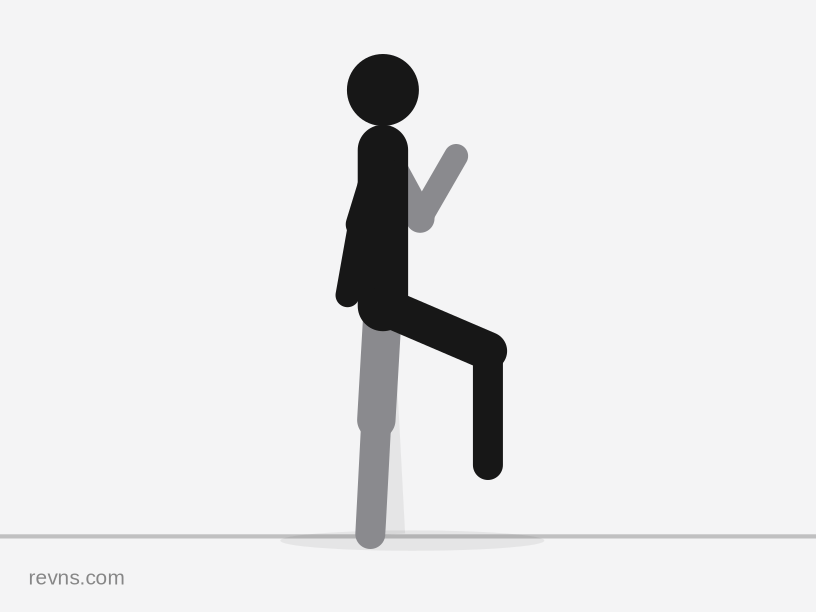
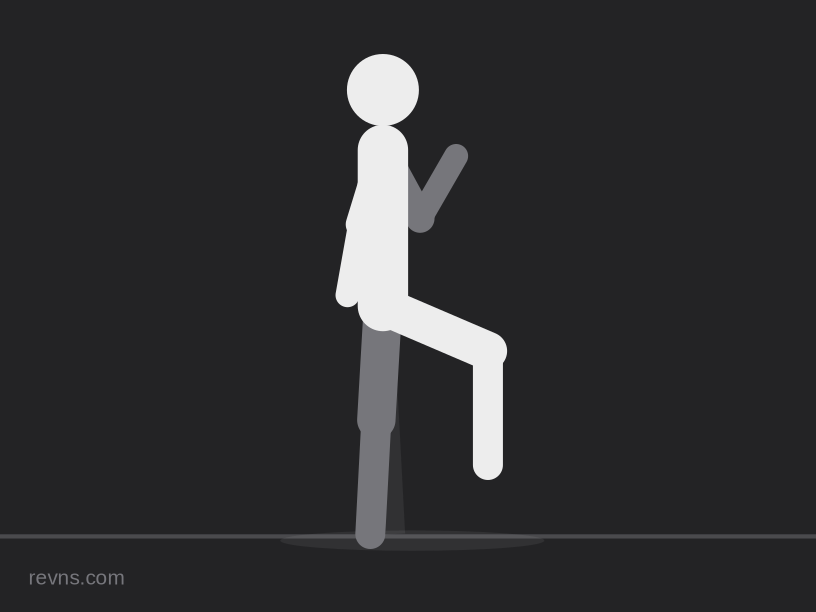
1. Standing march
The march raises heart rate without jumping and rehearses balance before squats. Keep the first interval quiet if you are in an apartment or office.
- Stand tall, feet hip-width apart.
- Lift one knee to a comfortable height.
- Swap legs in a steady rhythm.
- Swing arms naturally; do not clench fists.
Do: 45 s continuous. Common mistake: stomping heels to go faster. Think soft feet. Easier: smaller knee lift at slower pace. Harder: high knees on days you have space and joint tolerance.
2. Squat
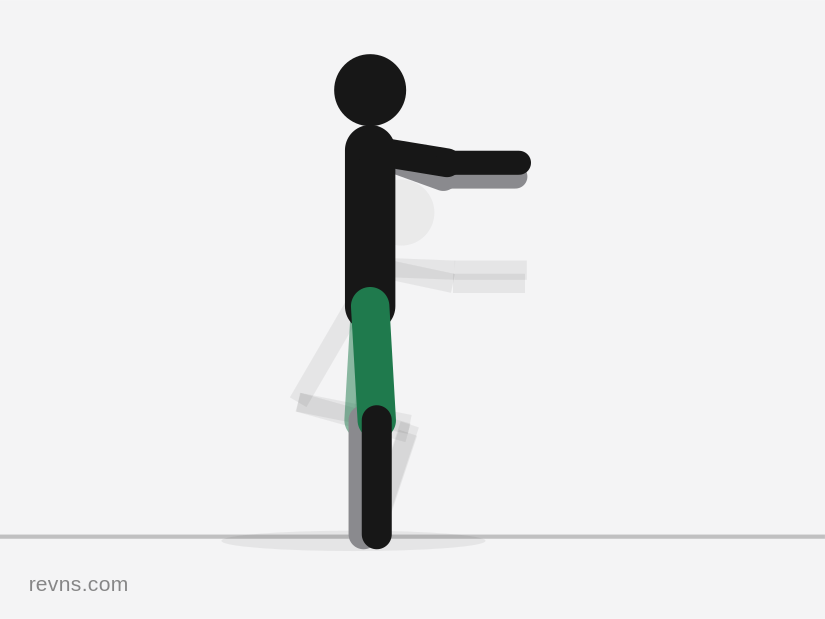
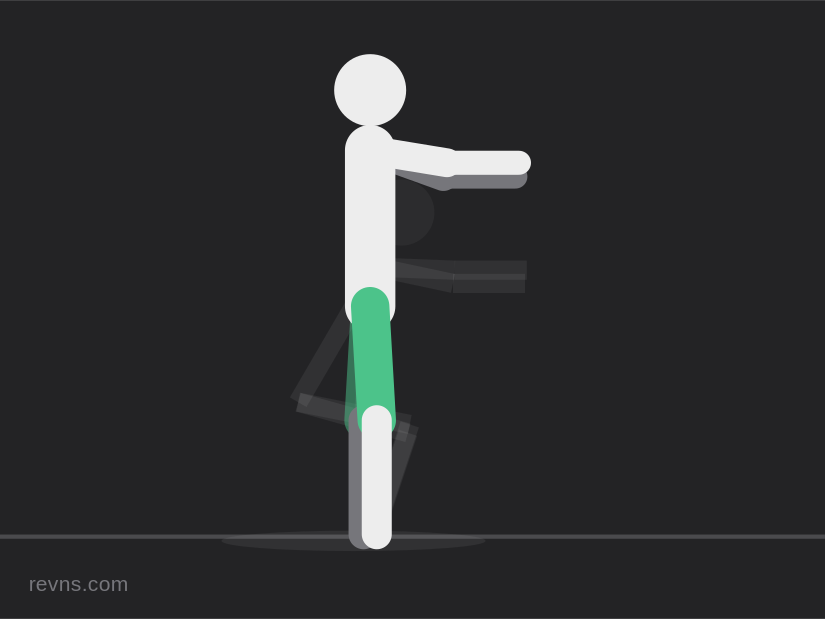
The squat trains thighs and glutes in a small footprint. Depth is optional in week one; consistency matters more than how low you go.
- Stand feet shoulder-width, toes slightly out.
- Send hips back and bend knees together.
- Keep chest comfortable and weight mid-foot.
- Stand by pressing through the whole foot.
Do: as many controlled reps as fit in 45 s. Common mistake: knees collapsing inward. Push knees gently toward the middle toe. Easier: squat to a chair and stand. Harder: squat pulses or two extra seconds on the lowering phase.
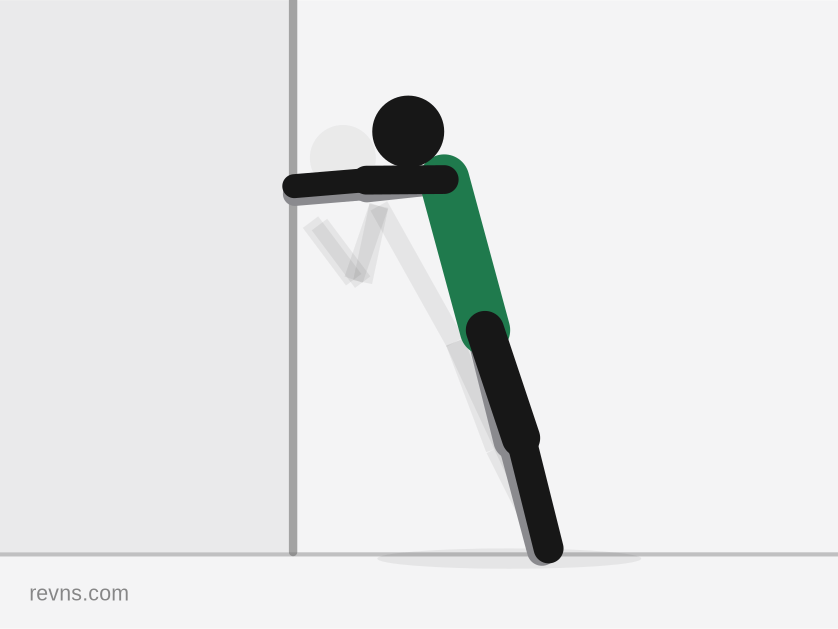
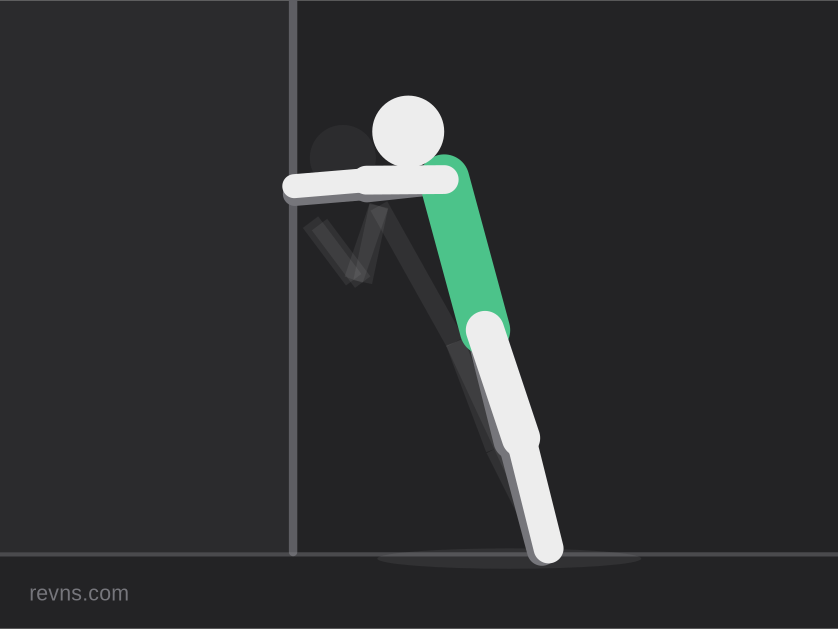
3. Wall push-up
The wall push-up trains chest, shoulders and arms without dropping to the floor. It is the default push for this anywhere plan.
- Stand arm’s length from a wall, hands at shoulder height.
- Walk feet back until your body forms one line.
- Bend elbows and bring chest toward the wall.
- Press away until arms are straight.
Do: 45 s of reps with no hip sag. Common mistake: feet too close so the waist bends. Step back until shoulders move, not just elbows. Easier: shorter range. Harder: incline push-ups on a sturdy desk when you upgrade.
4. Good morning
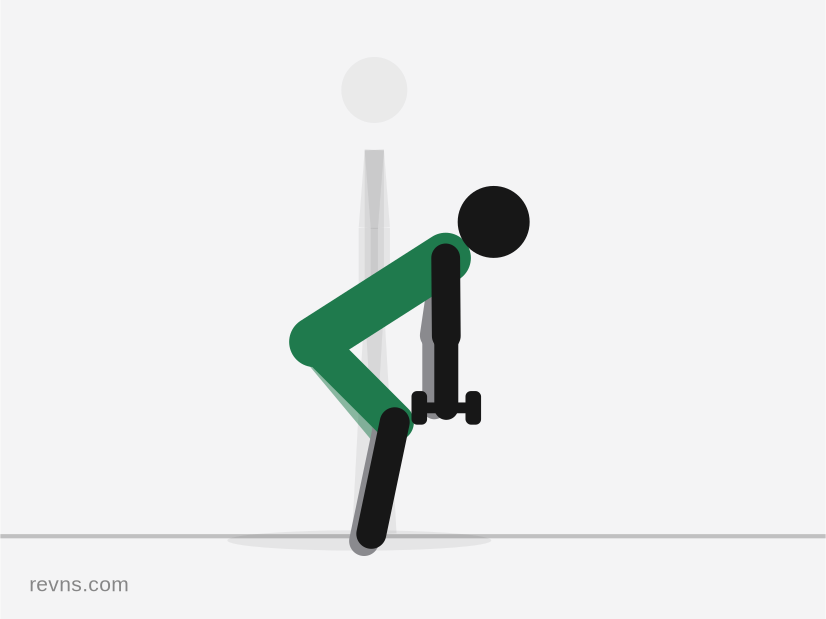
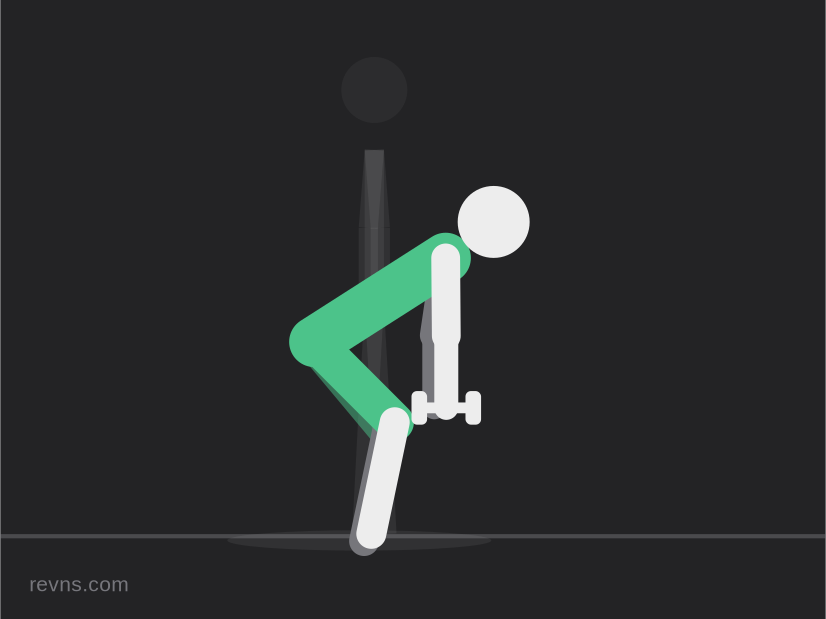
The good morning trains hamstrings and glutes with a hip hinge. Keep the range small if your back feels stiff after travel.
- Stand feet hip-width, knees softly bent.
- Place hands lightly behind your head or crossed on your chest.
- Hinge hips back with a flat back until you feel hamstrings stretch.
- Squeeze glutes and stand tall.
Do: 45 s of smooth reps, not a deep fold. Common mistake: rounding the lower back to reach farther. Stop the range where your back stays neutral. Easier: superman on a mat at home instead of good mornings that day. Harder: slower three-count lowering.
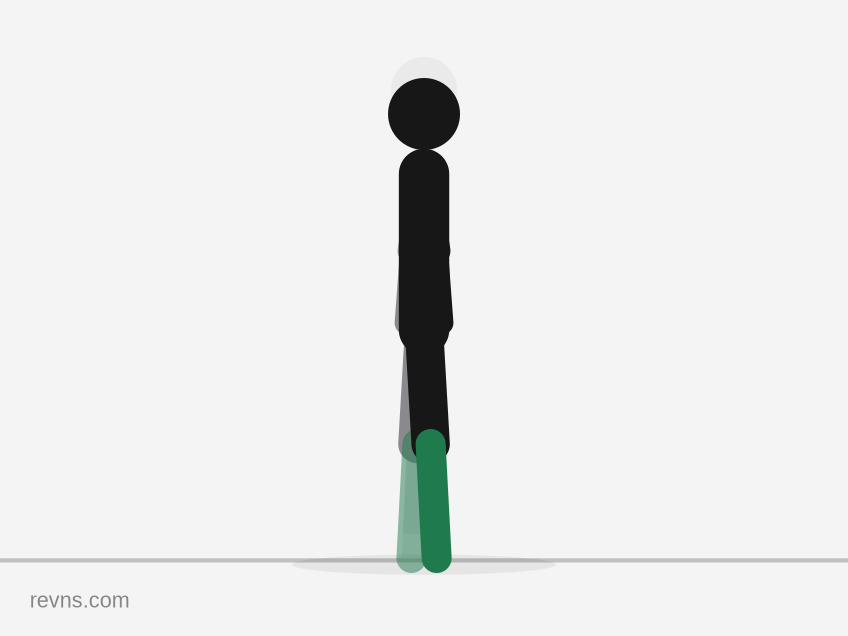
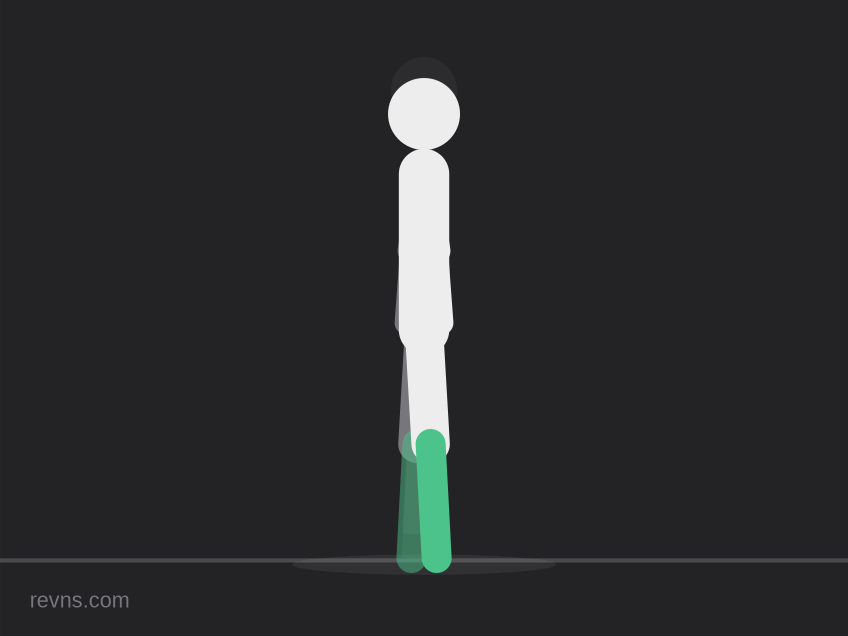
5. Calf raise
Calf raises finish the circuit with lower-leg strength and ankle stability for walking and stairs.
- Stand hip-width, tall posture.
- Rise onto the balls of both feet.
- Pause briefly at the top without bouncing.
- Lower heels with control.
Do: 45 s continuous. Common mistake: bouncing at the bottom. Pause one second at the top instead. Easier: hold a wall with fingertips. Harder: single-leg calf raises on travel days when you have a step and balance.
What muscles does this 5 minute anywhere workout work?
| Move | Main muscles |
|---|---|
| Standing march | Hip flexors, quads, calves, core balance |
| Squat | Quadriceps, glutes |
| Wall push-up | Chest, front of shoulders, triceps |
| Good morning | Hamstrings, glutes, spinal stabilisers |
| Calf raise | Gastrocnemius, soleus |
There is no row for the upper back. Once a week, add back exercises at home without equipment when you have 15 to 20 minutes and floor space. For a longer standing-friendly option at home, see standing ab exercises on a different day.
How does this compare to a 10-minute or 15-minute home workout?
| Plan | Time | Floor work | Best when |
|---|---|---|---|
| This 5-minute circuit | ~5 min | None | Travel, office, one free block |
| 10 minute ab workout at home | ~10 min | Mat core | You want trunk focus |
| Morning workout routine 15 minutes | ~15 min | Bird dog on floor | You want a fuller start-of-day round |
| Quiet apartment workout no jumping | ~20 min | Bridges, dead bugs | You need neighbour-friendly strength |
The five-minute plan is not weaker than longer ones; it is narrower. Use it when time and space are tight, then return to a longer sibling when you can.
What do top search results miss?
Competitor pages often time each move for one minute without saying how hard to work, or they prescribe HIIT intervals on the floor (planks, climbers, leg raises) that do not fit an office dress code. Nourish Move Love notes honestly that many five-minute videos skip warm-up and cool-down; this plan starts with marching inside the five minutes and names an optional 60-second wind-down.
What this post adds:
- All-standing stations with library demos and easier and harder links.
- A printed clock (45 s work, 15 s change) so the session ends at five minutes without guessing.
- Rep benchmarks so you can progress without adding equipment.
- WHO- and NHS-aligned frequency language instead of “fat burning” claims.
What should you do this week?
- Monday: One five-minute pass after lunch or between meetings. Note wall push-up distance and squat depth.
- Wednesday: Repeat. If marches felt easy, lift knees slightly higher, not faster stomps.
- Friday: Same circuit, or a second pass if form stayed clean on Wednesday.
- Optional travel day: Run the circuit in an airport or hotel before a long sit. Log it with a simple workout tracker if streaks help you.
When should you see a professional?
Check with a doctor or physiotherapist before starting if you have heart or lung disease, uncontrolled high blood pressure, diabetes with complications, recent surgery, osteoporosis, joint replacement, or if you are pregnant or within a few months postpartum. Skip good mornings and use a smaller squat range if a clinician has limited your spinal flexion.
Stop for chest pain, fainting, unusual shortness of breath, sharp joint pain, numbness, or dizziness that does not clear with rest. Mild muscle stiffness after the first week is common. Pain that changes how you walk for more than a few days needs an exam, not more calf raises.
This is general training guidance, not medical advice.
Related
- Morning workout routine 15 minutes: a six-move beginner home circuit
- Full body workout at home with no equipment: a six-move beginner routine
- Quiet apartment workout no jumping: a six-move beginner routine with demos
- Low impact cardio workout at home: a quiet beginner circuit with demos
- Strength training for beginners: a simple plan for the first eight weeks
- Rest days: how many you need and what to do on them
- Exercise library
Sources
- Bull FC et al. World Health Organization 2020 guidelines on physical activity and sedentary behaviour. Br J Sports Med 2020
- American College of Sports Medicine. Progression models in resistance training for healthy adults. Med Sci Sports Exerc 2009
- NHS. Strength exercises
- Ainsworth BE et al. 2024 Adult Compendium of Physical Activities
Terms in this post
revns publishes training and nutrition guidance, not medical advice. See a clinician for symptoms, injury or a medical condition. Accurate as of November 24, 2026.