Morning workout routine 15 minutes: a six-move beginner home circuit
A morning workout routine in 15 minutes: six bodyweight moves, a joint warm-up, one round and moving demos. No equipment, beginner-friendly, before work.
revns editorial · Published November 24, 2026 · 9 min read

Beginner morning workout routine 15 minutes: march and cat-cow warm-up, six no-equipment moves one round, 30 s rest, high-knee finisher. About 15 minutes, two to four days a week.
A morning workout routine in 15 minutes is six bodyweight moves — squat, wall push-up, reverse lunge, glute bridge, bird dog and high knees — plus a short march and cat-cow warm-up, done as one round before breakfast or before work. It needs no equipment, suits healthy beginners, and lands at about 14 to 16 minutes including cooldown when you rest 30 seconds between moves. Train two to four days a week. Every strength move below has a moving demo from the exercise library.
TL;DR
| Block | Move | Prescription | Rest after |
|---|---|---|---|
| Warm-up | Standing marches | 2 min | — |
| Warm-up | Cat-cow | 8 slow reps | — |
| 1 | Squat | 10–12 reps | 30 s |
| 2 | Wall push-up | 10–12 reps | 30 s |
| 3 | Reverse lunge | 8 per leg | 30 s |
| 4 | Glute bridge | 12 reps | 30 s |
| 5 | Bird dog | 6 per side | 30 s |
| 6 | High knees | 30 s moderate | — |
| Cool-down | Cat-cow + slow breathing | 2 min | — |
Week one: one round only. Week three: add two reps per strength move, or repeat high knees once, when every rep still looks the same at the start and the end.
What is a good morning workout routine for 15 minutes?
A good morning workout routine for 15 minutes trains the whole body at moderate effort, starts gently because tissues are stiffer after sleep, and ends on time so you can shower and eat. It is not a sprint. Many ranked pages for this query are timed follow-alongs (one minute per move, little rest guidance) or one long video. This guide gives rep counts, rest, a warm-up for the spine and hips, and easier and harder links on each move so you can repeat the same session and track progress.
The circuit hits legs (squat, lunge), push muscles (wall push-up), hips (bridge), trunk (bird dog) and a short wake-up cardio finisher (high knees). That matches what busy adults search for: full body, no gym, before work.
Why do a short workout in the morning?
People choose mornings for consistency: fewer meetings, fewer surprises, and the session is done before willpower fights the sofa at night. For health targets, the important part is weekly volume, not the clock on the wall. The WHO 2020 guidelines tell adults to do muscle-strengthening activity on two or more days a week and 150 to 300 minutes of moderate aerobic activity per week. A 15-minute circuit of squats, pushes and marching counts toward the strength part when sets feel moderately hard. A brisk walk to the train or a lunchtime stroll helps cover aerobic minutes.
Morning sessions also pair well with easy days in a training week. If you run or lift heavier later in the week, this routine is a moderate start, not a second HIIT session. See planning a training week for how to place hard and easy days. If you want harder intervals, use the beginner HIIT workout at home on a different day, not stacked on top of this one every morning.
How do you do this morning workout routine?
Session clock (about 14–16 minutes)
- Minutes 0–2: standing marches with relaxed arm swings. Start slow; let your heart rate rise gradually.
- Minute 2–3: eight slow cat-cow reps to loosen the spine and hips before squats and lunges.
- Minutes 3–12: move through the six exercises in order. Rest 30 seconds after each strength move. Sip water if you need it.
- Minutes 12–14: finish with 30 seconds of high knees at a pace you could hold while talking in short phrases, not an all-out sprint.
- Minutes 14–16: repeat four cat-cow reps and one minute of slow breathing (inhale four counts, exhale six).
Effort and form
Work at about 6 to 7 out of 10 on the last rep of squats, lunges and push-ups: you could do two more with perfect form, but the set is real work. High knees should feel brisk, not breathless panic. If you are panting before lunch, swap high knees for standing marches for 45 seconds.
How many days a week?
Two to four mornings on non-consecutive days, for example Tuesday, Thursday and Saturday. Add a fourth day only when sleep and soreness stay normal. Place at least one rest day between harder sessions elsewhere in your week. Logging the session takes seconds with a simple workout tracker if you want a streak without overthinking.
When to progress
Progress when the last rep of every set looks like the first for two mornings in a row. Then change one thing:
- add two reps to squat, wall push-up, bridge or bird dog, or
- add one lunge per leg, or
- extend high knees to 40 seconds, or
- add a second round of only the first four moves on days you have 20 minutes.
Do not add jumps, heavy loads and a second full round in the same week.
The moves
Each block lists steps, a dose, one common mistake, and easier and harder options. Breathe out on the effort and in on the return. On a hard floor, use a rug or mat for bird dog and bridge.
1. Squat
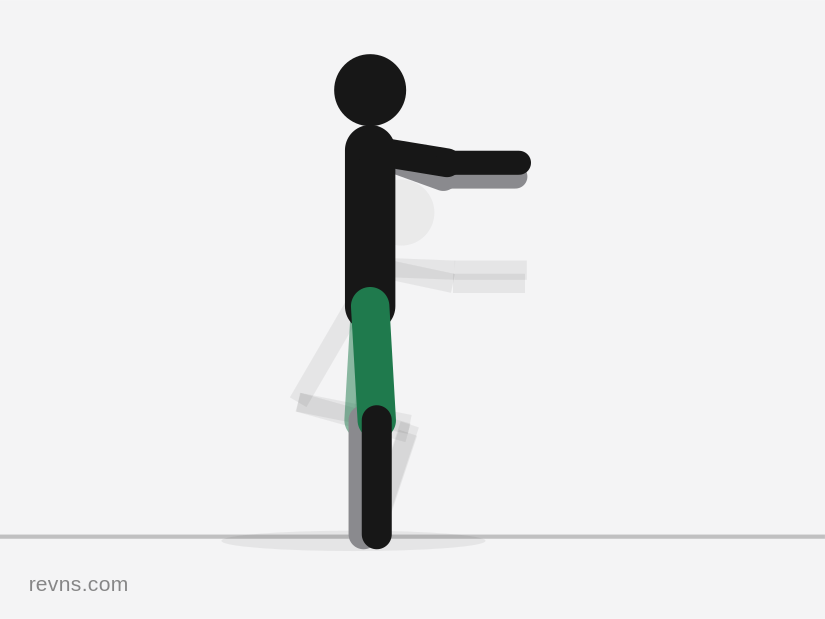
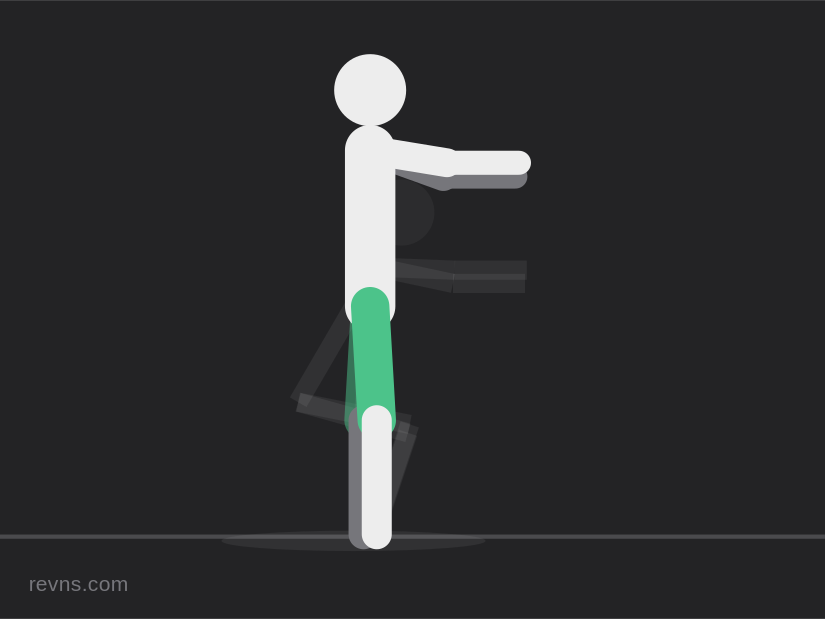
The squat wakes up the thighs and glutes and rehearses sitting and standing for the day ahead. After sleep, keep the first reps shallow and deepen only as hips feel looser.
- Stand with feet about shoulder-width apart, toes turned out slightly.
- Push your hips back and bend your knees as if sitting into a chair.
- Keep your chest comfortable and weight over the middle of your feet.
- Rise by pressing through the whole foot.
Do: 10–12 reps. Common mistake: dropping fast into the bottom. Use a three-second lowering on the first two reps each morning. Easier: squat to a chair and stand. Harder: squat pulses or two extra reps per week.
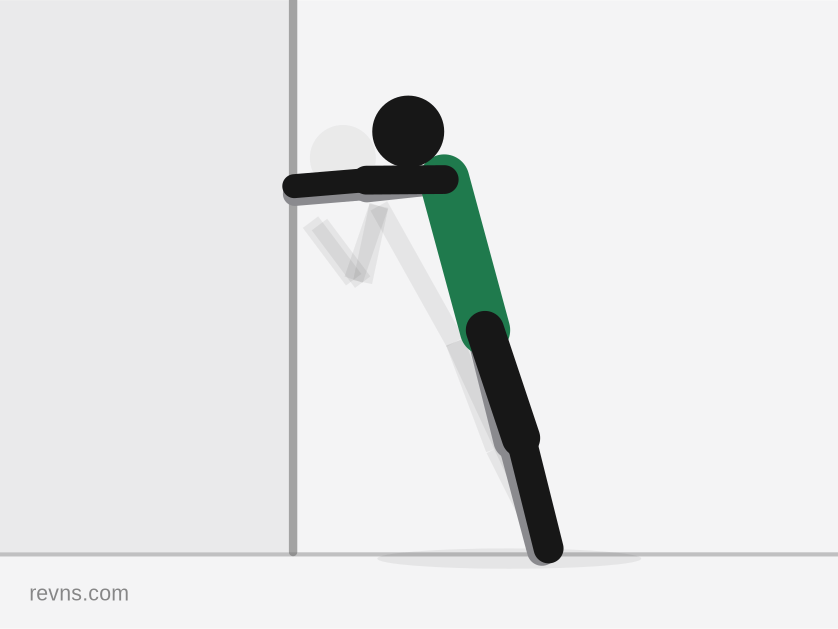
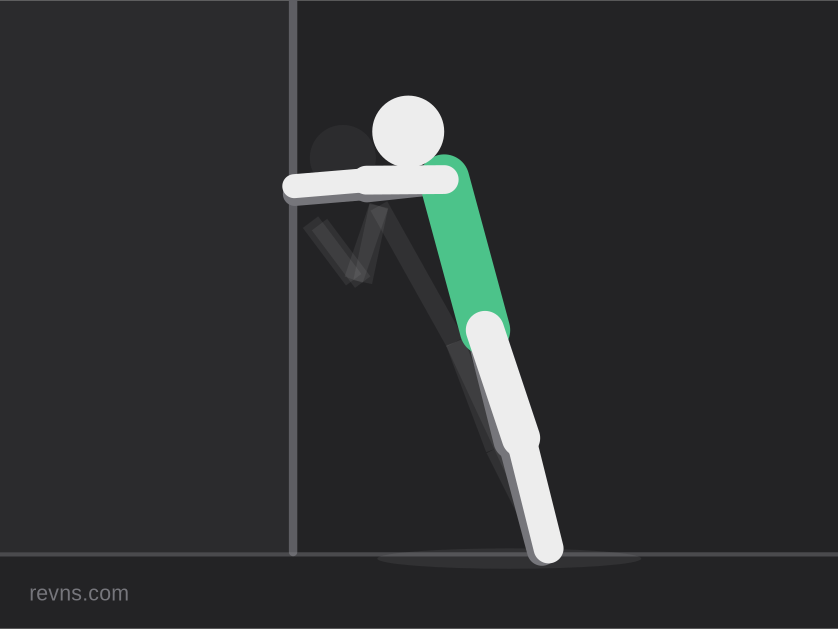
2. Wall push-up
The wall push-up trains chest, shoulders and arms without getting on the floor before you are ready. It is the default push here; move to incline push-ups only when 12 wall reps feel easy.
- Stand arm’s length from a wall, hands at shoulder height and slightly wider than shoulders.
- Walk your feet back until your body leans in a straight line.
- Bend your elbows and bring your chest toward the wall.
- Press the wall away until arms are straight.
Do: 10–12 reps. Common mistake: feet too close, so the hips fold instead of the arms working. Step back until your shoulders, not your waist, move. Easier: a smaller range of motion. Harder: incline push-ups on a sturdy counter.
3. Reverse lunge
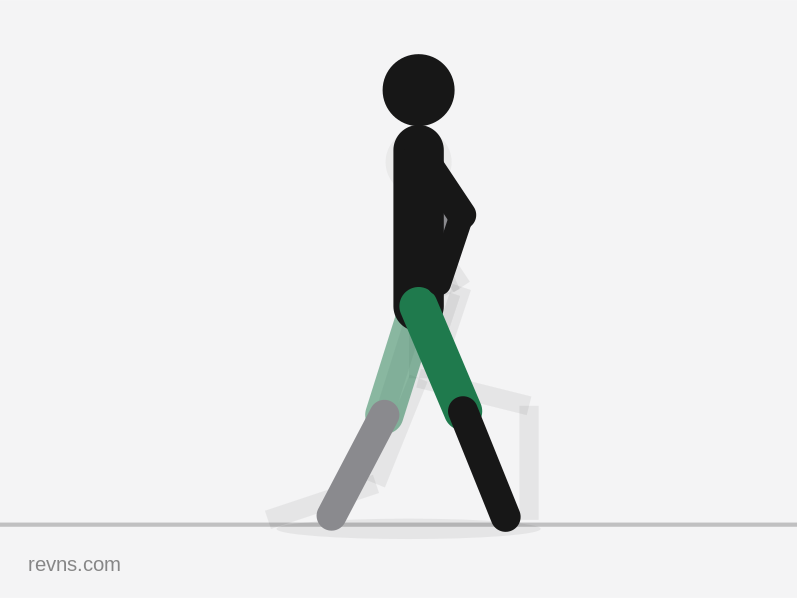
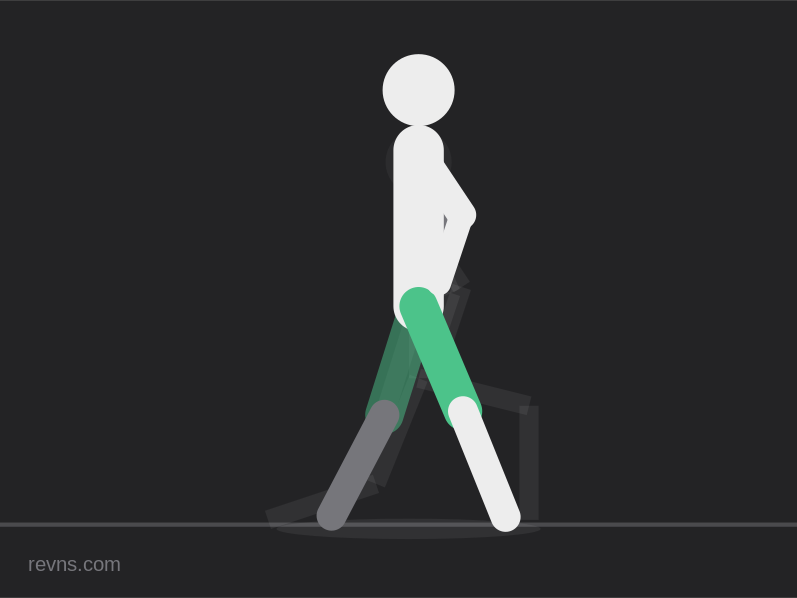
The reverse lunge works each leg and challenges balance before you walk or climb stairs. Step softly on hard floors so you do not wake housemates.
- Stand tall, feet hip-width apart.
- Step one foot back about one long stride.
- Lower until both knees bend comfortably, back knee hovering above the floor.
- Push through the front heel to stand and switch legs.
Do: 8 reps per leg. Common mistake: a tiny step so the front knee shoots forward. Lengthen the step back. Easier: hold a wall with one hand. Harder: walking lunges or 10 reps per leg.
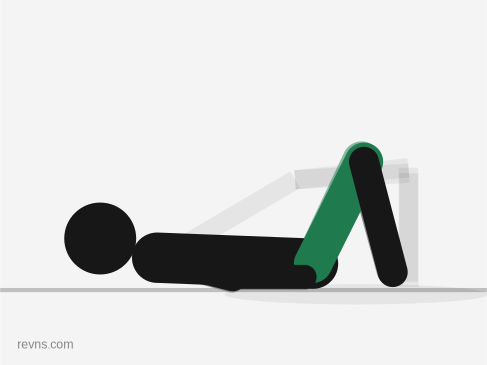
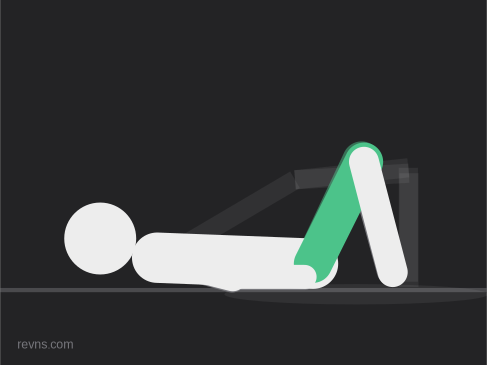
4. Glute bridge
The glute bridge targets the back of the hips after standing moves. It also reminds you to squeeze the glutes before longer sits at a desk.
- Lie on your back, knees bent, feet flat hip-width apart.
- Press through your heels and lift hips until shoulders, hips and knees align.
- Pause one second at the top without arching your lower back.
- Lower under control.
Do: 12 reps. Common mistake: pushing the ribs up. Think about tucking the pelvis slightly before you lift. Easier: smaller range. Harder: single-leg glute bridges or a two-second hold at the top of each rep.
5. Bird dog
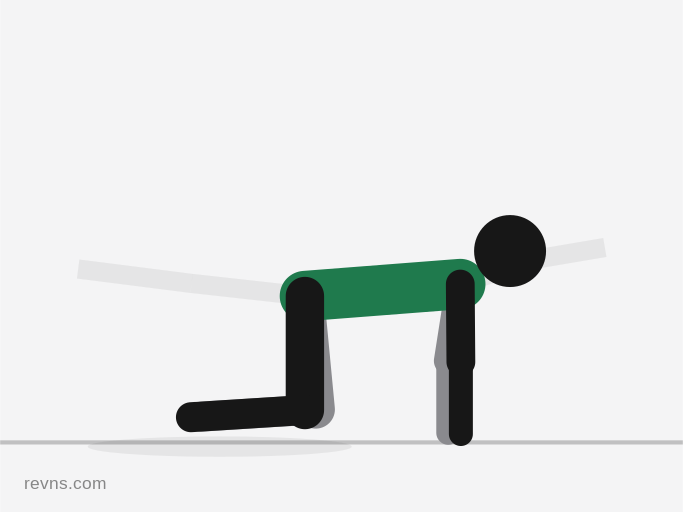
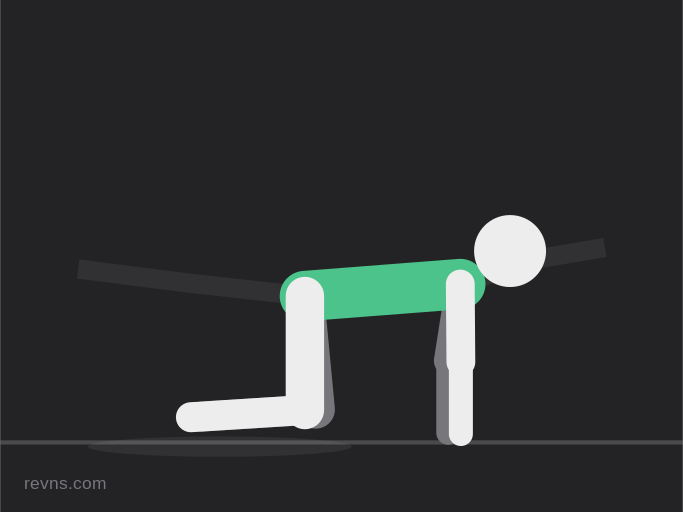
The bird dog trains the muscles along the spine and teaches the trunk to stay still while arm and leg move. It is quieter than crunches and fits a morning floor routine.
- Start on hands and knees, wrists under shoulders, knees under hips.
- Brace your stomach lightly.
- Reach one arm forward and the opposite leg back in one long line.
- Return slowly and switch sides.
Do: 6 reps per side. Common mistake: lifting the leg high so the back arches. Reach long, not high. Easier: dead bugs on your back. Harder: a two-second pause at full reach each rep.
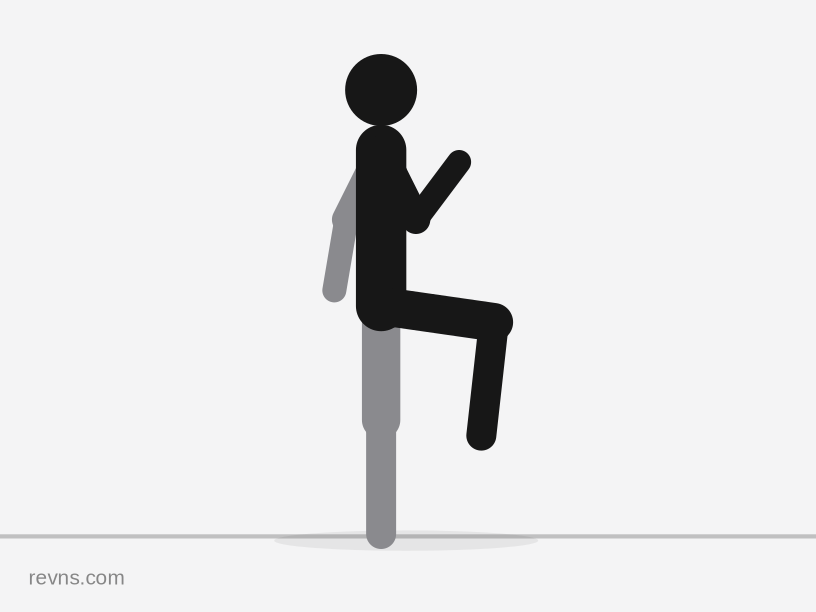
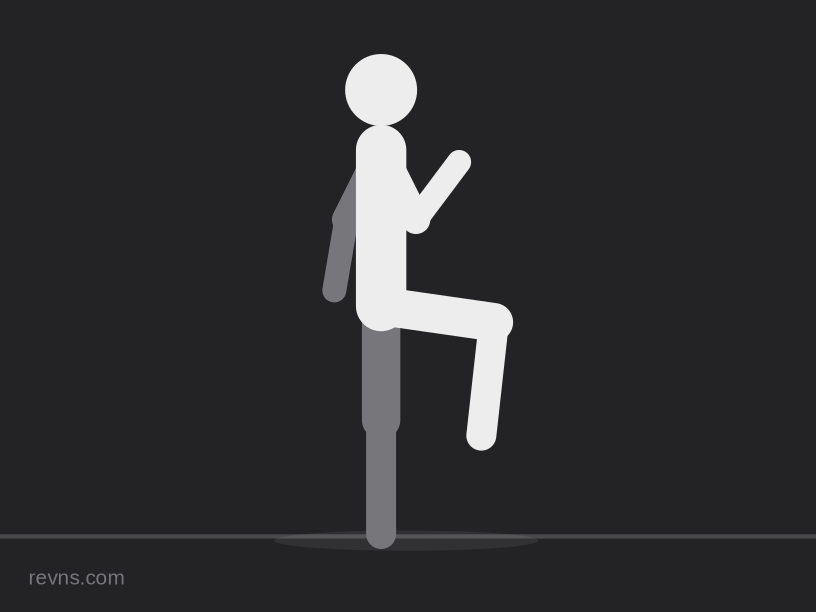
6. High knees
High knees raise heart rate slightly and finish the round awake. They are optional: swap for 45 seconds of standing marches if impact or noise is a problem, as in the quiet apartment workout.
- Stand tall, core gently braced.
- March in place and lift knees toward hip height without leaning back.
- Pump your arms naturally.
- Land softly on the balls of your feet.
Do: 30 seconds at moderate pace. Common mistake: sprinting the first 10 seconds and stopping. Pick a rhythm you could hold for 60 seconds. Easier: standing marches or step jacks. Harder: 40 seconds or the low impact cardio circuit on another day.
What muscles does this 15-minute morning routine work?
| Move | Main muscles |
|---|---|
| Squat | Quadriceps, glutes |
| Wall push-up | Chest, front of shoulders, triceps |
| Reverse lunge | Quadriceps, glutes, hamstrings |
| Glute bridge | Glutes, hamstrings |
| Bird dog | Spine stabilisers, glutes, shoulders |
| High knees | Hip flexors, calves, core balance |
There is no pull for the upper back without equipment. Pair this with back exercises at home without equipment once a week if rows matter to you. The full body workout at home with no equipment is a longer sibling with a plank instead of high knees when you have 25 minutes.
How is a morning routine different from a HIIT workout?
HIIT alternates short hard intervals with rest so breathing spikes. This 15-minute morning routine keeps reps and steady rest so you are alert, not gasping, before work. Both can count toward weekly activity when effort is honest. Use HIIT on days you have time to shower and recover; use this template on days you want strength and mobility without a loud finisher. Compare pacing with the beginner HIIT workout at home before you stack them on consecutive mornings.
What should you do this week?
- Day 1 (morning): Full warm-up and one round. Note wall push-up depth, lunge balance and high-knee pace.
- Day 3: Repeat. If form matches day 1, add one rep to squats and bridges only.
- Day 5 or 6: Same round, or skip high knees if calves feel tight and walk 10 minutes instead.
- Optional: On a low-energy morning, run only moves 1–4 and call it a win.
Track sleep and steps through Apple Health in the revns iPhone app if you use it; this guide does not require a wearable.
When should you see a professional?
Check with a doctor or physiotherapist before starting if you have heart or lung disease, uncontrolled high blood pressure, diabetes with complications, recent surgery, osteoporosis, joint replacement, or if you are pregnant or within a few months postpartum. Stop and get advice for chest pain, fainting, unusual shortness of breath, sharp joint pain, numbness, or dizziness that does not clear with rest.
Muscle stiffness for a day or two after the first week is common. If pain changes how you walk or lasts more than a week, ease back to wall push-ups and half-depth squats until a clinician clears you.
This is general training guidance, not medical advice.
Related
- Full body workout at home with no equipment: a six-move beginner routine
- Quiet apartment workout no jumping: a six-move beginner routine with demos
- Beginner HIIT workout at home: a six-move no-equipment circuit with demos
- Low impact cardio workout at home: a quiet beginner circuit with demos
- Strength training for beginners: a simple plan for the first eight weeks
- Rest days: how many you need and what to do on them
- Exercise library
Sources
- Bull FC et al. World Health Organization 2020 guidelines on physical activity and sedentary behaviour. Br J Sports Med 2020
- American College of Sports Medicine. Progression models in resistance training for healthy adults. Med Sci Sports Exerc 2009
- NHS. Strength exercises
- Ainsworth BE et al. 2024 Adult Compendium of Physical Activities
Terms in this post
revns publishes training and nutrition guidance, not medical advice. See a clinician for symptoms, injury or a medical condition. Accurate as of November 24, 2026.