Full body exercise
Standing marches
Also called marching in place, standing march, march on the spot
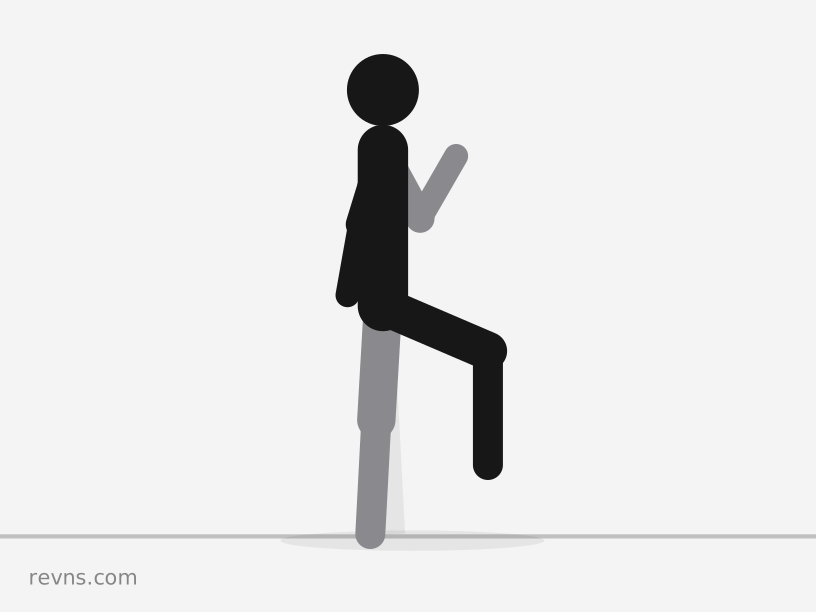
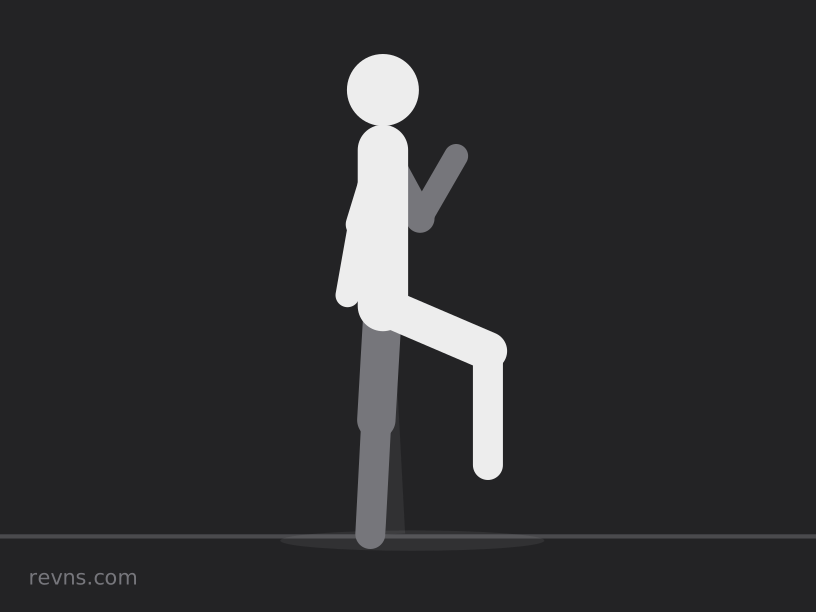
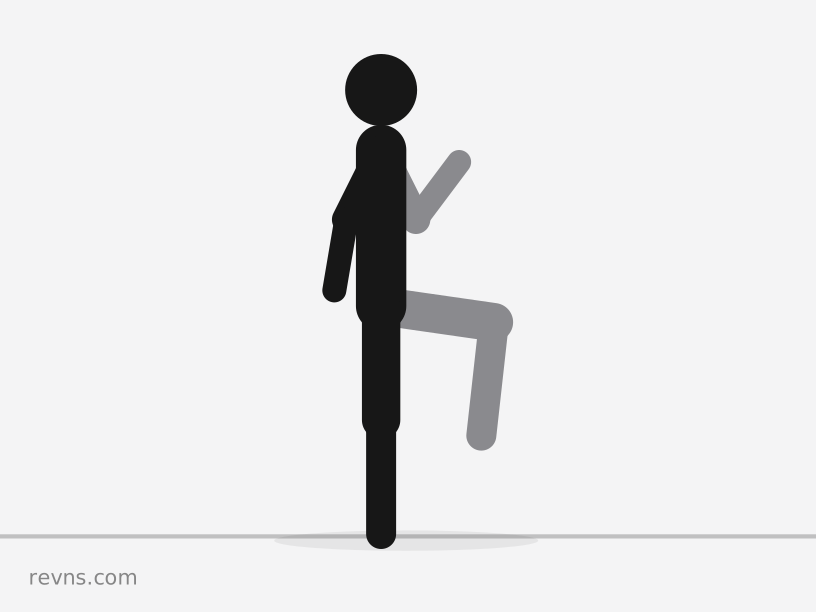
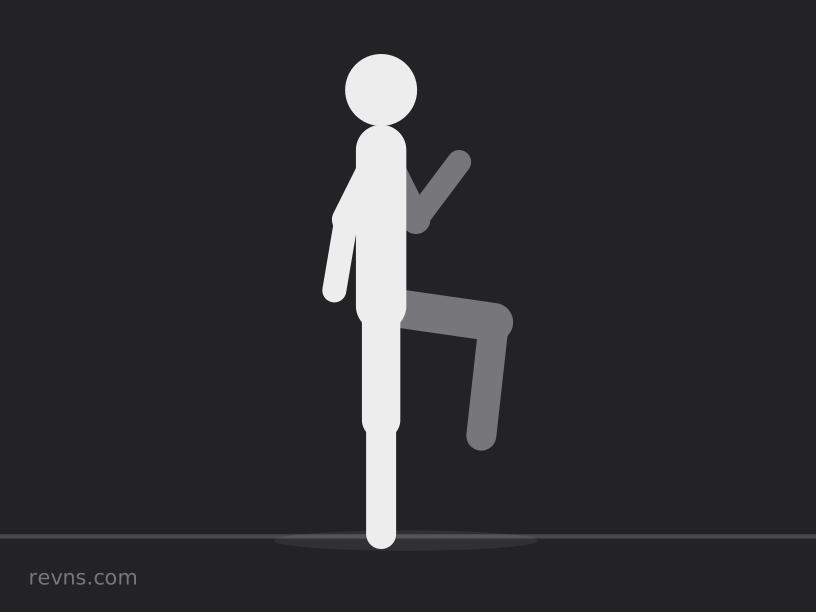
Standing marches: a beginner cardio exercise for the whole body, no equipment needed. March on the spot, knees up, arms swinging.
| Level | Beginner |
|---|---|
| Type | Cardio |
| Movement | Compound, locomotion |
| Equipment | No equipment |
| Where | Home, Gym, Outdoors, Office, Travel and hotel rooms |
| Main muscles | Spread across the body |
| Counted in | Reps |
| Calories | About 47 kcal in 10 minutes at 70 kg |
How to do standing marches
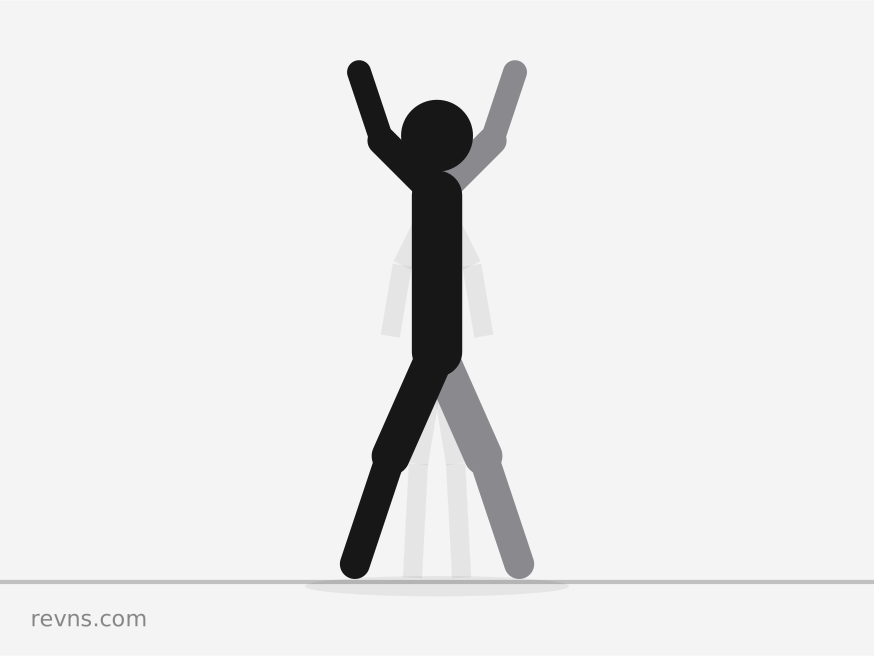
- Stand tall, holding a chair if needed.
- Lift one knee towards hip height.
- Lower it and lift the other.
- Swing the arms.
Form tips
- Go faster for more effort.
- Stand tall.
- Hold a chair for balance.
Breathing
Steady breathing.
What muscles do standing marches work?
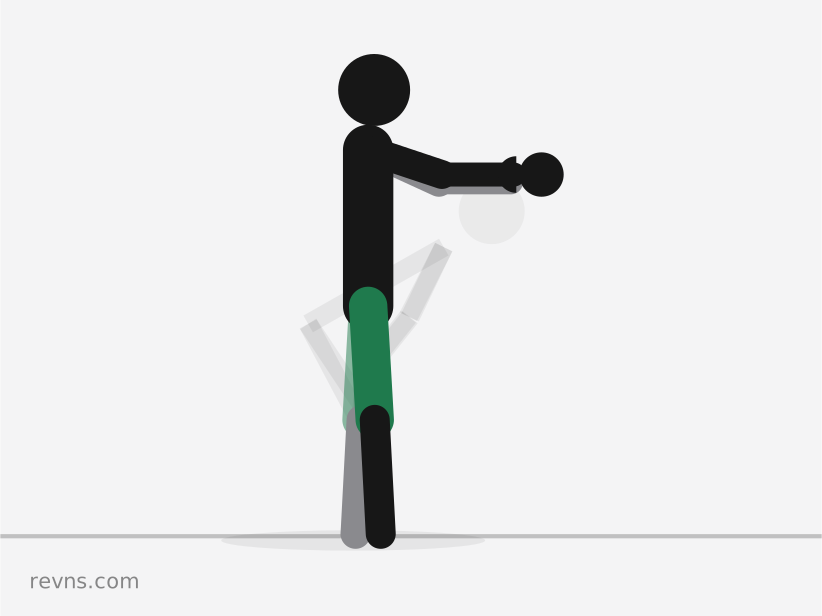
The main movers are green in the figure. The bars show each muscle’s share of the work, as the revns body map counts it.
- QuadsHelper
- CoreHelper
- CalvesHelper
What standing marches are good for
- Gentle cardio
- Older adults and beginners
- Warm-ups and desk breaks
How many sets and reps of standing marches?
Starting points from the American College of Sports Medicine’s guidance. Pick the row for your level, and move up when the last set feels easy with clean form.
| Level | Sets | Reps or time | Rest | How often |
|---|---|---|---|---|
| Beginner (this move) | 3 to 5 | 20 to 30 seconds of work | 30 to 60 seconds | 2 to 3 a week |
| Intermediate | 6 to 8 | 30 to 40 seconds of work | 20 to 30 seconds | 2 to 4 a week |
| Advanced | 8 to 10 | 40 to 45 seconds of work | 15 to 20 seconds | 3 to 4 a week |
How many calories do standing marches burn?
Active calories (on top of resting burn) for steady work, from a MET of 3.8: “Calisthenics (push-ups, sit-ups, pull-ups, lunges), moderate effort” (code 02022) in the 2024 Adult Compendium of Physical Activities. Rests, pace and effort change the real number.
| Body weight | 1 minute | 10 minutes | 30 minutes |
|---|---|---|---|
| 55 kg | about 4 kcal | about 37 kcal | about 110 kcal |
| 70 kg | about 5 kcal | about 47 kcal | about 140 kcal |
| 85 kg | about 6 kcal | about 57 kcal | about 170 kcal |
| 100 kg | about 7 kcal | about 67 kcal | about 200 kcal |
At about 1 seconds a rep, 3 sets of 12 are about 0.6 minutes of work: roughly 3 kcal at 70 kg.
Common standing marches mistakes
- Slouching.
- Tiny steps.
- Holding the breath.
Standing marches variations and alternatives
Who should take care with standing marches?
Stop if you feel sharp pain, dizziness, chest pain or unusual shortness of breath, and see a clinician about pain that stays. If you are new to exercise, pregnant, or managing a heart, joint or other health condition, check with a professional first.
More full body exercises
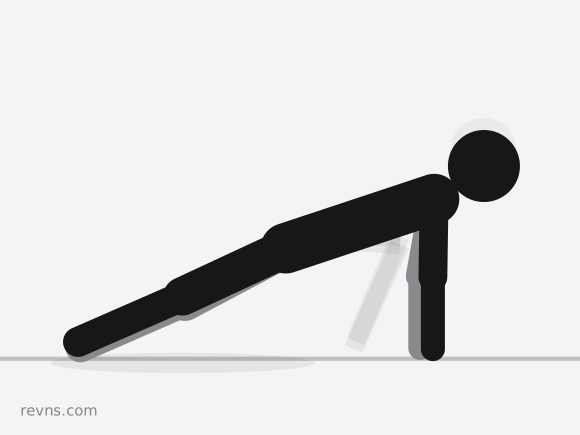
Use this demo on your site
Free to embed with the credit link. The figure carries Content Credentials (C2PA) that name revns as its maker.
<iframe src="https://revns.com/embed/exercises/standing_marches" title="Standing marches exercise demo" width="480" height="420" style="border:0;max-width:100%" loading="lazy"></iframe>
Sources
- Herrmann SD et al. 2024 Adult Compendium of Physical Activities. J Sport Health Sci 2024
- American College of Sports Medicine. Progression models in resistance training for healthy adults. Med Sci Sports Exerc 2009
- World Health Organization. Guidelines on physical activity and sedentary behaviour. 2020
General training guidance, not medical advice.