Tricep extension: how to do it with dumbbells, beginner form and demos
Tricep extension how to do it: upper arms still, 3-second lowers, ribs down. Five-move ladder from floor dips to overhead dumbbell with sets, rest and demos.
revns editorial · Published November 23, 2026 · 10 min read
Do a tricep extension with upper arms still and elbows pointing forward. Start on floor or bench dips, then 3×10–12 overhead dumbbell extensions, 2–3 days a week.
A tricep extension done right keeps the upper arms still, the ribs down and the elbows pointing forward while you bend and straighten only at the elbow. This guide walks through a five-move ladder in the exercise library: floor dips, bench dips, standing or seated overhead dumbbell extensions, kickbacks and cable pushdowns. Plan 10 to 15 minutes, two or three sessions a week, and stop if sharp elbow, shoulder or wrist pain appears.
TL;DR
| # | Move | Sets × reps | Rest |
|---|---|---|---|
| 0 | Warm-up: arm circles + elbow bends | 1 min | — |
| 1 | Floor triceps dips | 2 × 10–12 | 45 s |
| 2 | Bench dips | 2 × 8–10 | 60 s |
| 3 | Tricep extensions (overhead dumbbell) | 3 × 10–12 | 60–90 s |
| 4 | Tricep kickbacks | 2 × 10 / arm | 60 s |
| 5 | Tricep pushdowns (gym option) | 2 × 12 | 60 s |
How often: 2–3 days a week on non-consecutive days. Progress: when every working set hits 12 clean reps, add the smallest dumbbell jump or add one rep per set before loading.

Tricep extension: how to do it?
To do a tricep extension, you isolate elbow extension: the muscle on the back of the upper arm straightens the arm. The American Council on Exercise describes the dumbbell overhead version with a braced torso, shoulders down and back, and elbows that stay forward while you lower the weight behind the head to roughly a 90-degree bend—without letting the upper arms swing backward.
Three rules cover most beginner errors:
- Brace before you bend. Light glute squeeze, ribs stacked over hips, chin level. Your core stops the rib cage from flaring when the weight passes behind your head.
- Freeze the upper arms. Think "biceps beside the ears" on overhead reps. Only the forearms travel; the upper arm does not drop toward the floor like a pulldown.
- Own the lowering phase. Aim for a two- to three-second descent. Bouncing out of the bottom steals tension from the triceps and irritates elbows.
If you cannot keep those rules overhead, stay on floor or bench dips for another week, or use cable pushdowns with elbows pinned to your ribs. Heavy weight with arching teaches back strain, not triceps.
What muscles does a tricep extension work?
The triceps brachii has three heads—long, lateral and medial—that share the job of extending the elbow. In an overhead dumbbell extension, the long head crosses the shoulder, so the raised-arm position often feels like a deeper stretch behind the arm. Pushdowns and kickbacks still train all three heads but change the shoulder angle.
Supporting muscles brace the trunk and stabilize the shoulder girdle so the elbow can move in isolation. That is why extensions belong after warm-up and usually after compound presses or dips when arms are awake—not as the first loaded move on a cold shoulder.
For weekly programming (sets across the month), see tricep extensions workout plan. This page is technique and a first-session ladder, not a full arm split.
How do you do this form workout?
Session flow
- Warm-up (2 minutes): slow arm circles, 10 bodyweight elbow bends, then row 1 of floor dips.
- Compound primer: bench dips for 2 sets of 8 to 10 if shoulders tolerate them; rest 60 seconds.
- Main isolation: tricep extensions for 3 working sets of 10 to 12; rest 60 to 90 seconds.
- Strict check: 2 sets of tricep kickbacks per arm with a lighter dumbbell if elbows stay quiet.
- Gym swap: finish with 2 sets of tricep pushdowns when a cable is available—same elbow rules, different angle.
How often
Two or three days per week aligns with WHO guidance to strengthen major muscle groups on at least two days. Leave 48 hours between hard triceps days if tendons feel hot. Pair with rows and curls from arm workout without weights at home, or schedule extensions after chest or shoulder presses in the gym.
When to add weight
Move up when you complete the top of your rep range for every set with the same tempo and no rib flare. Increase by the smallest plate jump on your dumbbells or add one rep per set for a week before loading. See progressive overload in plain words.
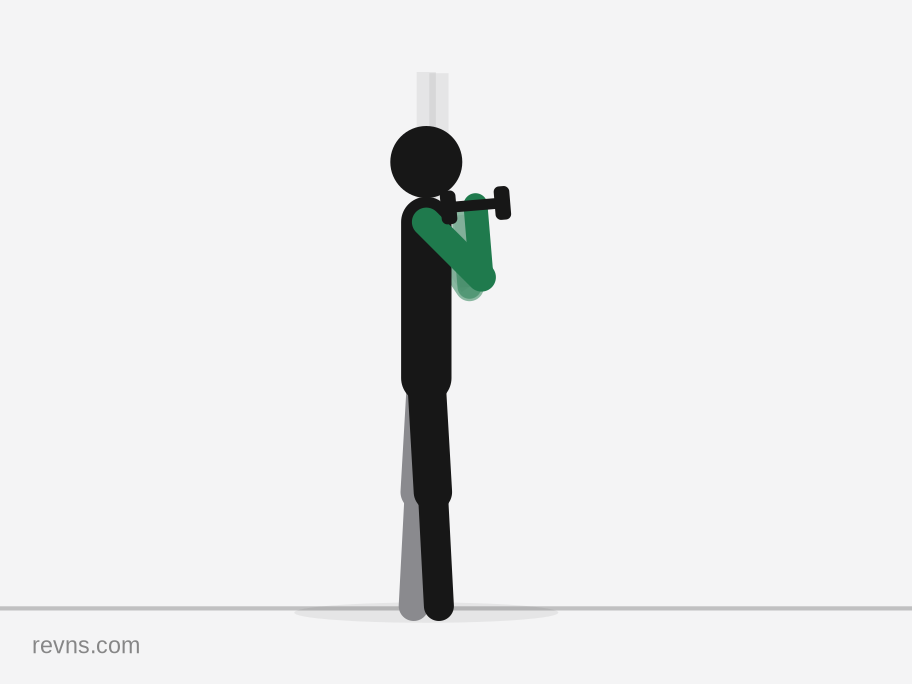
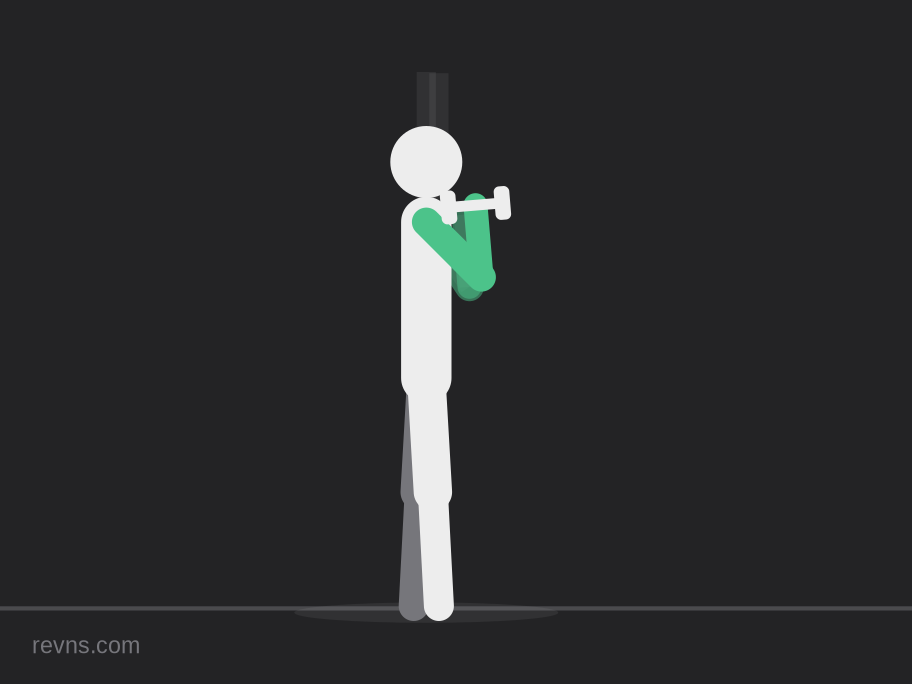
Rib-down wall drill (no extra equipment)
Between sets, stand with your back lightly on a wall, feet a step forward, and hold a light dumbbell overhead in both hands. Practice the lowering phase without letting the lower back leave the wall. If ribs peel away, the weight is too heavy for that drill or you need a seated bench with back support.
The moves
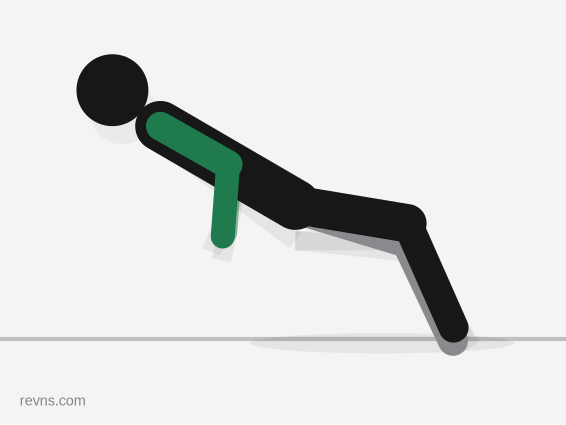
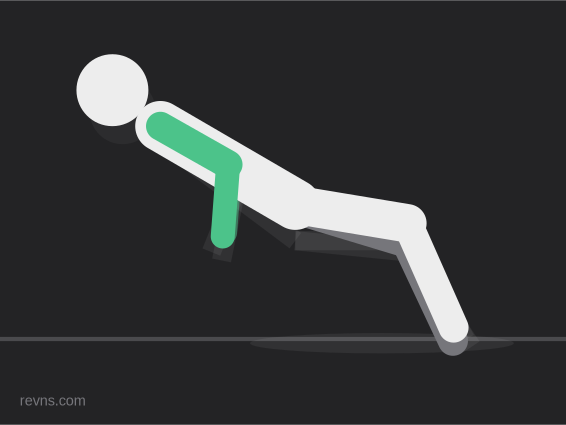
1. Floor triceps dips (no dumbbell)
Floor triceps dips teach elbow extension with hips low and no shoulder-overhead mobility demand. Use them when you have no bell yet or when overhead position feels stiff.
- Sit on the floor, knees bent, feet flat hip-width apart.
- Place your hands behind your hips, fingers pointing toward your feet.
- Lift your hips slightly off the floor; chest stays tall.
- Bend the elbows straight back to lower the hips a few centimetres.
- Press through the palms to straighten the arms without collapsing between reps.
Do: 2 × 10–12, rest 45 s. Move on when: 12 reps stay smooth for two sessions. Common mistake: pushing with the legs instead of the arms. Keep heels light and think "elbows back." Easier: wall pushups for general push strength. Harder: bench dips.
2. Bench dips
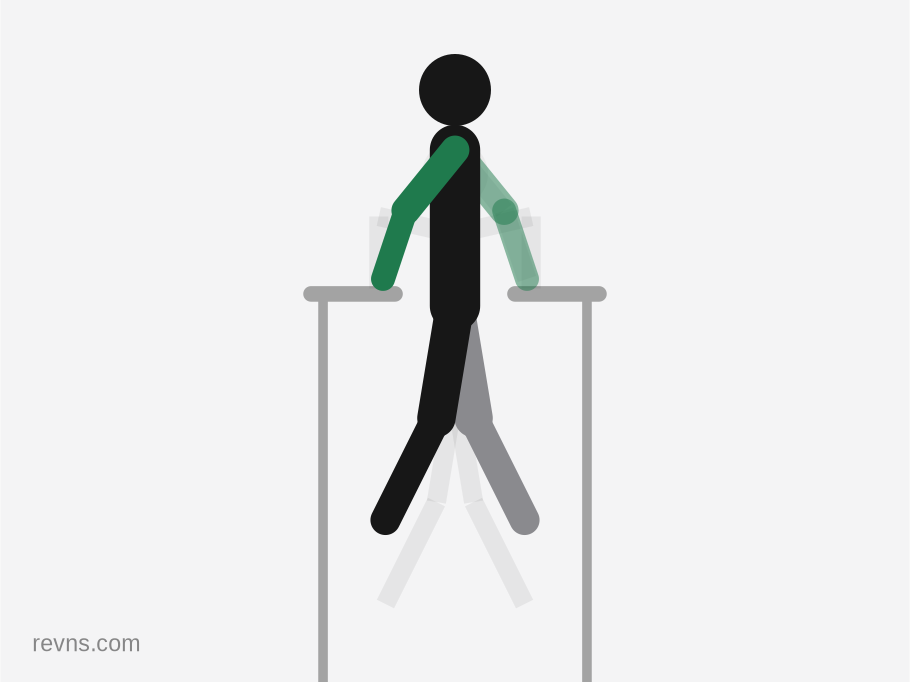
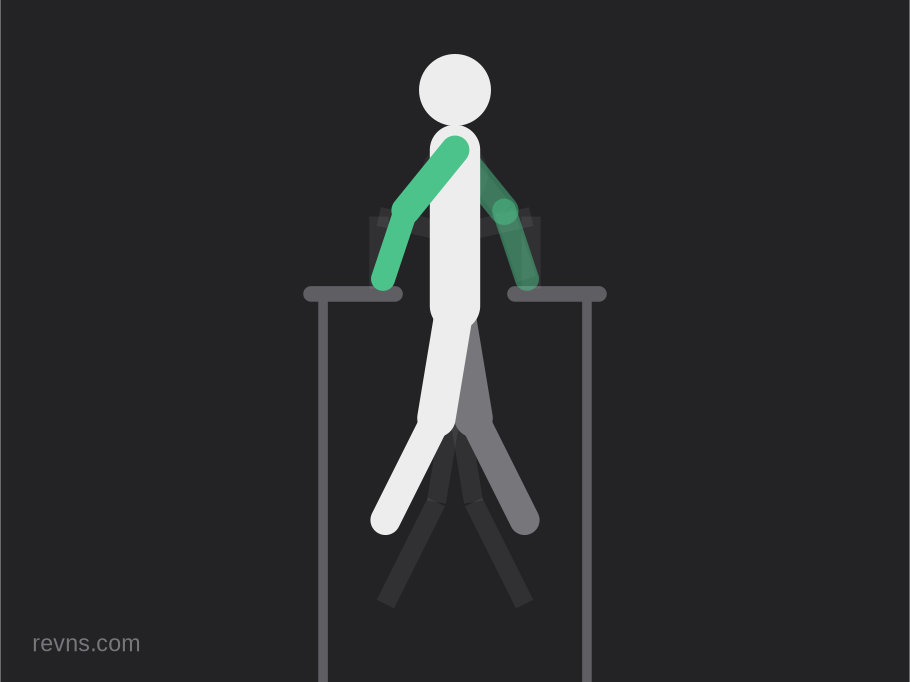
Bench dips add range and load through a chair or bench. They prepare the triceps and shoulders for overhead work.
- Sit on the edge of a sturdy bench or chair, hands beside your hips, fingers forward.
- Walk your feet forward and slide hips off the edge; knees bent, feet flat.
- Keep the back close to the bench; shoulders down.
- Bend the elbows to about 90 degrees or the deepest pain-free range your shoulders allow.
- Press up by straightening the elbows without locking into joint pain.
Do: 2 × 8–10, rest 60 s. Move on when: depth stays comfortable and shoulders do not pinch. Common mistake: dropping so deep the shoulders roll forward. Stop higher and build depth slowly. Easier: floor triceps dips. Harder: dips on parallel bars when available.
3. Standing or seated overhead dumbbell tricep extension
This is the move most people mean by tricep extension: both hands on one dumbbell, arms overhead, elbows forward.
- Stand with feet hip-width apart or sit on a bench with back support.
- Hold one dumbbell with both hands around the inner plate or handle; press it straight overhead.
- Pin upper arms near the head; elbows point forward, not out to the sides.
- Inhale and lower the bell behind your head by bending the elbows for three seconds.
- Exhale and extend the elbows to return overhead without slamming the weight into the stack.
Do: 3 × 10–12, rest 60–90 s. Move on when: 3 × 12 with no rib flare for two sessions. Common mistake: arching the lower back as the weight travels behind the head. Brace glutes and ribs down, or switch to seated with back support. Easier: bench dips. Harder: diamond pushups or skull crushers when elbows tolerate lying work.
4. Tricep kickbacks (single-arm strict check)
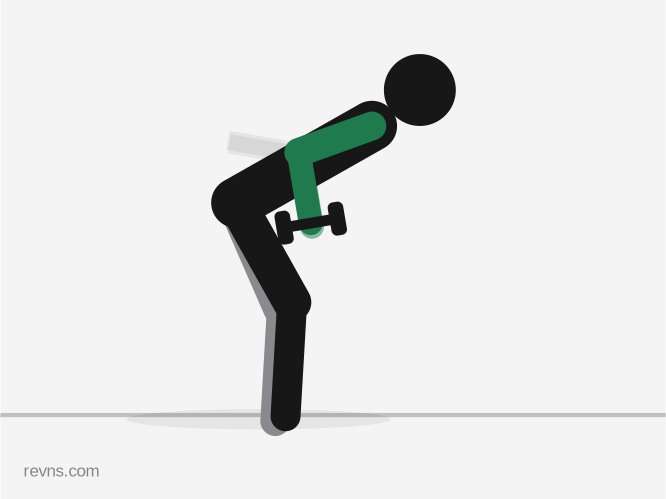
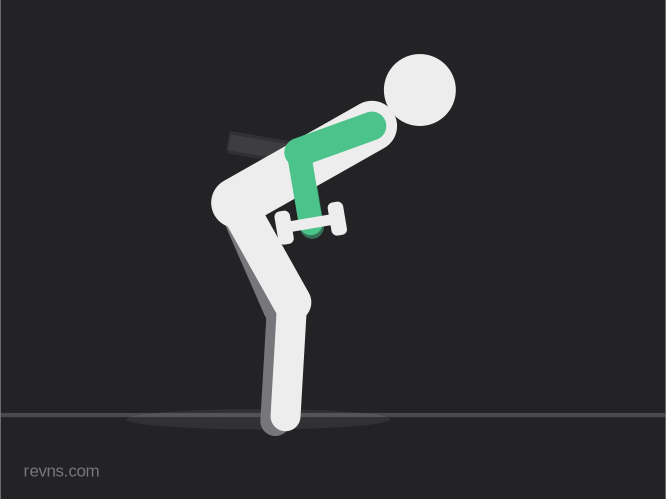
Kickbacks lock the upper arm parallel to the torso so swing is obvious. They reinforce the same elbow path as overhead work.
- Hold a light dumbbell in one hand; hinge forward at the hips with a flat back.
- Raise the upper arm to the side until it is roughly parallel to the floor; elbow bent 90 degrees to start.
- Keep the upper arm still; only the forearm moves.
- Straighten the elbow back until the arm is long behind you.
- Lower for three seconds to 90 degrees; complete all reps on one side, then switch.
Do: 2 × 10 per arm, rest 60 s. Move on when: the upper arm does not drop during the set. Common mistake: swinging the dumbbell up with the shoulder. Use a lighter bell and pause at full extension. Easier: tricep extensions. Harder: skull crushers.
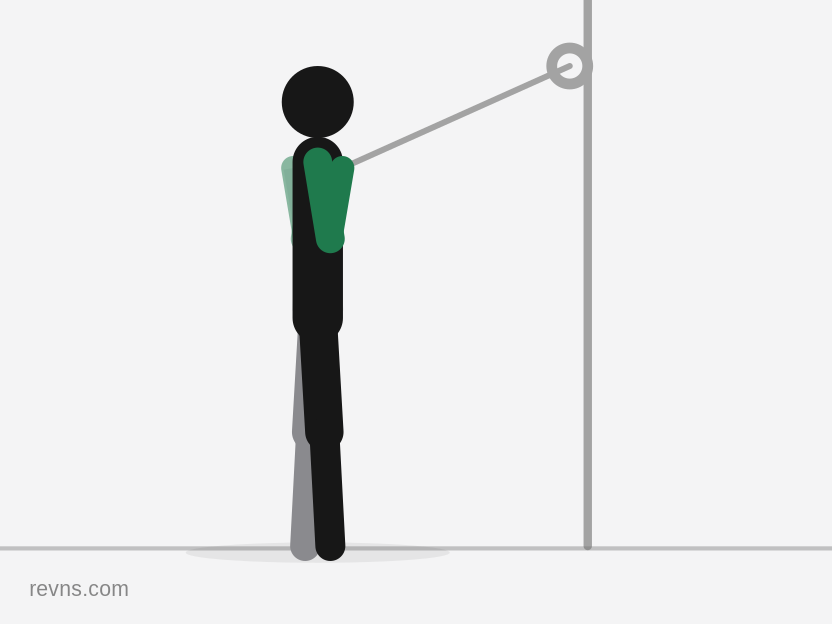
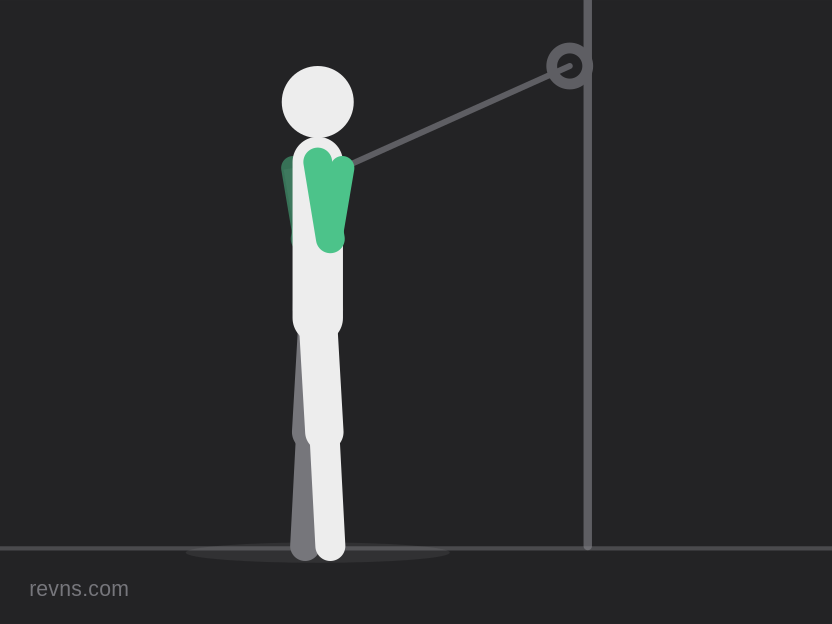
5. Cable tricep pushdowns (gym)
Pushdowns train the same elbow lockout with the upper arm at your side—useful when overhead mobility is limited or you want a second angle on arm day.
- Attach a bar or rope to a high cable; stand facing the stack.
- Grasp the handle, elbows tucked to your ribs, shoulders down.
- Press the handle straight down until arms are straight without locking painfully.
- Rise for three seconds until elbows reach about 90 degrees.
- Keep the torso still; only the forearms move.
Do: 2 × 12, rest 60 s. Move on when: elbows stay glued to the ribs for every rep. Common mistake: leaning over the bar and turning the rep into a partial crunch. Stand tall and lighten the stack. Easier: bench dips. Harder: overhead cable tricep extensions.
One-arm vs two-arm overhead tricep extension
Two hands on one dumbbell is the simplest grip for beginners: the bell stays vertical and wrists share the load. One dumbbell per hand overhead demands more shoulder stability and is easier to pace uneven sides—use it once form is automatic. The Mayo Clinic often demonstrates a lying single-arm extension on a bench; that pattern is valid but targets the same triceps with different shoulder stress. Choose overhead standing or seated first if that is what your equipment and mobility allow.
What do most tricep extension guides miss?
Many ranked pages list steps and mistakes but skip practical pieces beginners need the first week:
| Gap | What this guide adds |
|---|---|
| No overhead readiness | Floor triceps dips and bench dips before the bell |
| Tempo | Named 3-second lowering on every stage |
| Progression order | Floor dip → bench dip → overhead → kickback → pushdown |
| Rest between sets | 60–90 s for strength-size sets (see rest between sets) |
| Library links | Animated tricep extensions demos with easier and harder moves |
Verywell Fit covers seated versus standing well but rarely sequences regressions for someone whose elbows flare on rep four. ACE emphasizes bracing; it does not tie pushdowns to the same session as overhead work for shoulder-friendly volume.
Common tricep extension mistakes and fixes
Rib flare and lower-back arch
Sign: ribs lift and the lower back leaves the wall in the rib-down drill. Fix: seated position with back support, lighter weight, or more bench dips before returning overhead.
Elbows drifting wide
Sign: elbows point out like a goalpost. Fix: imagine narrowing the elbow path toward the ears; drop load. Wide elbows recruit shoulders and shorten triceps tension.
Upper arms swinging backward
Sign: the upper arm drops behind the head on the lowering phase. Fix: shorten range until upper arms stay vertical; use tricep pushdowns until overhead control returns.
Hitting the back of the head
Sign: the dumbbell taps the skull or neck. Fix: path slightly to the side of the head, slower tempo, or switch to kickbacks until range improves.
Weight too heavy
Sign: reps 1–4 look fine; reps 9–12 become a partial squat and rib flare. Fix: reduce 2–4 kg on the shared dumbbell or use cables until 12 strict reps are automatic.
How should you breathe during tricep extensions?
Inhale on the lowering phase behind the head; exhale on the extension back to straight arms. Avoid breath-holding through a whole set if you have high blood pressure unless a clinician cleared it for lifting. Steady breathing supports the brace without turning the set into a valsalva test.
Tricep extensions vs pushdowns vs dips: where does each fit?
| Move | Best when |
|---|---|
| Overhead tricep extension | You want long-head emphasis and have overhead mobility |
| Tricep pushdown | Elbows stay at the ribs; shoulders dislike overhead |
| Bench or floor dips | You have no dumbbells or want compound triceps volume |
Dips load chest and shoulders as well as triceps. Extensions isolate lockout strength for presses. Many programs use both across the week; see tricep exercises at home for a chair-friendly session.
What to do this week
- Run floor dip → bench dip → overhead once; log whether rep 10 overhead stays strict.
- Film one overhead set from the side; check for rib flare and elbow width.
- Keep one rest day between hard push days; see rest days.
- Track load and reps for four weeks before swapping exercises—use a simple workout tracker or your app's log.
When to see a professional
Stop and get medical advice for sharp elbow or shoulder pain, a pop at the elbow, numbness or tingling into the hand, swelling that worsens after each session, or pain that does not ease with a lighter week. Extensions are not treatment for tendon or nerve conditions.
People returning after shoulder surgery, elbow surgery or a triceps tear should follow their surgeon or physiotherapist plan—not this guide—before loading overhead work.
This is general training guidance, not medical advice.
Related
- Tricep extensions workout plan: benefits and a weekly routine
- Tricep exercises at home: a six-move beginner routine with a chair
- Benefits of dips: what they train, how often and a simple plan
- Bicep curl: how to do it right, with beginner form drills and demos
- Hammer curl vs bicep curl: differences and when to use each
- How to warm up before a workout
- Tricep extensions in the exercise library
Sources
- American Council on Exercise. Triceps Extension. ACE Exercise Library.
- Campbell N, Laskowski E. Video: Triceps extension with dumbbell. Mayo Clinic, reviewed 2012.
- Bull FC et al. WHO Guidelines on Physical Activity and Sedentary Behaviour. Br J Sports Med 2020.
- American College of Sports Medicine. ACSM's Guidelines for Exercise Testing and Prescription, 11th ed. Wolters Kluwer.
- 2024 Adult Compendium of Physical Activities. Compendium code 02054 — resistance exercise (arm extension).
Terms in this post
revns publishes training and nutrition guidance, not medical advice. See a clinician for symptoms, injury or a medical condition. Accurate as of November 23, 2026.