Tricep extensions workout plan: benefits, muscles trained and a weekly routine
Tricep extensions workout plan: benefits, muscles worked, sets and reps, and a two-day routine for home or gym. Overhead and cable options included.
revns editorial · Published November 22, 2026 · 8 min read
Tricep extensions isolate the triceps for stronger lockouts on presses. Do them 2 days a week, 2–3 sets of 8–12 reps after compounds; progress load when form stays clean.
A tricep extensions workout plan trains the muscles that straighten your elbow so presses and pushes lock out cleanly. Tricep extensions are isolation push work: one joint moves, the triceps lead. Most adults do well with two arm sessions a week, two to three sets of eight to twelve reps, and slow load increases after compound pushes. The tables below give a simple two-day plan for dumbbells at home or cables in the gym.
TL;DR
| Question | Short answer |
|---|---|
| What do tricep extensions train? | Triceps brachii (elbow extension), especially the long head overhead |
| Why include them? | Stronger lockouts, arm volume, less spinal load than extra benching |
| How often? | 2 days per week, 48–72 hours between hard triceps sessions |
| Sets and reps | 2–3 × 8–12, rest 60–90 s; stop 1–3 reps before form fails |
| Push or pull? | Push — pair with press and dip days |
| Progress | Add reps, then weight; see progressive overload |
What muscles do tricep extensions work?
Tricep extensions work the triceps brachii, the three-headed muscle on the back of the upper arm. Its job is elbow extension: straightening the arm. The long head crosses the shoulder, so overhead extensions — elbows up, weight behind or above the head — often feel like a deep stretch there. Pushdowns and kickbacks load the lateral and medial heads from other angles.
Shoulders and core still help: they keep ribs down and upper arms still. Wrists and forearms grip the handle. If only your forearms move, you are not extending from the triceps.
| Variation | Usual emphasis | Equipment |
|---|---|---|
| Overhead dumbbell extension | Long head stretch | Dumbbell, band |
| Cable pushdown | Lateral head, steady tension | Cable stack |
| Skull crusher (lying) | All heads, horizontal arm | Bar, dumbbells, EZ bar |
| Bench dip (short range) | Bodyweight extension | Bench, chair |
For animation and cues on the overhead dumbbell version, use the tricep extensions exercise page.
What are the benefits of tricep extensions?
Stronger lockout on presses
The top of a bench press, overhead press or dip is triceps-heavy. When the bar stalls in the last few inches, dedicated extension work can help without adding another heavy bench day. Extensions are a targeted fix, not a substitute for full-range pressing.
Arm volume with less torso load
After heavy squats or deadlifts, your trunk may not want another barbell bench wave. Seated or standing extensions load the arms while the spine stays relatively quiet. That is why many programmes put curls and extensions after compounds.
Balance for pull-heavy weeks
Rows and chin-ups train elbow flexion. Push patterns and triceps work keep the upper arm balanced. See benefits of bicep curls for the flexion side of that pairing.
Fits WHO strength targets
The WHO advises adults to do muscle-strengthening activities on two or more days per week across major muscle groups. Triceps extensions count toward arm work when they sit inside a week that also trains legs, back, chest and core — as in how much exercise per week.
Skill carry-over
Throwing, pressing luggage overhead and climbing all need elbow extension. Isolation work supports those patterns; it does not replace sport practice.
Are tricep extensions effective if you already press?
Yes, for lockout and arm-size goals; optional for general health. A 2017 systematic review of six studies (115 participants, mostly untrained) reported that short and long rest intervals between sets can both support hypertrophy when sets are hard, with no clear winner — useful when planning 60 to 90 seconds between extension sets. A 2021 network meta-analysis in Medicine and Science in Sports and Exercise (Lopez et al., 28 studies, 747 healthy adults) found no clear hypertrophy difference between low, moderate and high loads when sets reached volitional failure, so 8–12 rep extensions with hard effort can add direct triceps volume.
You can skip extensions if dips, close-grip push-ups and bench press already progress and arms look balanced. Add them when:
- The last third of a press fails repeatedly
- You want arm size without another heavy compound
- Dips bother your shoulders and you need a lighter isolation option
How often should you do tricep extensions?
Two days per week suits most beginners and intermediates. That matches two push or upper-body days in a typical split and leaves at least one easier day between hard triceps sessions. The American College of Sports Medicine often cites two to three strength days per week for novices learning resistance training, with one to three sets of eight to twelve reps per exercise.
| Schedule | Who it fits |
|---|---|
| 2 extension days | Full-body 3×/week or upper-lower |
| 1 heavy + 1 light | Push-pull-legs or high-frequency pressers |
| Extensions only on 1 day | Time-crunched; add dip or close-grip push-up volume elsewhere |
Too much: elbow pain that worsens each session, shrinking reps at the same weight for two weeks, or arm work stealing sleep and leg sessions. Swap a day for active recovery.
How many sets and reps of tricep extensions?
Start with 2 to 3 sets of 8 to 12 repetitions, stopping 1 to 3 reps before failure, the range ACSM commonly uses for novices. Rest 60 to 90 seconds between sets unless you are pairing with heavy compounds (then 90 to 120 seconds is fine).
| Goal | Sets × reps | Rest |
|---|---|---|
| General size and strength | 2–3 × 8–12 | 60–90 s |
| Heavier strength | 3 × 6–8 | 90–120 s |
| Pump finisher | 2 × 12–15 | 45–60 s |
Across the week, roughly 6 to 12 direct triceps sets from extensions, pushdowns and kickbacks sits in the range many hypertrophy reviews discuss, before you count presses and dips. Increase load when you hit the top of the rep range on every set with the same slow tempo.
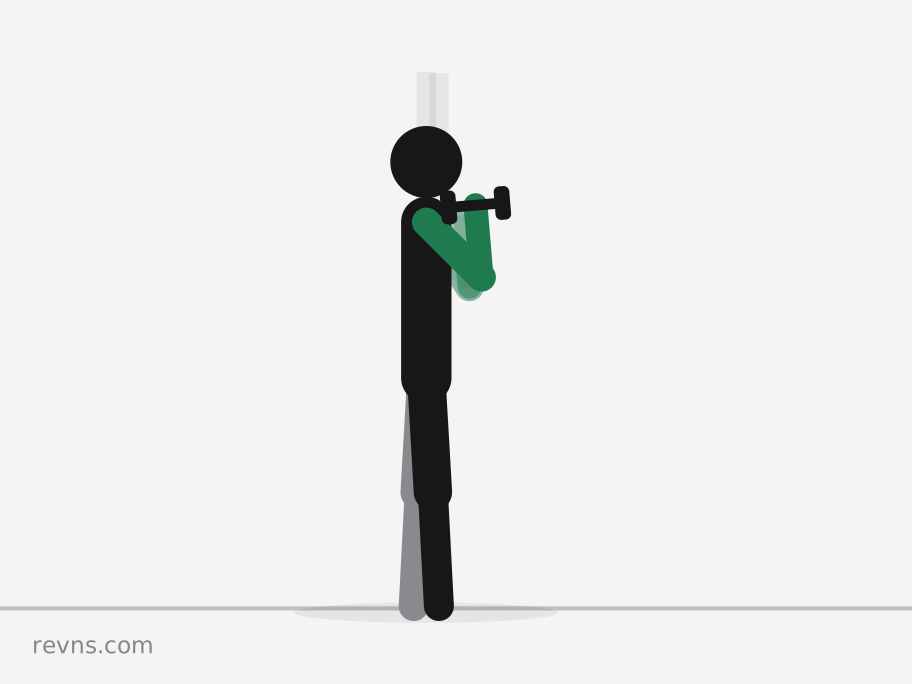
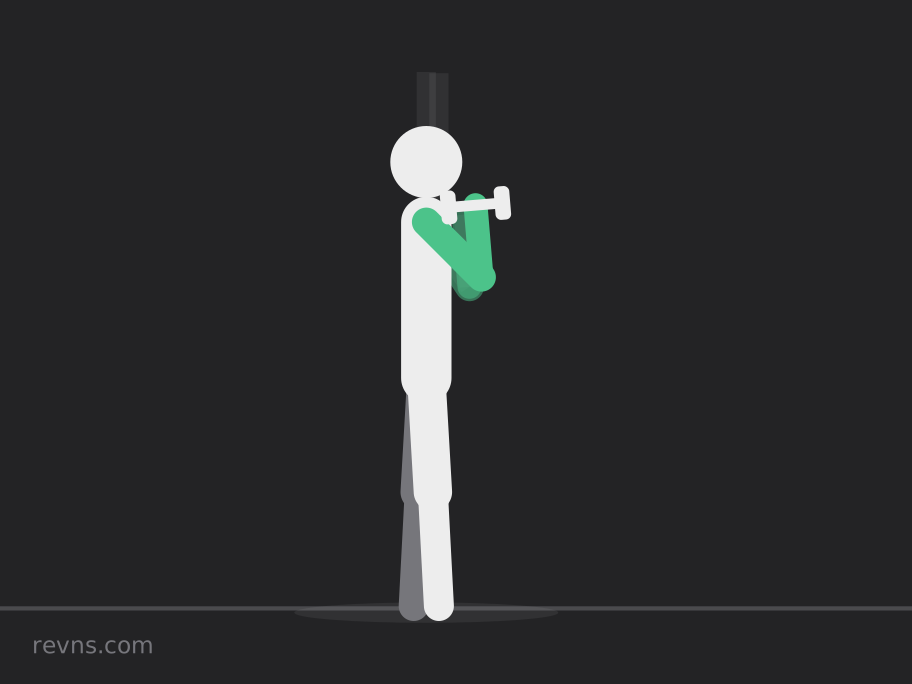
How to do overhead tricep extensions with good form
- Stand or sit tall; ribs over hips; brace the core lightly.
- Hold one dumbbell with both hands (or one dumbbell per hand) overhead, elbows pointing forward.
- Keep upper arms still; only bend and straighten at the elbows.
- Lower the weight behind the head until you feel a stretch, without flaring elbows wide.
- Straighten the arms; exhale on the way up; lower for two to three seconds.
Common mistake: elbows drifting apart or lower back arching. Fix with a lighter weight and a shorter range.
Easier: bench dips with a short range on a sturdy chair. Harder: diamond push-ups when wrists allow. At home without dumbbells, see tricep exercises at home.
Tricep extensions vs pushdowns and skull crushers
Searchers often compare tricep extensions vs pushdowns or vs skull crushers. All three are elbow-extension moves; the angle changes which head feels the load.
Overhead extensions (dumbbell or cable behind the neck) lengthen the long head. Cable pushdowns keep elbows at the ribs — a stable line for high reps. Skull crushers use a horizontal upper arm; some people feel them in the elbows more than overhead work.
In practice: pick one overhead and one elbows-down move per week if equipment allows. If gym cables are busy, dumbbell overhead plus close-grip push-ups is enough for many beginners.
A simple tricep extensions workout plan (two days)
Run these after your main push (bench, press, dip or push-up work), not instead of it. Each arm block takes about 10 to 15 minutes.
Day A (after push or upper day)
| Exercise | Sets × reps | Rest |
|---|---|---|
| Tricep extensions (overhead dumbbell) | 3 × 8–10 | 90 s |
| Close-grip push-ups or knee push-ups | 2 × 8–12 | 60 s |
Day B (two or three days later)
| Exercise | Sets × reps | Rest |
|---|---|---|
| Lying skull crusher OR cable pushdown (if available) | 3 × 10–12 | 60 s |
| Tricep extensions (lighter burnout) | 1 × 12–15 | — |
Warm-up: one set of 15 reps with a very light dumbbell or band, plus arm circles. See how to warm up before a workout.
Log sessions in a workout log with sets and reps or simple workout tracker so load trends stay visible. Protein supports growth; use the protein calculator if daily targets are unclear.
Tricep extensions at home vs gym
At home: one or two dumbbells, or a resistance band looped overhead, cover overhead extensions. Pair with chair dips or floor push-ups from the home tricep routine.
At gym: add cable pushdowns and an EZ-bar skull crusher for variety. Machines can teach a fixed path; still stop if elbows ache.
Neither setting requires daily max loading. Two quality days beat six sloppy ones.
Benefits for women and older adults
Women gain the same lockout and functional benefits as men for strength training for women. Arm size still depends on genetics, total training volume and nutrition.
Adults over 50 often use lighter extensions to support overhead press and carrying tasks. Start with a band or single dumbbell; avoid locking the elbows violently if joint irritation appears.
What to do this week
- Add two working sets of tricep extensions after your next push session. Stop with two reps left.
- Log weight and reps for four weeks before judging progress.
- Keep one rest or easy day between hard upper-body days; see rest days.
- If the back of the elbow aches more than a week, reduce load and seek assessment if pain is sharp or swelling appears.
When to see a professional
Stop and get medical advice for sharp elbow or shoulder pain, numbness or tingling in the hand during extensions, visible swelling after training, or loss of strength that does not improve with a lighter week. This is general training guidance, not medical advice. Extensions are not treatment for tendonitis or nerve compression.

Related
- Tricep exercises at home: a six-move beginner routine with a chair
- Benefits of overhead press: what they train and a simple plan
- Leg press workout plan: benefits, muscles and a weekly routine
- Benefits of bicep curls: what they train and a simple plan
- Benefits of dips: what they train, how often and a simple push plan
- How long to rest between sets: strength, muscle and endurance
- Tricep extensions exercise library page
This is general training guidance, not medical advice.
Sources
- Bull FC et al. WHO Guidelines on Physical Activity and Sedentary Behaviour. Br J Sports Med 2020.
- American College of Sports Medicine. ACSM's Guidelines for Exercise Testing and Prescription, 11th ed. Wolters Kluwer.
- Grgic J et al. The effects of short versus long inter-set rest intervals in resistance training on measures of muscle hypertrophy: A systematic review. Eur J Sport Sci 2017.
- Lopez P et al. Resistance Training Load Effects on Muscle Hypertrophy and Strength Gain: Systematic Review and Network Meta-analysis. Med Sci Sports Exerc 2021.
Terms in this post
revns publishes training and nutrition guidance, not medical advice. See a clinician for symptoms, injury or a medical condition. Accurate as of November 22, 2026.