Benefits of overhead press: what they train, how often and a simple plan
Benefits of overhead press: shoulder strength, lockout power and core bracing for pushes. Sets, reps, how often per week and a two-day shoulder plan for home or gym.
revns editorial · Published November 22, 2026 · 9 min read
Overhead press is a vertical compound push for shoulders and triceps with core bracing. Train it 1–2 hard days a week, 2–4 sets of 6–12 reps; stop if shoulder pain persists.
The main benefits of overhead press are stronger shoulders and triceps for any lift you push overhead, better core bracing when the spine stays stacked, and carry-over to sport and daily tasks such as shelving or swimming. An overhead press — the vertical push shown on our exercise page — is a compound push: several joints and muscles share the load. Most adults do well with one or two press sessions a week, 2 to 4 sets of 6 to 12 reps, and slow load increases. Pair it with pulls so the back stays balanced.
TL;DR
| Question | Short answer |
|---|---|
| What does it train? | Deltoids, triceps, upper traps, core stabilisers |
| Why do it? | Overhead strength, lockout power, stacked posture under load |
| How often? | 1–2 hard days a week, not daily heavy pressing |
| Sets and reps | 2–4 × 6–12, strict form; see rest between sets |
| Progress | Add reps, then weight; progressive overload |
| Who should modify? | Ongoing shoulder, neck or wrist pain: change angle or get assessed |

What muscles does overhead press work?
In a standing or seated overhead press, you push a barbell, dumbbells or kettlebells from shoulder level toward the ceiling. The anterior and lateral deltoids produce most of the lifting force. Triceps extend the elbow in the top half. Upper trapezius and serratus anterior help upward rotation of the shoulder blade so the arm can finish overhead without pinching.
The rotator cuff keeps the ball centred in the socket. You do not feel it as a burn, but weak or tired cuff muscles are one reason presses feel unstable. The core (abdominals, obliques, erector spinae) fights extension: if the ribs flare and the lower back arches hard, the weight moves but the spine pays the price.
That is why coaches call overhead press a vertical compound exercise: hips, knees and ankles stay relatively quiet in a strict version, but the trunk still works isometrically. A push press or jerk adds leg drive; this guide focuses on the strict pattern most beginners learn first.
What are the benefits of overhead press?
Overhead strength for life and sport
Anything you lift above your head uses the same shoulder flexion and elbow extension. Carrying a suitcase into an overhead locker, pressing a surfboard, serving in tennis or finishing a swimming stroke all benefit when the shoulders and triceps are stronger. Pressing does not replace skill practice, but it builds capacity.
Balanced upper-body pushing
Programmes built around horizontal pushes such as bench press or push-ups load the chest and front shoulders horizontally. Overhead press adds vertical volume so the deltoids see work from another angle. Many people run a 1:1 push-to-pull ratio over the week (press plus push-ups versus rows or pull-ups). Shoulder balance reduces the chance that the front of the shoulder does all the work.
Core and posture under load
A strict press teaches ribs down, glutes lightly on, gaze forward. That bracing transfers to squats, deadlifts and carries. Studies of resistance training often report improved trunk endurance alongside limb strength because the torso must stabilise heavy lifts. Overhead pressing is one of the simplest ways to practise that stack without a maximal squat on your back.
Bone and function in line with guidelines
The WHO recommends that adults do muscle-strengthening activities on at least two days per week that work all major muscle groups. Vertical pressing counts toward shoulder and arm work when it is part of a balanced week that also hits legs, back and hips. Strength supports function as you age; overhead press alone does not cover the whole body.
Measurable progress for lifters
Load on the overhead press rises slowly but steadily in novices. Tracking bar weight or dumbbell pairs is an easy win on an upper-body day. It pairs naturally with lateral raises or face pulls for shoulder health when those movements stay pain-free.
Is overhead press the same as shoulder press or military press?
Yes, for most gym purposes. Coaches use overhead press, shoulder press, OHP and military press for a vertical push. Military press traditionally means standing, feet together, minimal leg drive; some gyms use the name for any barbell press. Dumbbell shoulder press allows each arm to find a comfortable path and is often easier on stiff shoulders.
| Name | Typical meaning |
|---|---|
| Overhead press (OHP) | Any vertical press overhead |
| Shoulder press | Same pattern; often seated or dumbbell |
| Military press | Strict standing barbell press, little leg |
| Push press | Leg dip then drive; more weight, less isolation |
Searchers ask "overhead press vs shoulder press" — compare the movement, not the label. If pain appears with a barbell but not with dumbbells, the variation matters more than the name.
Is overhead press a compound exercise?
Yes. Shoulder flexion and elbow extension both move, and the trunk stabilises. That is why it belongs early in a session when you are fresh, similar to squats or rows. Isolation work such as lateral raises can follow when you want extra delt volume without loading the spine again.
Are the benefits of overhead press worth it compared with only push-ups?
For overhead-specific goals, usually yes. Push-ups and bench presses build horizontal pushing strength. They train the front deltoid but not the same vertical lockout line. If you never press overhead, shelf heights and shoulder flexion range can lag even when push-ups feel strong.
You can skip barbell overhead work if landmine presses, high-incline dumbbell press or pike push-ups progress without pain and match your sport. Overhead barbell work is optional but efficient when shoulders tolerate it.
A 2021 network meta-analysis in Medicine and Science in Sports and Exercise (Lopez et al., 28 studies in healthy adults) found that load to failure can build size and strength without one rep range winning every outcome; higher loads tended to edge strength more. For overhead press, 6 to 12 reps with 2 to 3 reps in reserve is a practical starting band, aligned with ACSM beginner guidance.
How often should you overhead press?
One or two hard sessions per week suits most people who also squat or deadlift and train the back. Pressing heavy three days in a row often irritates shoulders and elbows without extra recovery.
| Weekly schedule | Who it suits |
|---|---|
| 1 press day | Full-body 3×/week, busy schedules |
| 2 press days | Upper-lower or push-pull-legs splits |
| Press every session | Usually too much; alternate with incline or landmine |
Space hard press days at least 48 hours apart unless one day is light technique work. On weeks with poor sleep or high life stress, cut a set rather than chase weight; see stress, sleep and training load.
How many sets and reps of overhead press?
| Goal | Sets × reps | Rest | Notes |
|---|---|---|---|
| Strength base | 3–4 × 5–8 | 2–4 min | After warm-up sets; barbell or heavy dumbbells |
| General size and strength | 3 × 8–10 | 90–120 s | Default for most adults |
| Technique or lighter day | 2–3 × 10–12 | 60–90 s | Dumbbells, controlled tempo |
Weekly direct pressing sets for shoulders often land around 6 to 12 working sets when you also do push-ups or bench work. More is not always better if elbows or shoulders complain.
Rest: compound overhead work benefits from 2 to 3 minutes between hard sets so the triceps and deltoids recover enough to keep form; see how long to rest between sets.
How to do overhead press with good form
- Rack the bar at chest height or hold dumbbells at shoulder level, palms forward or slightly angled.
- Set feet hip-width, ribs over pelvis, glutes engaged, brace the core without holding your breath the whole set.
- Press straight up or slightly back so the bar finishes over the mid-foot; head moves forward slightly at the top only if needed.
- Lock out elbows without shrugging the ears to the ceiling; lower under control to the collarbone or ear level.
- Stop the set if the lower back arches hard or the bar drifts forward.
Common mistake: leaning back and turning the press into an incline bench. The fix is lighter weight, a tighter brace and pausing at the bottom.
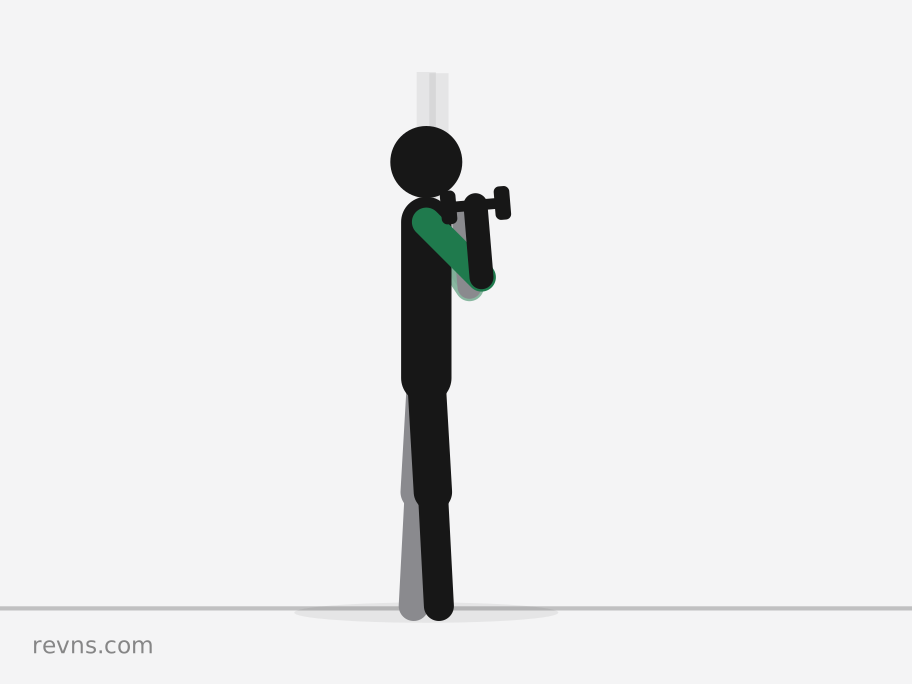
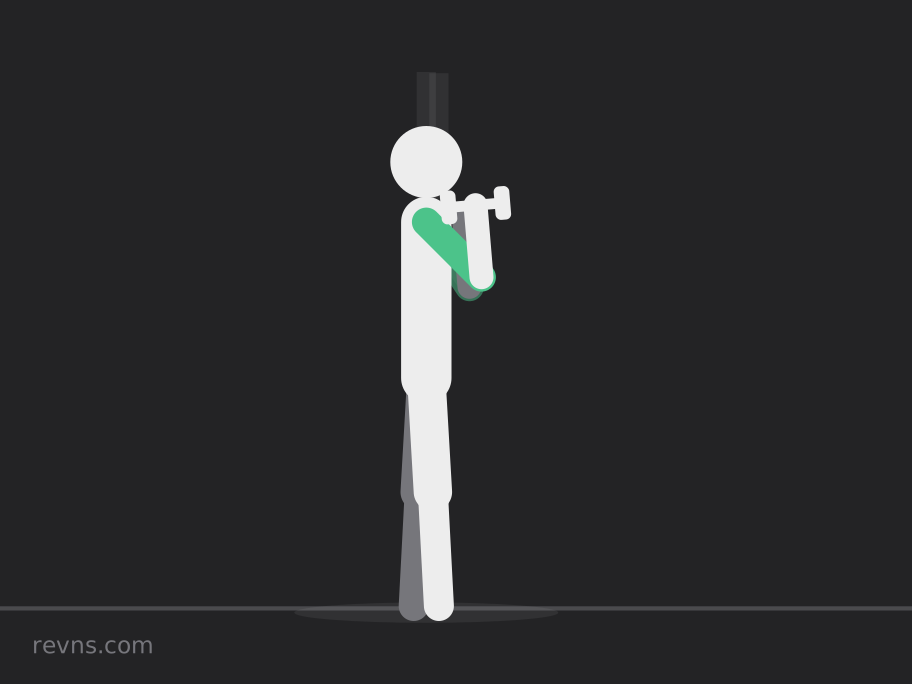
Easier: seated dumbbell press, landmine press, or pike push-ups for bodyweight. Harder: standing barbell press from the rack, tempo press (3-second lowering), or push press only after strict form is solid.
A simple overhead press workout plan (two days a week)
Use this on upper-body or push days, after a warm-up, before arm isolation. Each session adds roughly 20 minutes of shoulder work.
Day A (after legs or full-body day)
| Exercise | Sets × reps | Rest |
|---|---|---|
| Overhead press (dumbbell or barbell) | 3 × 8–10 | 2 min |
| Lateral raises | 2 × 12–15 | 60 s |
Day B (2–3 days later)
| Exercise | Sets × reps | Rest |
|---|---|---|
| Incline dumbbell press OR landmine press | 3 × 8–10 | 90 s |
| Overhead press (lighter) | 2 × 10–12 | 90 s |
Warm up: arm circles, band pull-aparts and two empty-bar or light dumbbell sets of 8. See how to warm up before a workout.
Recovery: shoulders grow with food, sleep and pulls. Regular meals with enough protein across the day fit most diets, including vegetarian and vegan plates. Use the protein calculator if unsure of daily protein; log loads in a workout log or simple workout tracker.
Benefits of overhead press for women
Women gain the same functional benefits: overhead strength, bone-loading through the WHO strengthening recommendation, and support for strength training for women. Dumbbells let each shoulder find a path that feels safe; machines can teach the line before free weights.
Heavy overhead pressing does not instantly build bulky shoulders; muscle gain is slow and depends on genetics, total volume and nutrition. Pair presses with rows or band face pulls so the back stays as strong as the front.
Is overhead press safe? When to change or stop
Many people press for years without injury when load rises gradually. Red flags:
- Pinching at the front of the shoulder every rep
- Pain radiating to the neck or down the arm
- Numbness in the hand during or after sets
- Pain that does not ease within a week of lighter work
Try higher incline, neutral-grip dumbbells, single-arm landmine or shorter range before abandoning vertical pushing entirely. Persistent symptoms need a clinician or physiotherapist, not a heavier drop set.

How do you track overhead press progress?
Write down the weight, the reps and how many reps you had left for each set. Change one thing at a time: add a rep first, then add weight once every set reaches the top of your rep range. If a session feels off, repeat the same numbers instead of forcing a jump.
What to do this week
- Add two sets of overhead press on your next upper day; stop with 2–3 reps left in the tank.
- Film one set from the side: check for excessive lean-back.
- Log weight and reps for four weeks before judging progress.
- Keep one full rest or easy day before the next hard upper session; see rest days.
When to see a professional
Seek medical advice for shoulder pain that wakes you at night, swelling after training, loss of overhead range that does not return after a deload, repeated dislocation feeling, or chest pain during effort. This is general training guidance, not medical advice. Pressing is not treatment for rotator cuff tears or impingement diagnosed by a clinician.
Related
- Benefits of bicep curls: what they train, how often and a simple plan
- Benefits of sumo deadlifts: what they train, sumo vs conventional and a simple plan
- Tricep extensions workout plan: benefits and a weekly routine
- Benefits of dips: what they train, how often and a simple push plan
- Strength training for beginners: the first eight weeks
- Progressive overload in plain words
- How long to rest between sets: strength, muscle and endurance
- Overhead press exercise library page
This is general training guidance, not medical advice.
Sources
- Bull FC et al. WHO Guidelines on Physical Activity and Sedentary Behaviour. Br J Sports Med 2020.
- American College of Sports Medicine. ACSM's Guidelines for Exercise Testing and Prescription, 11th ed. Wolters Kluwer.
- Lopez P et al. Resistance Training Load Effects on Muscle Hypertrophy and Strength Gain: Systematic Review and Network Meta-analysis. Med Sci Sports Exerc 2021.
- Saeterbakken AH, Fimland MS. Effects of body position and loading modality on muscle activity and strength in shoulder presses. J Strength Cond Res 2013.
- NHS. Shoulder pain and common causes. Updated 2024.
Terms in this post
revns publishes training and nutrition guidance, not medical advice. See a clinician for symptoms, injury or a medical condition. Accurate as of November 22, 2026.