Benefits of sumo deadlifts: what they train, sumo vs conventional and a simple plan
Benefits of sumo deadlifts: glutes, quads and a shorter bar path versus conventional. Who they suit, sets, reps, weekly plan and when to see a clinician.
revns editorial · Published November 22, 2026 · 9 min read

Sumo deadlifts use a wide stance and hands inside the knees. They emphasize quads and glutes, shorten bar travel versus conventional style, and fit lifters who want a more upright pull.
The main benefits of sumo deadlifts are strong glutes and quads, a shorter vertical bar path than conventional pulls, and a more upright torso that some lifters find easier to brace. They are a compound hip hinge, not a replacement for sleep, food or a full leg programme. Most adults do well with one to two hard deadlift days a week, 3 to 5 sets of 3 to 8 reps at heavy-but-clean loads, and slow increases via progressive overload. See the sumo deadlift demo, then use the plan below.
TL;DR
| Question | Short answer |
|---|---|
| What do sumo deadlifts train? | Glutes, quads, hamstrings, adductors, grip and torso bracing |
| Versus conventional? | Sumo: wider stance, more upright trunk, ~25–40% less vertical bar travel in elite lifters (Escamilla 2000) |
| Back-friendly? | Sometimes, for some bodies; not a guarantee |
| How often? | 1–2 heavy hinge days/week for most people |
| Sets and reps | 3–5 × 3–8 for strength; 2–4 × 6–10 when learning |
| Who should modify? | Pregnancy, acute back pain, diastasis: get clinician clearance first |

What are the benefits of sumo deadlifts?
Benefits of sumo deadlifts include direct loading of the glutes and quadriceps, training the adductors in a wide stance, and finishing the pull with a more vertical trunk than a typical conventional deadlift. In competition and gym settings, they also let some lifters handle heavy loads with a bar path that stays closer to the body's centre of mass.
Shorter bar path and less vertical work
Escamilla and colleagues filmed 12 sumo and 12 conventional lifters at a national powerlifting championship and published a three-dimensional analysis in Medicine & Science in Sports & Exercise in 2000. The sumo group used a wider stance (about 70 ± 11 cm versus 32 ± 8 cm for conventional), more turned-out feet, and a more vertical trunk and thigh at liftoff and when the bar passed the knees. Vertical bar distance, mechanical work and predicted energy expenditure were roughly 25 to 40 percent greater in the conventional group for the same completed lifts. That does not mean sumo is always "easier"; it means the bar travels farther in conventional style in that sample.
More upright posture
The same 2000 study reported 5 to 10 degrees greater vertical trunk and thigh positions in sumo at key points in the pull. A more upright torso can help lifters who struggle to keep a neutral spine in narrow-stance pulls, though form still depends on bracing skill, hip mobility and individual anatomy.
Quad and adductor emphasis
In a follow-up EMG study in Medicine & Science in Sports & Exercise in 2002, Escamilla and colleagues had 13 collegiate football players perform sumo and conventional deadlifts at a 12-repetition maximum intensity. Overall EMG activity from vastus medialis, vastus lateralis and tibialis anterior was significantly greater in sumo, while medial gastrocnemius activity was significantly greater in conventional. Coaches sometimes choose sumo when quad strength or hip adductor capacity is a priority.
Glute and grip strength for training and sport
Sumo deadlifts remain a standard way to build hip extension strength for powerlifting, field sports and general training. Grip is trained under heavy isometric load; straps are optional for accessory work but not for learning bracing. Pair sumo days with how to warm up before a workout that includes hip and ankle mobility.
Fits WHO weekly strength targets
The WHO 2020 guidelines recommend adults do muscle-strengthening activities on two or more days a week that work major muscle groups. One or two deadlift sessions, inside a balanced week that also trains push, pull and legs, count toward that target.

What muscles do sumo deadlifts work?
A sumo deadlift is a wide-stance barbell hinge. Primary contributors include:
| Muscle group | Role in sumo |
|---|---|
| Gluteus maximus | Hip extension and abduction at lockout |
| Quadriceps | Knee extension from a more bent-knee start |
| Hamstrings | Hip extension; co-contract with quads |
| Adductors | Stabilize wide knees-out position |
| Erector spinae | Maintain neutral spine under load |
| Forearms and grip | Hold the bar |
The 2002 Escamilla EMG paper showed greater quadriceps and tibialis anterior recruitment in sumo versus conventional at matched relative intensity, and greater calf (medial gastrocnemius) recruitment in conventional. Hamstrings and glutes work hard in both styles; differences are a matter of degree and setup, not one style skipping the posterior chain.
Sumo deadlift vs conventional: which is better?
Neither style wins for everyone. Escamilla's 2000 biomechanics paper found ankle and knee moments differed significantly between sumo and conventional groups, while hip moments did not differ significantly between groups of experienced lifters. In plain language: both styles load the hips heavily; they redistribute demand across knees and ankles differently.
| Factor | Sumo deadlift | Conventional deadlift |
|---|---|---|
| Stance | Wide, feet turned out | Hip-width or slightly wider |
| Hands | Inside knees, narrow grip | Outside legs, wider grip |
| Torso | Usually more upright at liftoff | Often more forward lean |
| Bar travel | Shorter vertical path in 2000 study | Longer vertical path |
| EMG highlight (2002) | More vastus, tibialis anterior | More medial gastrocnemius |
When is sumo deadlift better? Consider sumo if you have a long torso, limited ankle dorsiflexion, or you want extra quad volume without adding another squat variation. Consider conventional if you prefer a narrow setup, you compete only in conventional divisions, or conventional simply feels more stable after you have practiced both.
Is sumo deadlift cheating? No. It is a legal, standard technique in powerlifting and in most gyms. Claims that "only conventional counts" are culture, not physiology.
Are sumo deadlifts better for your back?
They can feel better for some lifters, but they are not automatically safer. A more upright trunk may change spinal loading for a given load, yet low-back comfort still depends on bracing, load management, sleep and prior injury. The 2000 study compared experienced competitors, not beginners with disc issues.
Use these practical rules:
- Learn bracing (360-degree pressure, ribs down) before you chase heavy plates.
- Keep the bar close to the legs through the pull.
- Stop if you feel sharp pain, numbness down the leg, or pain that worsens each session.
See how long to rest between sets for heavy pulls (often 2 to 3 minutes or more between work sets). If back pain persists despite lighter loads, see a clinician; switching style alone is not treatment.
Is sumo deadlift easier than conventional?
It is easier for some lifters and harder for others. Biomechanics work shows conventional pulls can require more total vertical work in trained powerlifters. Many people with sticky hips or long femurs lock onto sumo quickly; others feel cramped in a wide stance.
Test with empty bar or light kettlebell sumo deadlifts for a week before you decide. Your "easier" pull is the one where you can keep neutral spine, knee track over toes, and smooth bar speed for every rep in a set.
How to do a sumo deadlift with good form
- Set the bar over mid-foot with a wide stance; toes turned out enough that knees can track over feet.
- Hinge and grip the bar inside your knees, arms straight, lats engaged.
- Pull slack from the bar; wedge hips toward the bar without dropping the chest.
- Push the floor apart with your feet, stand by extending hips and knees together.
- Lock out tall without leaning back; lower by pushing hips back, bar skimming thighs.
Common mistakes: hips shooting up first (stiff-leg turn), knees caving, rounding the lumbar spine, or jerking the bar. Fix with lighter loads and video from the side.
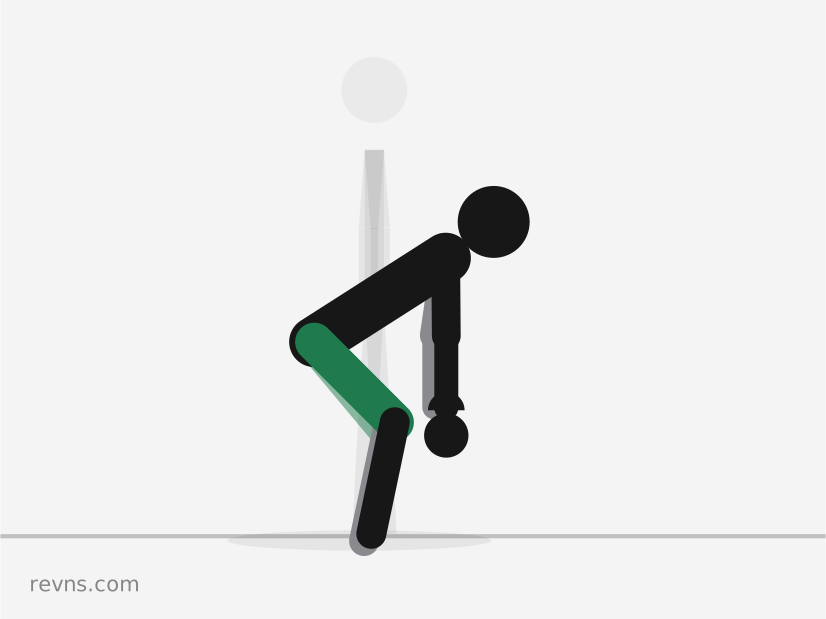
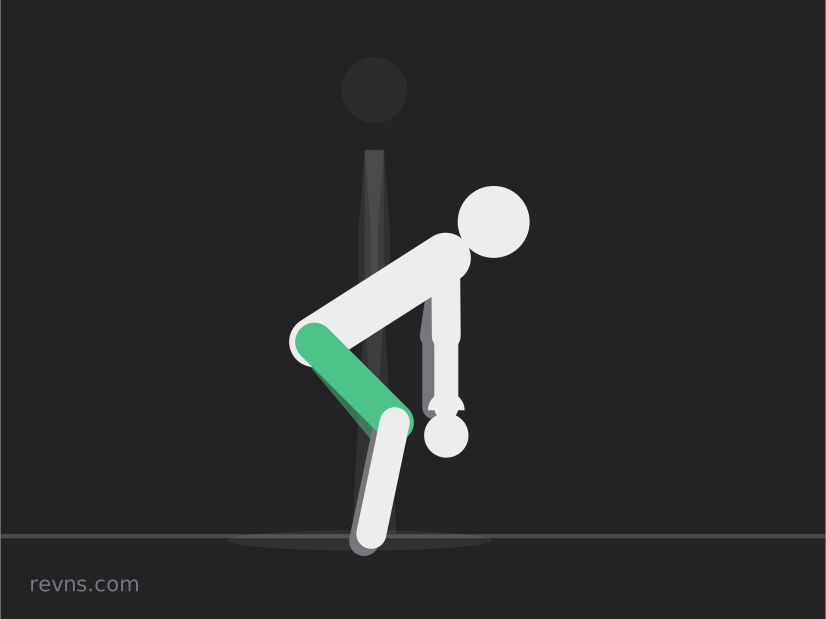
Easier: Kettlebell deadlifts or conventional deadlifts with a narrower stance. Harder: heavier loads with one-rep-max estimates tracked slowly over months.
How often should you do sumo deadlifts?
One to two deadlift-focused days per week suit most recreational lifters. Heavy hinges stress the nervous system and connective tissue; stacking maximal pulls on consecutive days often stalls progress. Align with rest days: how many you need: keep at least one full rest or easy day between hard lower-body sessions.
| Experience | Sumo frequency | Notes |
|---|---|---|
| Beginner | 1×/week | Learn brace and rhythm; add rows and squats other days |
| Intermediate | 1–2×/week | One heavy, one moderate or technique day optional |
| In-season athlete | 1×/week or less | Protects joints when sport load is high |
Signs you need fewer deadlift days: rising resting heart rate, grip failing before back/legs, or bar speed slowing for two weeks at the same load. See overtraining symptoms.
How many sets and reps of sumo deadlifts?
| Goal | Sets × reps | Intensity | Rest |
|---|---|---|---|
| Learn technique | 3–5 × 5 | Light to moderate | 90–120 s |
| Strength | 3–5 × 3–5 | Heavy, 1–3 reps in reserve | 2–4 min |
| Muscle (accessory) | 2–4 × 6–10 | Moderate | 90–120 s |
Start with 3 sets of 5 at a load you could repeat for two more reps. Add 2.5 to 5 kg only when every rep looks the same. Film the last rep of each set; if form breaks, the set count is high enough.
A simple sumo deadlift workout plan (two days a week)
Use this on lower-body or pull days, after warm-up. Total time 25 to 40 minutes for deadlifts and accessories.
Day A — sumo focus
| Exercise | Sets × reps | Rest |
|---|---|---|
| Sumo deadlifts | 4 × 4 | 3 min |
| Romanian or kettlebell deadlift | 3 × 8 | 90 s |
| Plank or dead bug | 2 × 30–45 s | 60 s |
Day B — legs and support (2–3 days later)
| Exercise | Sets × reps | Rest |
|---|---|---|
| Squat or split squat pattern | 3 × 6–8 | 2 min |
| Row or lat pull | 3 × 8–10 | 90 s |
| Hip abduction or lateral band walk | 2 × 12–15 | 60 s |
Log loads in a workout log with sets and reps or a workout split tracker so hinge stress stays visible across the week.
Benefits of sumo deadlifts for women
Women gain the same bone and strength benefits as men from heavy compounds when form and recovery support it. Sumo does not "bulk" thighs overnight; muscle gain is slow and needs protein, sleep and overall volume. See strength training for women. During pregnancy or postpartum, get clinician guidance before maximal pulls; sumo stance width may need adjustment as the belly grows.
Sumo deadlift with dumbbells or kettlebells
No barbell? A single heavy kettlebell between the feet mimics the wedge pattern. Keep the stance only as wide as the floor and joints allow. The same muscles apply; load per hand is lower, so higher reps (8–12) are common. Progress to a bar when grip and brace are solid.
What to do this week
- Film 3 sets of 5 light sumo deadlifts; check knees tracking over toes and bar path.
- Add one sumo day to your split, or swap conventional for sumo for four weeks and compare bar speed.
- Log weight, sets and reps for four weeks before judging strength gains.
- Keep protein and sleep on target; use the protein calculator if unsure.
- If you feel dizzy, faint or have chest pain during pulls, stop and seek urgent care.
When to see a professional
Get medical advice before heavy deadlifting if you have active back or hip pain, recent surgery, pregnancy complications, osteoporosis with spine fragility, or numbness and tingling in the legs during lifts. This is general training guidance, not medical advice. Deadlift style is not a fix for disc injury or nerve compression.
Related
- Benefits of bicep curls: what they train and a simple plan
- Benefits of overhead press: what they train and a simple plan
- Progressive overload in plain words
- Strength training for beginners: the first eight weeks
- Forearm and grip strength exercises
- Sumo deadlifts exercise library page
This is general training guidance, not medical advice.
Sources
- Escamilla RF et al. A three-dimensional biomechanical analysis of sumo and conventional style deadlifts. Med Sci Sports Exerc 2000;32(7):1265–1275.
- Escamilla RF et al. An electromyographic analysis of sumo and conventional style deadlifts. Med Sci Sports Exerc 2002;34(4):682–688.
- Bull FC et al. WHO Guidelines on Physical Activity and Sedentary Behaviour. Br J Sports Med 2020.
- American College of Sports Medicine. ACSM's Guidelines for Exercise Testing and Prescription, 11th ed.
Terms in this post
revns publishes training and nutrition guidance, not medical advice. See a clinician for symptoms, injury or a medical condition. Accurate as of November 22, 2026.