Forearm and grip strength exercises: a five-move dumbbell routine
Forearm and grip strength exercises: five dumbbell moves with demos, sets, rest and how often. Wrist curls, carries and curls for home or gym.
revns editorial · Published November 22, 2026 · 9 min read
Forearm and grip strength exercises with dumbbells: five moves, two rounds, wrist flexors and extensors plus a heavy carry. Train at the end of a session, 2–3 days a week.
Forearm and grip strength exercises with dumbbells mean five moves in order: wrist curls, reverse wrist curls, hammer curls, reverse curls and farmer carries, usually for two rounds. You need one or two dumbbells and a bench or sturdy chair. The session takes about 25 minutes and suits anyone past the first month of lifting who wants stronger hands for rows, deadlifts and daily carries. Every move has a demo from the exercise library.
TL;DR
| Move | Sets × reps or time | Rest |
|---|---|---|
| Wrist curls | 2 × 12–15 each arm | 45 s |
| Reverse wrist curls | 2 × 12–15 each arm | 45 s |
| Hammer curls | 2 × 10–12 | 60 s |
| Reverse curls | 2 × 10–12 | 60 s |
| Farmer carry | 3 × 30–45 s walk | 60–90 s |
Train two or three days a week, always after your main lifts, with at least one rest day between hard grip days.
How do you do this forearm and grip workout?
Follow this order each session.
- Warm up for 3–4 minutes. Shake out the hands, make slow wrist circles both ways, then do ten easy band curls or very light bicep curls with a weight you could lift twenty times. The goal is blood flow, not fatigue.
- Round 1. Wrist curls (both arms), reverse wrist curls (both arms), hammer curls, reverse curls, then one farmer carry.
- Rest 60–90 seconds after the carry if you have energy for round 2.
- Round 2. Repeat the same order. In week one, skip round 2 if forearms feel pumped or grip fails on the carry.
- Cool down (optional). Open and close the hands ten times, then stretch the wrist gently with the arm straight in front of you.
Effort rule. Stop each rep set with one to three clean reps left. Carries end when your shoulders shrug, your walk shortens or you cannot keep an upright torso.
How often. Train this routine two or three non-consecutive days a week, for example Tuesday and Friday, or Monday, Wednesday and Saturday. The ACSM 2026 overview of resistance training prescription, synthesizing more than thirty thousand participants, recommends adults train major muscle groups at least twice weekly with at least two sets per exercise. Forearms already work on rows and deadlifts; this plan adds roughly ten to twelve direct sets across flexors, extensors and carries, which matches common hypertrophy guidance without duplicating a full arm day. See progressive overload in plain words for when to add weight.
When to progress. Add weight when you hit the top of the rep range on both sets with slow lowering, for two sessions in a row. On carries, add five to ten seconds or step up one dumbbell size when 45 seconds feels steady for three walks.
The moves
Each block lists what the move trains, steps, dose, a common mistake, and easier and harder options from the library.
1. Wrist curls
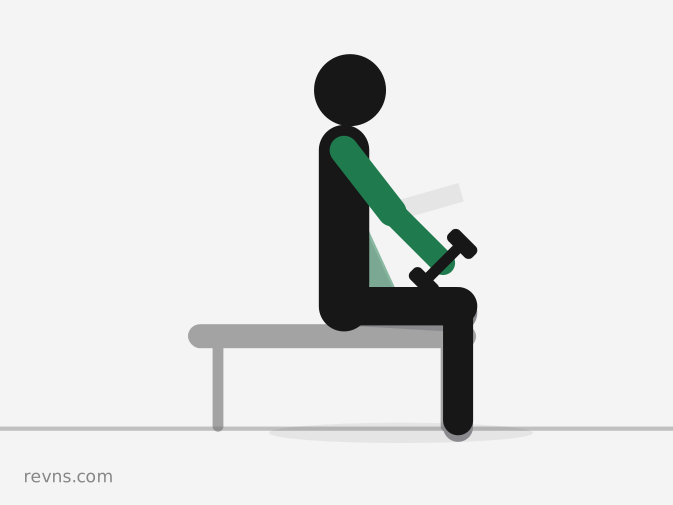
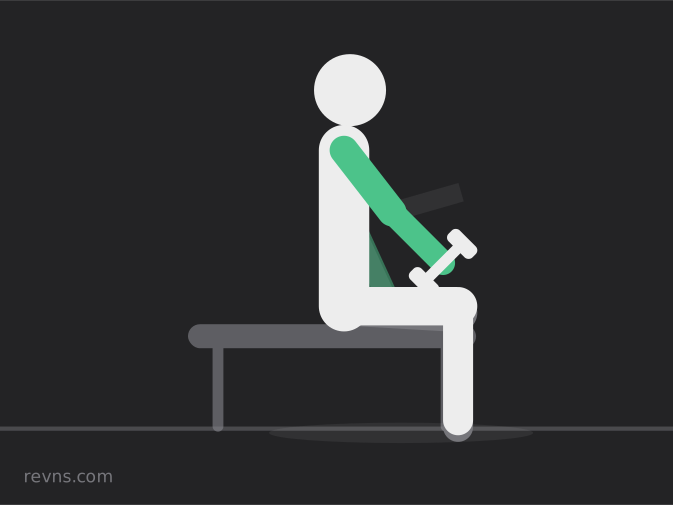
Wrist curls isolate the wrist flexors on the palm side of the forearm. They help closing grip—the kind you use holding a bar, a bag handle or a jar lid—and they pair well with heavier pulls because they add volume without loading the spine.
- Sit on a bench with a light dumbbell in one hand.
- Rest your forearm on your thigh, palm up, wrist just past your knee.
- Let the weight roll toward your fingertips.
- Curl the wrist up as high as it goes without lifting the forearm.
- Lower for about two seconds and repeat, then switch arms.
Do: 2 × 12–15 per arm, rest 45 s. Move on when: 15 slow reps on both sets for two sessions; add the smallest dumbbell increment. Common mistake: lifting the elbow off the thigh to shorten the range. Pin the forearm down and accept a smaller motion. Easier: band curls for blood flow only. Harder: hammer curls for longer-lever work.
2. Reverse wrist curls
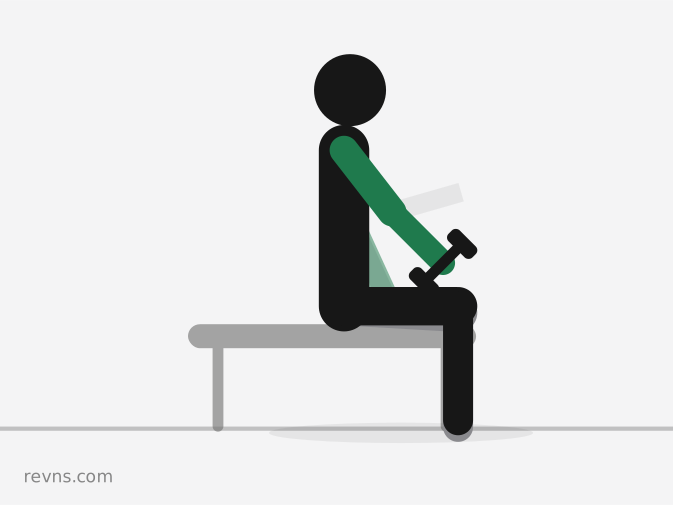
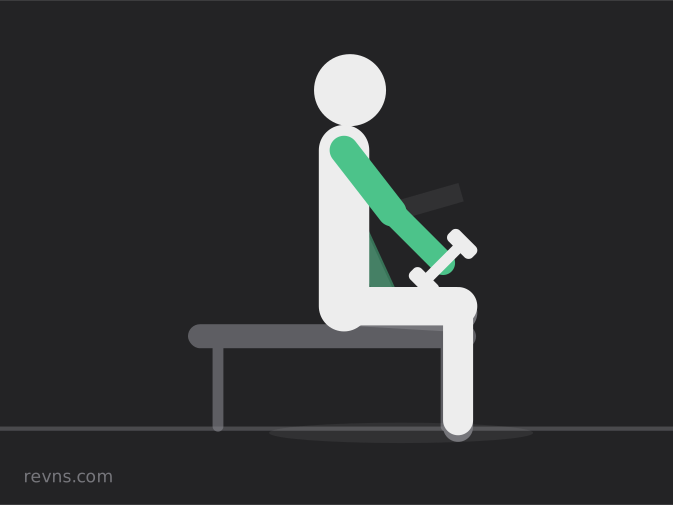
Reverse wrist curls train the wrist extensors on the back of the forearm. Most pulling and curling emphasizes flexors; a few sets here balance the lower arm and support keyboard, racket and bar work that keeps the wrist extended.
- Sit with a lighter dumbbell than you used on wrist curls.
- Rest your forearm on your thigh, palm down.
- Let the wrist hang toward the floor.
- Raise the back of the hand toward the ceiling.
- Lower slowly and repeat, then switch arms.
Do: 2 × 12–15 per arm, rest 45 s. Move on when: top reps feel smooth; add weight only on wrist curls first, then here. Common mistake: using the same load as wrist curls. Extensors are smaller—start around half the wrist-curl weight. Easier: wrist curls only for one week before adding these. Harder: reverse curls for elbow-level load.
3. Hammer curls
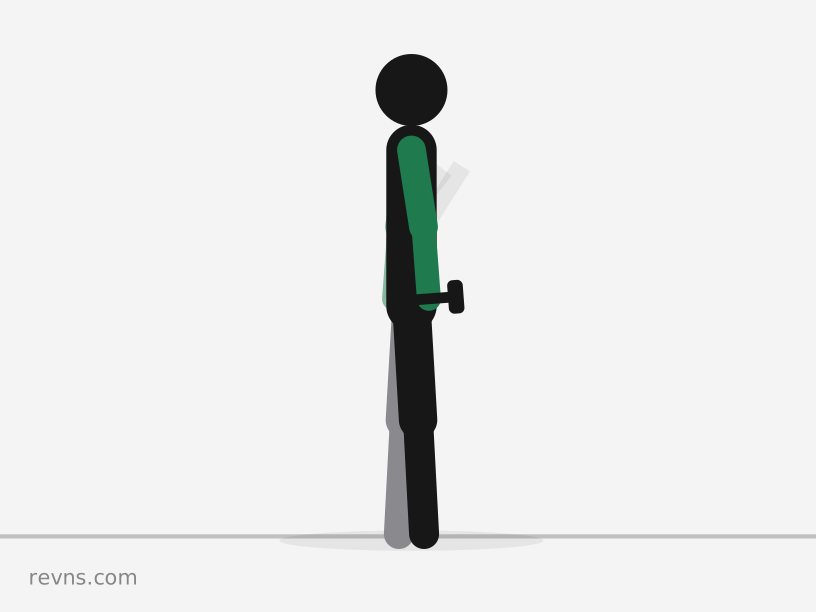
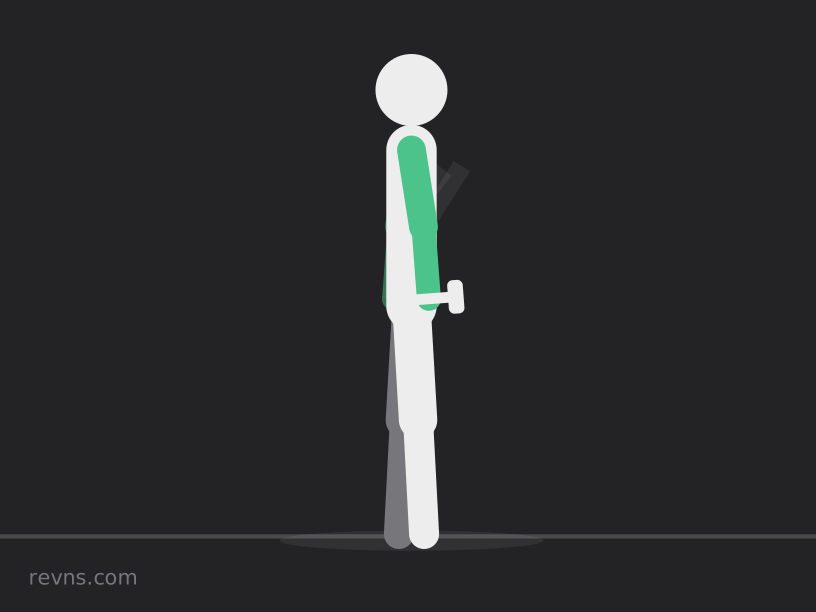
Hammer curls hit the brachioradialis, the thumb-side forearm muscle, plus the biceps with a neutral grip. That grip angle carries over to pull-ups, rows with parallel handles and suitcase carries.
- Stand tall with dumbbells at your sides, thumbs forward.
- Pin your elbows to your ribs.
- Curl both weights up without rotating the palms.
- Lower under control to straight arms.
Do: 2 × 10–12, rest 60 s. Move on when: 12 reps on both sets twice; add weight or one rep per set. Common mistake: letting the elbows drift forward. Brace your ribs and move only the forearms. Easier: bicep curls. Harder: concentration curls.
4. Reverse curls
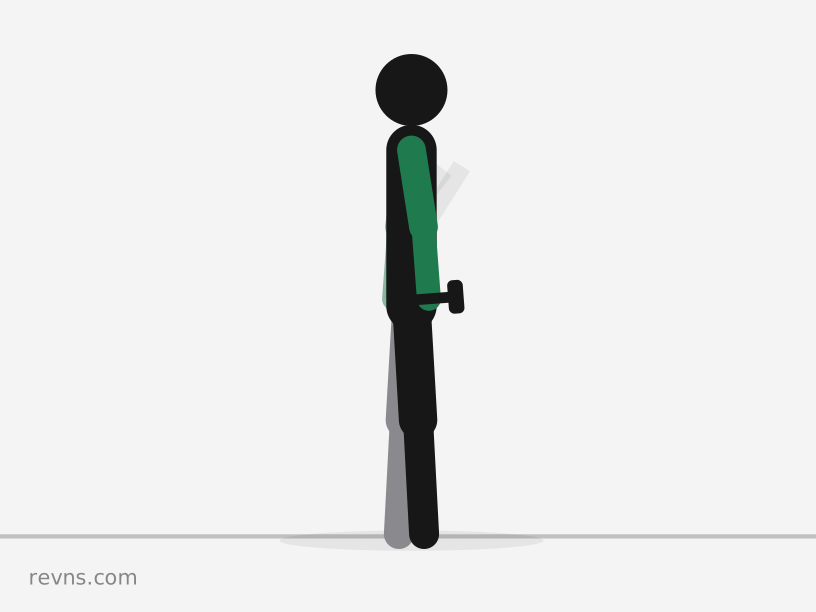
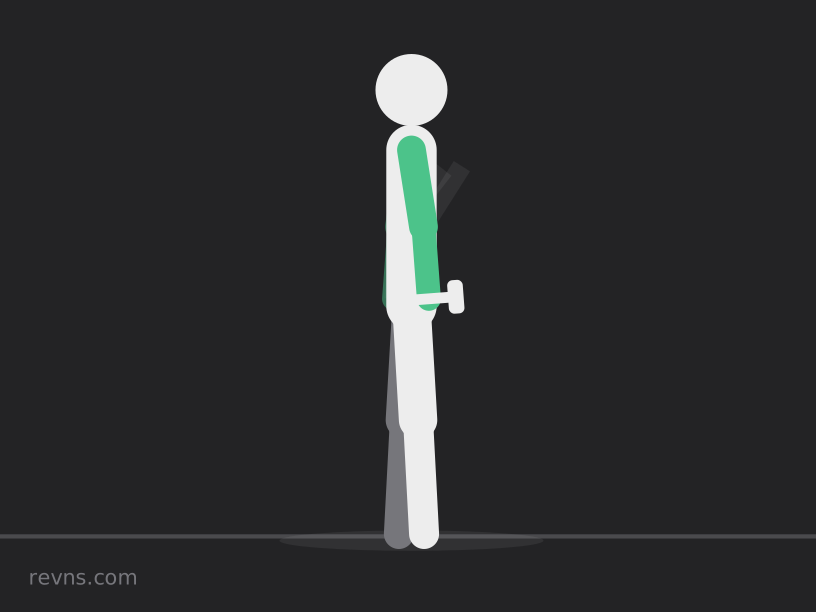
Reverse curls load the forearm extensors and brachialis through elbow flexion with a palms-down grip. They reinforce keeping the wrist straight under load, which helps deadlift double overhand grips before straps.
- Stand with dumbbells at your sides, palms facing back.
- Keep elbows at your sides.
- Curl up without turning the wrists.
- Lower slowly to full extension.
Do: 2 × 10–12, rest 60 s. Move on when: last reps slow but form stays strict; then add weight. Common mistake: swinging the torso. Take a half step back from the rack and brace your belly. Easier: hammer curls. Harder: concentration curls with strict tempo.
5. Farmer carry
The farmer carry builds crush and support grip under load while the shoulders and trunk stay tall. It is the most functional move in the list: it transfers to grocery bags, suitcase walks and heavy dumbbell rows.
- Pick up a heavy dumbbell in each hand.
- Stand tall, shoulders down, ribs stacked over the pelvis.
- Walk with short, quiet steps for the prescribed time.
- Set the weights down with a hip hinge, not a rounded back.
Do: 3 × 30–45 s, rest 60–90 s. Move on when: 45 s feels easy with level shoulders; increase weight or add ten seconds. Common mistake: shrugging the traps to hide grip fatigue. Shrugging means the set is over—rest, then go again with slightly less weight. Easier: one-handed carry with a lighter bell, switching sides halfway. Harder: heavier bells or upright rows on a separate back day—not in this finisher.
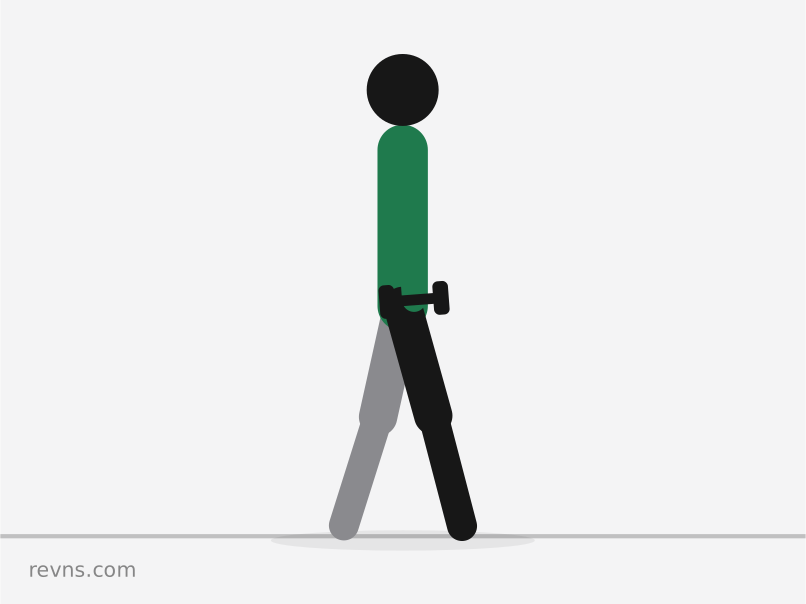
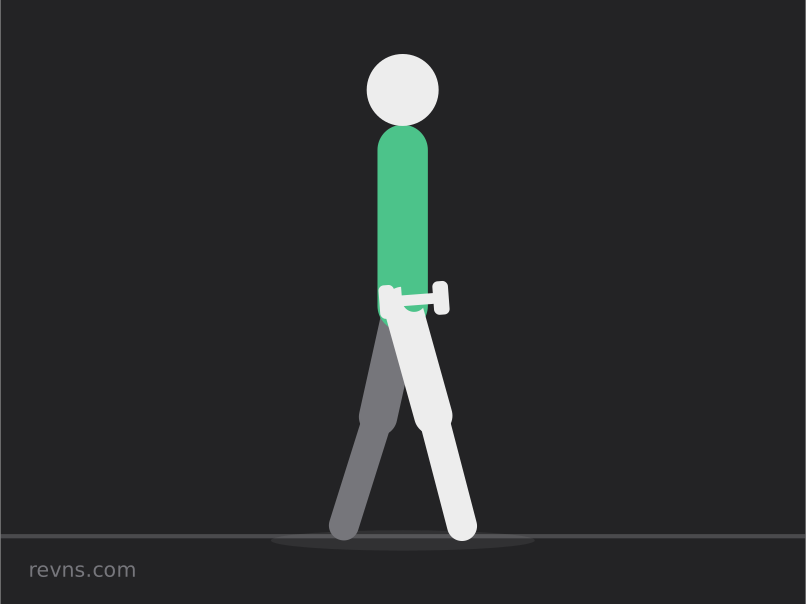
What are forearm and grip strength exercises?
Forearm and grip strength exercises are any drills that train the muscles from the elbow to the fingers. Flexors close the hand and curl the wrist. Extensors open the hand and extend the wrist. Brachioradialis and brachialis add thickness near the elbow on neutral and overhand curls. Support grip is holding a weight still or walking with it, as in the farmer carry.
Rows, pull-ups and deadlifts already stress these tissues. A dedicated dumbbell finisher makes sense when:
- The bar slips on deadlifts before your back gives out.
- Carry tasks (luggage, shopping bags) feel harder than your gym numbers suggest.
- You want more forearm size without adding another long arm day.
This routine keeps wrist isolation, elbow curls with different grips and loaded walking in one session so each function gets work. Competitor pages often list hangs or plate pinches; hangs need a bar, and pinches need plate pairs. With dumbbells only, wrist curls plus carries cover most home and hotel gyms.
What muscles do forearm and grip exercises work?
| Move | Main targets | What it helps in the gym |
|---|---|---|
| Wrist curls | Wrist flexors | Holding a bar, chin-up bar, mixed grip |
| Reverse wrist curls | Wrist extensors | Keeping the wrist neutral under load |
| Hammer curls | Brachioradialis, biceps | Neutral-grip rows and pull handles |
| Reverse curls | Brachialis, extensors | Overhand rows, deadlift overhand sets |
| Farmer carry | Hands, forearms, upper back, core | Rows, deadlifts, loaded walks |
Forearm size responds to weekly volume, not one epic burn-out day. Research synthesised in the ACSM 2026 position overview links higher weekly set counts to more hypertrophy, with diminishing returns past roughly eighteen to twenty sets per muscle group per week in meta-regression work cited there. Two or three sessions of this five-move finisher land near ten to twelve direct sets, which is a sensible add-on when pulls already supply indirect work.
How often should beginners versus trained lifters do grip work?
Beginners who still learn squats, hinges and pushes should finish one round of this routine once a week for two weeks, then add the second round. Keep wrist weights light until ten reps look identical on video.
Intermediates who train rows and deadlifts twice a week can run the full table twice weekly on pull or leg days. If you already do a long arm day workout at the gym, swap hammer and reverse curls there and keep only wrist work plus carries here so you do not double-count arm volume.
Who should skip the finisher? Anyone in acute wrist or elbow flare, pregnancy with heavy carries cleared only by a clinician, or people told to avoid gripping load after hand surgery. When in doubt, ask a physiotherapist.
What do most forearm workout pages miss?
Typical ranking pages list the same five moves but leave out order (wrist isolation before heavy elbow curls, carries last), extensor balance (reverse wrist curls at half the flexor load) and session placement (grip last so pulls stay crisp). They also rarely link each move to a demo you can check between sets. This guide adds those pieces and ties progression to carry time and rep tops, not guesswork.
Safety and when to stop
Forearm training is low impact, but wrists and elbows can still flare when load jumps too fast.
Check with a clinician or physiotherapist before this routine if you have:
- Tennis or golfer's elbow diagnosed in the last few months.
- Wrist fracture, carpal tunnel symptoms or numbness in the fingers.
- High blood pressure uncontrolled and you want maximal heavy carries.
Stop the session and seek care for:
- Sharp wrist or elbow pain during a curl or carry.
- Sudden loss of grip on one side with tingling.
- Swelling or bruising after a drop.
This is general training guidance, not medical advice.
Related
- Bicep curl: how to do it right, with beginner form drills and moving demos
- Benefits of bicep curls: what they train, how often and a simple plan
- Arm workout without weights: a six-move beginner routine at home
- Strength training for beginners: a simple plan for the first eight weeks
- Progressive overload in plain words
- How long to rest between sets: strength, muscle growth and endurance
Sources
- Currier BS et al. American College of Sports Medicine Position Stand. Resistance Training Prescription for Muscle Function, Hypertrophy, and Physical Performance in Healthy Adults: An Overview of Reviews. Med Sci Sports Exerc. 2026.
- ACSM. Updated resistance training guidelines and position stand summary. 2026.
- Bull FC et al. WHO Guidelines on Physical Activity and Sedentary Behaviour. Br J Sports Med 2020.
- Herrmann SD et al. 2024 Adult Compendium of Physical Activities. J Sport Health Sci 2024.
Terms in this post
revns publishes training and nutrition guidance, not medical advice. See a clinician for symptoms, injury or a medical condition. Accurate as of November 22, 2026.