Standing ab exercises: a six-move beginner routine at home with demos
Standing ab exercises for beginners at home: six bodyweight moves, two rounds, sets and rest, animated demos, and easier options—no mat or equipment.
revns editorial · Published November 21, 2026 · 9 min read
Standing ab exercises at home: six beginner moves on your feet, two rounds, reps and rest table, moving demos, WHO-aligned frequency, easier options per move.
Standing ab exercises for beginners at home are six bodyweight moves you do on your feet: standing marches, cross crunches, torso twists, bodyweight woodchops, side bends and step jacks, for two rounds with rest between moves. You need no equipment and no mat. The session takes about fourteen to eighteen minutes. Train it two or three non-consecutive days a week. Every move below has a moving demo in the exercise library.
TL;DR
| Move | Prescription | Rest |
|---|---|---|
| Standing marches | 20 per side (warm-up) | 30 s |
| Standing cross crunches | 10 per side | 30–45 s |
| Standing torso twists | 12 per side | 30–45 s |
| Bodyweight woodchops | 8 per side | 45 s |
| Standing side bends | 8 per side | 45 s |
| Step jacks | 16–20 total | 60 s between rounds |
Two rounds through rows 2–6 (row 1 is the warm-up each round). About 14–18 minutes with rests.
| Starting test | If you pass | If not yet |
|---|---|---|
| 20 slow standing marches per side without leaning back | Run the full two-round plan | Hold a chair; skip step jacks week one and add a second march set instead |
What are standing ab exercises?
Standing ab exercises train the muscles around your trunk — rectus abdominis, obliques, deep stabilisers and hip flexors — while you stay on your feet. That matters when getting down to a mat is awkward (tight hips, office clothes, shared gym floor), when wrists or shoulders dislike long planks, or when you want a low-impact core session that still raises breathing rate slightly.
On the floor, moves like crunches and dead bugs mostly challenge anti-extension and flexion with your back supported. Standing work adds balance, rotation under load and diagonal patterns that mirror reaching, twisting and lifting in daily life. Neither style is automatically “better”; they cover different skills.
The American College of Sports Medicine tells healthy novices to train each major muscle group about two to three days per week, with one to three sets of 8–15 reps for many exercises. The reps in this table sit in that range. The WHO 2020 physical activity guidelines also recommend muscle-strengthening activity on two or more days a week for adults. Slow, controlled standing reps count toward that target when you genuinely brace — not when you whip through a twist from the neck.
How do you do this standing ab workout?
Session structure
- Warm-up (2 minutes): standing marches, 20 per side at an easy pace; roll the shoulders and take four deep breaths.
- Round 1: cross crunch → torso twist → woodchop → side bend → step jacks. Rest as in the TL;DR table.
- Round 2: repeat moves 2–6. Repeat the march warm-up before round 2 if you cooled down.
- Cooldown (optional): forward fold for 20 seconds per side as a hamstring stretch, or walk slowly for one minute.
How often
Two or three non-consecutive days (for example Tuesday, Friday, Sunday). Stack it after an easy walk, on a day between heavy leg sessions, or as a short add-on to a 10 minute ab workout on a mat on another day — not back-to-back hard core every day.
When to progress
Progress when the last rep of each set looks like the first (no leaning back on cross crunches, no hip swivel on twists). Then change one lever per week:
- two more reps per side on one move;
- slower tempo (three seconds on each woodchop); or
- swap step jacks for high knees for twenty seconds if landings stay quiet and balance is solid.
Do not add reps, tempo and a harder finisher all at once.
Pace and breathing
Move slowly on cross crunches, twists and side bends. Competitive pages often use 40-on / 20-off timers; that can work later, but beginners usually learn form faster with counted reps and full rest. Breathe out on the effort (elbow to knee, twist, chop up, side bend down).
The moves
Each block lists steps, dose, one common mistake, and easier and harder options linked to the library.
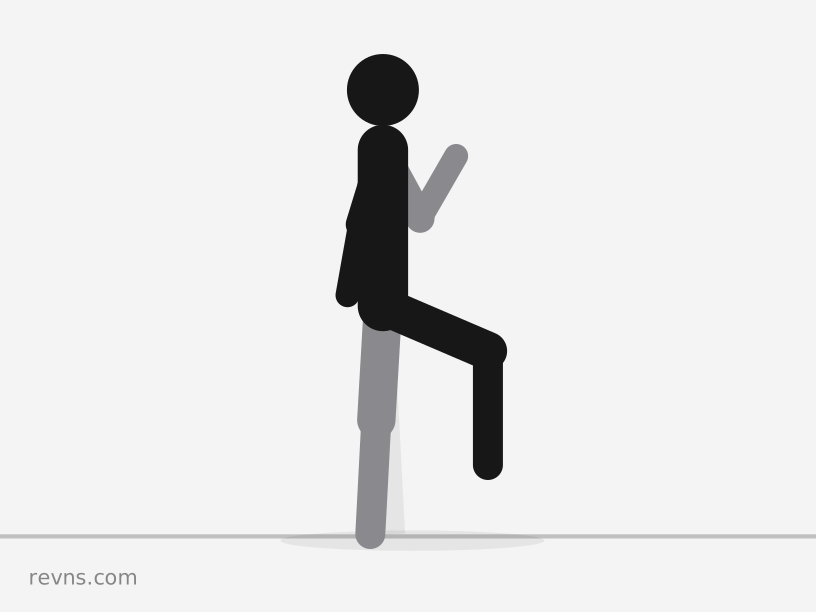
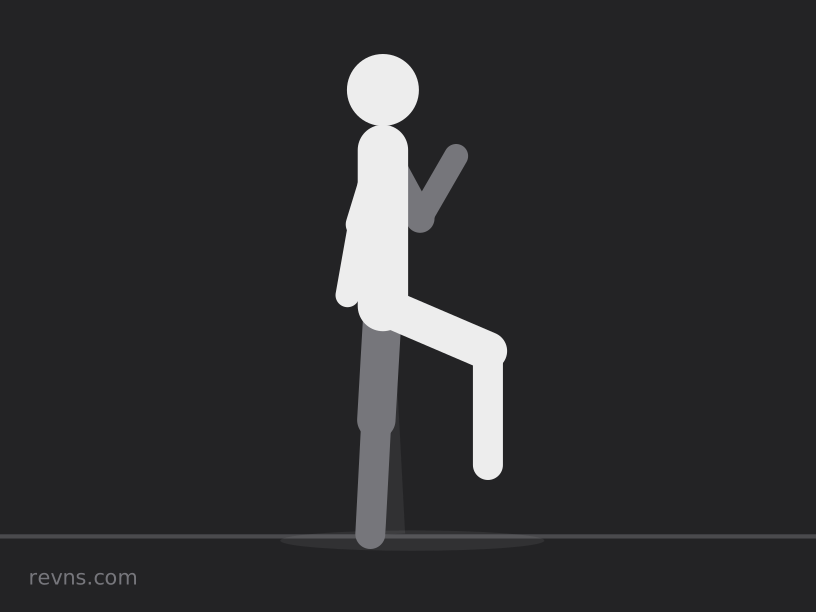
1. Standing marches
Standing marches warm the hip flexors and teach tall posture before you add rotation. They are also the easiest fallback when balance fails.
- Stand tall, feet hip-width apart; hold a chair or wall lightly if needed.
- Lift one knee toward hip height without leaning backward.
- Lower the foot and lift the other knee.
- Swing the opposite arm forward as you march.
- Keep the chest lifted and the core gently braced.
Do: 20 per side before each round (warm-up). Move on when: you can march 30 per side without holding the wall. Common mistake: leaning back to lift the knee. Stand tall and lift a smaller knee height. Easier: smaller knee lift, slower pace. Harder: step jacks or high knees.
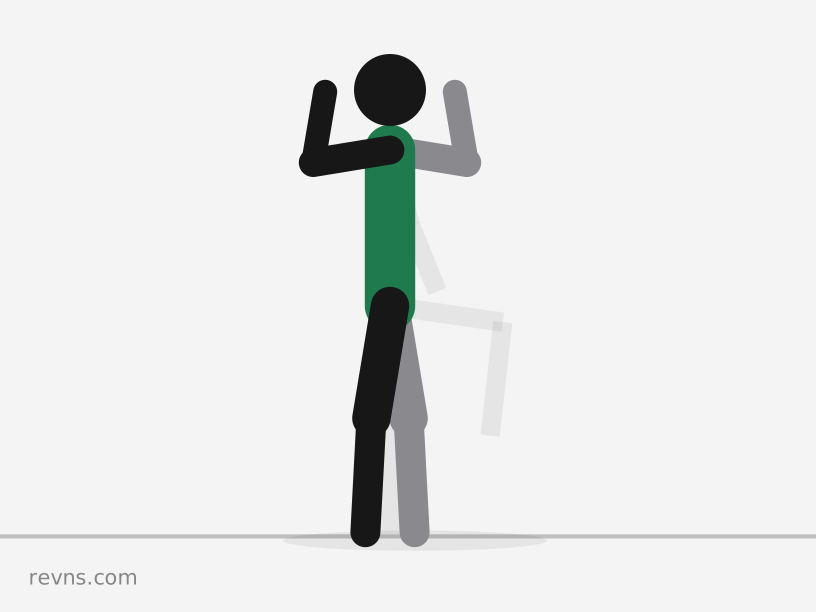
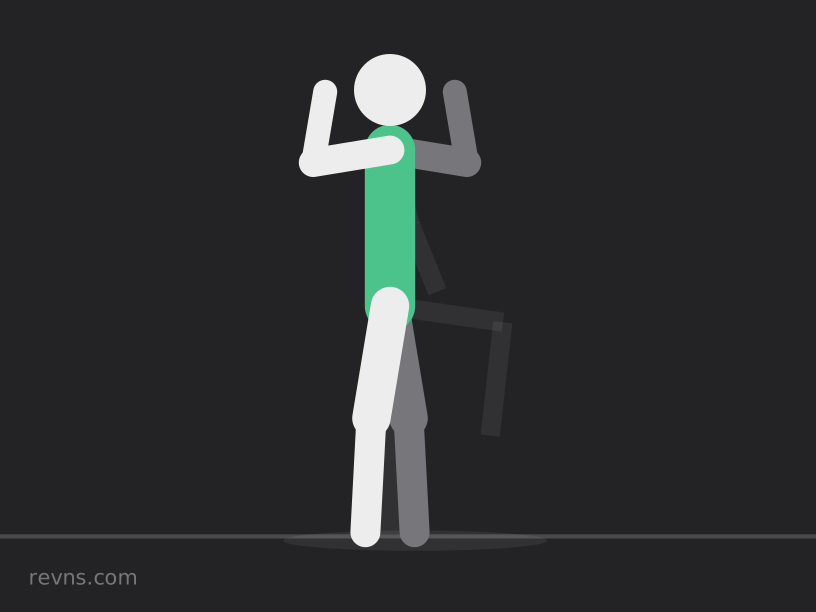
2. Standing cross crunches
Standing cross crunches pair knee flexion with trunk rotation — the same cross-body pattern as bicycle crunches, but on your feet.
- Stand with feet hip-width apart.
- Place your fingertips at your temples, elbows wide — do not pull on your neck.
- Shift weight onto one foot.
- Lift the opposite knee and rotate to bring the elbow toward that knee.
- Return to tall standing and alternate sides.
Do: 10 per side, rest 30–45 s. Move on when: 12 per side stay smooth without leaning back. Common mistake: pulling the head with the hands. Fingertips light; eyes forward. Easier: standing marches without the twist. Harder: high knees with a slower cross-body reach, or bicycle crunches on the floor.
3. Standing torso twists
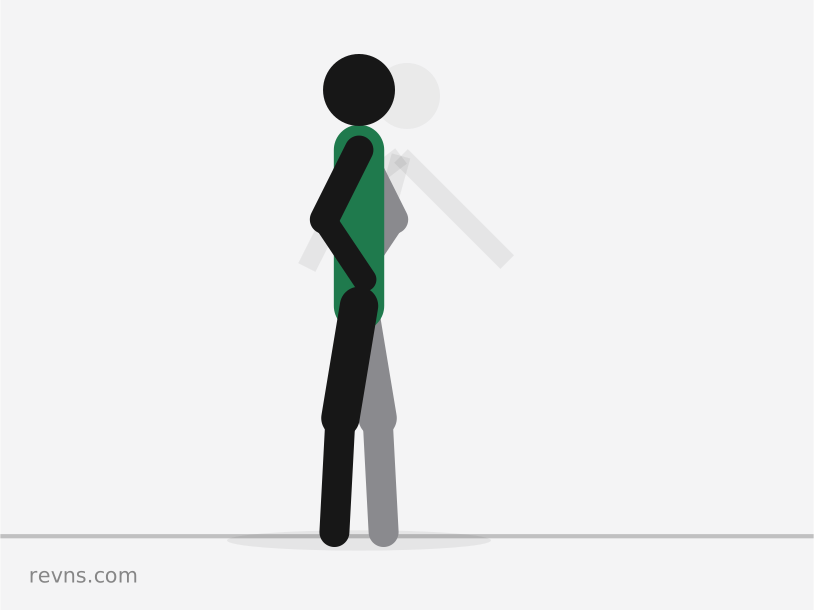
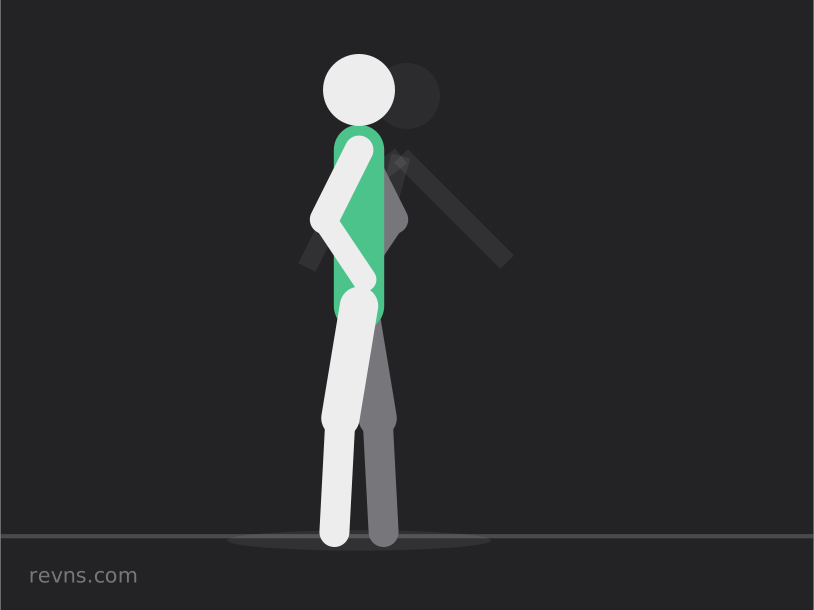
Torso twists train controlled rotation through the rib cage while the pelvis stays facing forward.
- Stand with feet hip-width apart, knees soft.
- Bring your palms together at chest height, elbows bent.
- Brace your stomach lightly.
- Rotate your ribs and shoulders to the right, pause, then to the left.
- Keep the hips still; the turn comes from the mid-back and ribs.
Do: 12 per side, rest 30–45 s. Move on when: 15 per side feel controlled with no lower-back pinch. Common mistake: swiveling the hips instead of the ribs. Glue the feet and turn a smaller arc. Easier: smaller range, hands on hips. Harder: bodyweight woodchops or Russian twists on the floor.
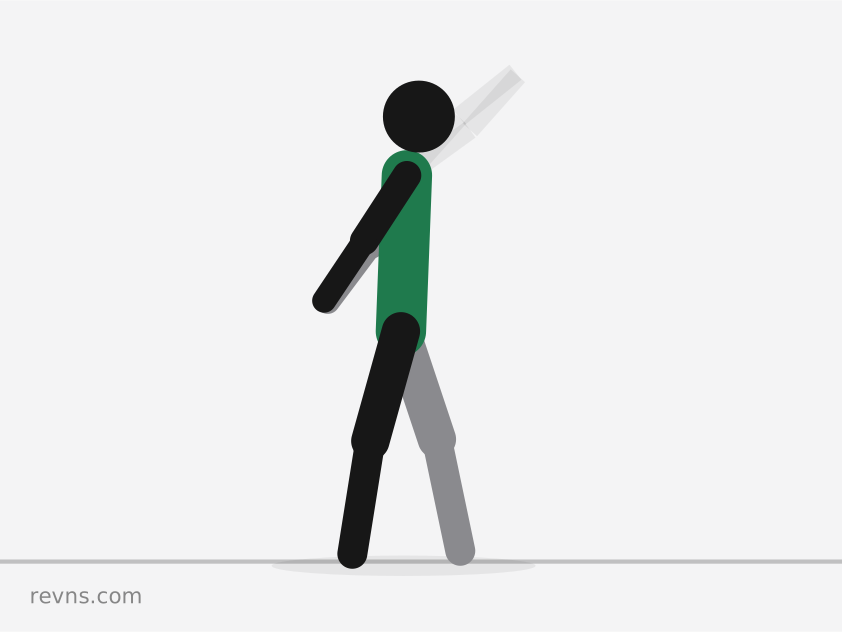
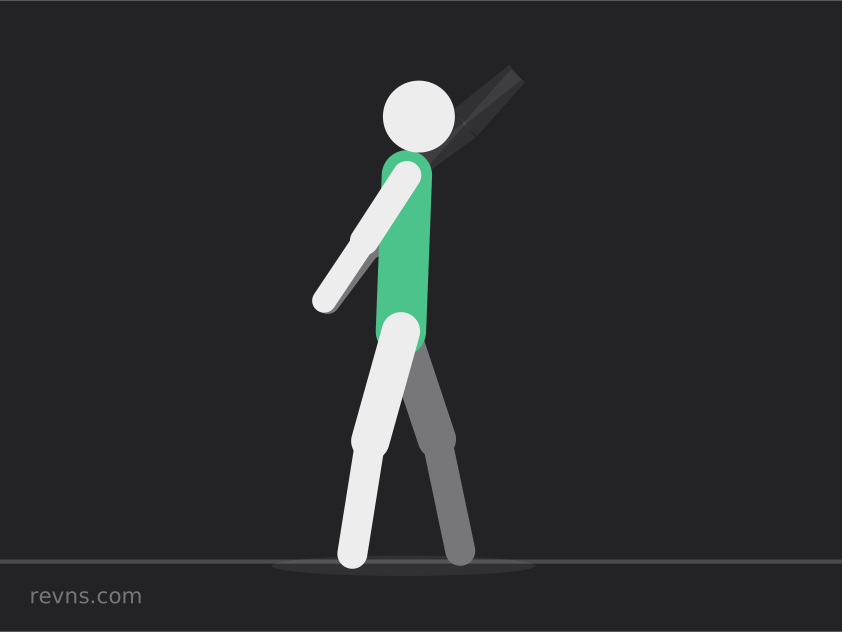
4. Bodyweight woodchops
Bodyweight woodchops sweep the arms diagonally from hip to opposite shoulder, training rotation and anti-rotation together.
- Stand with feet a little wider than hips, knees soft.
- Clasp your hands beside one hip.
- Pivot the back foot and turn the ribs as you sweep the hands diagonally up.
- Return along the same path with control.
- Complete all reps on one side, then switch.
Do: 8 per side, rest 45 s. Move on when: 10 per side stay smooth for two sessions. Common mistake: twisting only the lower back. Turn hips and ribs together; shorten the arc if needed. Easier: standing torso twists. Harder: woodchops with a light dumbbell when available.
5. Standing side bends
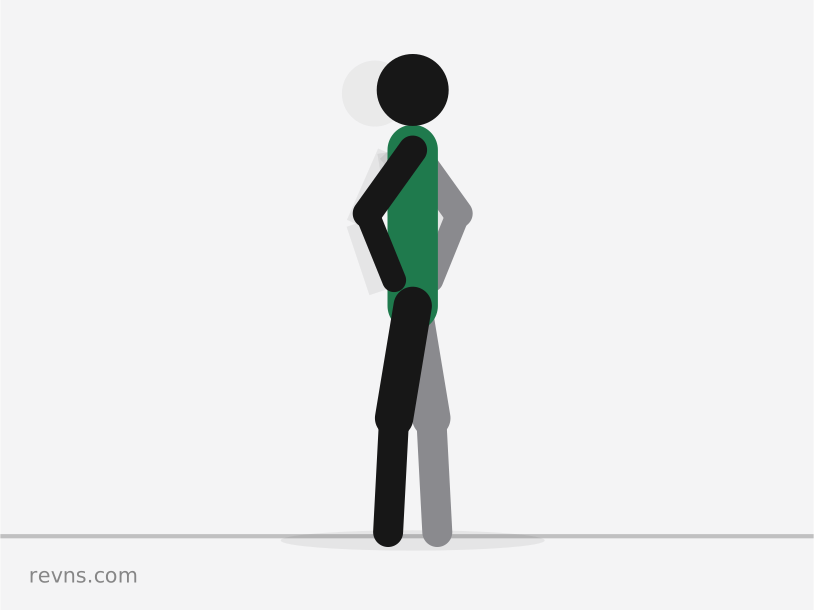
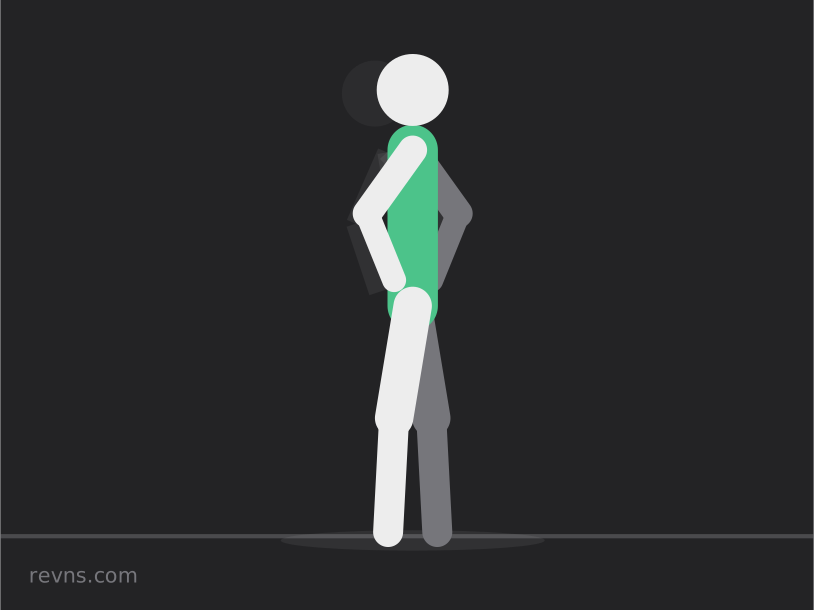
Standing side bends load the obliques through side flexion — useful after long sitting when the trunk feels stiff.
- Stand tall, feet hip-width apart, hands on hips.
- Brace your stomach and squeeze the glutes lightly.
- Slide one hand down the outside of the same leg as far as you control.
- Use the side core to return to tall.
- Alternate sides without bending forward.
Do: 8 per side, rest 45 s. Move on when: 10 per side with no shoulder collapse on the top side. Common mistake: reaching forward instead of sideways. Think “ear toward shoulder,” not “hands to toes.” Easier: shorter range, chair touch for balance. Harder: side plank hip dips or heel taps on the floor.
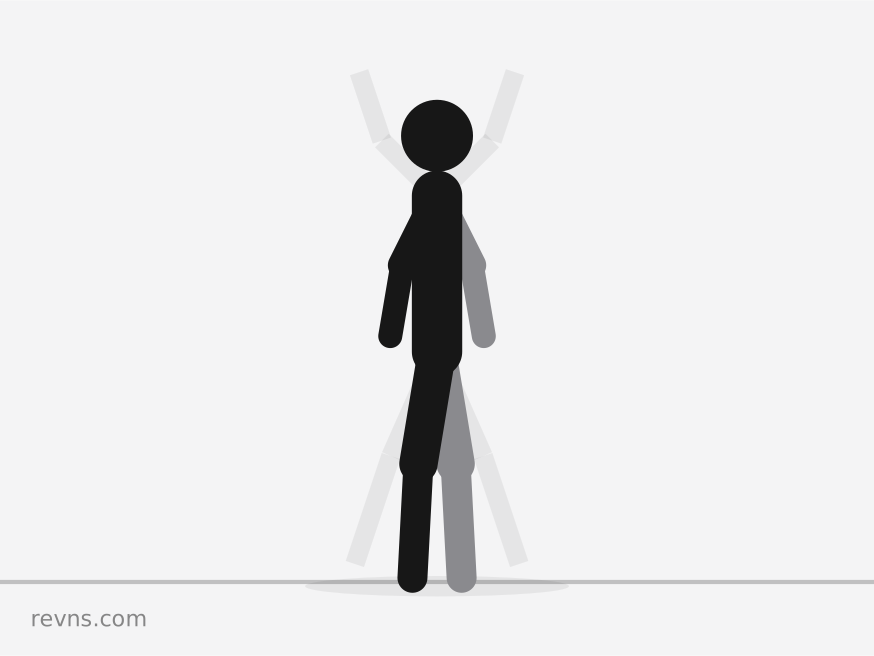
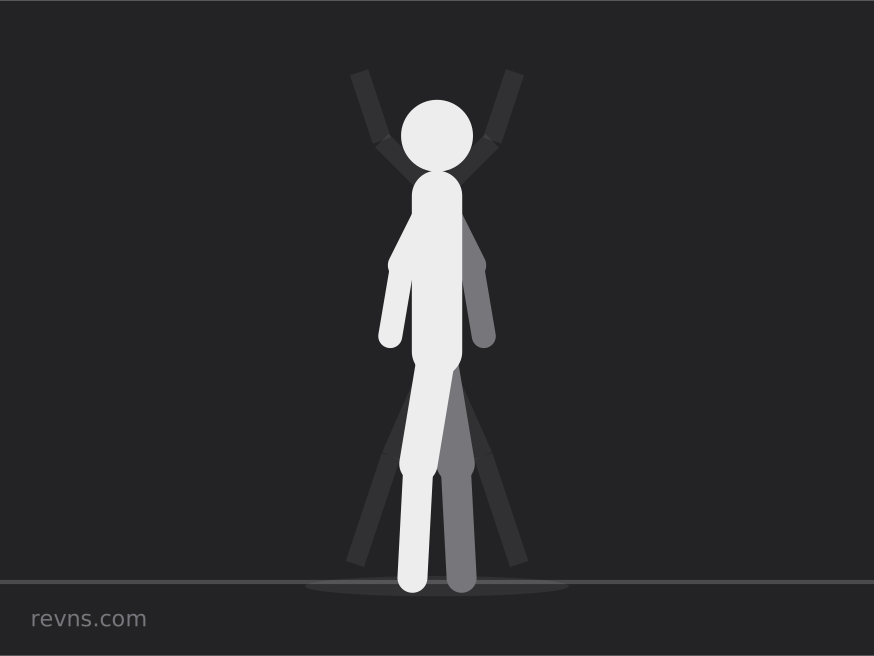
6. Step jacks
Step jacks finish the circuit with light cardio and shoulder motion while both feet stay in contact most of the time — quieter than jumping jacks.
- Stand with feet together, arms at your sides.
- Step one foot out to the side as you raise both arms overhead.
- Step back to centre as the arms lower.
- Alternate the leading foot each rep or each round.
- Stay tall; do not stomp.
Do: 16–20 total reps, rest 60 s before the next round. Move on when: 24 reps feel easy with arms fully overhead. Common mistake: arms only halfway up. Reach fully unless shoulders are painful overhead. Easier: slower steps, arms to shoulder height only. Harder: jumping jacks if landings are soft and joints tolerate impact.
Standing ab exercises: what muscles do they work?
| Move | Main emphasis |
|---|---|
| Standing marches | Hip flexors, deep core, posture |
| Standing cross crunches | Rectus abdominis, obliques, balance |
| Standing torso twists | Obliques, deep trunk rotators |
| Bodyweight woodchops | Obliques, shoulders, glutes (pivot) |
| Standing side bends | Obliques, lateral trunk control |
| Step jacks | Calves, shoulders, light full-body cardio |
This table is a coaching summary, not an anatomy exam. Real life blends muscles on every rep. For more side-core floor work, see oblique exercises for a stronger side core. For anti-extension holds, see plank variations for beginners.
How is this different from the videos and lists online?
Pages that rank for standing ab exercises often share the same gaps:
- Timer-only circuits (40 seconds on, 20 off) with ten moves and little guidance on who should shorten range;
- Video-only follow-alongs where you cannot check your own alignment mid-set;
- No progression rule — the same ten moves forever, or “go faster” with no move-on test;
- Mixed levels in one list (single-leg lifts next to basic marches) with no easier line per exercise.
This guide keeps six named moves, rep counts you can slow down, easier and harder links on every block, and library demos on each exercise page. It also separates warm-up marches from working sets and tells you when one round in week one is enough.
If you usually train core on the floor, alternate this standing session with a core workout for beginners at home so you cover bracing on the back as well as rotation on your feet.
What should you do this week?
- Day 1: One round only. Note whether twists stay small and pain-free.
- Day 3: Two rounds if day 1 felt fine. Log: “Standing abs, 2 rnd, woodchops smooth.”
- Day 6: Third session, or swap for a walk if oblique soreness is sharp, not mild.
- Next week: Add two reps to cross crunches or five seconds slower on woodchops — not both.
Use the simple workout tracker pattern to mark core on strength days. In revns you can log these as bodyweight core work alongside steps and sleep if you use the iPhone app with Apple Health (read-only sync for steps, sleep, resting heart rate, HRV, weight and recorded workouts).
When should you see a professional?
Stop and seek individual advice for:
- Sharp low-back or pelvic pain during twists, chops or side bends, not mild muscle burn.
- Dizziness or balance loss that does not improve when you hold a chair.
- Chest pain, fainting or unusual shortness of breath during step jacks or high knees.
- Pelvic floor symptoms (leaking, heaviness) that worsen with bracing.
- Pain that worsens week after week despite easier variations.
Anyone with recent abdominal surgery, advanced osteoporosis with limits on spinal flexion, or a clinician’s advice to avoid rotation should get individual clearance before diagonal chops and deep side bends.
This is general training guidance, not medical advice.
Related
- Core workout for beginners at home: six moves, no equipment
- 10 minute ab workout at home: a timed beginner routine on a mat
- Oblique exercises for a stronger side core: five moves at home with demos
- Plank variations for beginners: six holds from wall to floor
- Rest days: how many you need and what to do on them
- Full body workout at home with no equipment: a six-move beginner routine
- Exercise library
Sources
- Bull FC et al. World Health Organization 2020 guidelines on physical activity and sedentary behaviour. Br J Sports Med 2020
- American College of Sports Medicine. Progression models in resistance training for healthy adults. Med Sci Sports Exerc 2009
- Ainsworth BE et al. 2024 Adult Compendium of Physical Activities. Supplement to Medicine & Science in Sports & Exercise
- Centers for Disease Control and Prevention. How much physical activity do adults need?
Terms in this post
revns publishes training and nutrition guidance, not medical advice. See a clinician for symptoms, injury or a medical condition. Accurate as of November 21, 2026.