Oblique exercises for a stronger side core: five moves at home with demos
Oblique exercises for a stronger side core at home: side plank, hip dips, Russian twists, bicycle crunches and heel taps. Two rounds, demos, rest and weekly plan.
revns editorial · Published November 20, 2026 · Updated November 21, 2026 · 8 min read
Oblique exercises for a stronger side core: five bodyweight moves in two rounds, two or three days a week, with moving demos and easier options on every exercise.
Oblique exercises for a stronger side core at home are five bodyweight moves in order: side plank hold, side plank hip dips, Russian twists, bicycle crunches and heel taps, for two rounds. You need no equipment except a mat or carpet. The session takes about eighteen to twenty-four minutes. Train it two or three non-consecutive days a week. Every move has a moving demo in the exercise library.
TL;DR
| Move | Prescription | Rest |
|---|---|---|
| Side plank | 20–30 s per side | 30 s |
| Side plank hip dips | 8–10 per side | 45 s |
| Russian twist | 12 per side | 45 s |
| Bicycle crunch | 10 per side | 45 s |
| Heel taps | 12 per side | 60 s between rounds |
Two rounds. Warm up with eight slow cat-cow reps.
| Starting test | If you pass | If not yet |
|---|---|---|
| Side plank on knee 20 s per side, hips level | Use full side plank in round 1 | Hold on knee only; skip hip dips for two weeks |
What are oblique exercises for a stronger side core?
Oblique exercises for a stronger side core train the muscles along the sides of your trunk — mainly the internal and external obliques — plus the glutes and deep core that stop your pelvis and ribs from twisting or collapsing under load. In plain terms, they help you brace when you carry a bag on one shoulder, rotate without wrenching the lower back, and stay level when you run, cycle or lunge.
They are not the same as hundreds of fast crunches. Holds such as the side plank build anti-lateral flexion (resisting side bending). Twists such as Russian twists build controlled rotation. Cross-body curls such as bicycle crunches blend flexion and rotation. A balanced routine mixes those patterns rather than only one.
The obliques work with the rest of the core; you cannot fully isolate them from the hip flexors or the deep abdominals. That is normal. The goal is useful strength, not a burn that leaves the neck sore.
How do you do this side-core workout?
Session structure
- Warm-up (2 minutes): cat-cow, eight slow breaths; stand and reach both arms overhead, side bend each way without forcing.
- Round 1: side plank → hip dips (if you passed the knee hold test) → Russian twist → bicycle crunch → heel taps. Rest as in the TL;DR table.
- Round 2: repeat. Skip round 2 in week one if your bottom shoulder or obliques cramp badly.
- Cooldown (optional): child's pose or knees-to-chest, one minute of slow breathing.
How often
Two or three non-consecutive days (for example Monday, Thursday, Saturday). The WHO 2020 guidelines say adults should do muscle-strengthening activities involving major muscle groups on two or more days a week. Pair this session with a lower ab routine or a full body workout at home on other days, and follow rest days guidance when your trunk is still sore from heavy squats or long runs.
When to progress
Change one lever per week: five more seconds on the side plank, two more reps on twists, or feet slightly off the floor on Russian twists only when your lower back stays long. Do not add all three at once.
The moves
Each block lists steps, dose, one common mistake, and easier and harder options linked to the library.
1. Side plank
The side plank trains the obliques and the lateral hip to hold your body level against gravity. It is the foundation for the hip dips that follow.
- Lie on your side with your forearm on the floor, elbow directly under your shoulder.
- Stack your feet, or bend the bottom knee and rest it on the floor for a lighter version.
- Lift your hips until your body forms a straight line from head to heels (or head to knees if on the knee version).
- Reach the top arm up or rest the hand on your top hip.
- Push the floor away with the bottom forearm; breathe steadily for the full hold, then switch sides.
Do: 20–30 s per side. Move on when: 30 s feels steady for two sessions on both sides. Common mistake: hips sinking toward the floor. Lift them one inch higher and shorten the hold. Easier: side plank on knee. Harder: side plank hip dips in the next block.
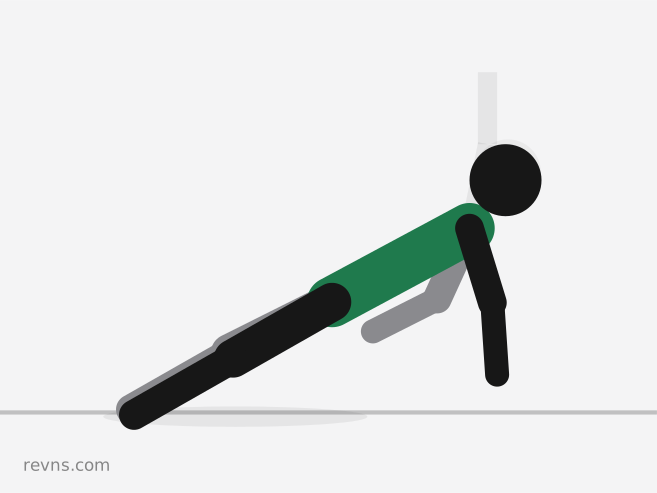
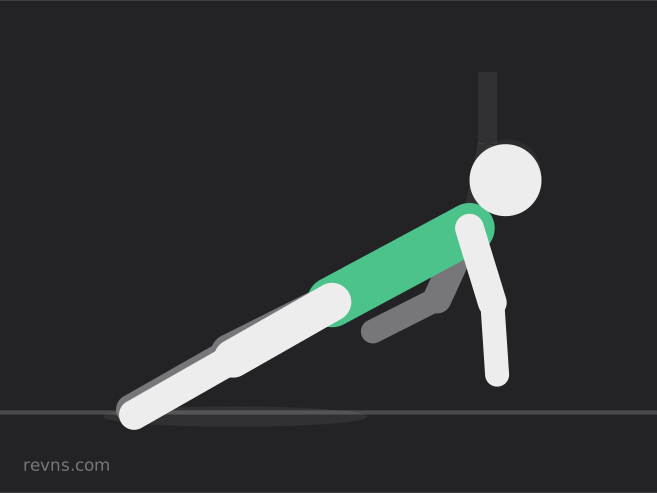
2. Side plank hip dips
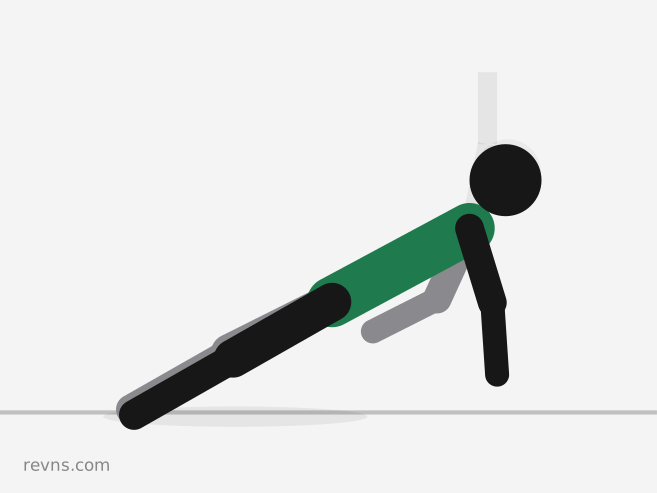
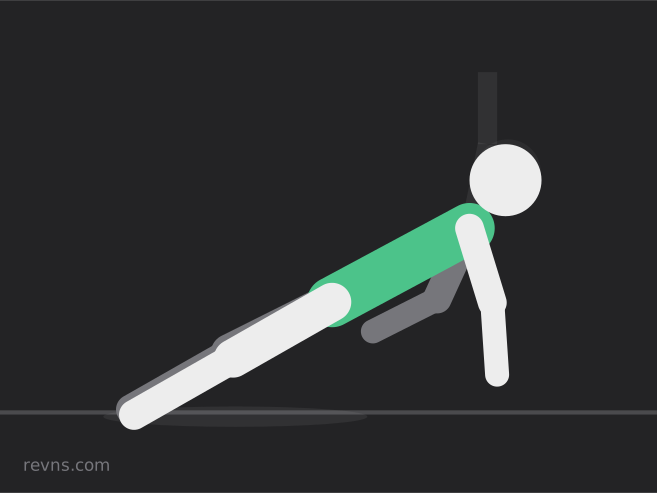
Hip dips add a slow up-and-down motion in the side plank, loading the obliques through a short range.
- Set up in a forearm side plank, feet stacked or bottom knee bent.
- Lower the bottom hip toward the floor without resting it down.
- Lift the hip back to the starting line, slightly above neutral if you can control it.
- Repeat for reps, then switch sides.
Do: 8–10 per side, rest 45 s. Move on when: 10 reps stay smooth without the shoulder collapsing. Common mistake: rolling the chest toward the floor. Stack the hips and look straight ahead. Easier: smaller range, or hold only (side plank). Harder: longer lowering phase (three seconds down).
3. Russian twists
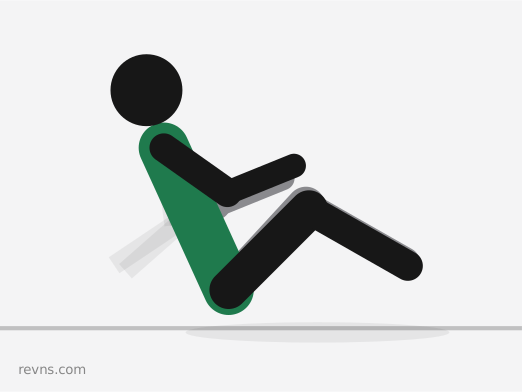
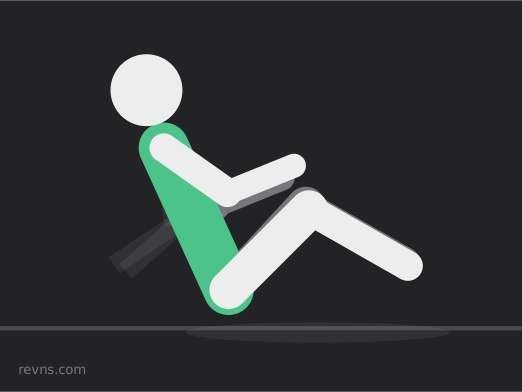
Russian twists train rotation through the ribs while the legs stay mostly still. They are a staple on competitor lists but often shown with heavy weights; body weight is enough to start.
- Sit with knees bent and heels on the floor.
- Lean back until you feel your core engage, keeping your lower back long — not rounded into a slump.
- Hold your hands together at your chest.
- Turn your chest to the right, pause, then to the left — that is one rep.
- Keep your feet quiet; the turn comes from the rib cage.
Do: 12 per side (24 total turns), rest 45 s. Move on when: you can lift the heels slightly without the back rounding. Common mistake: swinging the arms without turning the torso. Move the sternum, not only the hands. Easier: bicycle crunches with a smaller range. Harder: feet off the floor with a light book at the chest — not a heavy weight.
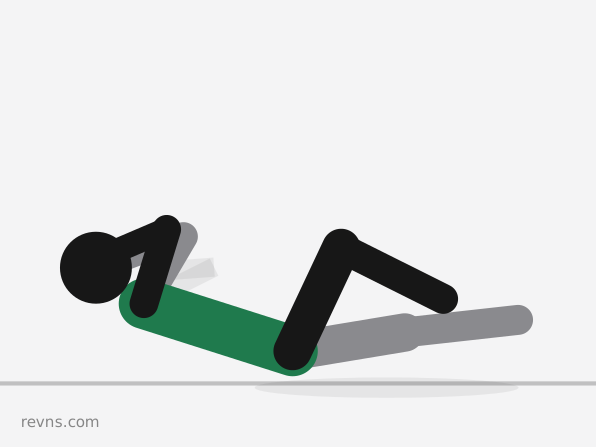
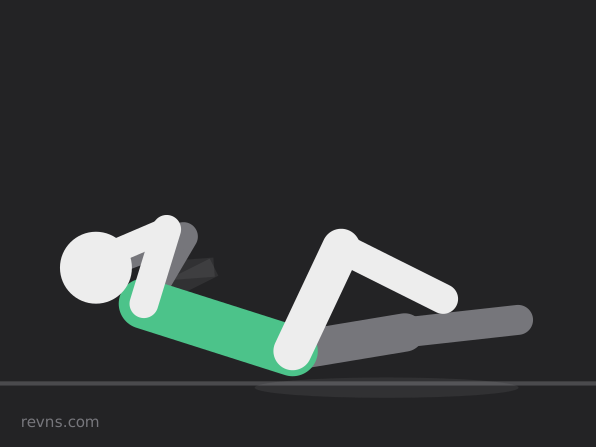
4. Bicycle crunches
Bicycle crunches link flexion and rotation. In an American Council on Exercise–sponsored lab study (30 healthy adults ages 20–45), electromyography ranked the bicycle maneuver first for rectus abdominis activity among 13 common exercises — still move slowly and stop if the neck or lower back complains.
- Lie on your back, hands lightly behind your ears — not pulling the head.
- Lift your shoulders off the floor and draw the knees toward 90 degrees.
- Bring your right elbow toward your left knee as the right leg lengthens.
- Switch sides in a slow, controlled rhythm — no kicking.
- Keep the lower back heavy on the floor; shorten the leg reach if it arches.
Do: 10 per side, rest 45 s. Move on when: 12 per side stay slow for two sessions. Common mistake: pulling on the neck. Elbows stay wide; the turn comes from the trunk. Easier: crunches without rotation. Harder: longer pause with the elbow at the knee.
5. Heel taps
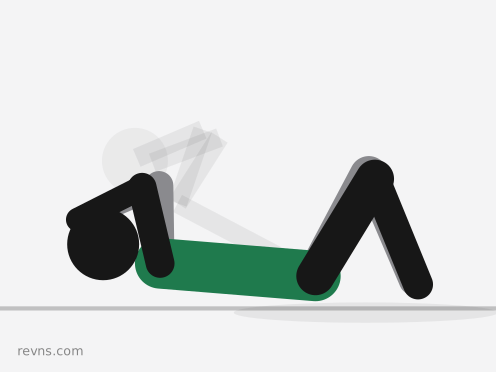
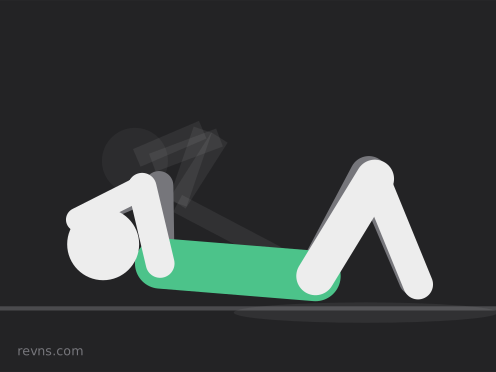
Heel taps (sometimes called heel touches) load the obliques through a small side bend while the shoulders stay lifted.
- Lie on your back, knees bent, feet flat and slightly wider than your hips.
- Lift your shoulders off the floor and brace your stomach.
- Reach your right hand toward your right heel, then your left hand toward your left heel.
- Keep the shoulders up between taps; side-bend through the trunk, not a full twist.
- Move at a steady tempo — about two seconds per tap.
Do: 12 per side, rest 60 s before round 2. Move on when: 15 taps per side with no neck strain. Common mistake: dropping the shoulders between taps. Stay lifted for the whole set. Easier: feet closer to your hips. Harder: bicycle crunches for more rotation.
Which muscles do these oblique exercises work?
| Move | Main emphasis | Also works |
|---|---|---|
| Side plank | External and internal obliques, glute medius | Bottom shoulder, deep core |
| Hip dips | Obliques through side flexion | Hips, shoulder stability |
| Russian twist | Oblique rotation | Hip flexors, deep abs |
| Bicycle crunch | Obliques and rectus abdominis | Hip flexors |
| Heel taps | Obliques (lateral flexion) | Upper abdominals |
These muscles help in sports that twist — tennis, golf, football — and in the gym when you squat or deadlift with a braced trunk. They are not a substitute for heavy pulls or carries, but they fill gaps that front-only ab circuits often leave.
How is this different from other oblique workouts online?
Pages that rank for oblique exercises often mix dumbbell woodchops, cable punches and farmer carries with floor work, which is fine in a gym but not a pure home, no-kit routine. Others publish long lists of 20 or 30 moves without hold times, rest or a knee-to-full side plank gate. Video follow-alongs rarely link easier and harder versions per move.
This guide keeps five named exercises with library demos, cites WHO frequency for strength days, gives a starting test on side plank on knee, and orders holds before rotation so your shoulders and hips learn to stay level before you twist fast on the floor. If you already use plank variations for beginners, add this session on a third core day once forearm and side knee planks feel solid.
What should you do this week?
- Session 1: Run the starting test. One round of the full routine if you pass; otherwise holds and heel taps only.
- Session 2 (two days later): Two rounds if session 1 felt fine. Log hold seconds, not only reps.
- Session 3: Add two reps to twists or five seconds to planks — not both.
- Next week: Introduce hip dips if you skipped them; otherwise keep the same structure and add a round only when form stays clean.
Use the simple workout tracker to mark "side core / 2 rnd" on strength days. Calories for each move follow the 2024 Adult Compendium codes on the linked exercise pages — modest per minute, meaningful as a habit across months.
When should you see a professional?
Stop and get individual advice for:
- Sharp pain at the side of the ribs or lower back during twists, not mild muscle burn.
- Pain that shoots into a leg or numbness when you hold or rotate.
- Pelvic floor symptoms (leaking, heaviness) that worsen when you brace.
- Chest pain, fainting or unusual breathlessness during holds.
- Pain that worsens each week despite easier variations.
Pregnant people and anyone in the first months after childbirth should follow clinician guidance on supine and rotation work before long twists or flat-on-back drills.
This is general training guidance, not medical advice.
Related
- Core workout for beginners at home: six moves, no equipment
- Plank variations for beginners: six holds from wall to floor
- Lower ab exercises at home: a five-move routine with no equipment
- 10 minute ab workout at home: a timed beginner routine on a mat
- Standing ab exercises: a six-move beginner routine at home with demos
- Rest days: how many you need and what to do on them
- Full body workout at home with no equipment: a six-move beginner routine
- Exercise library
Sources
- Mayo Clinic. Exercises to improve your core strength
- WHO. Physical activity fact sheet (muscle-strengthening recommendation)
- American College of Sports Medicine. Progression models in resistance training for healthy adults. Med Sci Sports Exerc 2009
- Francis P, Bruton A. American Council on Exercise. New Study Puts Spotlight on Ab Exercises. ACE Fitness Matters May/June 2001
Terms in this post
revns publishes training and nutrition guidance, not medical advice. See a clinician for symptoms, injury or a medical condition. Accurate as of November 21, 2026.