Plank variations for beginners: six holds from wall to floor
Plank variations for beginners at home: wall, knee, forearm, high and side holds with sets, rest times, move-on rules, and animated demos—no equipment.
revns editorial · Published November 18, 2026 · 8 min read
Beginner plank variations: dead-bug brace test, then wall, knee forearm, forearm, knee high and side-knee holds—2 rounds, 20–30 s each, 2–3 days a week.
Plank variations for beginners are six isometric holds in order from easiest to hardest: dead-bug bracing, then wall, knee forearm, forearm, knee high and side plank on the bottom knee — each for 20 to 30 seconds, two rounds, about 12 to 15 minutes total. You need a wall, floor space and no equipment. Every variation below has a moving demo from the exercise library.
TL;DR
| # | Variation | Hold | Rest |
|---|---|---|---|
| 0 | Dead bug (brace test) | 8 per side | 30 s |
| 1 | Wall plank | 20–30 s | 20–30 s |
| 2 | Knee forearm plank | 20–30 s | 20–30 s |
| 3 | Forearm plank | 15–25 s | 20–30 s |
| 4 | Knee high plank | 15–25 s | 20–30 s |
| 5 | Side plank on knee | 15–25 s / side | 30 s between rounds |
Two rounds through rows 1–5 (skip row 3–4 in week one if needed). 2–3 days a week on non-consecutive days.
Plank variations for beginners: where do you start?
If a full forearm plank makes your hips sag in under ten seconds, you are not ready for long holds on your toes — and that is normal. Start at the wall, earn knee versions, then stand up into a high plank only when wrists and shoulders tolerate it. Side work on the bottom knee trains obliques without asking for a full side bridge on day one.
Starting test: If you cannot keep your lower back down on eight dead bugs per side without rushing, spend one week on dead bugs and wall planks before knee forearm planks. Planks are anti-extension drills: your job is to stop the spine from extending, not to win a stopwatch.
The World Health Organization advises adults to do muscle-strengthening activity on two or more days per week. Short plank circuits count when effort is real — bracing, breathing, stopping when shape fails — not when you hang in a broken position to finish a timer.
How do you do this plank workout?
Session structure
- Brace check: dead bug, 8 reps per side, slow.
- Round 1: wall plank → knee forearm → forearm → knee high → side plank on knee (each side).
- Rest 45–60 seconds between rounds.
- Round 2: repeat. In week one, stop after knee forearm if forearm or high planks break down.
- Cooldown (optional): cat-cow, 6 slow reps.
How often
Two or three non-consecutive days (for example Tuesday, Thursday, Sunday). Pair with core workout for beginners at home on alternate days, or finish a strength training for beginners session with one round only.
When to progress
| You are on… | Move up when… | Next step |
|---|---|---|
| Wall plank | 30 s steady, 2 sessions | Knee forearm |
| Knee forearm | 30 s steady, 2 sessions | Forearm on toes |
| Forearm | 25 s steady, 2 sessions | Knee high, then high plank |
| Knee high | 25 s steady, 2 sessions | Full high plank |
| Side on knee | 25 s / side, 2 sessions | Full side plank |
Add five seconds per week at one level, or switch variation — not both at once. Harder options include plank shoulder taps after a stable high plank.
Warm-up rule
Never jump into a toe plank cold. Dead bugs wake the brace; wall planks load the shoulders gently. If wrists hurt in high planks, stay on forearm versions and ask a clinician or physiotherapist about wrist mobility before adding load.
The moves
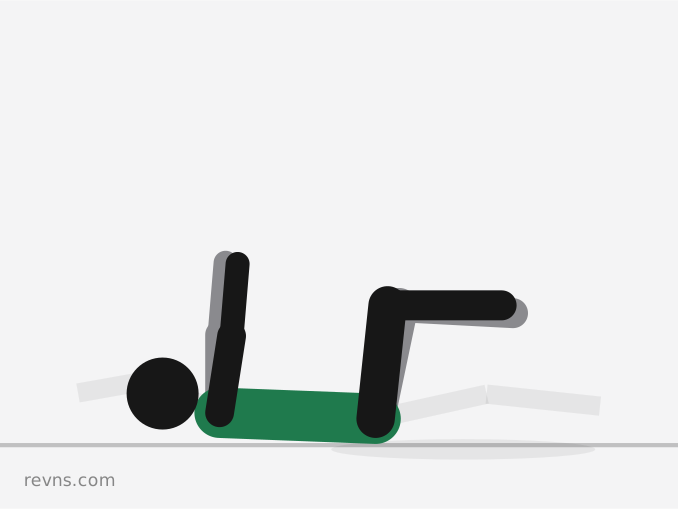
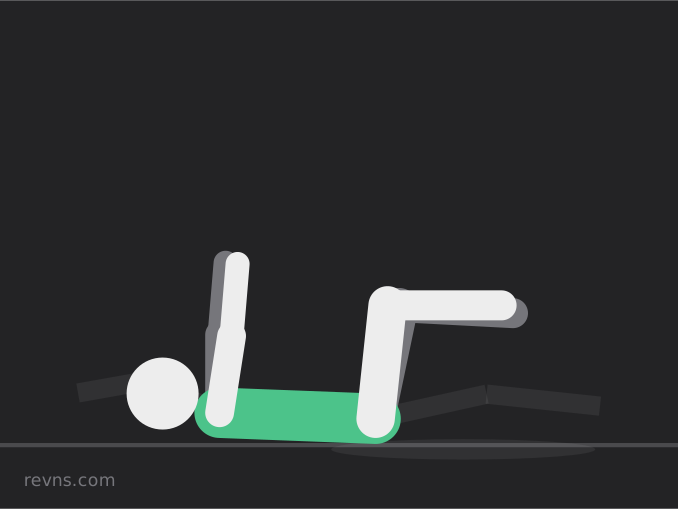
1. Dead bug (brace test)
Dead bugs teach the same brace you use in every plank: lower back stays down while limbs move.
- Lie on your back, arms to the ceiling, knees bent 90 degrees over hips.
- Press your lower back gently into the floor.
- Reach one arm overhead and the opposite leg toward the floor without the back arching.
- Return and switch sides at a slow three-count.
- Stop the set if the back lifts off the floor.
Do: 8 reps per side before planks. Move on when: 10 per side stay smooth. Common mistake: arching the lower back as the leg lowers. Shorten the leg reach. Easier: crunches with feet flat. Harder: longer reach toward leg raises.
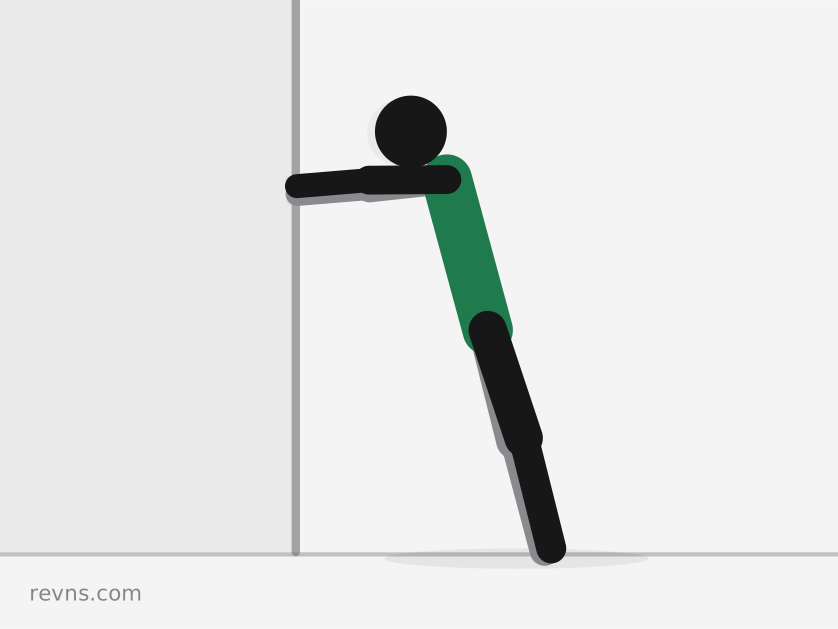
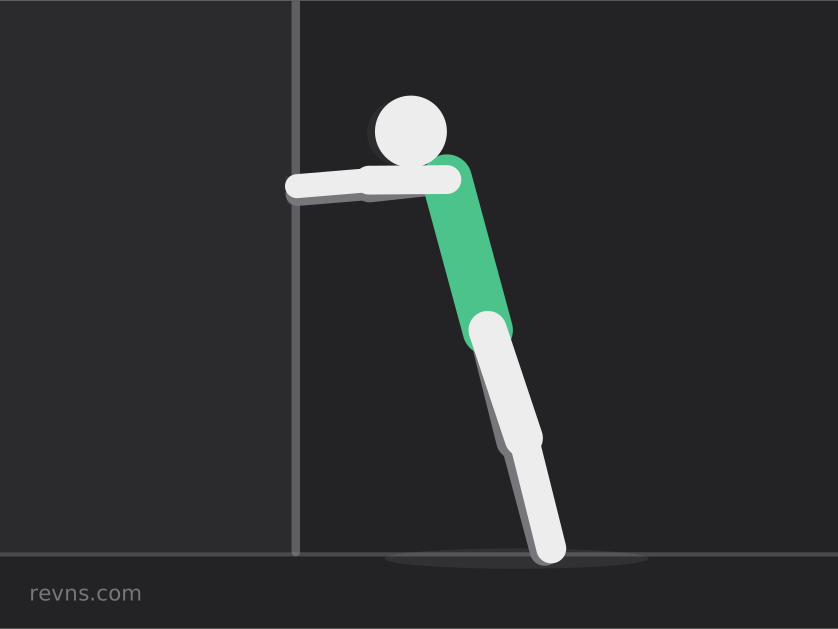
2. Wall plank
A wall plank is the lightest front plank: gravity loads the trunk less than the floor.
- Stand arm's length from a wall.
- Place palms on the wall at shoulder height, fingers up.
- Walk feet back until your body forms a straight line from head to heels.
- Brace your stomach and squeeze your glutes.
- Hold without shrugging shoulders to your ears.
Do: 20–30 s, up to 2 brief retries if form stays perfect. Move on when: 30 s steady for two sessions. Common mistake: standing too close so the body bends at the hips. Step feet back. Easier: shorter holds. Harder: knee forearm plank.
3. Knee forearm plank
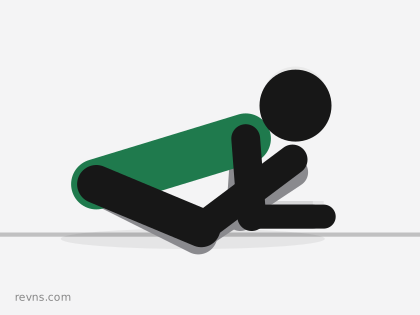
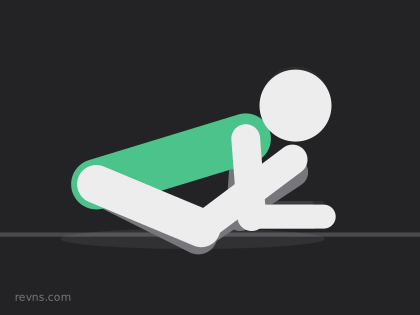
The knee forearm plank is the floor version most beginners should learn before full toes-down planks.
- Kneel and place forearms on the floor, elbows under shoulders.
- Walk knees back until your body is a straight line from head to knees.
- Brace your core and squeeze glutes.
- Push the floor away between the shoulder blades.
- Breathe steadily and end when hips pike or sag.
Do: 20–30 s. Move on when: 30 s with hips level for two sessions. Common mistake: hips lifting so the line breaks. Tuck the pelvis slightly and re-check from the side. Easier: wall plank. Harder: forearm plank on toes.
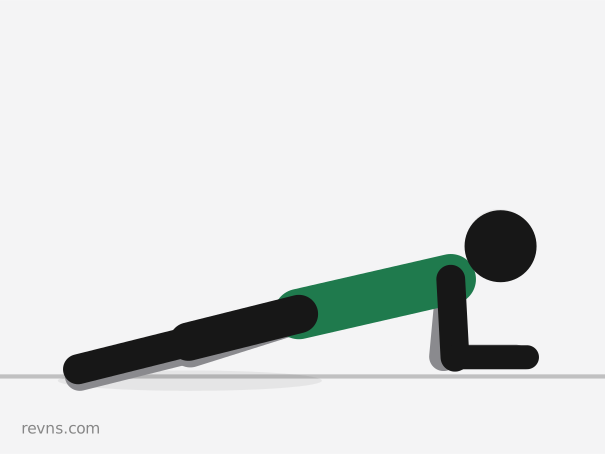
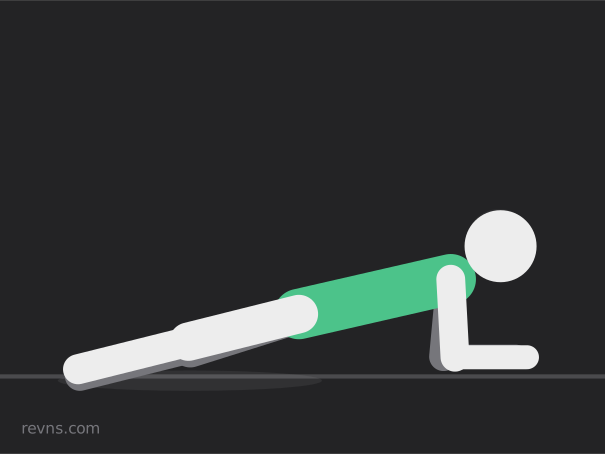
4. Forearm plank
The classic forearm plank loads the full anterior core and shoulders.
- Place forearms on the floor, elbows under shoulders.
- Step feet back into one line from head to heels.
- Squeeze glutes and brace; push the floor away.
- Keep eyes on the floor just ahead of your hands.
- Lower knees to end the set when form fails.
Do: 15–25 s in early weeks. Move on when: 30 s steady for two weeks. Common mistake: holding your breath. Short steady breaths reduce blood-pressure spikes. Easier: knee forearm plank. Harder: plank shoulder taps.
5. Knee high plank
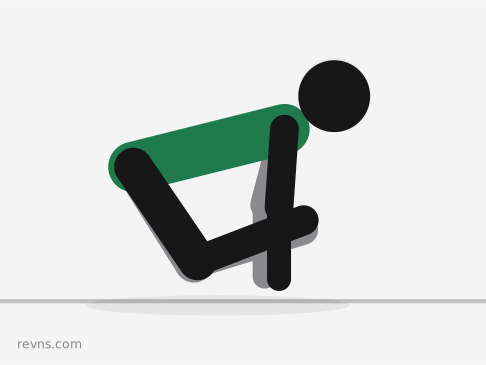
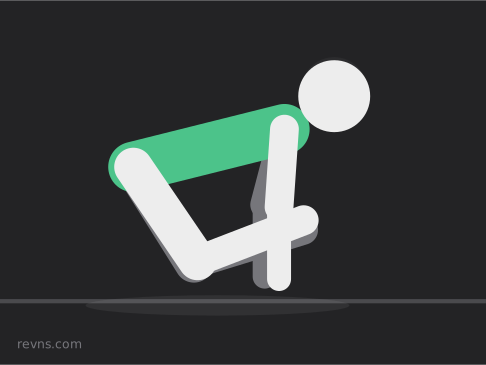
The knee high plank is the top of a modified push-up hold: more wrist load, same brace.
- Kneel with hands directly under shoulders.
- Walk knees back so your body is straight from head to knees.
- Press the floor away with soft elbows.
- Keep ribs down and glutes on.
- Hold, then rest on knees.
Do: 15–25 s. Move on when: 25 s steady for two sessions. Common mistake: bending at the hips so the bottom sticks up. Shift shoulders over hands. Easier: knee forearm plank. Harder: high plank on toes.
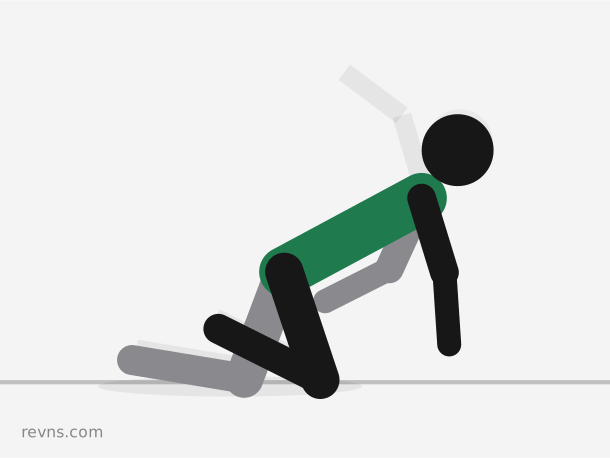
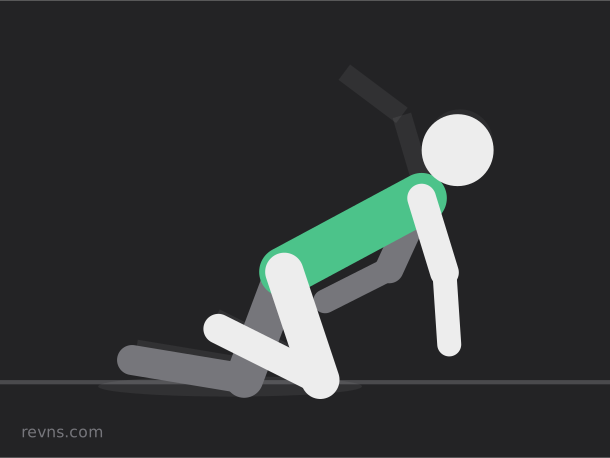
6. Side plank on knee
Side planks target obliques and lateral hip stability. The bottom knee down reduces load versus a full side bridge on stacked feet.
- Lie on your side, elbow under shoulder.
- Bend the bottom knee to about 90 degrees; stack or stagger the top leg for balance.
- Lift hips so your body forms a line from head to knees.
- Reach the top arm up or rest it on the hip.
- Hold without hips rolling forward, then switch sides.
Do: 15–25 s per side. Move on when: 25 s per side for two sessions — try full side plank. Common mistake: sinking between shoulder and hip. Push the floor away with the bottom forearm. Easier: shorter holds. Harder: side plank hip dips later.
What muscles do these plank variations work?
| Variation | Main emphasis |
|---|---|
| Dead bug | Deep abdominals, anti-extension |
| Wall / knee forearm | Front core, shoulders, lighter load |
| Forearm / high plank | Full anterior core, shoulders, wrists (high) |
| Side on knee | Obliques, glute medius, lateral stability |
Planks are isometric: they build endurance and stiffness under load, not range like crunches. That stiffness helps push-ups, squats and posture on long runs. Calories for each hold follow the 2024 Adult Compendium light calisthenics code used on each exercise page — modest per minute, meaningful as a habit across weeks.
How is this guide different from what ranks today?
Pages that rank for plank variations for beginners often show long lists of advanced moves (Spiderman planks, jacks, walk-ups) mixed with basics, rely on video follow-alongs without hold prescriptions, or skip the wall-to-knee-to-toe ladder entirely. Under Armour and NASM publish useful progression charts but rarely tie them to timed rounds, move-on rules and per-variation mistakes.
This routine stays on six named holds with:
- A dead-bug gate so you do not plank with a back that cannot stay down on the floor;
- Library demos under each heading so form is visible without matching a video frame to a name;
- Explicit easier and harder links on every move, including the new wall and knee entries;
- Breathing called out, because breath-holding is common and risky for people with high blood pressure;
- A honest path to high plank and full side plank once knee versions are solid.
If you already run calisthenics for beginners, use this ladder on light days to shore up the plank you need for push-ups.
What should you do this week?
- Session 1: Full ladder with one round only. Log hold times that ended before hips sagged.
- Session 3: Two rounds if session 1 felt fine. Note weakest step (often forearm or high).
- Session 5: Third session, or walk and skip if shoulders or low back are sore.
- Next week: Add five seconds at the weakest variation only.
Use the simple workout tracker pattern to mark “core / planks” on strength days. If you track readiness, keep plank days off hard leg or press days when sleep was poor — holds demand more when you are fatigued.
When should you see a professional?
Stop and get individual advice for:
- Sharp low-back pain during or after planks, not mild muscle burn.
- Wrist, elbow or shoulder pain that persists after moving to knee or forearm versions.
- Chest pain, fainting or unusual shortness of breath during holds.
- Numbness or tingling down an arm or leg.
- Pelvic floor symptoms (leaking, heaviness) that worsen when bracing.
Pregnant people and anyone postpartum should follow clinician or midwife guidance on prone planks and long flat-on-back work before adding floor holds.
This is general training guidance, not medical advice.
Related
- Core workout for beginners at home: six moves, no equipment
- 10 minute ab workout at home: a timed beginner routine on a mat
- Calisthenics for beginners: push-up to pull-up progressions at home
- Rest days: how many you need and what to do on them
- Exercise library
Sources
- Bull FC et al. World Health Organization 2020 guidelines on physical activity and sedentary behaviour. Br J Sports Med 2020
- American College of Sports Medicine. Progression models in resistance training for healthy adults. Med Sci Sports Exerc 2009
- Ainsworth BE et al. 2024 Adult Compendium of Physical Activities. Supplement to Medicine & Science in Sports & Exercise
- National Academy of Sports Medicine. The plank: coaching progressions and variations for every client (resource center, accessed 2026)
Terms in this post
revns publishes training and nutrition guidance, not medical advice. See a clinician for symptoms, injury or a medical condition. Accurate as of November 18, 2026.