10 minute ab workout at home: a timed beginner routine on a mat
A 10 minute ab workout at home for beginners: five mat moves, 45 seconds on and 15 off for two rounds, animated demos, and clear easier options.
revns editorial · Published November 18, 2026 · 9 min read
Beginner 10-minute home ab circuit: plank, dead bug, crunch, glute bridge, bicycle crunch — 45 s on, 15 s off, two rounds on a mat.
A 10 minute ab workout at home is five mat moves done for 45 seconds each with 15 seconds to reset, twice through — about ten minutes on the clock. It suits beginners who want a short ab workout at home with clear timings, not a follow-along video. You need a mat (or carpet), space to lie down, and a phone timer. Every move below has a moving demo from the exercise library.
TL;DR
| # | Move | Work | Reset |
|---|---|---|---|
| 1 | Forearm plank | 45 s | 15 s |
| 2 | Dead bug | 45 s | 15 s |
| 3 | Crunch | 45 s | 15 s |
| 4 | Glute bridge | 45 s | 15 s |
| 5 | Bicycle crunch | 45 s | 15 s |
Two rounds. Rest 30 seconds between rounds. Optional 30-second cat-cow warm-up before round 1. Total working time: 10 minutes.
10 minute ab workout at home: who is this for?
This routine is for beginners and anyone returning after a break. It does not assume you can hold a two-minute plank or pump out fast sit-ups. Timed intervals let you stop when form fails instead of chasing a rep count.
Skip this circuit until you have individual guidance if you:
- are in late pregnancy or early postpartum and have been told to avoid supine core work;
- have acute low-back or pelvic pain that spikes when you flex or brace the trunk;
- were recently told to limit crunch-style loading after disc or abdominal surgery.
Everyone else: move slowly, keep the lower back pressed down on crunching moves, and never pull on the neck.
How do you do this 10 minute ab workout?
Before you start
- Clear floor space longer than your height. Roll out a mat.
- Set a timer that beeps or shows the clock (phone, watch, or kitchen timer).
- Optional 30 seconds of slow cat-cow: eight controlled cycles to wake the spine before planks.
The timed structure
- Work: 45 seconds on each move. Quality reps or a steady hold — stop early if form breaks.
- Reset: 15 seconds to breathe, shake out wrists, or preview the next move.
- Round 1: moves 1 through 5 in order.
- Between rounds: rest 30 seconds (walk your hands and knees, sip water).
- Round 2: repeat the same five moves. In week one, skip round 2 if your neck or lower back feels taxed.
Five slots of 60 seconds (45 plus 15), twice, plus 30 seconds between rounds, equals 600 seconds — ten minutes.
How often
Two or three days a week on non-consecutive days. Pair with strength training for beginners on full-body days, or run it after an easy walk. See rest days: how many you need if you stack running, lifting and daily ab work without recovery.
When to progress
For two weeks, finish both rounds with the same technique you started with. Then change one of these:
- add 5 seconds to each work interval (up to 50 seconds, not beyond);
- move to the harder exercise linked under a move; or
- add a third round on one day a week only.
Do not add all three at once.
What “good reps” look like
On dead bugs and crunches, the lower back stays lightly pinned to the mat. On plank, the hips stay level — no sagging, no piking. On bridges, you lift from the glutes, not by arching the ribs. On bicycle crunches, the elbows reach toward the knee without yanking the head.
The moves
Each block lists steps, timing cues, a common mistake, and easier or harder options.
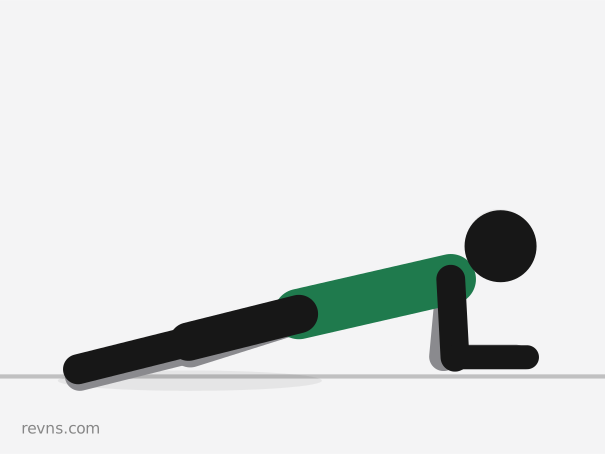
1. Forearm plank
The plank is an anti-extension hold: your job is to keep one straight line from head to heels while gravity pulls your belly down. The forearm version is gentler on the wrists than a high plank and fits a short ab circuit.
- Place forearms on the mat, elbows directly under shoulders.
- Step feet back, legs straight, feet hip-width apart for balance.
- Squeeze glutes and brace the stomach as if preparing for a light push.
- Push the floor away between your shoulders; look slightly ahead of your hands.
- Breathe in short steady breaths. End the 45 seconds if hips sag or shoulders shrug.
Do: 45 seconds per round. Move on when: 45 seconds is steady for two weeks — try 50 seconds or plank shoulder taps. Common mistake: hips dropping toward the floor. Widen the feet or end the interval early and bank a clean 30 seconds. Easier: knees on the mat in a short-lever plank, or swap the plank slot for extra dead bugs until holds improve. Harder: plank shoulder taps.
2. Dead bug
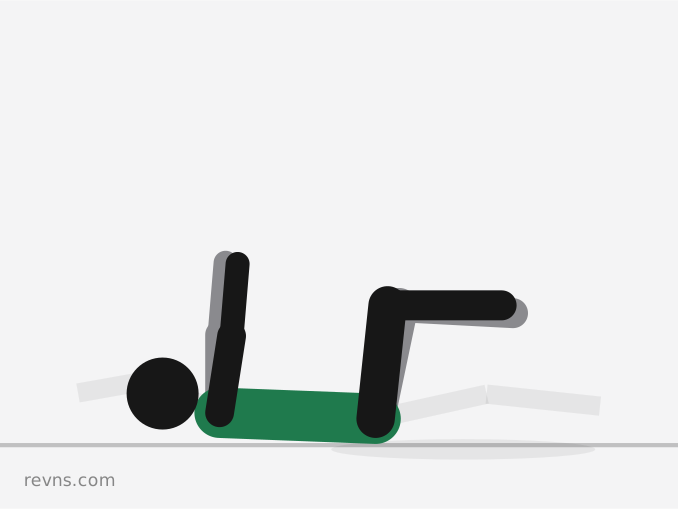
Dead bugs train the deep core to keep the pelvis still while opposite arm and leg move. They are a safer lead-in than fast leg lowers for people who feel their back arch on the floor.
- Lie on your back, arms toward the ceiling, knees bent at 90 degrees over hips.
- Press the lower back gently into the mat before you move.
- Reach one arm overhead and the opposite leg toward the floor without the back lifting.
- Return slowly and switch sides. Aim for slow reps, not a frantic count.
- During the 45-second interval, pause if the back arches — shorten the leg reach.
Do: as many controlled reps as fit in 45 seconds. Move on when: you can keep the back down for the full interval in both rounds. Common mistake: speeding up until the back peels off the mat. Treat the interval as slow reps, not a sprint. Easier: crunches with feet flat. Harder: leg raises only if the back stays down on every rep in practice sets.
3. Crunch
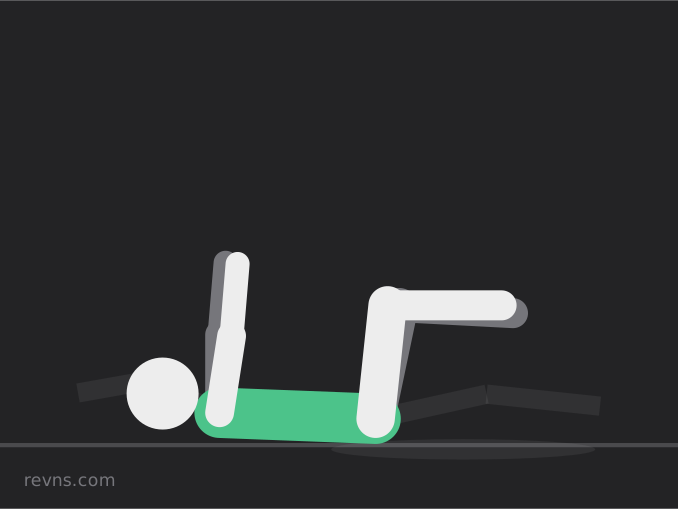
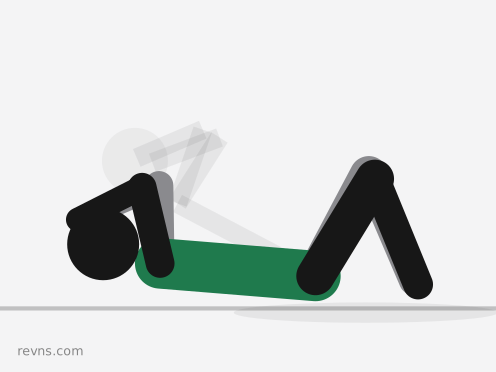
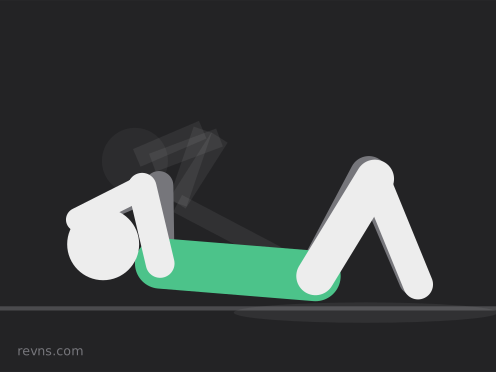
A half crunch — shoulders lifting, not a full sit-up — loads the rectus abdominis with less neck strain than rapid sit-ups when you keep the motion small.
- Lie on your back, knees bent, feet flat, hip-width apart.
- Lightly touch your fingertips to your temples; elbows stay wide. Do not interlace fingers behind the head.
- Exhale and lift your head and shoulder blades a few centimetres off the mat.
- Pause for one breath at the top without tucking the chin hard toward the chest.
- Lower with control and repeat for the 45-second interval.
Do: 45 seconds of slow reps. Move on when: 12 to 15 reps per 45 seconds feel smooth for two sessions — try toe touches with bent knees if hamstrings are tight. Common mistake: pulling the head forward with the hands. Think chest toward hips, not forehead toward knees. Easier: smaller range, or feet on the floor with arms crossed on the chest. Harder: toe touches or heel taps for oblique reach.
4. Glute bridge
Bridges are not a “ab-only” pose, but they belong in a short ab workout at home because strong glutes help hold a neutral pelvis in planks and running. They also give your flexion muscles a short break mid-circuit.
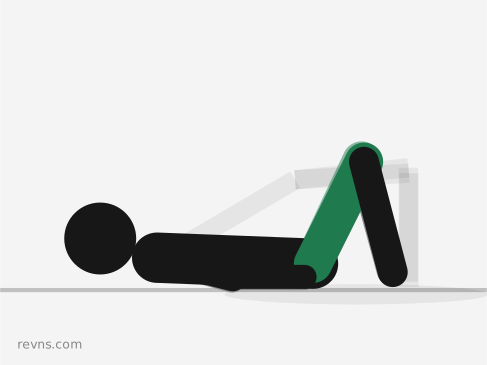
- Lie on your back, knees bent, feet flat close enough that fingertips can brush the heels.
- Press through the heels and squeeze the glutes at the top.
- Lift until shoulders, hips and knees form one line — no rib flare.
- Pause for one beat, then lower under control.
- Fit as many reps as quality allows in 45 seconds.
Do: 45 seconds per round. Move on when: 12 reps with a two-second squeeze feel easy — try lifting one foot briefly (single-leg glute bridges) only if the hips stay level. Common mistake: pushing the belly up instead of driving through the heels. Tuck the pelvis slightly before you lift. Easier: shorter range of lift. Harder: single-leg glute bridges.
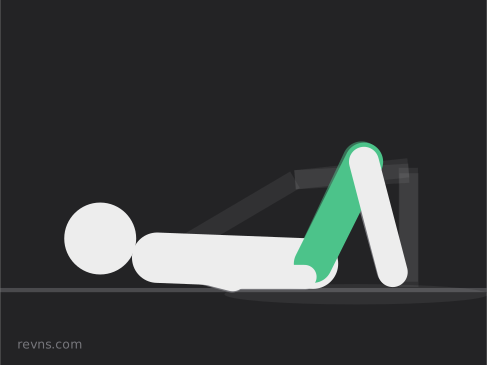
5. Bicycle crunch
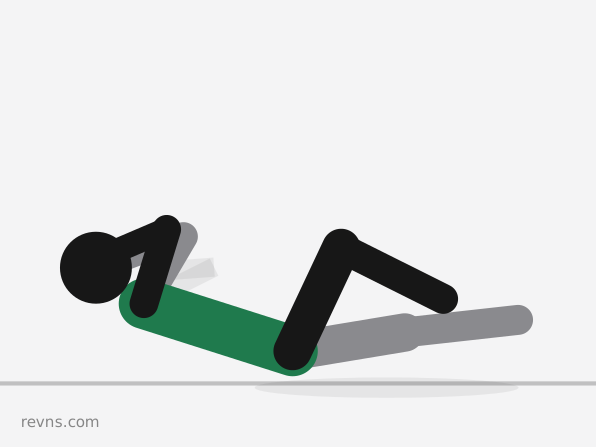
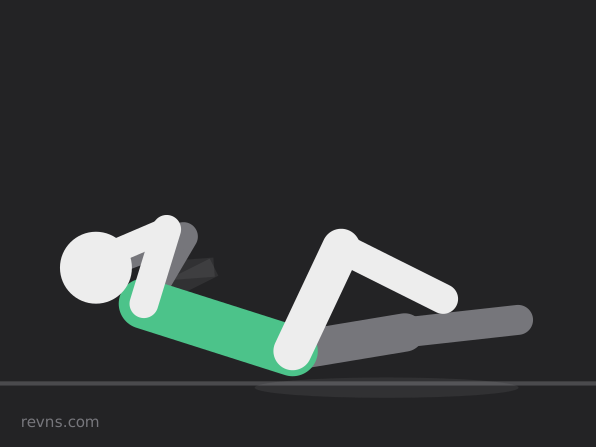
Bicycle crunches add rotation so the obliques share the work. In an American Council on Exercise–sponsored lab study (30 healthy adults ages 20–45), electromyography ranked the bicycle maneuver first for rectus abdominis activity among 13 common exercises — still move slowly and stop if the neck or lower back complains.
- Lie on your back, lower back pressed down, knees bent over hips.
- Place hands lightly beside the head; lift the shoulder blades slightly.
- Extend one leg while the opposite elbow travels toward the bent knee.
- Switch sides in a slow, controlled rhythm — you are not pedalling a real bike at speed.
- Stop the interval if the neck or lower back complains; finish the round with extra bridges if needed.
Do: 45 seconds. Move on when: the trunk stays still except for the intended twist for the full interval — then try russian twists on another day, not in the same ten minutes. Common mistake: racing and pulling the neck. Easier: keep both feet in the air with smaller knee bends, or substitute heel taps in round two. Harder: slower tempo with a longer pause at each twist.
What muscles does this 10 minute ab workout work?
| Move | Main emphasis |
|---|---|
| Forearm plank | Full anterior core, shoulders, glutes (isometric) |
| Dead bug | Deep abdominals, hip flexors (with control) |
| Crunch | Rectus abdominis (upper range) |
| Glute bridge | Glutes, hamstrings, posterior pelvis |
| Bicycle crunch | Rectus abdominis, obliques |
This is not a complete weekly training plan. The World Health Organization recommends adults also get 150 to 300 minutes of moderate aerobic activity per week plus strength work for major muscle groups on two or more days. A ten-minute ab circuit supports that picture; it does not replace leg, back or push work. When you want a longer stability-focused session, use the core workout for beginners at home guide (six moves, about fifteen to eighteen minutes, less crunch volume).
How is this different from the 10 minute videos online?
Pages that rank for 10 minute ab workout at home usually fall into three buckets:
- Video follow-alongs (FitnessBlender-style channels, influencer clips) that are hard to check against your own form mid-set;
- High-count circuits (eight to ten moves in one pass) with 40-on / 20-off timing and no guidance on when to shorten range; and
- Intensity marketing (“intense”, “daily burn”) without spinal-load warnings on leg lowers or sit-ups.
This guide keeps five named moves, a clock you control, and library demos you can open on each exercise page. It also states easier swaps (knees-down plank, heel taps instead of bicycles) so you can finish ten minutes without sacrificing the lower back.
If you already train calisthenics for beginners, treat this ab block as a finisher on a light day — plank skill from this circuit carries straight into push-up bracing.
What should you do this week?
- Day 1: One round only. Note whether the last 15 seconds of plank and bicycle crunches stay clean.
- Day 3: Full ten minutes (two rounds) if day 1 felt fine. Log one line: “Ab circuit 10 min, planks steady.”
- Day 6: Third session, or swap for a walk if abdominal soreness is sharp, not mild.
- Next week: Add five seconds to plank work or upgrade one move to its harder link — not both at once.
Use the simple workout tracker pattern to mark “core” on strength days. In revns you can log these as bodyweight strength alongside sleep and steps if you use the iPhone app with Apple Health.
When should you see a professional?
Stop and seek individual advice for:
- Sharp low-back, hip or pelvic pain during dead bugs, crunches or bridges, not mild muscle burn.
- Numbness or tingling down a leg when you lift a leg in dead bug position.
- Chest pain, fainting or unusual shortness of breath during planks.
- Pelvic floor symptoms (leaking, heaviness) that worsen when you brace — a pelvic health physiotherapist can adapt ab work.
- Neck pain that flares every time you crunch despite hand placement fixes.
Pregnant people and anyone in the first months after childbirth should follow clinician guidance on supine and crunch-heavy work before using timed flexion intervals.
This is general training guidance, not medical advice.
Related
- Core workout for beginners at home: six moves, no equipment
- Strength training for beginners: a simple plan for the first eight weeks
- Calisthenics for beginners: push-up to pull-up progressions at home
- Rest days: how many you need and what to do on them
- Mobility in ten minutes a day: a simple daily routine
- Exercise library
Sources
- Bull FC et al. World Health Organization 2020 guidelines on physical activity and sedentary behaviour. Br J Sports Med 2020
- American College of Sports Medicine. Progression models in resistance training for healthy adults. Med Sci Sports Exerc 2009
- Ainsworth BE et al. 2024 Adult Compendium of Physical Activities. Supplement to Medicine & Science in Sports & Exercise
- NHS. Strength and flexibility: abs workout (10-minute video overview)
- Francis P, Bruton A. American Council on Exercise. New Study Puts Spotlight on Ab Exercises. ACE Fitness Matters May/June 2001
Terms in this post
revns publishes training and nutrition guidance, not medical advice. See a clinician for symptoms, injury or a medical condition. Accurate as of November 18, 2026.