Back exercises at home without equipment: a six-move beginner routine
Back exercises at home without equipment for beginners: six moves with demos, sets, reps, rest, a table row pull, and how often to train. About 20 minutes.
revns editorial · Published November 20, 2026 · 9 min read
Beginner back exercises at home without equipment: six moves in two rounds, two to three days a week, with moving demos, a sturdy-table row and easier and harder options on every move.
The best back exercises at home without equipment, for a beginner, are six moves in order: bird dog, superman, reverse snow angel, prone Y-raise, good morning and an inverted row under a sturdy table. Do two rounds, rest 45 to 60 seconds between moves, and train two or three non-consecutive days a week. The session takes about 20 to 25 minutes and needs floor space plus a table or counter that will not tip. Every move below has a moving demo from the exercise library.
TL;DR
| Move | Sets × reps or time | Rest |
|---|---|---|
| Bird dog | 2 × 8 per side | 45 s |
| Superman | 2 × 10–12 | 45 s |
| Reverse snow angel | 2 × 8–10 | 45 s |
| Prone Y-raise | 2 × 10–12 | 45 s |
| Good morning | 2 × 10 | 45 s |
| Inverted row (table) | 2 × 6–10 | 60 s |
Two rounds in all. Warm up first with two slow cat-cow cycles.
How do you do back exercises at home without equipment?
Follow this order each session.
- Warm up for 3 to 5 minutes. March on the spot, roll the shoulders, then do eight slow cat-cow reps and ten good mornings with a tiny range. The goal is a warm spine and hips, not fatigue.
- Round 1. Bird dog through inverted row, in the table order. Rest 45 to 60 seconds between moves; rest 60 seconds before the row if your grip feels taxed.
- Round 2. Repeat. In week one, stop at one round if your lower back or grip feels done, and add round two in week two.
- Cool down (optional). Walk for two minutes and breathe slowly.
Effort rule. Stop each set with one or two clean reps left. On the floor moves, think squeeze and hold for one second at the top rather than lifting high. On the row, stop when your hips sag or your neck cranes forward.
How often. Start with two days a week, such as Tuesday and Friday, and add a third day when recovery feels easy. The ACSM position stand on progression in resistance training (2009) suggests novices train each major muscle group two to three days a week, with one to three sets. The WHO 2020 guidelines say adults should do muscle-strengthening activity on two or more days a week, covering all major muscle groups. A back-only day pairs well with a bodyweight chest workout at home or a full body workout at home on other days. Mild soreness along the back or between the shoulder blades for a day or two is common after the first sessions; see DOMS explained for what is normal.
When to make it harder. Add two reps per move, slow the lowering phase to three seconds, or walk your feet further forward on the row so your body is more horizontal. Change one lever at a time, as in progressive overload in plain words. When table rows feel easy for 2 × 12, read calisthenics for beginners for the next pull steps.
What back muscles do these moves work?
The back is not one muscle. It is a set of layers:
| Region | Main jobs in daily life | Moves here that train it |
|---|---|---|
| Upper back (traps, rhomboids) | Pulling the shoulder blades together, posture | Reverse snow angel, prone Y-raise, row |
| Lats | Pulling the arms down and back | Inverted row |
| Lower back (erectors) | Holding the spine still, extending it | Bird dog, superman, good morning |
| Deep stabilisers | Keeping the spine safe under load | Bird dog, cat-cow warm-up |
Push-heavy home routines, such as push-ups and dips, train the front of the body heavily. Without pulling, the upper back can lag and the shoulders can round forward. This routine adds the pull and extension patterns many all-push circuits skip.
The moves
Each block gives what the move trains, the steps, the dose, a common mistake, and an easier and harder option.
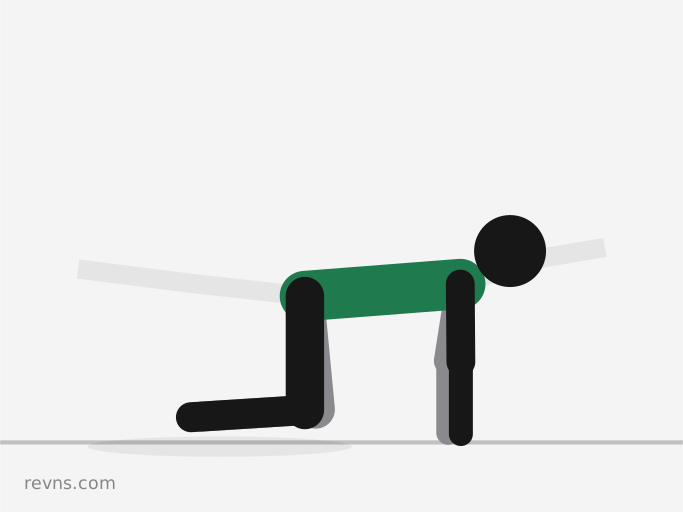
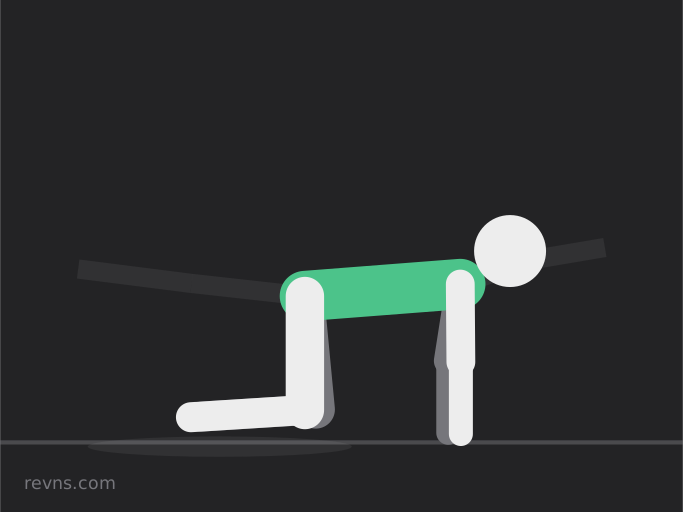
1. Bird dog
The bird dog trains the muscles along the spine, the glutes and the shoulders while the trunk stays still as arm and leg move. It is a low-impact way to learn back control before extension and pulling work.
- Start on all fours, hands under shoulders, knees under hips.
- Brace your stomach so your lower back does not sag.
- Reach the right arm forward and the left leg back until both are level with the torso.
- Pause for one second, return, and switch sides.
Do: 2 × 8 per side, rest 45 s. Move on when: 10 smooth reps per side on both sets for two sessions. Common mistake: rocking the hips side to side. Place a book on the lower back; it should stay quiet. Easier: shorter reach, or a shorter hold. Harder: a two-second pause, or a dead bug if you want more front-core work.
2. Superman
The superman trains spinal extension: the opposite of long sitting. You lift the arms, chest and legs a few centimetres, not as high as you can.
- Lie face down, arms reaching forward, legs long.
- Squeeze your glutes gently.
- Lift your arms, chest and legs a few centimetres off the floor.
- Hold one second, then lower with control.
Do: 2 × 10–12, rest 45 s. Move on when: 12 reps with a one-second hold on both sets for two sessions. Common mistake: cranking the head up and pinching the lower back. Look at the floor and lift low. Easier: bird dogs. Harder: back extensions on a gym bench when you have access.
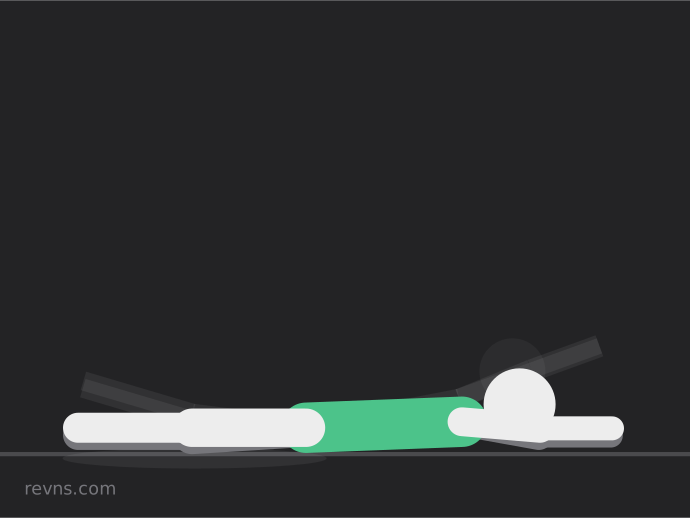
3. Reverse snow angel
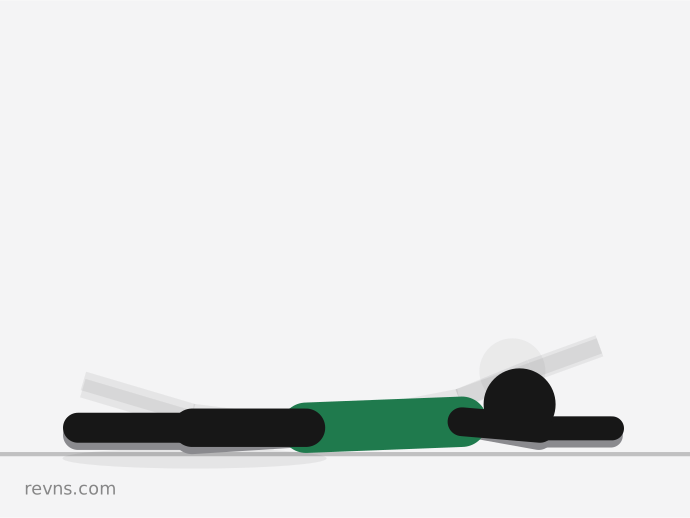
The reverse snow angel sweeps the arms from the hips to overhead while you lie face down. It trains the mid and lower traps that draw the shoulder blades back.
- Lie face down, arms at your sides, palms down.
- Lift your chest and arms slightly off the floor.
- Sweep your arms out and up in a wide arc toward your head, without touching down.
- Sweep them back to your hips.
Do: 2 × 8–10, rest 45 s. Move on when: 10 smooth reps on both sets for two sessions. Common mistake: rushing. Move slowly so the upper back does the work, not momentum. Easier: supermans. Harder: prone Y-raises.
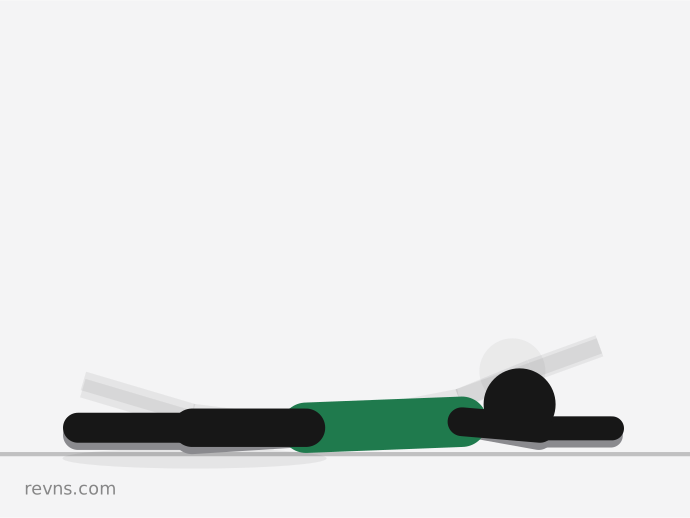
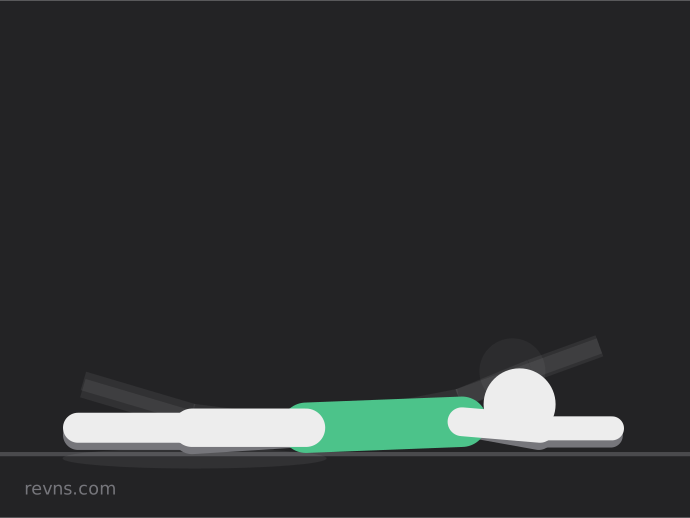
4. Prone Y-raise
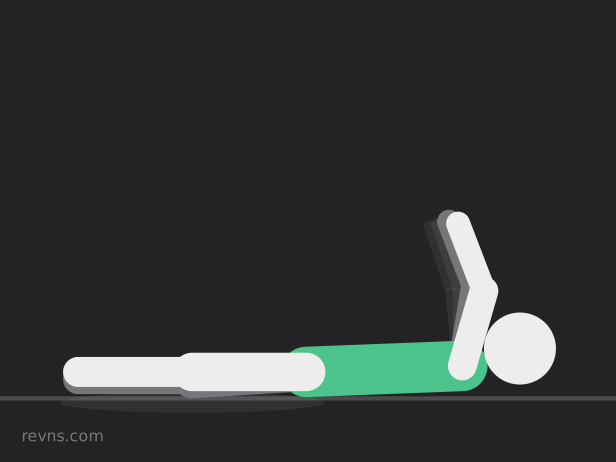
The prone Y-raise lifts the arms overhead in a wide Y with thumbs up. It targets the lower traps and rear shoulders, which many push-only routines miss.
- Lie face down, forehead lightly on the floor or hovering.
- Reach your arms overhead in a wide Y, thumbs pointing up.
- Squeeze your shoulder blades and lift your arms a few centimetres.
- Lower slowly.
Do: 2 × 10–12, rest 45 s. Move on when: 12 controlled reps on both sets for two sessions. Common mistake: shrugging the shoulders to the ears. Think shoulder blades down and out. Easier: reverse snow angels. Harder: reverse flies with light dumbbells later.
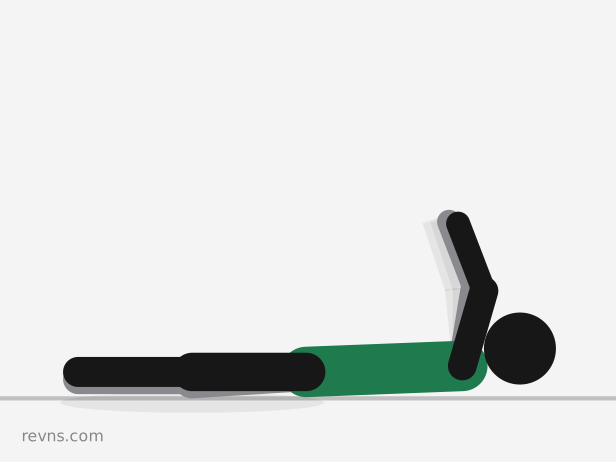
5. Good morning
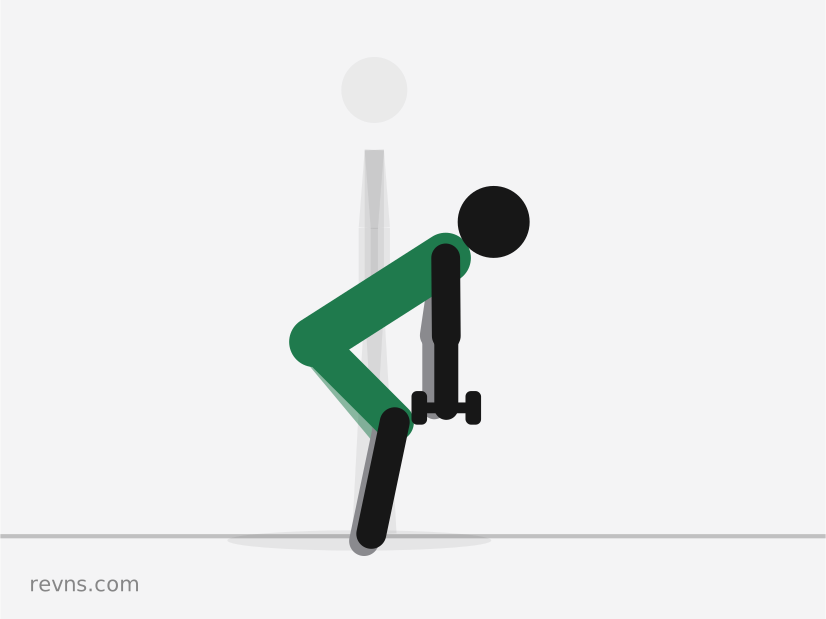
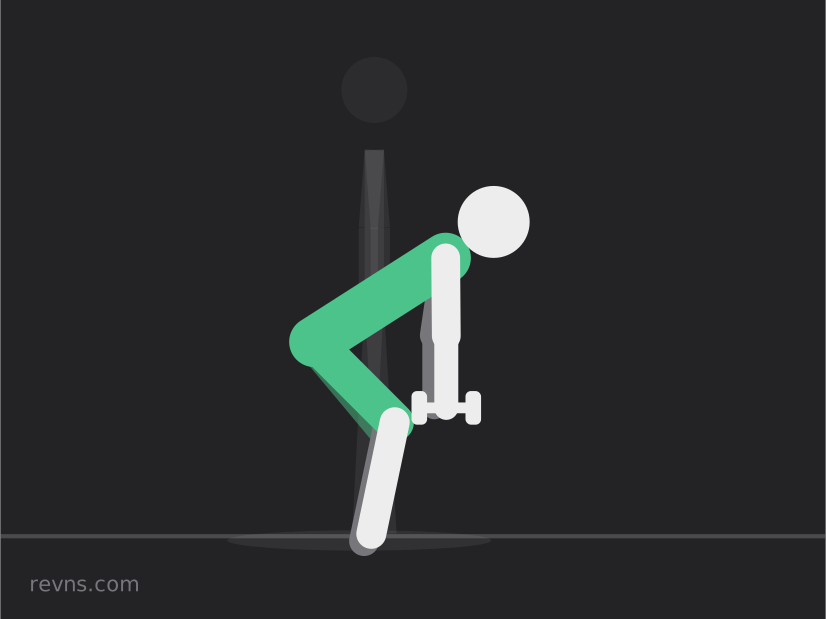
The good morning is a bodyweight hip hinge. It trains the hamstrings and the muscles along the spine to work together while the back stays flat. Use it to learn the pattern before any loaded deadlift.
- Stand with feet hip-width, hands behind your head or across your chest.
- Soften the knees slightly.
- Push your hips back and lower your chest until you feel the hamstrings, back flat.
- Stand by squeezing the glutes.
Do: 2 × 10, rest 45 s. Move on when: you can hinge without rounding for 10 reps on both sets. Common mistake: bending the knees like a squat. Hips go back; knees barely move. Easier: glute bridges. Harder: Romanian deadlifts with light weights when you have them.
6. Inverted row (under a sturdy table)
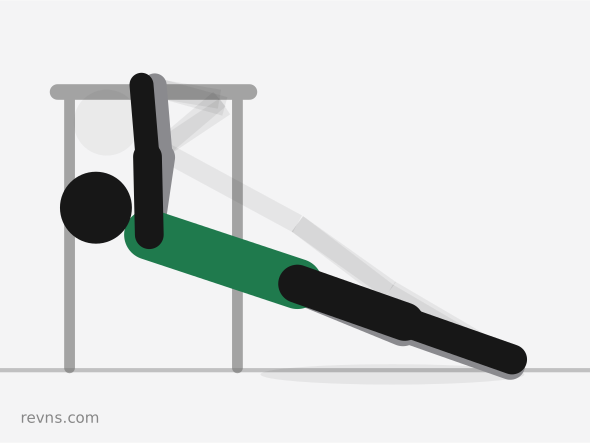
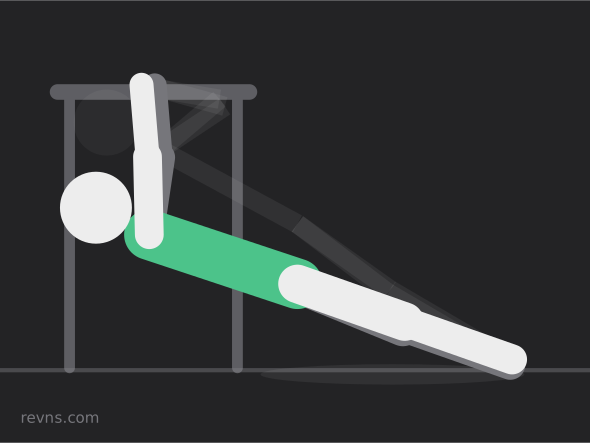
The inverted row is your horizontal pull without a bar. It trains the lats, upper back and arms while the core holds a straight line. Use a heavy dining table, a counter bolted to the wall, or playground bars if you have them. Test the surface: it must not slide, tip or have a sharp edge on your fingers.
- Lie under the table edge and grip it a little wider than shoulder width.
- Walk your feet forward until your body is straight from head to heels, heels on the floor.
- Pull your chest toward the edge, elbows driving back and shoulder blades squeezing.
- Lower with control until your arms are straight.
Do: 2 × 6–10, rest 60 s. Move on when: 10 clean reps on both sets for two sessions with feet further forward. Common mistake: hips sagging or only half reps. Stop the set when the body line breaks. Easier: bend the knees and walk the feet closer. Harder: feet on a low step, or negative pull-ups when you have a bar.
What are back exercises at home without equipment?
They are strength moves that train the upper back, lats and muscles along the spine using body weight and stable furniture, not dumbbells or machines. A complete beginner set usually mixes three patterns:
- Extension (superman, reverse snow angel) to balance sitting posture.
- Stability (bird dog, good morning) so the spine stays safe under effort.
- Horizontal pull (inverted row) so the arms and shoulder blades learn to row.
Most ranked pages list five to twenty moves without a clear order or rest times. This guide fixes one circuit, names the dose, and links an easier and harder option for every step. The demos show the figure, the cue and the muscle map on each move's own page, such as /exercises/prone_y_raises.
How often should beginners do back exercises at home?
| Experience | Days per week | Notes |
|---|---|---|
| Brand new | 2 | One or two rounds; log reps |
| 2 to 4 weeks in | 2 to 3 | Two full rounds; add reps before a third day |
| Pairing with push days | 2 back, 2 push | Example: back Tuesday, chest Thursday, full body Saturday |
If you also run or cycle, keep back day light on the day before a long run, or do back work after easy cardio. The AI fitness coach can hold your planned sessions if you log workouts in revns; it does not replace a coach for form checks.
What should you do this week?
- Day 1: Warm up, one round of all six moves. Note row foot position and how many supermans felt clean.
- Day 2: Rest or walk.
- Day 4: Two rounds if day 1 felt fine. Use the workout log template.
- Next week: Add two reps to one floor move, or walk the feet one step forward on rows. Not both at once.
- Week four: Try straightening the legs more on rows, or add a third weekly session.
If you already train, use this as a posture and pull supplement between harder gym days. For how this fits an eight-week start plan, see strength training for beginners.
Who should check with a clinician first, and when should you stop?
This routine is for healthy adults who can get down to the floor and back up. Ask a doctor or physiotherapist first if you have a heart or lung condition, uncontrolled high blood pressure, a known disc or nerve problem, recent back or shoulder surgery, osteoporosis with fracture risk, or if you are pregnant or recently gave birth.
Stop and seek advice for:
- Chest pain, pressure, fainting or unusual breathlessness.
- Sharp or shooting back pain, especially if it travels into a leg.
- Numbness or tingling in the groin, legs or arms that does not pass quickly.
- Loss of bladder or bowel control (seek urgent care).
- Dizziness or a feeling you may fall.
- Pain that gets worse from session to session, even on easier versions.
Skip or use the easier option for supermans and good mornings if acute lower-back pain is present. The row is the move most likely to bother the front of the shoulder if the grip is too wide; narrow the hands if needed.
This is general training guidance, not medical advice.
Related
- Full body workout at home with no equipment: a six-move beginner routine
- Bodyweight chest workout at home: a five-move beginner routine
- Calisthenics for beginners: push-up to pull-up progressions at home
- Core workout for beginners at home: six moves, no equipment
- Arm workout without weights: a six-move beginner routine at home
- Strength training for beginners: a simple plan for the first eight weeks
- Exercise library
Sources
- American College of Sports Medicine. Progression models in resistance training for healthy adults. Med Sci Sports Exerc 2009
- Bull FC et al. World Health Organization 2020 guidelines on physical activity and sedentary behaviour. Br J Sports Med 2020
- Harvard Health Publishing. Effective exercises for building a strong back
- Ainsworth BE et al. 2024 Adult Compendium of Physical Activities. J Sport Health Sci 2024
Terms in this post
revns publishes training and nutrition guidance, not medical advice. See a clinician for symptoms, injury or a medical condition. Accurate as of November 20, 2026.