Back exercise
Negative pull-ups
Also called pull-up negatives, eccentric pull-ups
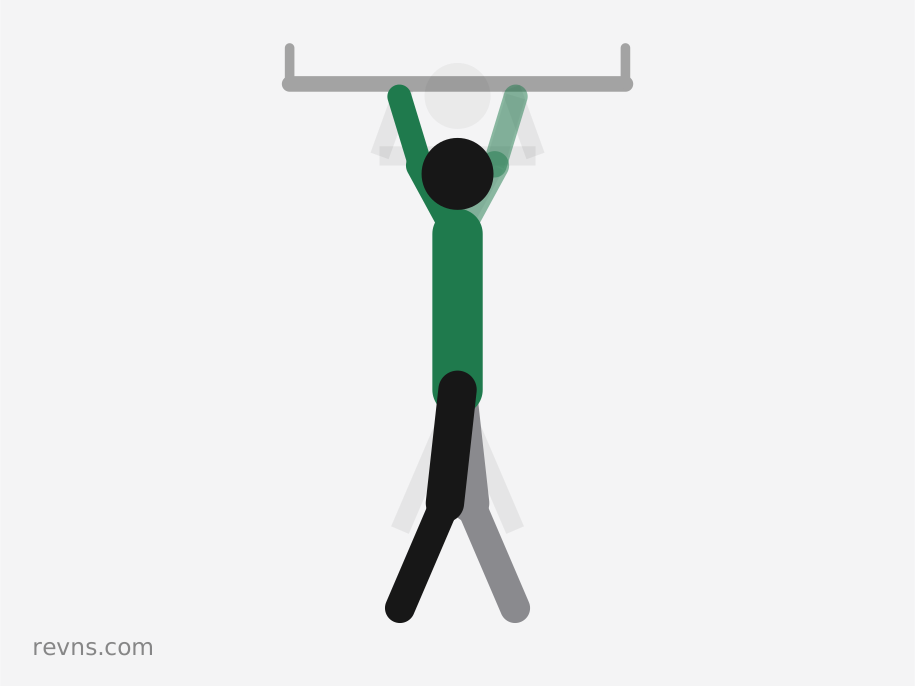
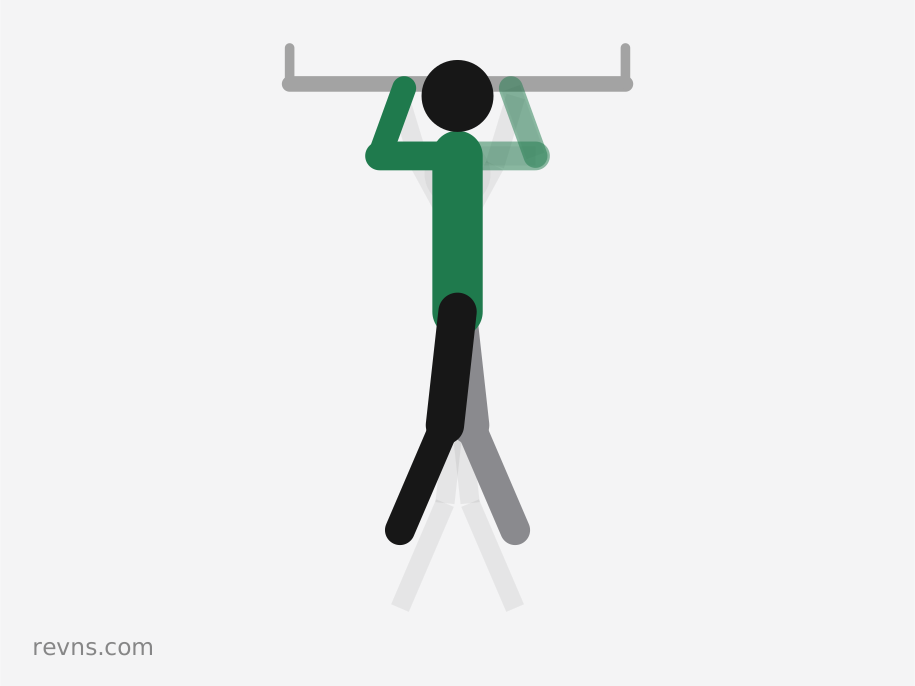
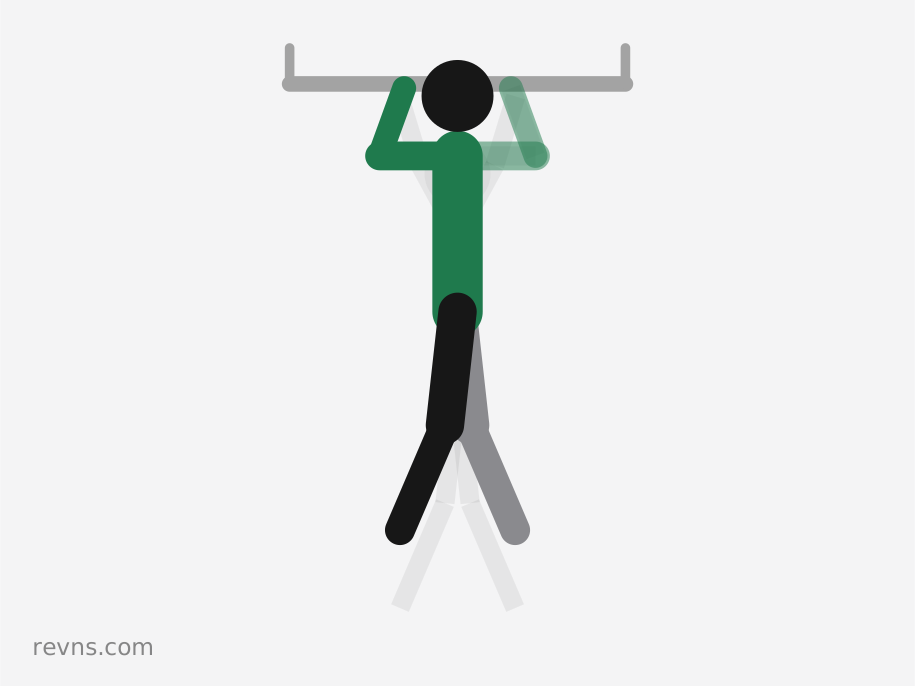
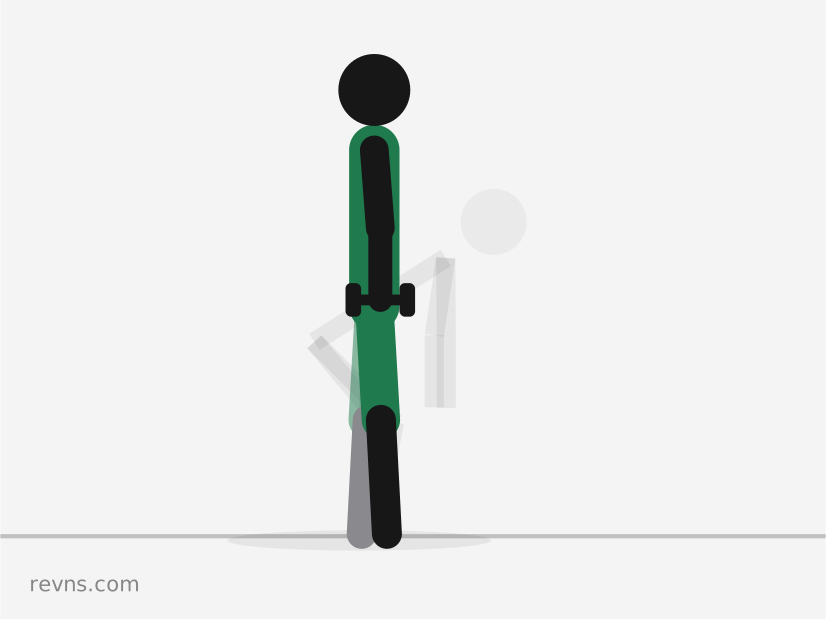
Negative pull-ups: a beginner strength exercise for the upper back and arms with pull-up bar or box. Start at the top, lower yourself as slowly as you can.
| Level | Beginner |
|---|---|
| Type | Strength |
| Movement | Compound, pull |
| Equipment | Pull-up bar, Box |
| Where | Gym, Home, Outdoors |
| Main muscles | Upper back, Arms |
| Counted in | Reps |
| Calories | About 47 kcal in 10 minutes at 70 kg |
How to do negative pull-ups
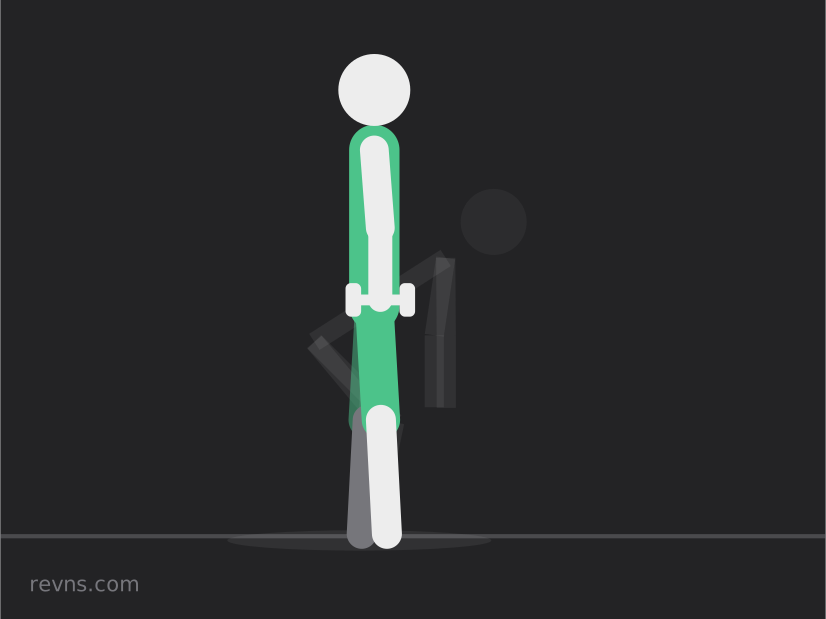
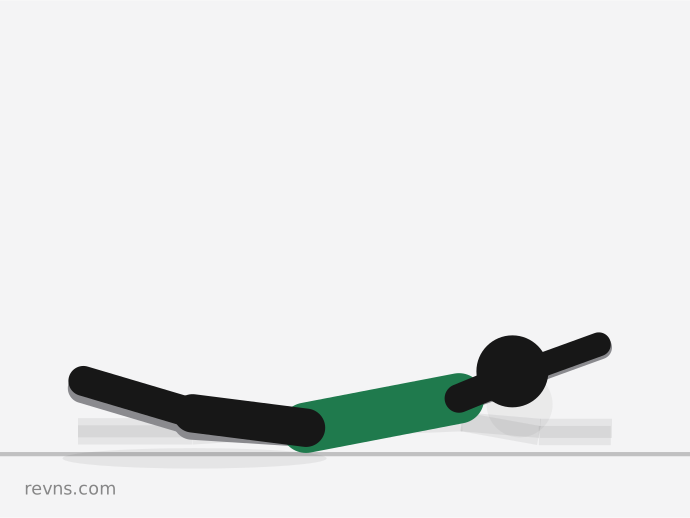
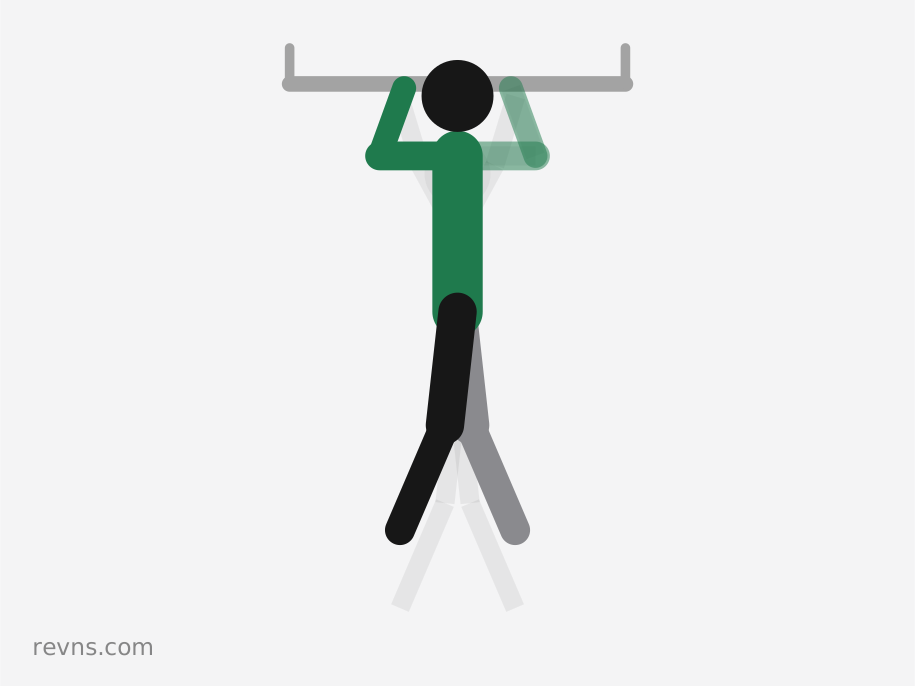
- Stand on a box or jump so your chin is over the bar.
- Hold the top position.
- Lower yourself as slowly as you can, taking 3 to 5 seconds.
- Step back up and repeat.
Form tips
- Aim for a steady, slow lowering.
- Keep the shoulders down.
- Rest well between reps.
Breathing
Breathe steadily while lowering.
What muscles do negative pull-ups work?
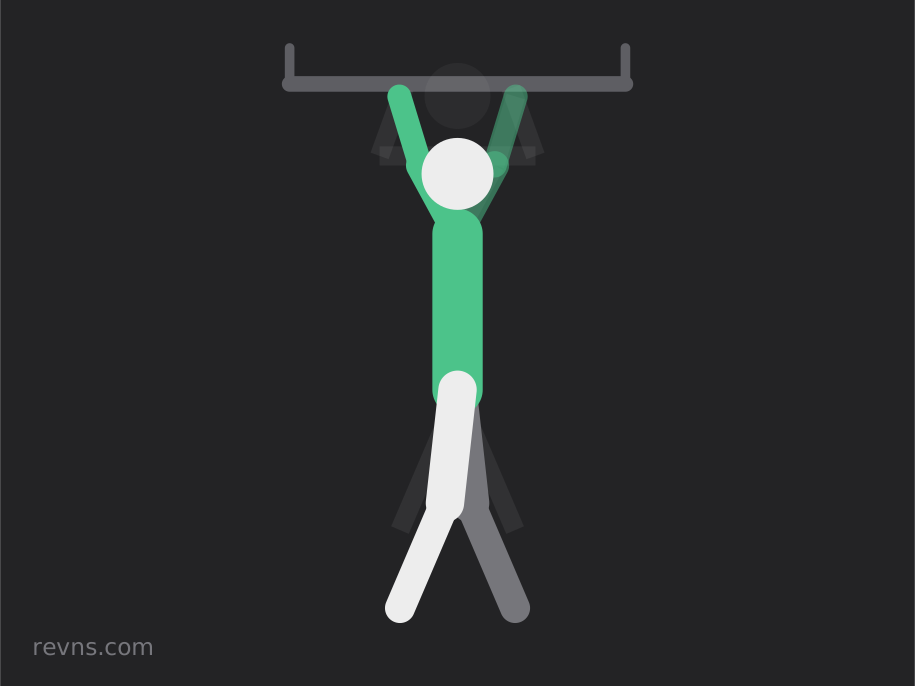
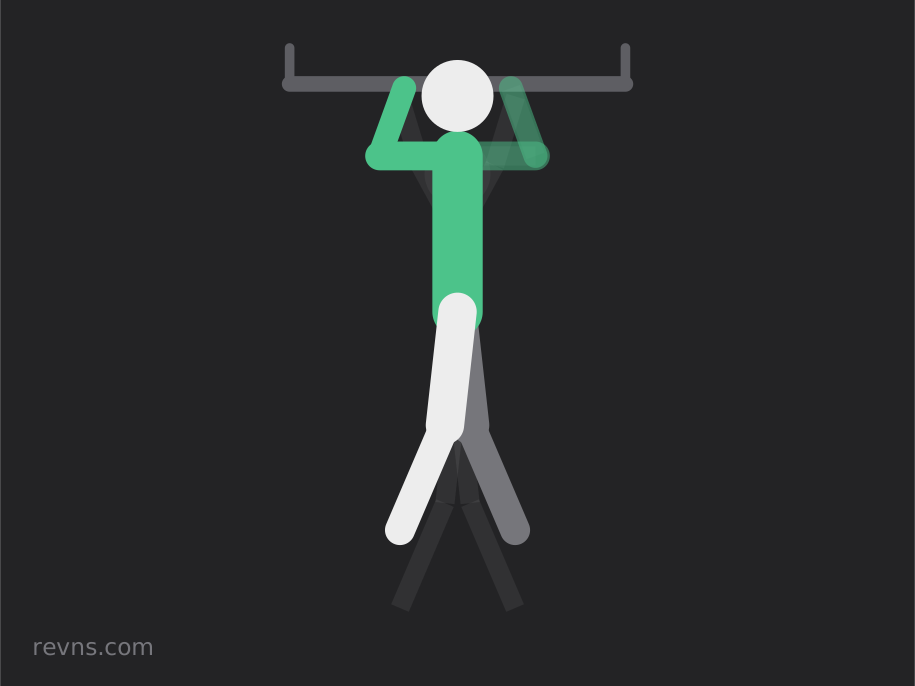
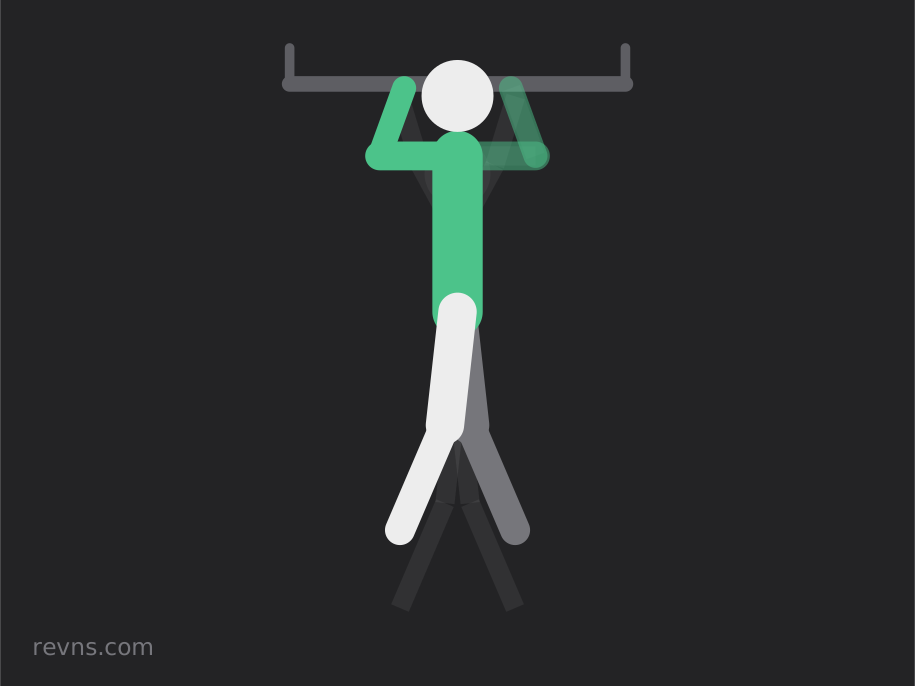
The main movers are green in the figure. The bars show each muscle’s share of the work, as the revns body map counts it.
- Upper backMain
- ArmsMain
What negative pull-ups are good for
- Building up to your first pull-up
- Lat and biceps strength
- Grip
How many sets and reps of negative pull-ups?
Starting points from the American College of Sports Medicine’s guidance. Pick the row for your level, and move up when the last set feels easy with clean form.
| Level | Sets | Reps or time | Rest | How often |
|---|---|---|---|---|
| Beginner (this move) | 2 to 3 | 8 to 15 | 45 to 60 seconds | 2 to 3 a week |
| Intermediate | 3 to 4 | 12 to 20 | 30 to 60 seconds | 3 to 4 a week |
| Advanced | 3 to 5 | 15 to 25 or a harder version | 30 to 60 seconds | 3 to 5 a week |
How many calories do negative pull-ups burn?
Active calories (on top of resting burn) for steady work, from a MET of 3.8: “Calisthenics (push-ups, sit-ups, pull-ups, lunges), moderate effort” (code 02022) in the 2024 Adult Compendium of Physical Activities. Rests, pace and effort change the real number.
| Body weight | 1 minute | 10 minutes | 30 minutes |
|---|---|---|---|
| 55 kg | about 4 kcal | about 37 kcal | about 110 kcal |
| 70 kg | about 5 kcal | about 47 kcal | about 140 kcal |
| 85 kg | about 6 kcal | about 57 kcal | about 170 kcal |
| 100 kg | about 7 kcal | about 67 kcal | about 200 kcal |
At about 6 seconds a rep, 3 sets of 12 are about 3.6 minutes of work: roughly 17 kcal at 70 kg.
Common negative pull-ups mistakes
- Dropping fast.
- Shrugging.
- Too many reps when tired.
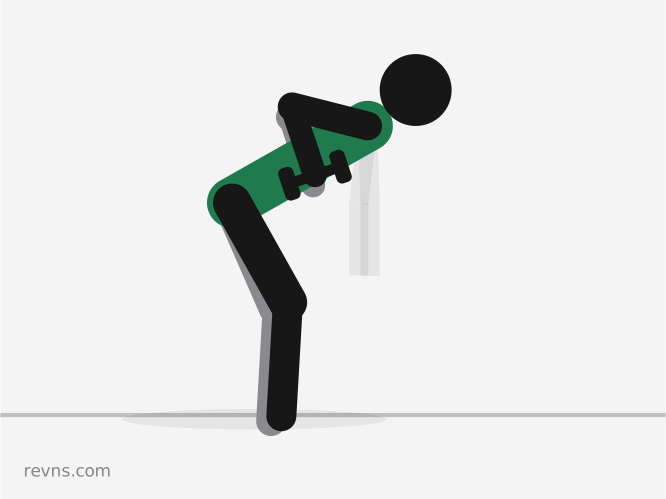
Negative pull-ups variations and alternatives
Who should take care with negative pull-ups?
Stop if you feel sharp pain, dizziness, chest pain or unusual shortness of breath, and see a clinician about pain that stays. If you are new to exercise, pregnant, or managing a heart, joint or other health condition, check with a professional first.
Workouts and guides with negative pull-ups
More back exercises
Use this demo on your site
Free to embed with the credit link. The figure carries Content Credentials (C2PA) that name revns as its maker.
<iframe src="https://revns.com/embed/exercises/negative_pullups" title="Negative pull-ups exercise demo" width="480" height="420" style="border:0;max-width:100%" loading="lazy"></iframe>
Sources
- Herrmann SD et al. 2024 Adult Compendium of Physical Activities. J Sport Health Sci 2024
- American College of Sports Medicine. Progression models in resistance training for healthy adults. Med Sci Sports Exerc 2009
- World Health Organization. Guidelines on physical activity and sedentary behaviour. 2020
General training guidance, not medical advice.