Arm workout without weights: a six-move beginner routine at home
An arm workout without weights for beginners: six moves with demos, sets, reps, rest, easier options and a rule for moving up. Needs a chair, a towel and a mat.
revns editorial · Published November 20, 2026 · Updated November 21, 2026 · 12 min read
Beginner arm workout without weights: six moves for triceps, biceps and shoulders, 2 rounds, 2 days a week, with easier options, rest times and a clear rule for when to make it harder.
A good arm workout without weights for a beginner uses six moves: incline push-ups, bench dips, towel curls, diamond push-ups, pike push-ups and plank shoulder taps. Do two rounds, rest about a minute between moves, and train two non-consecutive days a week. The session takes about 20 minutes and needs a mat, a sturdy chair or sofa, a counter or table, and a long towel. It trains the triceps (the back of the upper arm), the biceps (the front) and the shoulders. Every move below has a moving demo from the exercise library.
TL;DR
| Move | Sets × reps or time | Rest |
|---|---|---|
| Incline push-up | 2 × 8–12 | 60 s |
| Bench dip | 2 × 6–10 | 60 s |
| Towel curl | 2 × 10–12 | 45 s |
| Diamond push-up (on an incline) | 2 × 5–8 | 60 s |
| Pike push-up | 2 × 5–8 | 60 s |
| Plank shoulder taps | 2 × 8–10 per side | 45 s |
Two rounds in all, two days a week, with at least one rest day between sessions.
How do you do this arm workout without weights?
Follow this order each session.
- Warm up for 3–5 minutes. March on the spot, make big slow arm circles in both directions, then do ten slow wall push-ups. The goal is warm shoulders, elbows and wrists. For a longer routine, see how to warm up before a workout.
- Round 1. Do the six moves in order, resting 45–60 seconds between moves.
- Round 2. Repeat. In week one, do one round if your arms feel tired, and add the second round in week two.
- Cool down (optional). Walk for two minutes and breathe slowly.
Effort rule. Stop each set with two or three clean reps left. A bodyweight set is hard enough when the last reps slow down but still look like the first. Stop when form breaks, not when you reach the number.
How often. Start with two days a week, for example Monday and Thursday. The ACSM position stand on progression in resistance training (2009) suggests novices train each major muscle group two to three days a week, with one to three sets of 8 to 12 reps. The WHO 2020 guidelines say adults should do muscle-strengthening activity on two or more days a week, covering all major muscle groups. Arms are only part of that. Pair this session with a leg workout at home without weights, a core workout for beginners at home and a full body workout at home. Sore arms for a day or two are common after the first sessions; see DOMS explained for what is normal.
When to make it harder. Move up when you reach the top of the rep range on both sets of a move, with clean form, for two sessions in a row. Then change one thing: a lower surface, a longer lever or a slower lowering.
The moves
Each block gives what the move trains, the steps, the dose, a common mistake, and an easier and harder option.
1. Incline push-up
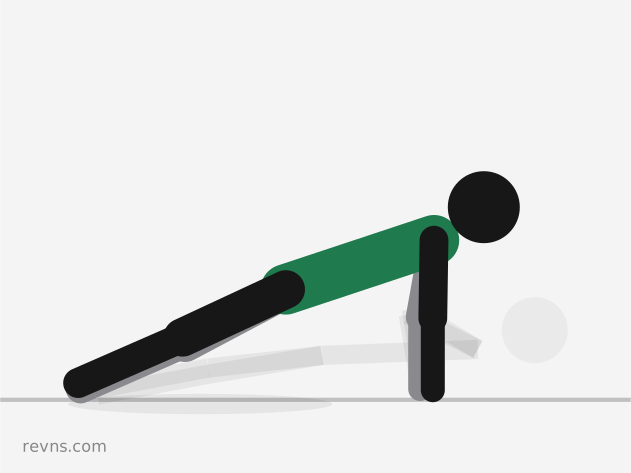
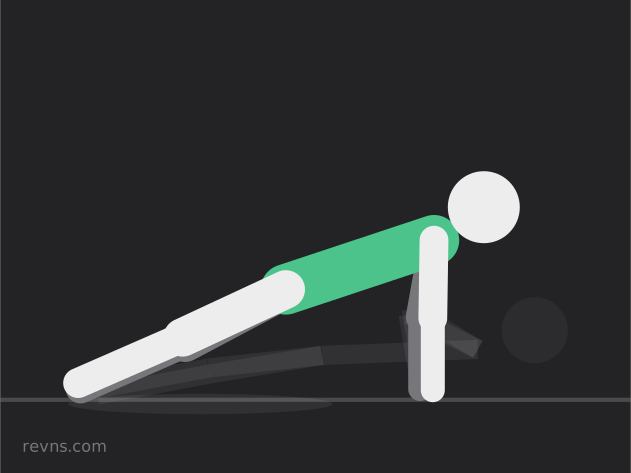
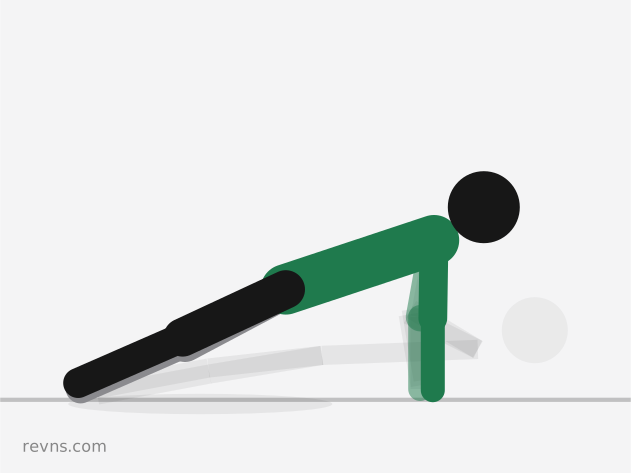
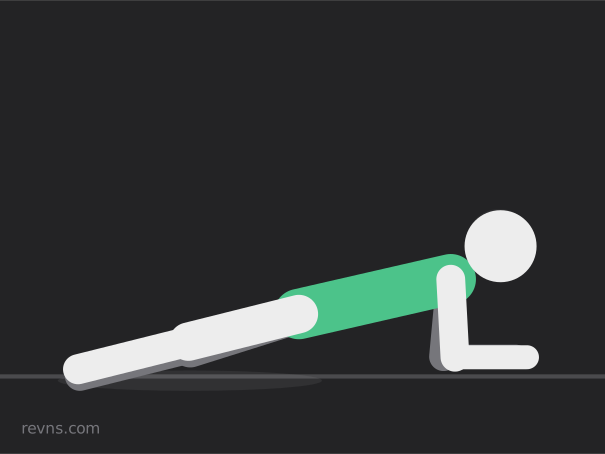
The incline push-up puts your hands on a raised surface, so you lift less of your body weight. It trains the triceps, the front of the shoulders and the chest together, and it is the safest way to warm the arms up for the harder moves. Use a counter, a sturdy table or a heavy bench, and check that it cannot slide. The higher the surface, the easier the move.
- Put your hands on a sturdy surface, slightly wider than your shoulders.
- Walk your feet back until your body is one straight line from head to heels.
- Lower your chest to the edge of the surface, elbows at about 45 degrees.
- Push back up until your arms are straight.
Do: 2 × 8–12, rest 60 s. Move on when: 12 clean reps on both sets for two sessions; then lower the surface. Common mistake: bending at the hips so the bottom sticks up. Squeeze your glutes and keep the body in one line. Easier: wall push-ups. Harder: knee push-ups, then push-ups on the floor.
2. Bench dip
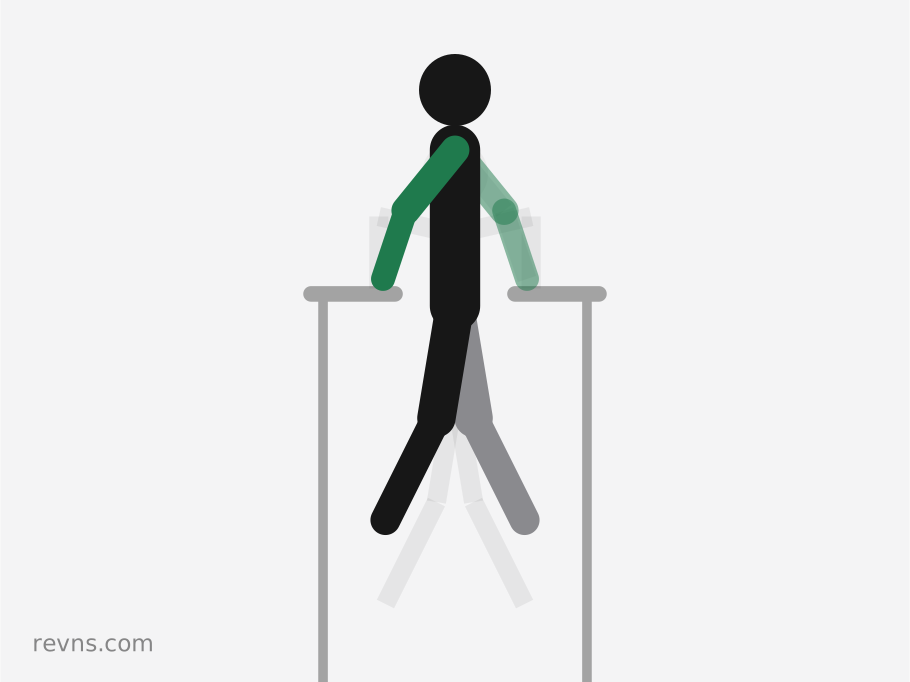
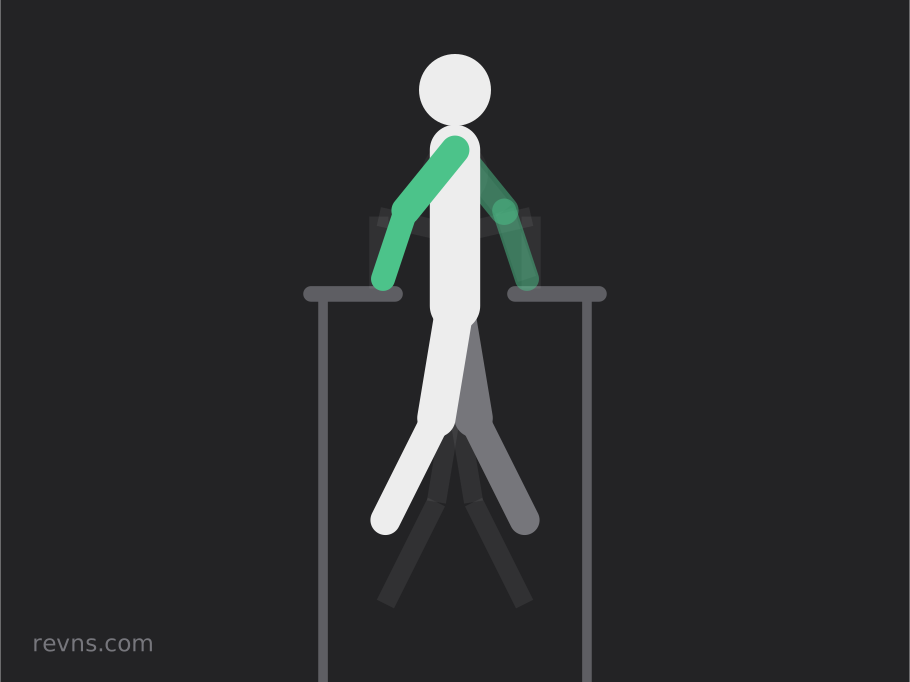
The bench dip is the main triceps move you can do at home with a chair. Your hands push your body up from behind you, so the triceps do most of the work, with help from the shoulders and chest. It puts a lot of stress on the front of the shoulder when you go deep, so keep the range short. Use a heavy chair or the edge of a sofa that cannot slide, and bend your knees to keep it easy.
- Sit on the edge of a sturdy chair, hands beside your hips.
- Slide your hips off the chair, knees bent and feet flat.
- Bend your elbows until they reach about 90 degrees.
- Push back up until your arms are straight.
Do: 2 × 6–10, rest 60 s. Move on when: 10 clean reps on both sets for two sessions; then straighten your legs. Common mistake: going so deep the shoulders ache, or letting the elbows flare. Stop at 90 degrees and keep the elbows pointing back. Easier: knee push-ups, or keep your feet closer to the chair. Harder: straighten the legs, then try dips on parallel bars.
3. Towel curl
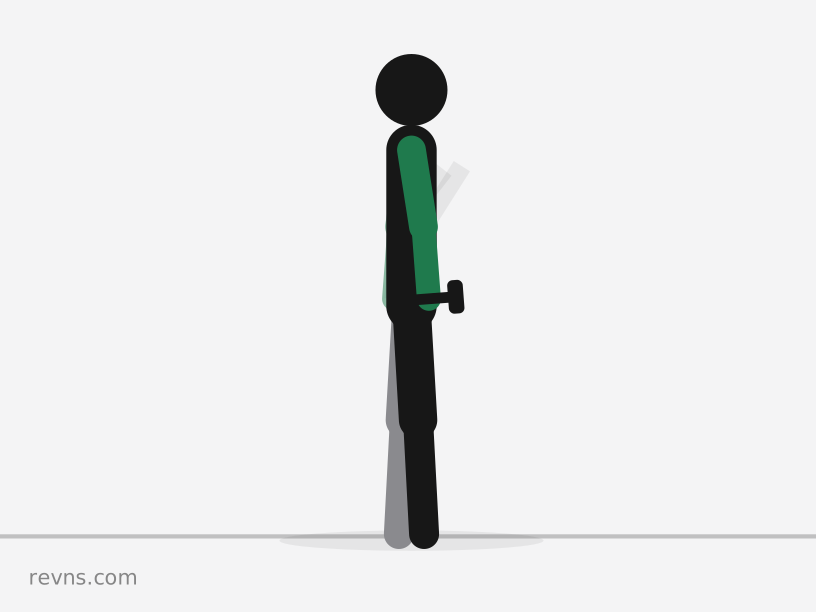
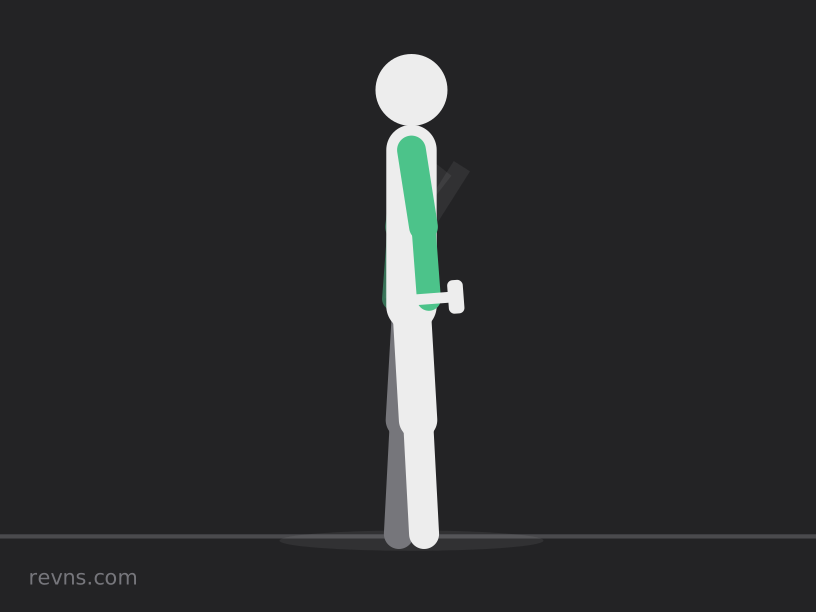
Most bodyweight arm routines leave out the biceps, because biceps work when you pull and push-ups only push. The towel curl fixes that with no kit. You stand on the middle of a long towel and curl your hands up while your feet press down on it, so your feet supply the resistance. You set the effort: press harder with the feet and the curl gets harder. Use a towel that will not tear.
- Stand with both feet in the middle of a long towel, ends in your hands.
- Keep your elbows by your sides and your palms up.
- Curl your hands to your shoulders while your feet press down on the towel.
- Lower slowly over three seconds.
Do: 2 × 10–12, rest 45 s. Move on when: you can do 12 reps with strong foot pressure and a slow lowering on both sets, for two sessions. Then try a band or a weight. Common mistake: letting the elbows drift forward or shrugging. Keep the elbows pinned to your sides. Easier: press less with the feet. Harder: band curls or concentration curls, which need a band or a weight.
4. Diamond push-up
The diamond push-up brings your hands together under your chest, which shifts more of the work onto the triceps. It is a harder move than a standard push-up, so a beginner should do it on an incline or on the knees. Hands about a thumb apart is enough; if your wrists complain, spread them a little.
- Put your hands on a sturdy surface, thumbs and index fingers touching in a diamond.
- Walk your feet back until your body is straight.
- Lower your chest to your hands, elbows close to your body.
- Push back up.
Do: 2 × 5–8, rest 60 s. Move on when: 8 clean reps on both sets for two sessions; then lower the surface. Common mistake: elbows flaring out, which turns it into a wide push-up. Keep them tucked. Easier: incline push-ups with hands a little closer. Harder: diamond push-ups on the floor, then decline push-ups.
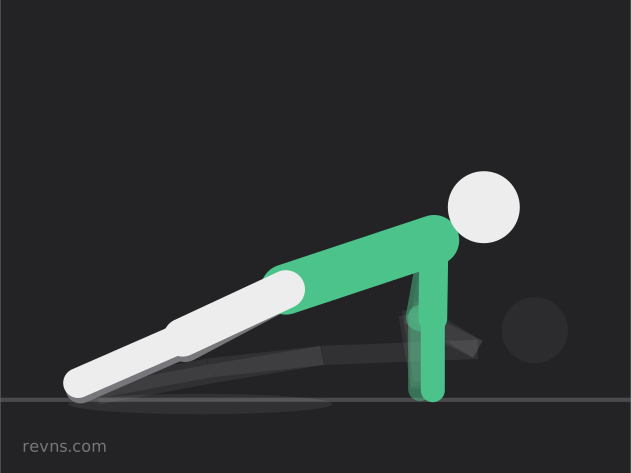
5. Pike push-up
The pike push-up puts your hips high so the shoulders, not the chest, do the pressing. It is the bodyweight stand-in for an overhead press and trains the shoulders and triceps. It is a step up for a beginner, so start with your hands on the floor and your feet close to your hands, and lower only part of the way. A shallow pike with a good line is better than a deep one that strains the neck.
- Start in a high plank, then walk your feet towards your hands so your hips rise.
- Keep your legs and back straight, head between your arms.
- Bend your elbows to lower the top of your head towards the floor.
- Press back up until your arms are straight.
Do: 2 × 5–8, rest 60 s. Move on when: 8 clean reps on both sets for two sessions; then raise your feet on a low step. Common mistake: letting the elbows flare wide. Keep them at about 45 degrees. Easier: a shallow range, or incline push-ups. Harder: feet on a low step, then decline push-ups.
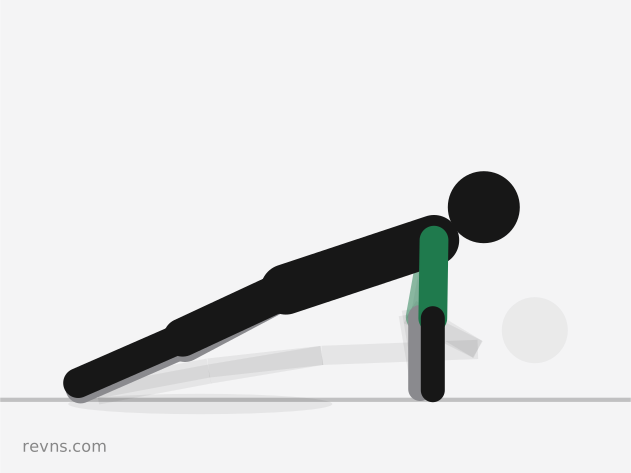
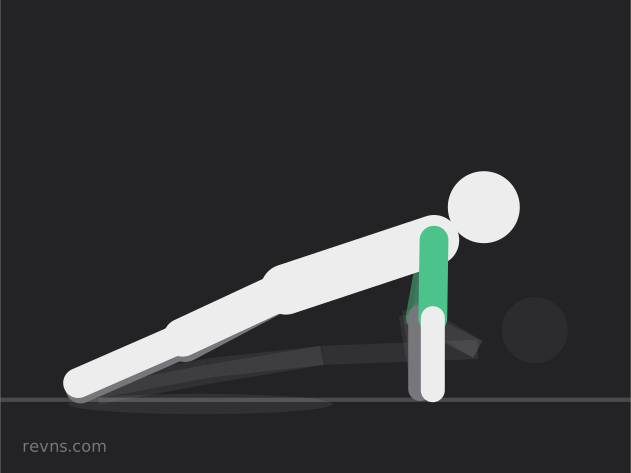
6. Plank shoulder taps
Plank shoulder taps ask your shoulders and arms to hold you still while one hand leaves the floor. They train the shoulders and the muscles around the shoulder blades, and they teach the body to stay straight, which makes every push-up cleaner. Place your feet wider than your hips to make it easier.
- Start in a high plank, feet a little wider than your hips.
- Lift one hand and tap the opposite shoulder.
- Put it back and switch.
- Keep your hips still.
Do: 2 × 8–10 per side, rest 45 s. Move on when: 10 per side with level hips on both sets, for two sessions; then bring your feet closer together. Common mistake: hips rocking side to side. Slow down and widen the feet. Easier: high plank or knee high plank. Harder: feet together, or mountain climbers.
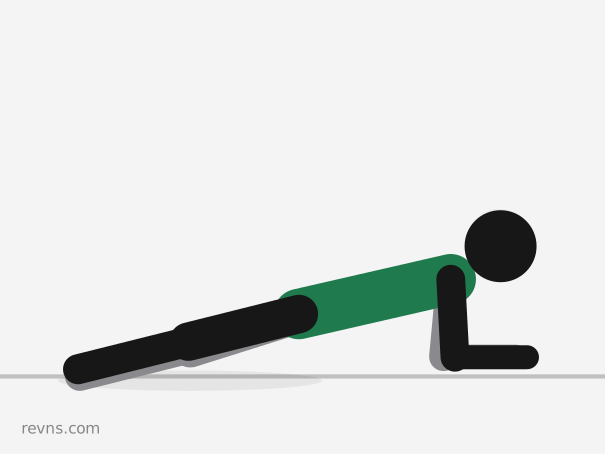
Can you build arm muscle without weights?
Yes, at first. Kikuchi and Nakazato (Journal of Exercise Science and Fitness, 2017) randomised 18 untrained young men to train twice a week for 8 weeks, either with a bench press at 40% of their one-rep maximum or with push-ups adjusted to match that load. Muscle thickness in the chest and the triceps grew in both groups, with no clear difference. What it shows: a push-up can be a real arm and chest exercise for a beginner. What it does not show: the sample was small, all male and untrained, so it says little about women, older adults or people who already lift.
A second paper explains why a ladder of easier and harder versions works. Ebben and colleagues (Journal of Strength and Conditioning Research, 2011) measured the peak force through the hands and feet in 23 recreationally fit adults (14 men, 9 women) across six push-up variations. Push-ups with the feet raised produced more force than every other variation, and push-ups with the hands raised or from the bent-knee position produced less than every other variation. Changing the angle changes the load, with no equipment.
A third paper covers effort. A 2017 meta-analysis by Schoenfeld and colleagues pooled 21 trials and found similar muscle growth with light and heavy loads when sets were taken close to failure. So a bodyweight set counts when it is hard. The limit is that, once you can do many clean reps, you need a harder version or added load to keep gaining.
What do arm workouts without weights miss?
Bodyweight moves push well and pull poorly. Push-ups, dips and planks cover the triceps, chest and shoulders. The biceps and the muscles of the upper back need pulling, which is why this routine includes a towel curl and why many pages that show only push-ups leave the front of the arm under-trained. If you can get a low sturdy bar or a strong table, inverted rows are the next pull to add. A resistance band is the cheapest later upgrade. Forearms and grip get some work from every plank and push-up, but they are not trained directly.
Do arm exercises without weights tone or slim the arms?
Strength training builds muscle, and it is a good use of 20 minutes. It does not decide where your body stores or loses fat, and the evidence does not support spot reduction. If your goal is a change in body shape, the main levers are the whole training week, food and sleep. See what is a calorie deficit for the basics. Track reps in a workout log so you can see progress that the mirror hides.
How do you make a home arm workout harder without weights?
| Lever | How | Example |
|---|---|---|
| Lower the surface | Move from a table to a chair to the floor | Incline to floor push-up |
| Longer lever | Move from knees to toes | Knee to full push-up |
| More reps | Add two reps a set, up to about 12 | 2 × 8 to 2 × 10 |
| Slower lowering | Take three seconds to go down | Slow towel curl |
| Pauses | Hold one to two seconds at the bottom | Paused dip |
| Raise the feet | Put your feet on a low step | Pike or decline push-up |
| Extra load | Wear a backpack with books | Weighted push-up |
Change one lever at a time. This is progressive overload in plain words. For a longer ladder from wall push-ups to pull-ups, see calisthenics for beginners.
What should you do this week?
- Day 1: One round of all six moves. Note the reps you reached and how hard each set felt.
- Day 2: Rest, or walk.
- Day 3: Two rounds if day 1 felt fine. Log reps in a workout log.
- Next week: Add two reps to one move, or lower the surface for one move. Not both at once.
- Week four: Try the harder option for the move that feels easiest.
If you already train, use this as a light session between runs or as a warm-up before an upper-body day. Many beginners see reps rise within two to four weeks, partly because the nervous system learns the pattern; visible change takes longer and varies with food, sleep and consistency. For a plan with the rest of the body, see strength training for beginners. A chest workout at home shares several of these moves.
Who should check with a clinician first, and when should you stop?
This routine is for healthy adults who can get down to the floor and back up. Ask a doctor or physiotherapist first if you have a heart or lung condition, high blood pressure that is not controlled, a shoulder, wrist, elbow or neck injury, recent surgery, or if you are pregnant or have recently given birth.
Stop and seek advice for:
- Chest pain, pressure, fainting or unusual breathlessness.
- Sharp pain in the shoulder, wrist or elbow, or a joint that swells.
- Dizziness or a feeling you may fall.
- Numbness or tingling that runs down an arm.
- Pain that gets worse from session to session, even with easier versions.
If your wrists hurt on the floor, try push-up handles or fists, or stay on the incline versions. Dips are the move most likely to bother shoulders; skip them or use the easier option if the front of the shoulder hurts. Muscle burn and mild soreness the next day are normal. Sharp or joint pain is not.
This is general training guidance, not medical advice.
Related
- Bodyweight chest workout at home: a five-move beginner routine
- Calisthenics for beginners: push-up to pull-up progressions at home
- Full body workout at home with no equipment: a six-move beginner routine
- Strength training for beginners: a simple plan for the first eight weeks
- Progressive overload in plain words
- Arm day workout at the gym: a six-move cable routine for intermediates
- Tricep exercises at home: a six-move beginner routine with a chair
- Exercise library
Sources
- Bull FC et al. World Health Organization 2020 guidelines on physical activity and sedentary behaviour. Br J Sports Med 2020
- American College of Sports Medicine. Progression models in resistance training for healthy adults. Med Sci Sports Exerc 2009
- Kikuchi N, Nakazato K. Low-load bench press and push-up induce similar muscle hypertrophy and strength gain. J Exerc Sci Fit 2017
- Ebben WP et al. Kinetic analysis of several variations of push-ups. J Strength Cond Res 2011
- Schoenfeld BJ, Grgic J, Ogborn D, Krieger JW. Strength and hypertrophy adaptations between low- vs. high-load resistance training: a systematic review and meta-analysis. J Strength Cond Res 2017
Terms in this post
revns publishes training and nutrition guidance, not medical advice. See a clinician for symptoms, injury or a medical condition. Accurate as of November 21, 2026.