Tricep exercises at home: a six-move beginner routine with a chair
Tricep exercises at home for beginners: six bodyweight moves with a sturdy chair, sets and reps, animated demos, shoulder-safe depth rules, and easier options.
revns editorial · Published November 21, 2026 · 10 min read
Tricep exercises at home: six beginner moves with a chair or floor, two rounds, reps and rest in a table, animated demos, ACSM and WHO frequency, and easier options for every exercise.
Tricep exercises at home for a beginner mean six bodyweight moves and one sturdy chair: close-grip wall push-ups, close-grip incline push-ups, bench dips on the chair, floor triceps dips, knee push-ups with elbows close, and pike push-ups. Do two rounds, rest about 45–60 seconds between moves, and train two non-consecutive days a week. The session takes about eighteen to twenty-two minutes including a short warm-up. Every move has a moving demo in the exercise library.
TL;DR
| Move | Sets × reps | Rest |
|---|---|---|
| Wall push-up (close grip) | 1 × 12–15 (warm-up) | 30 s |
| Incline push-up (close grip) | 2 × 8–12 | 60 s |
| Bench dip on a chair | 2 × 6–10 | 60 s |
| Floor triceps dip | 2 × 10–15 | 45 s |
| Knee push-up (elbows close) | 2 × 8–12 | 60 s |
| Pike push-up | 2 × 5–8 | 60 s |
Two rounds through rows 2–6 (row 1 is the warm-up each round). About 18–22 minutes with rests.
| Starting test | If you pass | If not yet |
|---|---|---|
| 12 slow close-grip wall push-ups with a straight body | Run the full plan with chair dips | Skip chair dips week one; add an extra floor dip set and stay on the wall and incline |
How do you do tricep exercises at home?
Use this order each session. You need a mat or carpet, a sturdy chair or sofa that does not slide, and a counter or table for incline push-ups.
- Warm up for 3–5 minutes. March on the spot, circle the shoulders, then do one set of close-grip wall push-ups. For a longer template, see how to warm up before a workout.
- Round 1. Do moves 2–6 in the table, resting 45–60 seconds between moves.
- Round 2. Repeat. In week one, do one round if your elbows feel tired, and add round two in week two.
- Cool down (optional). Walk for two minutes and stretch the triceps: bend one arm behind your head and gently draw the elbow with the other hand for twenty to thirty seconds per side.
Effort rule. Stop each set with two clean reps left. The last reps should look like the first: no hip sag on push-ups, no shoulder roll on dips.
How often. Start with Monday and Thursday, or any two days with a rest day between. The ACSM position stand on progression in resistance training (2009) suggests novices train each major muscle group two to three days a week, with one to three sets of eight to twelve reps. The WHO 2020 guidelines say adults should do muscle-strengthening activity on two or more days a week for all major muscle groups. Triceps are one slice of that week. Pair this with a full body workout at home, a back routine, and rest days as needed. Mild triceps soreness for a day after the first sessions is common; see DOMS explained.
When to make it harder. Move up when you hit the top of the rep range on both sets of a move, with clean form, for two sessions in a row. Then change one lever: a lower incline, straighter legs on chair dips, or an extra slow second on the lowering phase.
The moves
Each block lists what the move trains, steps, dose, one mistake, and easier and harder options. The triceps (triceps brachii) straighten the elbow; the long head also helps when your upper arm is overhead, which is why pike push-ups appear in the list.
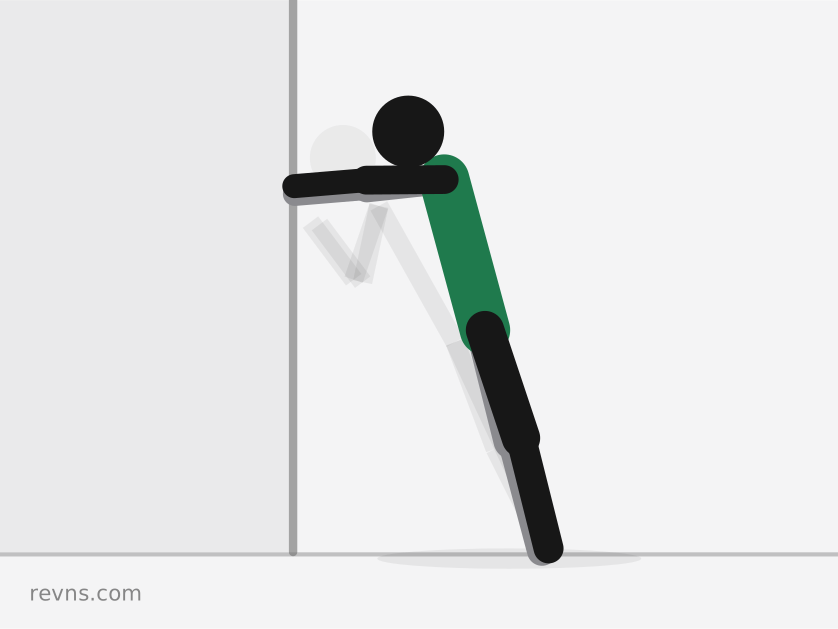
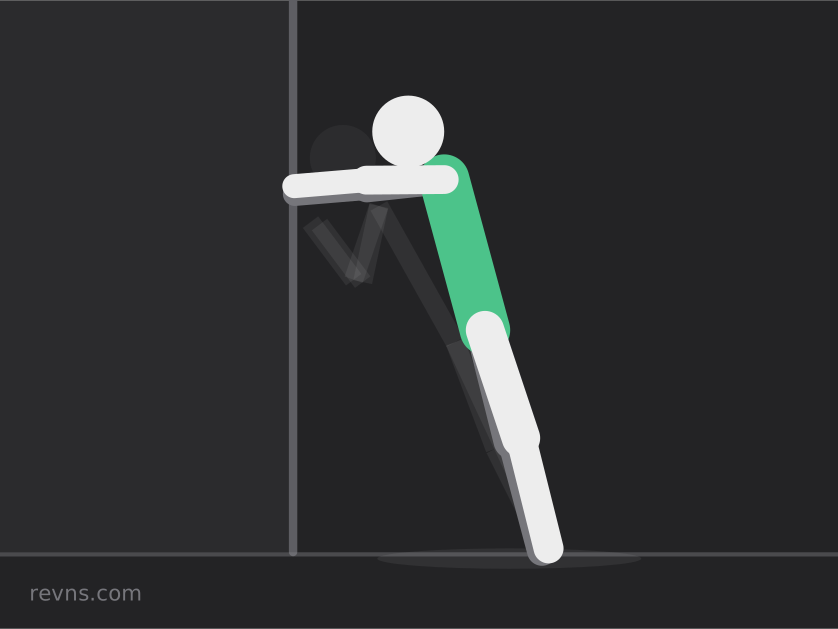
1. Wall push-up (close grip)
Close-grip wall push-ups load less weight than floor push-ups, so they warm the elbows and triceps without jumping straight to dips. Placing the hands under the shoulders keeps the elbows closer to the ribs, which shifts more work to the triceps than a wide hand position.
- Stand an arm’s length from a wall and place your hands on it at shoulder height, thumbs about a hand-width apart.
- Walk your feet back so your body forms one straight line from head to heels.
- Bend your elbows back along your sides and bring your chest close to the wall.
- Press the wall away until your arms are straight.
Do: 1 × 12–15 each round as a warm-up (not counted toward fatigue). Move on when: 15 easy reps; then rely on the incline as your main push. Common mistake: standing too close so the body folds at the hips. Step back until you feel mild work in the backs of the arms. Easier: Stand closer to the wall. Harder: incline push-ups on a lower surface.
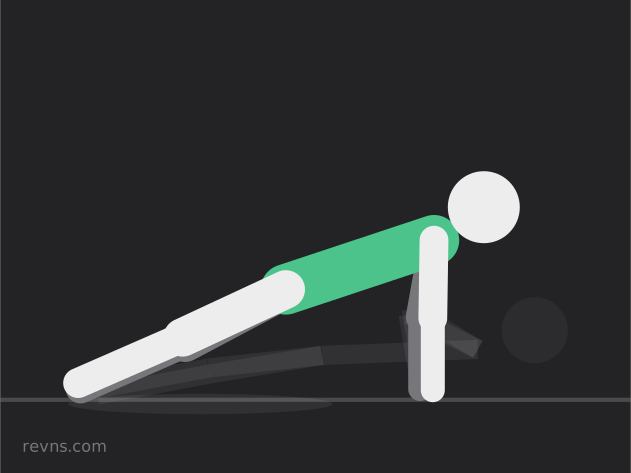
2. Incline push-up (close grip)
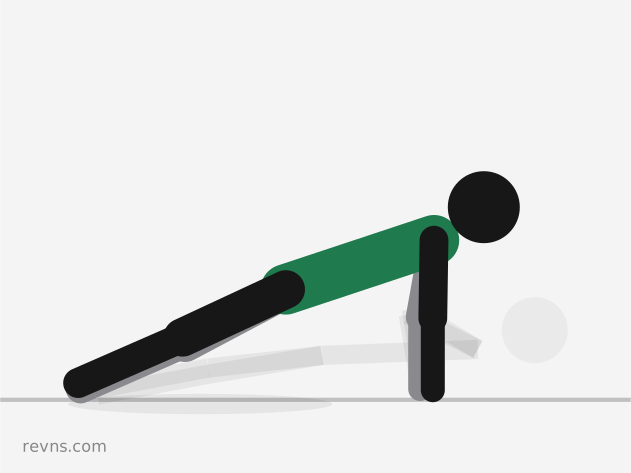
The incline push-up is the workhorse of home tricep training: your hands stay on a counter or table, so you lift less than your full body weight but still train a full push. A close grip keeps the elbows tracking back.
- Put your hands on a sturdy surface slightly narrower than shoulder-width, palms flat.
- Walk your feet back until your body is a straight plank from head to heels.
- Lower your chest to the edge, elbows at about 45 degrees from your sides.
- Push back up until your elbows are straight.
Do: 2 × 8–12, rest 60 s. Move on when: 12 reps on both sets for two sessions; then use a lower surface. Common mistake: letting the hips pike up. Brace your stomach and squeeze your glutes. Easier: wall push-ups with the same hand width. Harder: knee push-ups, then push-ups on the floor.
3. Bench dip on a chair
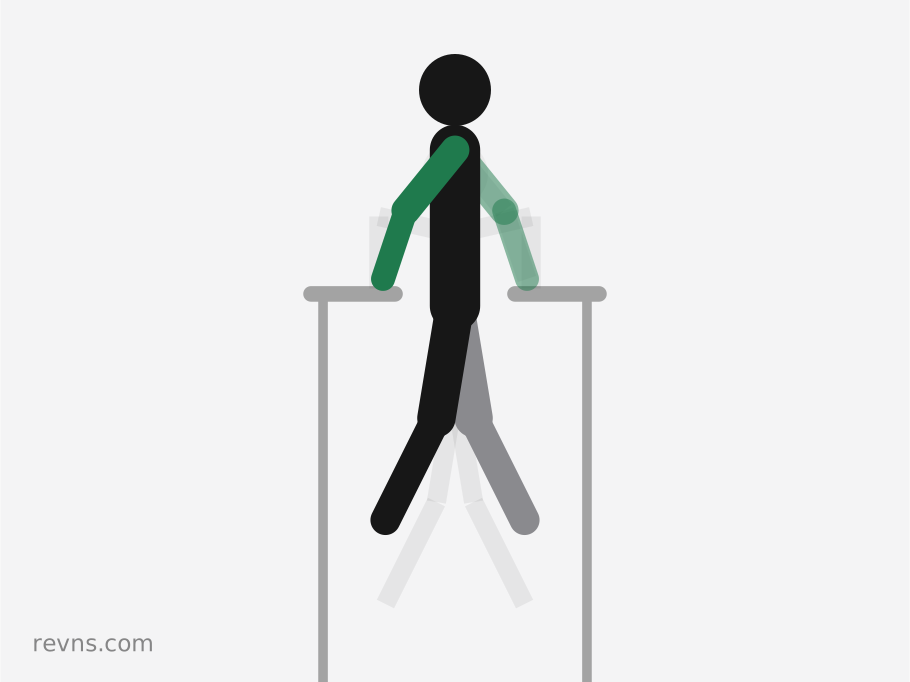
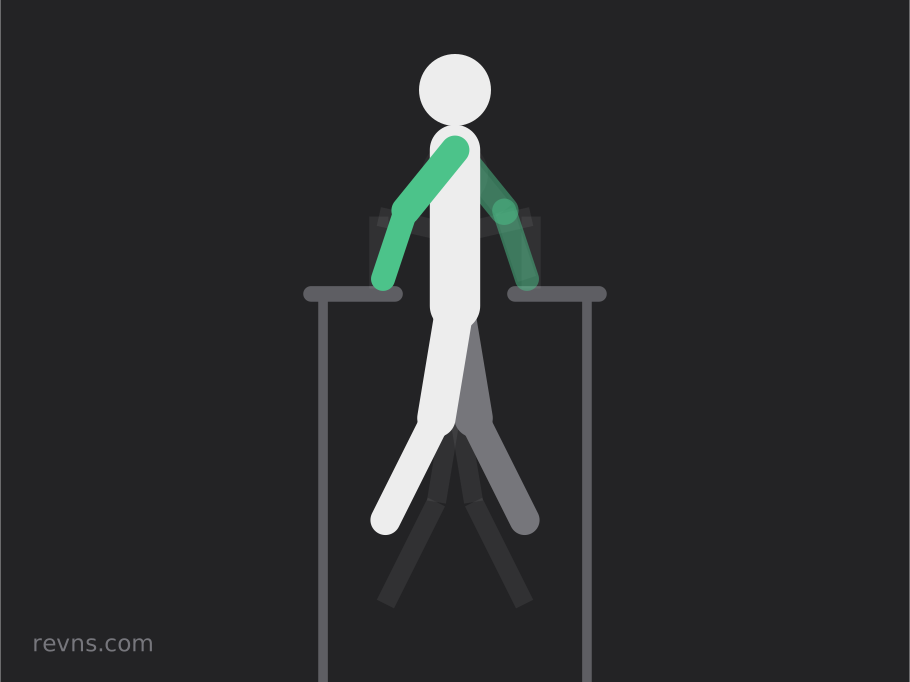
Chair dips are the heaviest tricep move in this routine. Your hands press your body up from behind you, so the triceps do most of the work. They also load the front of the shoulder when you go too deep, so range matters more than depth.
- Sit on the edge of a sturdy chair, hands beside your hips, fingers gripping the seat.
- Slide your hips off the front, feet flat and knees bent.
- Bend your elbows straight back until your upper arms are about level with the floor.
- Press through your palms to straighten your arms.
Do: 2 × 6–10, rest 60 s. Move on when: 10 clean reps on both sets; then walk your feet farther out or pause one second at the bottom. Common mistake: sinking until the shoulders roll forward. Stop when the upper arms are parallel to the floor, not when your hips touch the floor. Easier: floor triceps dips. Harder: dips on parallel bars when you have access.
4. Floor triceps dip
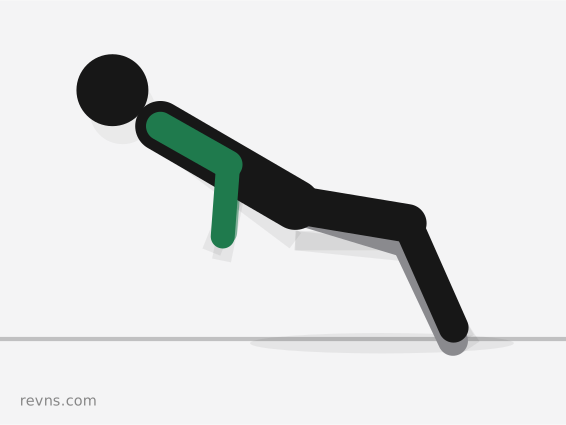
Floor triceps dips use a short range and a lighter load than chair dips. They suit your first dip pattern, a high-rep finisher, or a swap when chair dips bother your shoulders.
- Sit on the floor with knees bent and feet flat.
- Place your hands behind your hips, fingers pointing toward your feet.
- Lift your hips slightly and bend your elbows back to lower.
- Straighten your arms to lift again without sitting down between reps.
Do: 2 × 10–15, rest 45 s. Move on when: 15 reps feel easy; prioritise chair dips or add a one-second pause at the top. Common mistake: driving with the legs. Keep your feet light on the floor so the arms lift you. Easier: wall push-ups. Harder: bench dips.
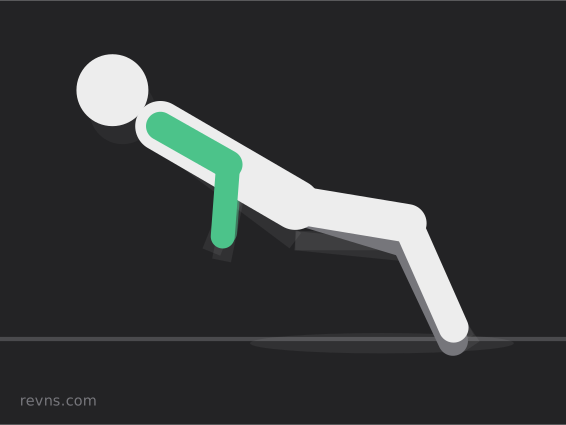
5. Knee push-up (elbows close)
Knee push-ups reduce load while you practise elbows close to the ribs, the same elbow path you want on the floor. They bridge the gap between incline and full push-ups for triceps.
- Kneel and place your hands under your shoulders, thumbs slightly closer than shoulder-width.
- Walk your hands forward until your body is straight from knees to head.
- Lower your chest toward the floor, elbows brushing your sides.
- Push back up to straight arms.
Do: 2 × 8–12, rest 60 s. Move on when: 12 reps on both sets; then try push-ups for one set. Common mistake: leading with the hips and barely bending the elbows. Move the chest, not the belt line. Easier: incline push-ups. Harder: push-ups or diamond push-ups when wrist comfort allows.
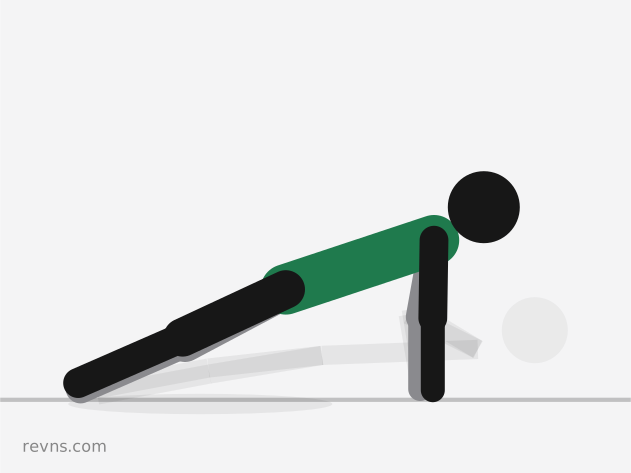
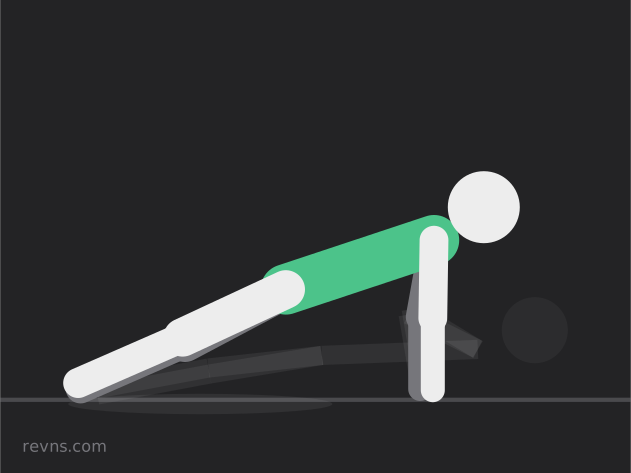
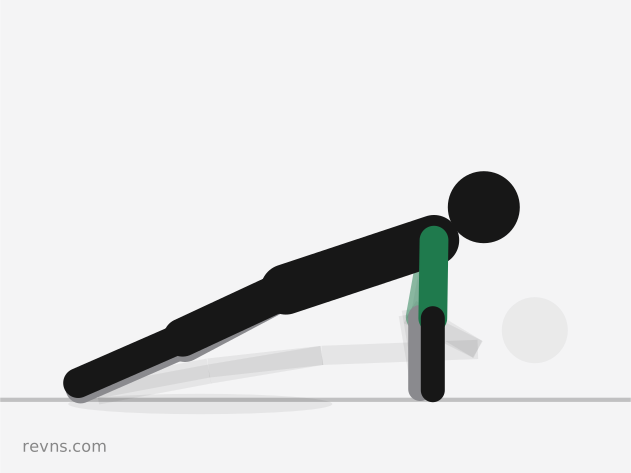
6. Pike push-up
The pike push-up puts the hips high so the shoulders and triceps press in a more overhead line. It trains the long head of the triceps and helps lockout strength for everyday pushing.
- Start in a downward-dog shape: hands and feet on the floor, hips high.
- Bend your elbows to lower the top of your head toward the floor between your hands.
- Keep your hips high and legs fairly straight.
- Press the floor away to straighten your arms.
Do: 2 × 5–8, rest 60 s. Move on when: 8 shallow reps are steady; then lower the head a little closer to the floor. Common mistake: dropping the hips so it becomes a regular push-up. Walk your feet in to keep a steep pike. Easier: Pike with hands on a chair seat. Harder: Deeper pike or decline push-ups.
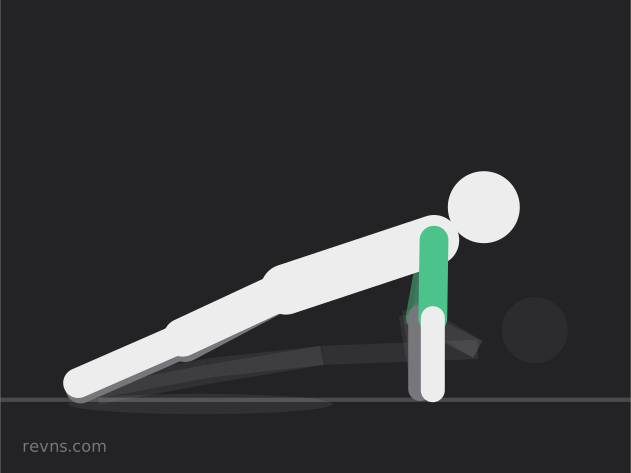
What are the best tricep exercises at home?
The best set for most healthy beginners is the six above: they need no dumbbells, use a chair almost everyone has, and progress from wall to floor to chair. Pages that only list band pushdowns or dumbbell kickbacks skip readers who own nothing. This routine starts with pushes and dips, then adds overhead angle with the pike.
If you have only a floor, do wall and incline push-ups, floor dips, knee push-ups and pike push-ups, and skip chair dips until you have a stable seat. If chair dips hurt your shoulders, swap an extra set of floor dips and stay on incline push-ups; do not force depth.
| Goal | Move to emphasise | Simple progression |
|---|---|---|
| Lockout strength (straightening the elbow) | Chair dips, floor dips | Add reps, then pause at the bottom |
| Long-head triceps (overhead line) | Pike push-ups | Feet closer to hands |
| Joint-friendly start | Wall and incline close-grip push-ups | Lower the incline over weeks |
What muscles do these tricep exercises work?
The triceps brachii has three parts (heads). All three extend the elbow. The long head crosses the shoulder, so moves with the upper arm overhead, such as pike push-ups, bias that region more than dips alone. Push-ups and dips also use the chest (pectorals) and front shoulders (anterior deltoids) as helpers.
You cannot spot-reduce arm fat: fat loss follows overall energy balance, not which muscle you train. Strength work can build triceps muscle; how your arms look also depends on food, sleep and genetics.
How do tricep exercises at home compare to gym machines?
Cable pushdowns and machine dips keep tension at every angle and let you add load in small jumps. At home you trade that for convenience and no cost. Bodyweight dips and close-grip push-ups can still be heavy: Ebben and colleagues (J Strength Cond Res, 2011) measured peak vertical ground reaction force in six push-up variations in 23 recreationally fit adults (14 men, 9 women). Feet-elevated push-ups produced the highest loads; hands-elevated and knee push-ups the lowest. That pattern helps you judge how hard incline and floor push-ups feel, but the study did not measure triceps muscle activity.
A practical split: train triceps at home twice a week, and add gym cable work later if you join a gym—see arm day at the gym for a cable template.
What should you do this week?
- Day 1: One round of all six moves. Note reps and how the front of the shoulders feel on chair dips.
- Day 2: Rest or walk.
- Day 4: Two rounds if day 1 felt fine. Log reps in a workout log or your tracker.
- Week 2: Add two reps to floor dips or knee push-ups, not to every move at once.
- Week 4: Try chair dips with feet farther out only if shoulders stay comfortable.
If you already lift, use this as a light arm day between compound sessions. Beginners often see rep counts rise within two to four weeks as the nervous system learns the patterns.
Who should check with a clinician first, and when should you stop?
This routine is for healthy adults who can use their arms against the floor and a chair. Ask a doctor or physiotherapist first if you have a heart or lung condition, uncontrolled high blood pressure, a shoulder, elbow, wrist or neck injury, recent surgery, or if you are pregnant or recently postpartum.
Stop and seek advice for:
- Chest pain, fainting, or unusual breathlessness.
- Sharp pain in the shoulder, elbow or wrist, or swelling in a joint.
- Dizziness or a feeling you may fall.
- Numbness or tingling down the arm.
- Pain that worsens each session despite easier options.
Chair dips are the move most likely to bother shoulders; swap floor dips and incline push-ups if the front of the shoulder aches. Muscle burn and mild next-day soreness are common. Sharp joint pain is not.
This is general training guidance, not medical advice.
Related
- Arm workout without weights: a six-move beginner routine at home
- Bodyweight chest workout at home: a five-move beginner routine
- Calisthenics for beginners: push-up to pull-up progressions at home
- Arm day workout at the gym: a six-move cable routine
- Progressive overload in plain words
- Strength training for beginners: a simple plan for the first eight weeks
- Exercise library
Sources
- Bull FC et al. World Health Organization 2020 guidelines on physical activity and sedentary behaviour. Br J Sports Med 2020
- American College of Sports Medicine. Progression models in resistance training for healthy adults. Med Sci Sports Exerc 2009
- Kikuchi N, Nakazato K. Low-load bench press and push-up induce similar muscle hypertrophy and strength gain. J Exerc Sci Fit 2017
- Ebben WP et al. Kinetic analysis of several variations of push-ups. J Strength Cond Res 2011
Terms in this post
revns publishes training and nutrition guidance, not medical advice. See a clinician for symptoms, injury or a medical condition. Accurate as of November 21, 2026.