Benefits of bicep curls: what they train, how often and a simple plan
Benefits of bicep curls: stronger pulls, grip and arm volume with rows. Sets, reps, how often each week and a simple two-day arm plan for home or gym.
revns editorial · Published November 22, 2026 · 9 min read
Bicep curls isolate elbow flexors for pull strength, grip support and arm muscle. Do them 2–3 times a week, 2–3 sets of 8–15 reps, after compound pulls; progress load slowly.
The main benefits of bicep curls are stronger elbow flexion for pulls and carries, extra arm muscle when you pair them with rows or chin-ups, and grip support on loaded lifts. They are an isolation move, not a full workout. Most adults do well with two or three curl sessions a week, two to three sets of 8 to 15 reps, and slow load increases. See the bicep curl demo, then use the plan below.
TL;DR
| Question | Short answer |
|---|---|
| What do bicep curls train? | Elbow flexors: biceps brachii, brachialis, forearm helpers |
| Why do them? | Stronger pulls, carries and arm volume without more back load |
| How often? | 2–3 days a week, with at least one easier day between hard pulls |
| Sets and reps | 2–3 sets of 8–15, stopping 1–3 reps before form breaks |
| Progress | Add reps, then weight; see progressive overload |
| Who should skip or modify? | Sharp elbow or wrist pain: stop and get assessed |
What muscles do bicep curls work?
A standard standing or seated bicep curl bends the elbow to lift a weight toward the shoulder. The main movers are the biceps brachii on the front of the upper arm and the brachialis underneath it. Forearm muscles that flex the wrist and grip the handle help stabilize the lift.
That pattern matters for training design. Curls are isolation work: one joint moves, one muscle group leads. Compound pulls such as rows, lat pulldowns and chin-ups already train elbow flexion, but curls let you load the arms directly without loading the spine again. In programmes built around squats, deadlifts and presses, curls are often the last exercise of the day when energy is lower but arms still have room to work.
What are the benefits of bicep curls?
Stronger pulling and carrying
Any lift that asks you to pull a weight toward you uses elbow flexion. Heavier rows, pull-ups and farmer carries all feel easier when the flexors are stronger. Curls are not a replacement for those compounds, but they can close a gap when your grip or arms fail before your back.
Targeted arm volume without more spinal load
After a heavy deadlift or squat day, adding more barbell rows may be more than your lower back wants. A few sets of curls train the arms while the torso stays supported. That is why split programmes often put curls after back work.
Grip support
Holding a dumbbell or bar through a full set trains the hands and forearms isometrically. Better grip helps deadlifts, pull-ups and daily tasks such as lifting grocery bags. If grip is your weak point, curls are one piece of a grip plan that also includes hangs and carries.
Bone and function in line with strength guidelines
The WHO recommends that adults do muscle-strengthening activities on two or more days per week that work major muscle groups. Arm curls count toward that tally when they are part of a balanced week that also trains legs, chest, back and core. Strength work supports function as you age; curls alone do not cover the whole body.
Aesthetics and symmetry
Many people curl for arm shape. Muscle growth from curls follows the same rules as any lift: enough weekly sets, gradual overload and adequate protein. Visible change is slow. Curls do not remove body fat from the arms; they add muscle under the skin when the rest of your programme supports recovery.
Are bicep curls effective compared with only compound lifts?
Yes, for arm-specific goals; optional, for general health. Healthy adults gain muscle strength and size from resistance training that includes both multi-joint and single-joint work; isolation curls load the elbow flexors directly when rows and chin-ups use them mainly as helpers. You can build a strong back without curls, but if elbow flexion is the limiter, curls are a direct fix.
A 2017 systematic review of six studies (115 participants, mostly untrained) found that both short rests (60 seconds or less) and long rests (over 60 seconds) can support hypertrophy when sets are hard, with no clear overall winner. For curls, 60 to 90 seconds between sets is a practical default; see how long to rest between sets.
Curls are not necessary if rows and chin-ups already progress and you are happy with arm size. They are useful when:
- Pull-ups stop because arms fail, not lats
- You want arm volume without another heavy hinge or row
- You are returning after elbow or shoulder issues under clinician guidance
How often should you do bicep curls?
Two or three times a week fits most beginners and intermediates. That aligns with strength training for beginners: full-body or upper-lower splits already hit arms indirectly. Dedicated curl work on two days is enough for many people; a third light day of higher-rep curls can add volume if recovery is good.
| Weekly schedule | Who it suits |
|---|---|
| 2 curl days | Busy lifters, full-body 3×/week |
| 3 curl days | Push-pull-legs or body-part splits |
| Daily light curls | Technique or rehab only; keep load modest |
Signs you are doing too much: elbow ache that worsens each session, shrinking reps at the same weight for two weeks, or curls crowding sleep and leg work. Swap a curl day for active recovery.
Is it OK to do bicep curls every day?
Daily curls are not required. Muscle protein synthesis and neural recovery still need 48 to 72 hours between hard sessions for the same muscle in most people. If you enjoy movement every day, keep most days light (bands, low reps with perfect form) and limit heavy curls to two or three days.
How many sets and reps of bicep curls?
A supported starting point for muscle and strength in novices is 2 to 3 sets of 8 to 12 repetitions, stopping 1 to 3 reps before failure, the range the American College of Sports Medicine often cites for beginners learning resistance training.
| Goal | Sets × reps | Rest | Notes |
|---|---|---|---|
| General strength and size | 2–3 × 8–12 | 60–90 s | Add load when the top rep is clean |
| Heavier strength | 3–4 × 6–8 | 90–120 s | Use after a warm-up; skip if elbows hurt |
| Endurance or pump | 2–3 × 12–15 | 45–60 s | Lighter load; not every session |
Weekly direct biceps sets of roughly 6 to 12 across the week sit in the range many hypertrophy reviews discuss for a single muscle group in trained lifters. You do not need 20 sets of curls if rows and chin-ups already contribute volume.
How often to increase weight: when you can do the top of your rep range for all sets with the same slow tempo and no swing, add the smallest load jump your equipment allows (often 1 to 2 kg per dumbbell) or add one rep per set before loading.
How to do a bicep curl with good form
- Stand or sit tall, shoulders down, ribs stacked over hips.
- Hold dumbbells at your sides, palms facing forward (or use a neutral grip if wrists prefer it).
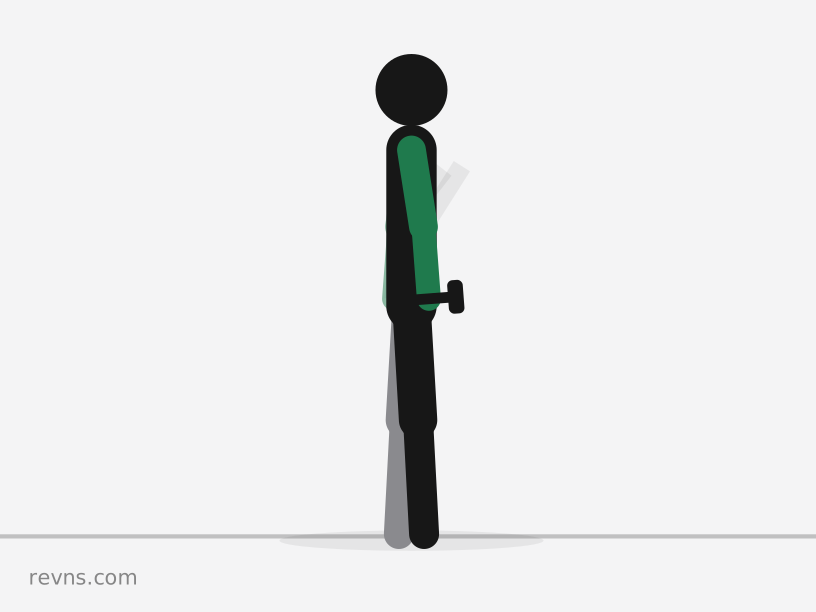
- Keep elbows fixed at your sides; only the forearms move.
- Curl until the weight reaches shoulder height without shrugging.
- Lower under control for two to three seconds; do not let gravity drop the weight.
Common mistake: swinging the torso or lifting the elbows forward. The fix is a lighter weight and a pause at the bottom.
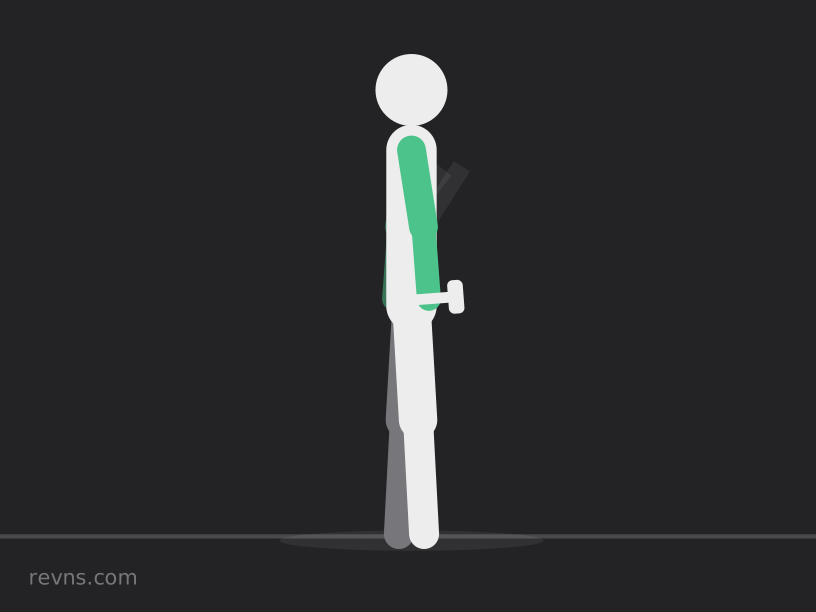
Variations such as hammer curls (neutral grip) emphasize brachialis and forearms; incline curls stretch the long head of the biceps. Cable curls keep tension at the bottom. Machines help when you are learning the path. All count toward the same weekly volume if form stays strict.
A simple bicep curl workout plan (two days a week)
Use this after your main compounds, not instead of them. Each session should take 10 to 15 minutes for arms.
Day A (after pull or full-body day)
| Exercise | Sets × reps | Rest |
|---|---|---|
| Bicep curls (dumbbell) | 3 × 8–10 | 90 s |
| Hammer curls (dumbbell) | 2 × 10–12 | 60 s |
Day B (after pull or upper day, 2–3 days later)
| Exercise | Sets × reps | Rest |
|---|---|---|
| Incline dumbbell curl OR cable curl | 3 × 10–12 | 60 s |
| Band curl burnout (light) | 1 × 15–20 | — |
Warm up: two sets of 15 curls with very light weight or a band before the first working set. See how to warm up before a workout.
Protein and recovery: arm growth still needs overall protein and sleep. Use the protein calculator if you are unsure of daily targets; track sessions in a workout log or a simple workout tracker so load trends stay visible.
Benefits of bicep curls for women
Women gain the same functional benefits: stronger pulls, better grip and support for strength training for women. Hormones and genetics set how fast arms grow; curls alone will not produce large arms without a long phase of progressive training, enough food and overall volume.
If you train at home, dumbbell curls need little space. Pair them with rows or band pull-aparts so the back stays balanced. Avoid curling through wrist pain; neutral-grip hammer curls often feel kinder.
How do you track bicep curl progress?
Keep it simple. Write down the weight, the reps and how many reps you had left for each set. Change one thing at a time: add a rep first, then add weight once every set reaches the top of your rep range. If a session feels off, repeat the same numbers instead of forcing a jump.
What to do this week
- Add two sets of bicep curls after your next row or pull session. Stop at two reps left in the tank.
- Log weight and reps in one place for four weeks before you judge progress.
- Keep one full rest or easy day between hard upper-body days; see rest days.
- If elbows or wrists ache for more than a week, drop load and seek assessment if pain is sharp or swelling appears.
When to see a professional
Stop and get medical advice for sharp elbow or wrist pain, numbness or tingling in the hand during curls, visible swelling after a session, or loss of strength that does not improve with a lighter week. This is general training guidance, not medical advice. Curls are not a treatment for tendonitis or nerve issues.
Related
- Bicep curl: how to do it right, with beginner form drills and moving demos
- Strength training for beginners: a simple plan for the first eight weeks
- Progressive overload in plain words
- How long does it take to build muscle? Timeline, sets and protein
- Benefits of overhead press: what they train and a simple plan
- Benefits of sumo deadlifts: what they train, sumo vs conventional and a simple plan
- Forearm and grip strength exercises: a five-move dumbbell routine
- Tricep extensions workout plan: benefits and a weekly routine
- Benefits of dips: what they train, how often and a simple push plan
- Bicep curls exercise library page
This is general training guidance, not medical advice.
Sources
- Bull FC et al. WHO Guidelines on Physical Activity and Sedentary Behaviour. Br J Sports Med 2020.
- American College of Sports Medicine. ACSM's Guidelines for Exercise Testing and Prescription, 11th ed. Wolters Kluwer.
- Grgic J et al. The effects of short versus long inter-set rest intervals in resistance training on measures of muscle hypertrophy: A systematic review. Eur J Sport Sci 2017.
- Grgic J et al. Effects of Rest Interval Duration in Resistance Training on Measures of Muscular Strength: A Systematic Review. Sports Med 2018.
- Lopez P et al. Resistance Training Load Effects on Muscle Hypertrophy and Strength Gain: Systematic Review and Network Meta-analysis. Br J Sports Med 2021.
Terms in this post
revns publishes training and nutrition guidance, not medical advice. See a clinician for symptoms, injury or a medical condition. Accurate as of November 22, 2026.