Quiet apartment workout no jumping: a six-move beginner routine with demos
A quiet apartment workout with no jumping: six bodyweight moves, two rounds, soft-foot cues and demos. About 20 minutes, no equipment, neighbor-friendly.
revns editorial · Published November 22, 2026 · 10 min read

Beginner quiet apartment workout, no jumping: six bodyweight moves plus a march warm-up, two rounds, 45 s rest, soft-foot cues. About 20 minutes, no equipment.
A quiet apartment workout with no jumping is six bodyweight moves — tempo squat, wall push-up, reverse lunge, glute bridge, dead bug and a wall sit — plus a march warm-up, done as two rounds with soft steps and slow lowering. It takes about 20 minutes, needs no equipment beyond floor space and a wall, and suits healthy adults who want strength and light cardio without disturbing neighbors. Train two or three days a week. Every move below has a moving demo from the exercise library.
TL;DR
| Move | Prescription | Rest after |
|---|---|---|
| Standing marches (warm-up) | 3 min | — |
| Squat (3 s down) | 10–12 reps | 45–60 s |
| Wall push-up | 10–15 reps | 45–60 s |
| Reverse lunge | 8 per leg | 45–60 s |
| Glute bridge | 12–15 reps | 45–60 s |
| Dead bug | 8 per side | 45–60 s |
| Wall sit | 20–35 s | 60–90 s between rounds |
Week one: one round. Week two: two rounds if knees and wrists feel fine. Week three: two or three rounds when every rep stays controlled and quiet.
What is a quiet apartment workout with no jumping?
A quiet apartment workout with no jumping is full-body training where neither foot leaves the floor at the same time as the other and you avoid hops, runs and hard landings. You still work legs, chest, shoulders, hips and trunk with squats, pushes, lunges, bridges and holds. The goal is real effort — not whisper-quiet cardio theater — without thumps that travel through a shared floor.
Search results for this query are often long video follow-alongs (Fitness Blender, YouTube) with timed intervals but little guidance on reps, rest, progression or what to swap when a move is loud on tile. Written plans (Bodypusher, Death Fitness) list moves and noise tips but rarely tie each exercise to easier and harder options with demos. This guide gives a rep-based circuit, soft-foot cues, and library-linked regressions so you can train in a flat without guessing form from a thumbnail.
Why does this routine stay quiet?
Noise in flats usually comes from impact (both feet off the ground), stomping (fast marches or deep lunges slammed home) and dropping to the floor between moves — not from slow strength work itself.
| Source of noise | What this routine does instead |
|---|---|
| Jumping jacks, burpees, jump squats | Excluded; use step jacks only in the separate low impact cardio guide if you want timed cardio |
| Fast heel strikes on hardwood | March and lunge under control; think "soft feet" |
| Dropping into squats or planks | Three-second lowering on squats; lower to the mat for dead bugs instead of flopping |
| Hard shoe soles | Bare feet or socks on a rug or mat |
That trade-off is intentional: you lose plyometric calorie spikes but keep joint-friendly strength that still counts toward weekly activity targets when effort is honest.
How do you do this quiet apartment workout?
Session clock (about 18–25 minutes)
- Warm-up (3 minutes): standing marches with relaxed arm swings. Hold a door frame if balance is wobbly.
- Round 1 (in order): squat → wall push-up → reverse lunge → glute bridge → dead bug → wall sit. Rest 45–60 seconds after each move except the wall sit.
- Between rounds: rest 60–90 seconds, march slowly, sip water.
- Round 2: repeat the same six moves. Train the other leg first on lunges if you started with the same side both times in round one.
- Round 3 (optional from week three): add only when every rep stays quiet and form stays clean.
- Cool-down (1–2 minutes): slow march, then ten seconds of easy forward fold or cat-cow if you are on a mat.
Who is this for?
Healthy adults in apartments or shared housing, parents training while a child sleeps nearby, beginners who want a first full-body plan without a gym, and anyone who needs a low-impact strength day between runs or rides. It is not a substitute for rehab after surgery unless a clinician prescribed similar moves.
Progression without adding jumps
When two rounds feel manageable for two sessions in a row, change one lever:
- add a third round, or
- add 2–3 reps per set, or
- slow the squat lowering to four seconds, or
- move wall push-ups to incline push-ups on a sturdy counter, or
- extend the wall sit by 5–10 seconds.
Do not add faster feet, jumps and sprints to this circuit; put those in an outdoor session or a different workout.
How hard should it feel?
The last 2–3 reps of squats, push-ups and lunges should feel challenging but repeatable — about 7 out of 10 effort on the final rep, not a max test. The wall sit should burn in the thighs without knee pinch. You should still breathe steadily; you are not sprinting.
What muscles does a no-jump apartment workout work?
| Move | Main targets |
|---|---|
| Squat | Quads, glutes, trunk brace |
| Wall push-up | Chest, arms, front shoulders |
| Reverse lunge | Quads, glutes, balance |
| Glute bridge | Glutes, hamstrings |
| Dead bug | Deep trunk, hip control |
| Wall sit | Quads, glutes (isometric) |
Together they cover the same movement patterns as a standard full body workout at home with no equipment — squat, push, lunge, hip extension and anti-rotation — but default to quieter regressions (wall push-ups, stepped lunges, mat work).
How often should you do a quiet apartment workout?
The World Health Organization advises adults to do muscle-strengthening activities involving major muscle groups on two or more days a week, in addition to aerobic work. For many people, two or three sessions of this circuit on non-consecutive days (for example Monday, Thursday, Saturday) meets that strength target while staying neighbor-friendly.
On other days you can walk, cycle, swim or use the low impact cardio workout at home if you want more heart-rate work without jumps. Leave at least one rest day with no planned hard session. See how much exercise per week for the full aerobic plus strength picture.
How can you make home workouts quieter for neighbors?
These habits matter as much as exercise choice:
- Train on a rug or mat under foot and knee contacts.
- Lower; do not drop when you sit to the floor for bridges and dead bugs.
- Step back into lunges instead of stomping forward.
- Pick a corner near a load-bearing wall for wall push-ups and the wall sit.
- Use soft soles or bare feet on hard floors.
- Exhale on the effort without shouting; sharp grunts carry through vents too.
Early morning and late evening are when neighbors notice thumps most. A shorter one-round session still counts if time or noise limits are tight.
The moves
Land softly. Breathe out on the hardest part of each rep. If a move still thumps, shorten range or swap the easier option below.
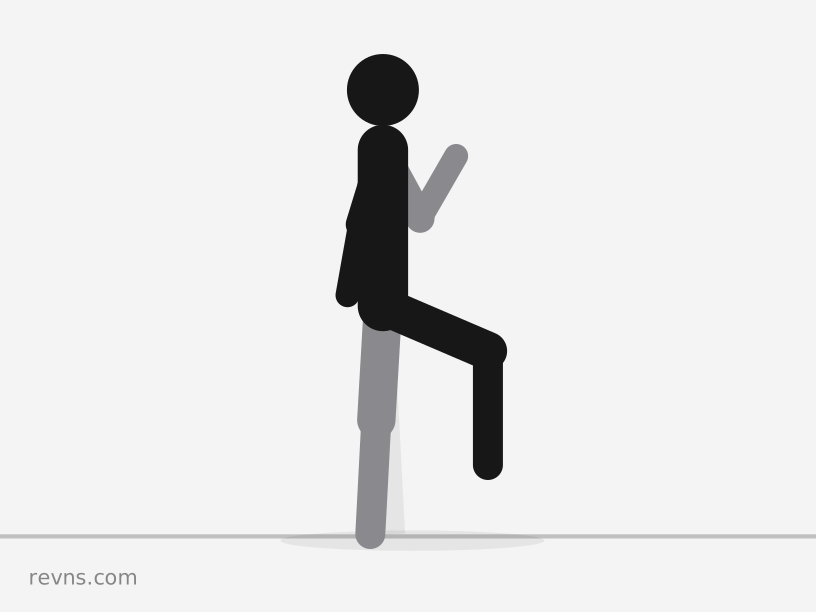
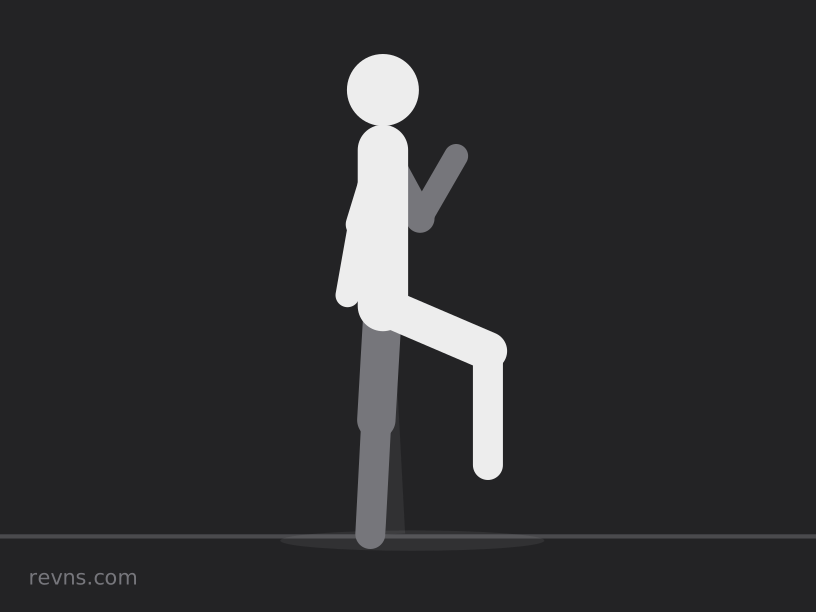
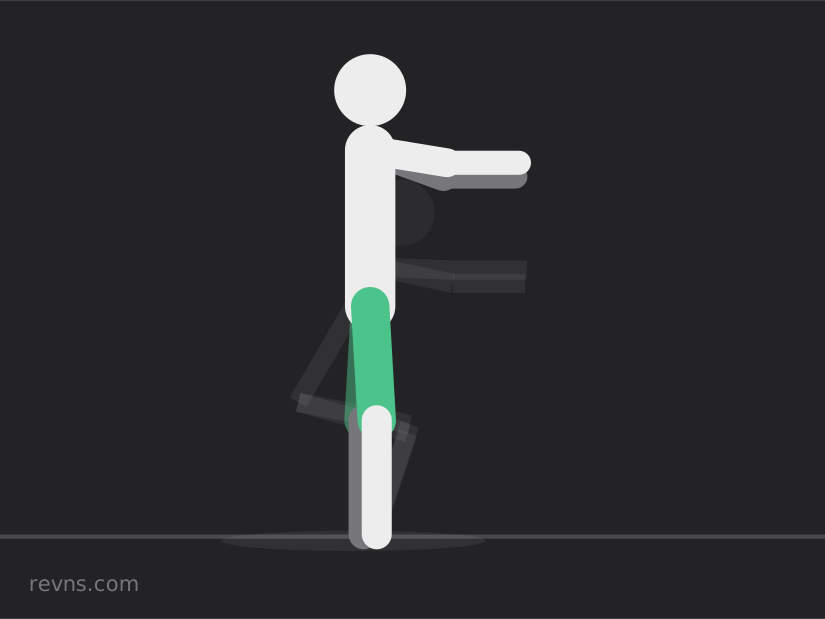
1. Standing marches
Marching warms hips and shoulders, raises heart rate slightly and stays quiet when steps stay small and soft.
- Stand tall, feet hip-width apart; hold a door frame if needed.
- Lift one knee toward hip height without leaning back.
- Lower and lift the other knee; swing arms naturally.
- Stay light on the feet; do not stomp.
Do: 3 minutes before the circuit, or 45 seconds as active rest. Move on when: you can march briskly for 3 minutes without holding support.
Common mistake: pounding the floor to "feel" the cardio — fix it by smaller steps and a slightly slower pace.
Easier: hold support with one hand. Harder: step jacks in the cardio guide, not here, if you want more rhythm without jumps.
2. Tempo squats
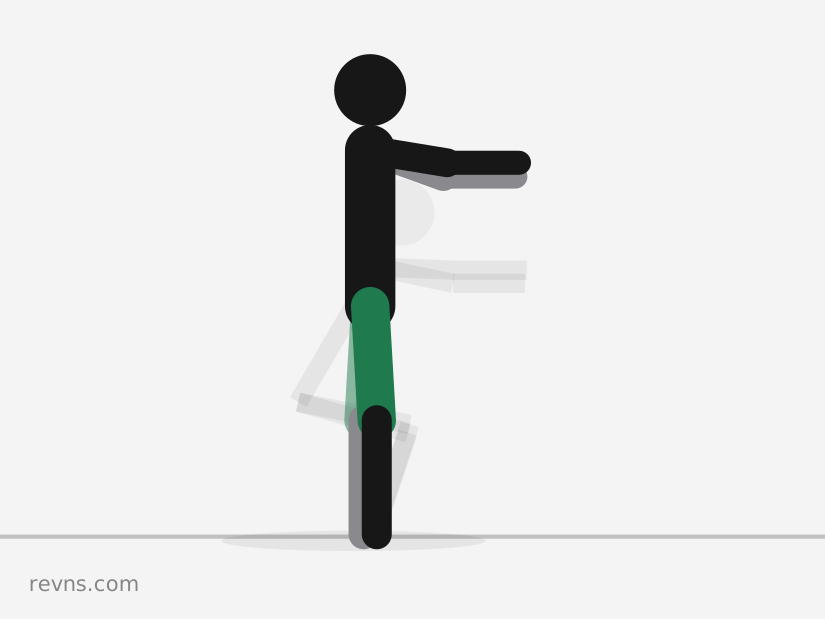
Squats train the thighs and hips. A slow lowering phase builds control and keeps sound down on hard floors.
- Stand feet shoulder-width apart, toes slightly out.
- Brace the trunk; sit hips back as if to a chair.
- Lower for a slow count of three; knees track over toes.
- Drive through mid-foot to stand; exhale without slamming the heels.
Do: 10–12 reps, rest 45–60 s. Move on when: 12 reps with a 3-second lowering feels controlled.
Common mistake: collapsing fast into the bottom — fix it by counting the lowering phase aloud.
Easier: box squats to a chair. Harder: squat pulses for time after the last rep (stay low and small).
3. Wall push-ups
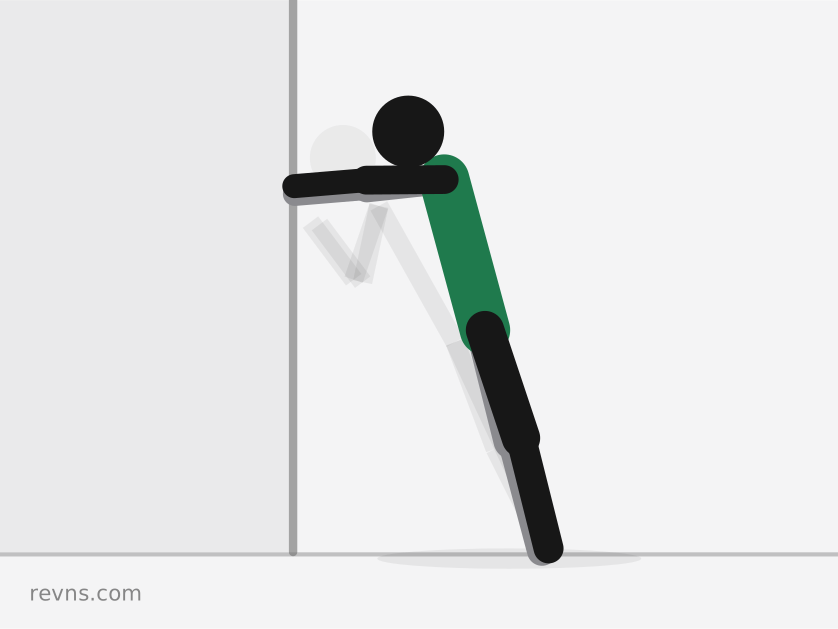
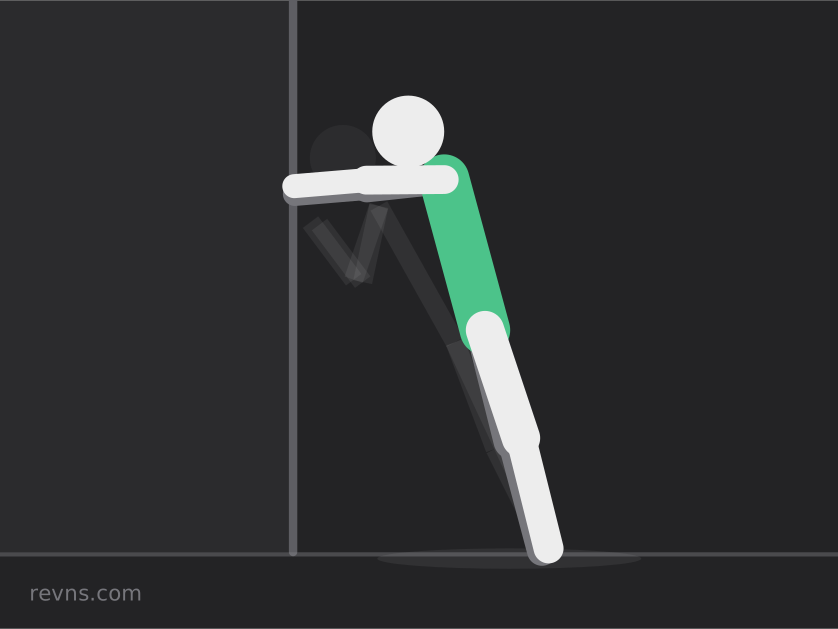
Wall push-ups train chest and arms with almost no floor noise — ideal when you are above a neighbor’s bedroom.
- Stand arm’s length from a wall, hands on the wall at shoulder height.
- Walk feet back until the body is a straight line from head to heels.
- Bend elbows, bring chest toward the wall without sagging hips.
- Press back to the start; keep the neck neutral.
Do: 10–15 reps, rest 45–60 s. Move on when: 15 slow reps feel easy.
Common mistake: hands too high and a short range — fix it by lowering the chest until elbows reach about 90 degrees.
Easier: stand closer to the wall. Harder: incline push-ups on a counter, then knee push-ups.
4. Reverse lunges
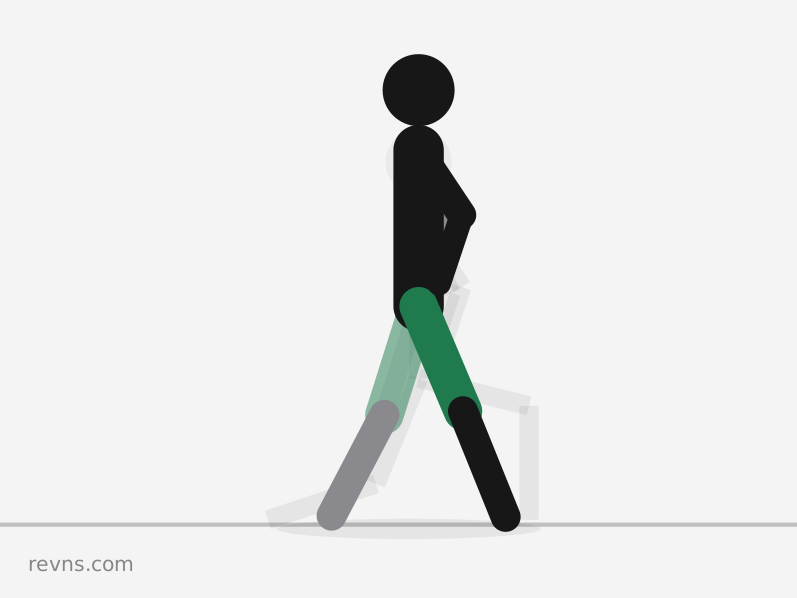
Stepping back keeps noise lower than forward lunges on many floors and gives you a moment to control weight on the front foot.
- Stand tall, feet hip-width apart.
- Step the right foot back; lower both knees toward 90 degrees.
- Front knee stays over the ankle; torso upright.
- Push through the front foot to stand; alternate legs each rep or complete one side then the other.
Do: 8 reps per leg, rest 45–60 s. Move on when: 8 per leg stay quiet and balanced.
Common mistake: crashing the back knee down — fix it by touching the back knee lightly and pausing before standing.
Easier: shorter step and shallower depth. Harder: split squats with feet fixed.
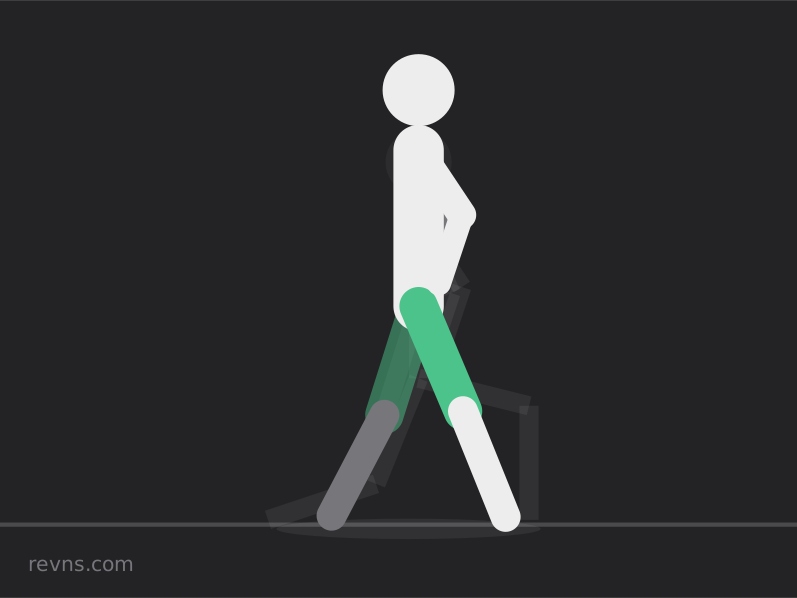
5. Glute bridges
Bridges work the glutes and hamstrings on the mat with no foot impact — one of the quietest hard moves you can do indoors.
- Lie on your back, knees bent, feet flat hip-width apart.
- Press through the heels, lift hips until shoulders, hips and knees line up.
- Squeeze glutes at the top for one second.
- Lower slowly without slamming the pelvis down.
Do: 12–15 reps, rest 45–60 s. Move on when: 15 reps with a pause at the top feel routine.
Common mistake: pushing through the toes and cramping the hamstrings — fix it by heels nearer the hips and weight in the heels.
Easier: shorter hold at the top. Harder: single-leg glute bridges.
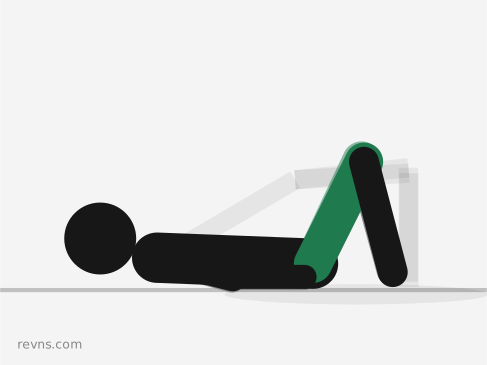
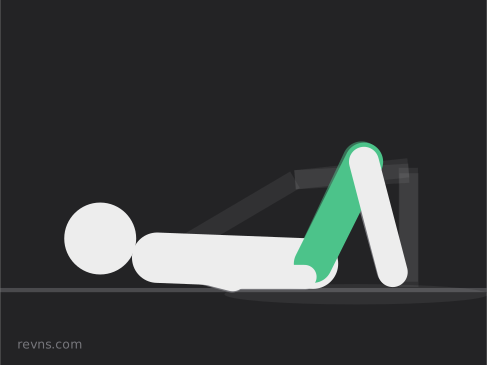
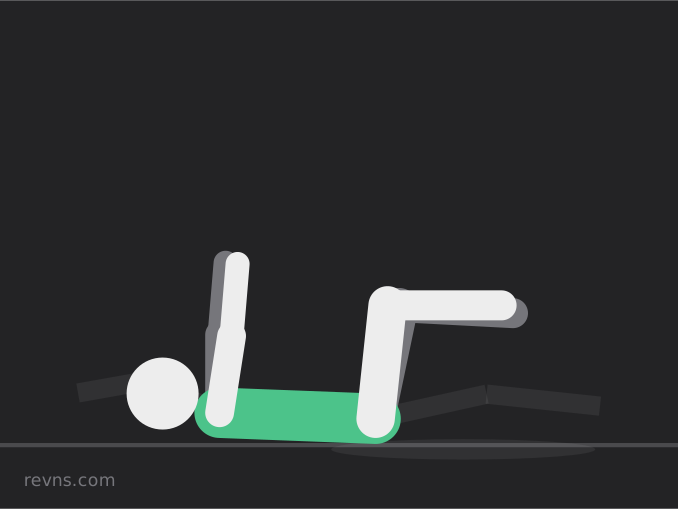
6. Dead bugs
Dead bugs build trunk control while you lie on a mat — silent for neighbors, demanding for the core.
- Lie on your back, arms toward the ceiling, knees bent at 90 degrees over hips.
- Press the low back gently into the floor.
- Reach the right arm back overhead while extending the left leg; stop before the back arches.
- Return; switch sides. Move slowly.
Do: 8 reps per side, rest 45–60 s. Move on when: 8 per side stay slow with the back flat.
Common mistake: arching the low back as the leg extends — fix it by shortening the reach or bending the knee more.
Easier: move only the legs, arms stay up. Harder: bird dogs on all fours.
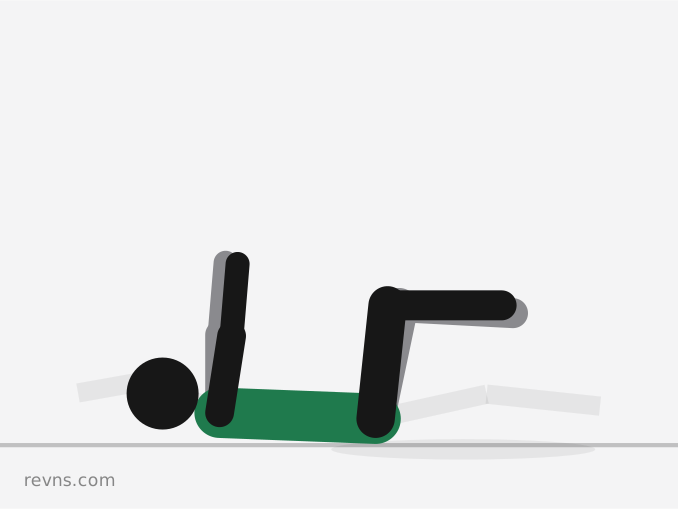
7. Wall sit
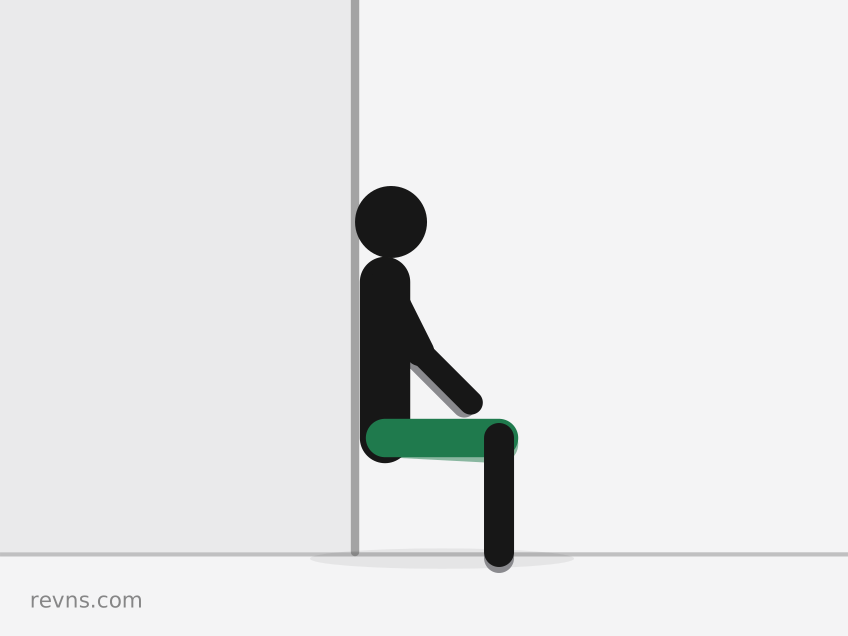
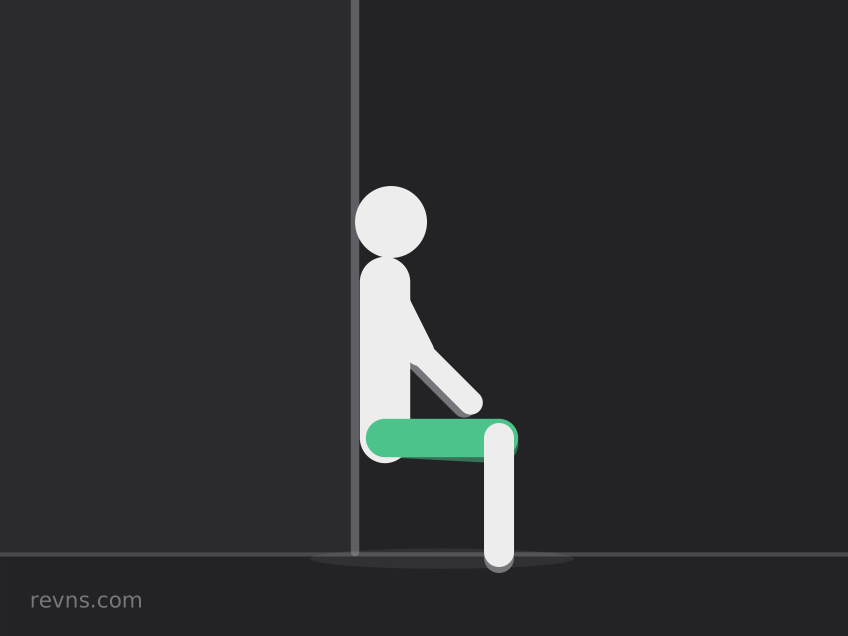
The wall sit finishes the round with an isometric quad hold. Noise stays low if you slide down the wall instead of dropping into the squat.
- Stand with back flat to a sturdy wall, feet forward slightly.
- Slide down until thighs are roughly parallel to the floor (or higher if knees protest).
- Knees over ankles, weight even on both feet.
- Breathe steadily; stand by sliding up, not collapsing.
Do: 20–35 seconds, rest 60–90 s before the next round. Move on when: 35 seconds at parallel feels manageable.
Common mistake: knees caving inward — fix it by pressing knees gently outward toward the middle toe.
Easier: higher hip position (less knee bend). Harder: longer hold or one single-leg calf raise after you stand.
How many calories does a quiet apartment workout burn?
Calorie burn depends on body size and effort. Using the 2024 Adult Compendium, moderate calisthenics is roughly 3.5–4.5 MET and slow squats with light effort sit near 3.5 MET. A 155-pound (~70 kg) adult might expend roughly 80–120 kcal in 20 minutes of mixed bodyweight work at a moderate pace — a ballpark, not a promise. Track trends in a workout log, not one session.
What should you do this week?
- Day 1: One round; note which move felt loudest and shorten that range.
- Day 2: Rest or easy walk.
- Day 3: Two rounds if day 1 felt fine and neighbors heard nothing.
- Day 4: Optional rest or the low-impact cardio circuit.
- Day 5: Repeat two rounds; compare balance on lunges to day 3.
- Next week: Add a third round or two reps per move, not both at once.
Who should check with a clinician first, and when should you stop?
Ask a doctor or physiotherapist before starting if you have heart or lung disease, recent joint surgery, osteoporosis with fracture risk, balance disorders, pregnancy complications, or symptoms your clinician is investigating.
Stop and seek urgent care for chest pain, fainting, severe breathlessness, or irregular heartbeat. Stop this workout and get advice for sharp knee or hip pain, swelling, dizziness, or balance loss.
This is general training guidance, not medical advice.
Related
- Low impact cardio workout at home: a quiet beginner circuit with demos
- Full body workout at home with no equipment: a six-move beginner routine
- Rest days: how many you need and what to do on them
- How much exercise per week: WHO guidelines for adults
- How to warm up before a workout: how long and what to do
- Exercise library
Sources
- Bull FC et al. World Health Organization 2020 guidelines on physical activity and sedentary behaviour. Br J Sports Med 2020
- U.S. Centers for Disease Control and Prevention. Physical Activity Basics
- Ainsworth BE et al. 2024 Adult Compendium of Physical Activities
- American College of Sports Medicine. ACSM's Guidelines for Exercise Testing and Prescription, 11th ed. — resistance training frequency overview
Terms in this post
revns publishes training and nutrition guidance, not medical advice. See a clinician for symptoms, injury or a medical condition. Accurate as of November 22, 2026.