How much exercise per week? WHO guidelines for adults, older adults and pregnancy
How much exercise per week do you need? WHO says 150 to 300 minutes of moderate activity plus strength work twice a week. See the numbers by age and how to count them.
revns editorial · Published November 19, 2026 · 9 min read
WHO advises adults 150 to 300 minutes of moderate or 75 to 150 of vigorous activity a week, plus strength work on 2 or more days. Older adults add balance work; children need 60 minutes a day.
How much exercise per week do you need? The World Health Organization advises adults to do 150 to 300 minutes of moderate-intensity activity a week, or 75 to 150 minutes of vigorous activity, or an equal mix, plus muscle-strengthening on two or more days. That is about 30 minutes of brisk walking on five days, plus two short strength sessions. Any amount is better than none, and the total counts more than how you split it.
TL;DR
| Group | Aerobic activity per week | Strength and other work |
|---|---|---|
| Adults 18 to 64 | 150 to 300 min moderate, or 75 to 150 min vigorous | Muscle strengthening on 2 or more days |
| Adults 65 and over | Same as adults | Strength on 2 or more days, plus balance work on 3 or more days |
| Pregnant and postpartum | At least 150 min moderate, if no medical reason not to | A mix of aerobic and strengthening work |
| Children and teens 5 to 17 | An average of 60 min a day, mostly aerobic | Vigorous activity and bone and muscle work on 3 days |
| Everyone | Any amount beats none; sit less | Spread across the week |
What does WHO actually recommend?
The numbers come from the WHO 2020 guidelines on physical activity and sedentary behaviour, published by Bull and colleagues in the British Journal of Sports Medicine. A panel reviewed the evidence on how much activity lowers the risk of early death and chronic disease, and set targets for each age group. The WHO fact sheet, updated 4 November 2026, repeats the core message: any amount of activity is better than none, all activity counts, muscle strengthening benefits everyone and all age groups should limit sedentary time.
For adults aged 18 to 64, the guideline has three parts:
- Aerobic activity: 150 to 300 minutes of moderate-intensity activity a week, or 75 to 150 minutes of vigorous-intensity activity, or an equivalent mix.
- Muscle strengthening: moderate or greater intensity, involving all major muscle groups, on two or more days a week.
- Going further: more than 300 minutes of moderate activity brings extra health benefits. Less sitting still helps at every level.
The 150 minutes is the point from which the evidence shows clear benefit. It is a floor to build toward, not a ceiling. WHO also notes that people who are not active enough have a 20 to 30 percent higher risk of death than people who are active enough. That is an association across many studies, not a promise for any one person.
What counts as moderate and vigorous activity?
Moderate-intensity activity raises your breathing and heart rate, but you can still talk in full sentences. Brisk walking, easy cycling, doubles tennis, water aerobics and general gardening fit here.
Vigorous-intensity activity makes talking hard. You can say only a few words at a time. Running, fast cycling, swimming laps, singles tennis, football and fast stair climbing fit here.
One minute of vigorous activity counts as about two minutes of moderate activity. That is why 75 minutes of vigorous work matches 150 minutes of moderate work. The easiest test needs no device:
| Effort | Talk test | Examples |
|---|---|---|
| Moderate | You can talk, but not sing | Brisk walk, easy ride, yoga flow that raises your pulse |
| Vigorous | You can say a few words only | Running, hard cycling, interval class |
If you prefer numbers, the heart rate zone calculator gives a range for each effort level, and the guide to heart rate training zones explains how zones line up with the talk test. For the easy end of the scale, see zone 2 training.
What counts as strength training for the guideline?
The guideline asks for muscle-strengthening work on two or more days a week, covering the major muscle groups: legs, hips, back, chest, abdomen, shoulders and arms. It can be weights, resistance bands, machines or your own body weight, such as squats, push-ups and step-ups. You do not need a gym. A simple session of 20 to 30 minutes can cover it. The guides to strength training for beginners and a full-body workout at home with no equipment give a start. Strength days also count toward the "two or more days" even when they are short.
How much exercise per week for older adults?
Adults aged 65 and over follow the same 150 to 300 minute aerobic range and the same two or more strength days. WHO adds one item: varied multicomponent physical activity that emphasises functional balance and strength training at moderate or greater intensity, on three or more days a week. The aim is to prevent falls. Examples are standing on one leg while brushing teeth, heel-to-toe walking, sit-to-stand repeats, tai chi and some dance classes.
WHO also says that when older adults cannot do the full amount because of a health condition, they should be as active as their abilities and conditions allow. A clinician or physiotherapist can help fit the plan. The guide on strength training after 40 covers what changes with age, and the daily leg exercises guide gives a simple routine.
How much exercise per week in pregnancy and after birth?
For pregnant and postpartum women, WHO recommends at least 150 minutes of moderate-intensity aerobic activity a week, with a variety of aerobic and strengthening work, when there is no medical reason to avoid it. The WHO fact sheet reports that activity in pregnancy is associated with a lower risk of pre-eclampsia, gestational hypertension, gestational diabetes, excessive gestational weight gain, delivery complications and postpartum depression, and has no adverse effect on birthweight or stillbirth risk.
Pregnancy changes what is comfortable, and some conditions mean you should limit or stop exercise. Your midwife or doctor should guide the plan. Our guide on exercise in pregnancy and postpartum lists the red flags that mean stop and call.
How much exercise do children and teenagers need?
For ages 5 to 17, WHO recommends an average of at least 60 minutes a day of moderate to vigorous activity, mostly aerobic. On at least three days a week, that should include vigorous activity and work that strengthens muscle and bone, such as jumping, climbing and running games. The WHO fact sheet reports that 86 percent of adolescents aged 11 to 17 had fewer than seven active days in the last week, and that one in four reported no active days.
How many people actually meet the target?
Not many. A pooled analysis of 507 surveys with 5.7 million participants by Strain and colleagues in The Lancet Global Health (2024) found that 31 percent of adults worldwide, about 1.8 billion people, did not reach 150 minutes of moderate activity a week in 2022. That is up five percentage points from 2010. WHO projects 35 percent by 2030 if the trend continues. Women were on average five percentage points less active than men, and inactivity rose after age 60.
This is survey data, and surveys rely on people reporting their own activity, so the exact figure carries some error. The direction is clear. For most readers the larger risk is doing too little, not too much.
Does it matter how I split the minutes?
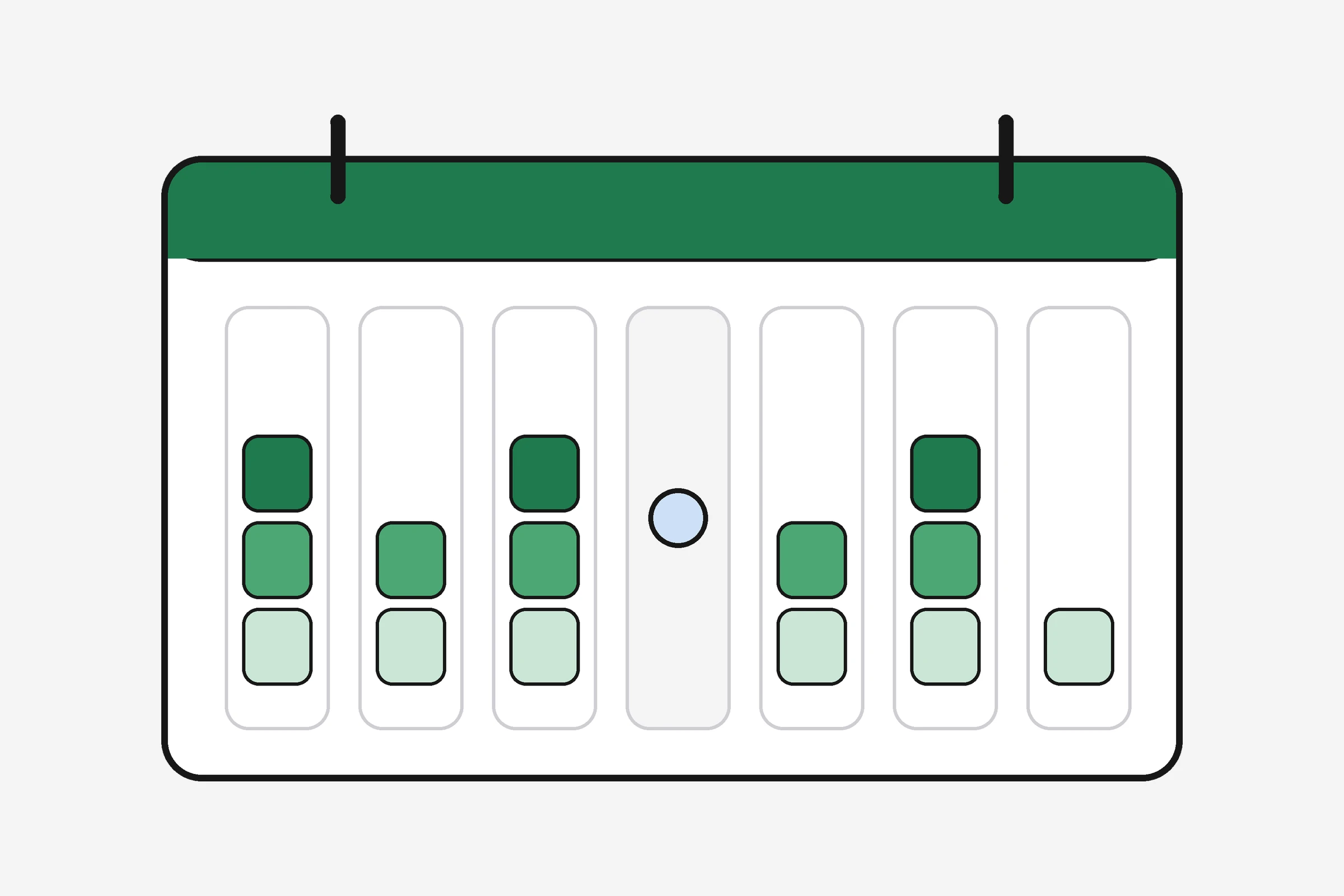
The WHO target is a weekly total. The guideline does not set a minimum number of days for aerobic work, and bouts of any length count. Ten minutes here and there add up. In practice, spreading activity over most days is easier on joints and easier to turn into a habit than packing it into one weekend session.
If you train hard on some days, keep easy days between them. The guide to rest days and the guide to planning a training week show how to mix hard, easy and rest days within the 150 minutes.
Do steps count toward 150 minutes?
Only the brisk ones. WHO sets its target in minutes of moderate or vigorous activity, not in steps. A 30-minute brisk walk on five days gives 150 minutes. The guide on how many steps per day you need shows how steps and minutes overlap. A slow stroll still helps your health and counts toward "any activity is better than none", but it may not reach moderate intensity.
What does a week of 150 minutes look like?
Here are three examples. All meet the guideline. Pick the one that fits your life, and swap the activity for what you like.
| Style | Aerobic | Strength | Total aerobic |
|---|---|---|---|
| Walker | 5 brisk walks of 30 min | 2 home sessions of 20 min | 150 min moderate |
| Runner | 2 easy runs of 30 min, 1 hard interval run of 30 min, 1 brisk walk of 30 min | 2 short sessions of 20 min | 90 min moderate plus 30 min vigorous (counts as 60): 150 min equivalent |
| Busy week | 3 walks of 20 min, 1 bike ride of 45 min, 3 bursts of 15 min at lunch | 2 sessions of 15 to 20 min | 150 min moderate |
Food does not change the target, but it supports it. A mix of carbohydrate and protein after longer sessions helps recovery. Vegetarian, vegan, eggetarian, Jain and non-vegetarian choices all work; the guide on what to eat before and after a workout has options for each.
What should you do this week?
If you are starting from little or no activity
- Add a 10-minute brisk walk on three days. This already counts.
- Next week, raise it to 15 or 20 minutes, or add a fourth day.
- After two to four weeks, add two short strength sessions using body weight.
- Aim for 150 minutes within 8 to 12 weeks, not in the first week.
If you already train 3 or more days a week
- Count your minutes of moderate and vigorous work. Count a vigorous minute twice.
- Check that you have strength work on at least two days.
- If aerobic minutes are well over 300 and you feel flat, read the guide on stress, burnout and deloading.
How to track it
A weekly total is easy to lose in a notebook. In revns you can log walks, runs, rides and lifts in the multi-sport tracker and see the week at a glance. The iPhone app can also read steps, sleep, heart rate and recorded workouts from Apple Health. Other device syncs are on the roadmap and are not live. A free option is the workout log template.
When should you see a professional?
Check with a doctor or another qualified clinician before you raise your activity level a lot if you have a heart or lung condition, diabetes, kidney disease, a joint problem, are pregnant or have not exercised for a long time and are over 45. Stop and get assessed if you have:
- Chest pain, pressure or tightness during or after exercise.
- Fainting, severe dizziness or unusual breathlessness.
- A racing or irregular heartbeat that does not settle.
- Sharp joint pain, or pain that gets worse or wakes you at night.
If your mood is low most days for two weeks or more, or you feel unsafe, contact a clinician or a local crisis line. In the US you can call or text 988. In the UK and Ireland, Samaritans are on 116 123. In India, KIRAN is on 1800-599-0019. Other countries are listed at findahelpline.com.
What does the guideline not tell you?
It is a population guideline, not a personal prescription. It sets the amount where research shows health gains for groups of people. It does not say what is best for an athlete chasing a race time, for building maximum muscle or for losing weight, which usually need different or larger amounts. It does not tell you which activity to pick. The best one is the one you will keep doing.
The evidence behind it is mostly observational: people who are more active tend to live longer and have less disease. Active people can differ from inactive people in other ways, so these studies show association, not proof of cause. Trials of exercise on blood pressure, blood sugar, mood and fitness support the same direction.
Related
- How many steps per day do you need?
- Rest days: how many you need and what to do on them
- Planning a training week: hard days, easy days and rest
- Strength training for beginners
- Zone 2 training explained
- Heart rate zone calculator
- AI fitness coach and week planner
This is general training guidance, not medical advice.
Sources
- Bull FC et al. World Health Organization 2020 guidelines on physical activity and sedentary behaviour. Br J Sports Med 2020
- World Health Organization. Physical activity fact sheet, updated 4 November 2026
- Strain T et al. National, regional and global trends in insufficient physical activity among adults from 2000 to 2022. Lancet Glob Health 2024
Terms in this post
revns publishes training and nutrition guidance, not medical advice. See a clinician for symptoms, injury or a medical condition. Accurate as of November 19, 2026.