Leg press workout plan: benefits, muscles worked and a weekly routine
Leg press workout plan: benefits, quads and glutes worked, sets and reps, and a two-day leg routine for beginners. Squat vs leg press and home swaps included.
revns editorial · Published November 22, 2026 · 10 min read
Leg press builds quad and glute strength with back support. Do it 1–2 leg days a week, 3–4 sets of 8–12 reps, after a warm-up; progress load when depth stays clean.
A leg press workout plan builds quad and glute strength with your back on a pad, so you can load the legs without balancing a barbell. The leg press is a compound push for the lower body. Most gym beginners do well with one or two leg sessions a week, three to four sets of eight to twelve reps, and slow load increases when depth and knee tracking stay clean. The tables below give a simple two-day leg plan and answer what muscles leg press works.
TL;DR
| Question | Short answer |
|---|---|
| What does leg press train? | Mainly quads; glutes and hamstrings help with higher or wider feet |
| Why use it? | Heavy leg work with spinal support; good when the back is tired |
| How often? | 1–2 leg days per week as part of a full-body or lower-body split |
| Sets and reps | 3–4 × 8–12, rest 60–90 s; stop 1–3 reps before form fails |
| Squat vs leg press | Squat for balance and core; leg press for supported volume |
| Home swap | Goblet squats, wall sits, glute bridges |
What muscles does leg press work?
Leg press primarily works the quadriceps, the four muscles on the front of the thigh that straighten the knee. Gluteus maximus and hamstrings join in when your feet sit higher or wider on the platform, because the hip angle opens more at the bottom. Calves push near lockout.
| Foot placement | Usual emphasis | Note |
|---|---|---|
| Mid platform, shoulder-width | Quads with glute help | Common starting point |
| Lower on platform | More quad bias | Shorter range at the ankle |
| Higher on platform | More glute and hamstring | Do not lift the lower back off the pad |
| Wider stance | Inner thigh and glute adduction feel | Knees still track over toes |
A 2001 study in Medicine & Science in Sports & Exercise (Escamilla et al., 10 experienced male lifters) compared knee loads during the squat and leg press with high and low foot positions. Both are closed-chain knee bends; peak knee forces differed by angle, stance and exercise, which is one reason coaches use both in programmes rather than treating them as identical. Your gym machine may angle the seat differently; use pain-free depth over chasing someone else's foot map.
For steps and form cues on the standard machine, see the leg press exercise page.
What are the benefits of leg press?
Leg strength with less spinal load
The back pad supports your trunk. That lets you focus on driving through the feet when a barbell squat would load the spine more. People returning after a layoff, or pairing leg work with heavy deadlifts, often use leg press for volume after compounds.
Beginner-friendly path to heavy loads
The sled moves on rails, so you do not need to balance a bar while learning depth. Light sets teach knee tracking and breathing before you add plates. That fits strength training for beginners when a squat rack feels intimidating.
Controlled progress for quads and glutes
You can add weight in small jumps and log every session. Progressive overload on leg press is simple: same depth, one more rep, then another plate. Track sets in a workout log with sets and reps or a simple workout tracker.
Fits WHO strength targets
The WHO advises adults to do muscle-strengthening activities on two or more days per week that work major muscle groups. Leg press counts toward leg training when your week also includes hinge, push and pull work, as in how much exercise per week.
Pairing with sport and running
Stronger quads and glutes support hills, accelerations and change of direction. Leg press does not replace sprint drills or single-leg balance, but it can add strength that easy runs and technical work build on. Keep at least one rest day between hard leg sessions.
Does leg press work hamstrings and glutes?
Yes, partly — more when feet are higher or wider. Quads stay the main mover on most setups. Hamstrings act as helpers at deeper hip flexion; glutes extend the hip on the drive up. Leg curls and Romanian deadlifts still have a place if you want isolated hamstring work.
If your goal is even hamstring and quad development, pair leg press with a hinge pattern such as benefits of sumo deadlifts or lighter Romanian deadlifts on another day. Schwanbeck et al. (2020, 46 trained young adults in an 8-week randomized trial) compared free-weight and machine-based programmes and reported similar quadriceps muscle thickness gains in both groups — a reminder that consistency and effort matter more than equipment choice for many novices.
Is leg press a good exercise?
For building leg strength with support, yes — when knees are healthy and form is controlled. It is less useful as the only leg exercise if you need balance, core bracing and hip mobility for sport or daily life. Free-weight squats, lunges and step-ups train those skills in ways a machine cannot fully copy.
Leg press is not a waste of time for people who use it as part of a balanced week. It is a poor sole leg day if you never squat, lunge or hinge.
| You | Leg press role |
|---|---|
| Beginner in a gym | Main quad exercise after warm-up |
| Intermediates | Volume after squats, or heavy day when back is loaded |
| Home-only trainers | Skip until you have a gym; use goblet squats instead |
| Knee pain history | Clinician first; light range only if cleared |
Leg press vs squat: which should you do?
Squats train legs plus trunk, balance and hip mobility; leg press isolates leg drive with back support. Many programmes use squats first, leg press second, on the same day or across the week.
| Factor | Barbell or goblet squat | Leg press |
|---|---|---|
| Core and balance | High demand | Low demand |
| Spinal load | Higher with bar on back | Lower with pad support |
| Skill curve | Steeper | Gentler |
| Load potential | High with good form | High with less technique risk |
| Carry-over to sport | Broader | Narrower |
Should I do squats or leg press first? In one session, squat first, leg press after. If you only leg press, use it as the first heavy lift after warm-up. See progressive overload for load rules.
How often should you leg press?
One or two leg days per week with leg press suit most beginners. Full-body plans might use leg press once; upper-lower or push-pull-legs might use it twice with different rep ranges. Leave at least 48 to 72 hours between hard leg sessions so quads recover.
| Weekly split | Leg press frequency |
|---|---|
| Full-body 3×/week | 1–2 sessions as the main leg push |
| Upper-lower 4×/week | 1 day heavy, optional light second day |
| Push-pull-legs | 1 dedicated leg day |
Signs you need active recovery or fewer sets: knee ache that builds across the week, depth getting shallow at the same weight, or leg day stealing sleep and upper-body quality.
How many sets and reps on leg press?
The American College of Sports Medicine often cites one to three sets of eight to twelve reps for novices learning resistance training. A 2021 network meta-analysis (Lopez et al., 28 studies, 747 healthy adults) found 8–12 rep training with hard sets can build size much like heavier loads when sets reach volitional failure, while higher loads still edge strength gains — a practical fit for leg press progressions. Leg press can run three to four sets because stabilizer fatigue is lower than on squats.
| Goal | Sets × reps | Rest |
|---|---|---|
| Strength and size (default) | 3–4 × 8–12 | 60–90 s |
| Heavier strength | 4 × 6–8 | 90–120 s |
| Endurance finisher | 2 × 15–20 | 45–60 s |
Stop one to three reps before your lower back peels off the pad or knees cave inward. Increase load when every set hits the top of the range with the same depth.
What happens if you do leg press every day? Daily heavy leg press usually stalls progress and can irritate knees. Most people alternate hard leg days with easy or upper-only days, per rest days.
How to do leg press with good form
- Sit with hips and lower back flat on the pad; feet shoulder-width on the platform.
- Release safety handles with control; knees line up over mid-foot.
- Lower until knees reach about 90 degrees or your pain-free range — no bouncing at the bottom.
- Press through mid-foot and heel; do not lock knees violently at the top.
- Re-engage safeties at the end of the set.
Common mistake: hips lifting off the pad at the bottom. Fix: reduce depth or foot height, and lighten the load.
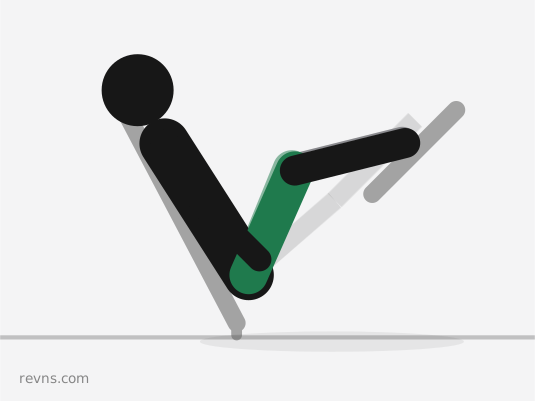
Breathing: brace lightly on the descent; exhale on the press. Tempo: two to three seconds down, one second up, for most sets.
Leg press workout plan for beginners (two gym days)
Allow 35 to 50 minutes per leg session including warm-up. Do Day A and Day B at least two days apart.
Day A — quad focus
| Exercise | Sets × reps | Rest |
|---|---|---|
| Warm-up: bodyweight squat or leg press with empty sled | 2 × 15 | 60 s |
| Leg press | 3 × 10–12 | 90 s |
| Leg extension (optional, light) | 2 × 12–15 | 60 s |
| Glute bridge or hip thrust | 3 × 10–12 | 60 s |
Day B — glute and hamstring balance
| Exercise | Sets × reps | Rest |
|---|---|---|
| Warm-up | 2 × 15 | 60 s |
| Leg press (feet slightly higher) | 3 × 8–10 | 90 s |
| Leg curl machine | 3 × 10–12 | 60 s |
| Walking lunge or step-up (bodyweight or dumbbells) | 2 × 10 each leg | 60 s |
Progression: when all sets hit the top of the rep range, add the smallest plate increment. Log weight and reps for four weeks before judging size changes; see how long to build muscle. Protein targets support recovery — use the protein calculator if unsure.
Warm up with five minutes of easy bike or brisk walk, then the empty-sled sets above. Read how to warm up before a workout.
Leg press workout at home (alternatives)
There is no true leg press without a machine. At home, stack these push and hinge patterns:
| Gym leg press | Home swap |
|---|---|
| Leg press | Goblet squats 3 × 8–12 |
| High-foot leg press | Glute bridges 3 × 12–15 |
| Leg extension | Wall sit 2 × 30–45 s |
| Leg curl | Single-leg Romanian deadlift 2 × 8 each |
Low impact cardio on non-leg days keeps conditioning without extra knee pounding.
Leg press workout plan for women
Women gain the same strength benefits: stronger squats, stairs, carries and bone-loading stimulus when paired with impact or heavy rows, as in bone health for women. Hormones do not block quad strength from leg press; progressive load and protein still set the pace. See strength training for women for weekly structure.
Avoid forcing depth if hips feel pinched; foot width and rotation are personal. Stop on sharp knee pain.
How do you track leg press progress?
Log sled weight, reps per set and foot placement in one place. Change one variable at a time. If a session feels off, repeat the same load instead of jumping. Pair with resting heart rate and sleep trends if recovery stalls — heavy legs need sleep like any other lift.
What to do this week
- After your gym warm-up, do two light sets on the leg press, then three working sets of ten with two reps left in the tank.
- Note foot position and depth in your log so next week is comparable.
- Keep one full rest day before the second leg session; see recovery in training.
- If knees ache more than forty-eight hours after a session, reduce load and seek assessment if pain is sharp.
When to see a professional
Stop and get medical advice for sharp knee pain, locking or giving way, swelling after leg day, numbness in the foot or leg, or chest pain during exertion. This is general training guidance, not medical advice. Leg press is not rehab unless a clinician prescribes it.

Related
- Strength training for beginners: the first eight weeks
- Benefits of bicep curls: what they train and a simple plan
- Benefits of sumo deadlifts: what they train and a simple plan
- Tricep extensions workout plan: benefits and weekly routine
- How long to rest between sets
- Leg press exercise library page
This is general training guidance, not medical advice.
Sources
- Bull FC et al. WHO Guidelines on Physical Activity and Sedentary Behaviour. Br J Sports Med 2020.
- American College of Sports Medicine. ACSM's Guidelines for Exercise Testing and Prescription, 11th ed. Wolters Kluwer.
- Escamilla RF et al. Effects of technique variations on knee biomechanics during the squat and leg press. Med Sci Sports Exerc 2001.
- Schwanbeck SR et al. Effects of training with free weights versus machines on muscle mass, strength, free testosterone, and free cortisol levels. J Strength Cond Res 2020.
- Lopez P et al. Resistance Training Load Effects on Muscle Hypertrophy and Strength Gain: Systematic Review and Network Meta-analysis. Med Sci Sports Exerc 2021.
Terms in this post
revns publishes training and nutrition guidance, not medical advice. See a clinician for symptoms, injury or a medical condition. Accurate as of November 22, 2026.