Beginner HIIT workout at home: a six-move no-equipment circuit with demos
A beginner HIIT workout at home with six bodyweight moves, 30-second work and rest intervals, two rounds and demos. About 18 minutes, no equipment.
revns editorial · Published November 22, 2026 · 10 min read
Beginner HIIT at home: six bodyweight moves, 30 s work / 30 s rest, two rounds, effort 7–8/10 on work intervals. About 18 minutes, no equipment, two or three days a week.
A beginner HIIT workout at home is six bodyweight moves — squat thrusts, mountain climbers, high knees, squats, knee push-ups and step jacks — done for 30 seconds each with 30 seconds of rest, twice through. It takes about 18 minutes plus a short warm-up, needs no equipment, and suits healthy adults who want short hard intervals without a gym. Train two or three days a week with at least one easy or rest day between sessions. Every move below has a moving demo from the exercise library.
TL;DR
| Move | Work | Rest | Easier swap |
|---|---|---|---|
| Standing marches (warm-up) | 3 min | — | Hold a chair |
| Squat thrusts | 30 s | 30 s | Step back to plank (no jump) |
| Mountain climbers | 30 s | 30 s | Step knees in one at a time |
| High knees | 30 s | 30 s | Standing marches |
| Squat | 30 s | 30 s | Shallower depth |
| Knee push-up | 30 s | 30 s | Wall push-up |
| Step jacks | 30 s | 30 s | Standing marches |
Round 1: top to bottom. Rest 60–90 s. Round 2: repeat. Cool-down: 2 minutes of slow marching.
What is a beginner HIIT workout at home?
HIIT means high-intensity interval training: you work hard for a short time, rest briefly, then repeat. At home that usually means bodyweight moves — squats, planks, marching patterns and floor-to-standing transitions — with no treadmill or bike required. Beginner here does not mean easy; it means shorter work periods, longer rest, regressions on every move, and no all-out sprints until form stays clean under fatigue.
The World Health Organization still anchors most healthy adults at 150–300 minutes of moderate activity or 75–150 minutes of vigorous activity weekly, plus muscle-strengthening on two or more days (BJSM 2020 guidelines summary). One well-run HIIT session can count as vigorous minutes when work intervals push breathing hard — but it does not replace a full week of movement on its own.
Pages that rank for beginner HIIT workout at home are often follow-along videos (Nourish Move Love, YouTube) with 40-second work and 20-second rest, or three-exercise primers (Healthline) that jump straight to jump squats. Written plans list moves but rarely tie each name to form steps, easier swaps and weekly limits. This guide gives a 30/30 circuit you can read without pressing play, with library demos on every move.
How hard should beginner HIIT feel?
Use a simple 0–10 effort scale. During work intervals, aim for 7–8: breathing fast, sentences broken up, but you could add one or two more reps with good form. During rest, let breathing settle; you are not collapsing on the floor.
That is below what many coaches call true HIIT (9–10 near-max), which fits trained people better. Starting closer to 7 reduces sloppy reps and joint stress. If you cannot finish 20 seconds with control, shorten the work interval to 20 seconds and keep 30 seconds of rest until week two.
The heart rate zone calculator can check that work intervals land in the upper zones for your age, but perceived effort is enough when you are new. Normal resting heart rate may rise slightly the morning after a first HIIT day; that is common and usually settles if sleep and food are steady.
How do you do this beginner HIIT workout at home?
Session clock (about 18–22 minutes)
- Warm-up (3 minutes): standing marches with arm swings. Add five slow squats and five wall push-ups in the last minute.
- Round 1 (30 s work, 30 s rest each): squat thrusts → mountain climbers → high knees → squats → knee push-ups → step jacks.
- Between rounds: rest 60–90 seconds. Sip water. March slowly if you are dizzy — that is a stop sign, not a cue to push.
- Round 2: repeat the same six moves in the same order.
- Cool-down (2 minutes): slow march, then ten seconds of easy forward fold if hamstrings feel tight.
Who is this for?
Healthy adults who want time-efficient cardio, people returning after a layoff who already tolerate squats and planks, and trained athletes using it as a short conditioning finisher. It is not a good first workout if you cannot yet do knee push-ups or stand from the floor without dizziness — start with the full body beginner circuit for two weeks, then try half of this HIIT round.
How many days a week?
Two or three non-consecutive days fit most beginners. Pair with two strength or easy cardio days and at least one full rest day. Competitive coaches often cap hard interval days because fatigue stacks quickly; the same logic applies at home. If overtraining symptoms such as poor sleep, heavy legs on easy days or falling mood show up, drop to one HIIT day until recovery feels normal.
Progression without jumping straight to burpees
When two full rounds feel repeatable for three sessions in a row, change one variable:
- lengthen work to 35 seconds (keep 30 s rest), or
- shorten rest to 25 seconds, or
- swap step jacks for jumping jacks if knees and neighbours allow, or
- add a third round instead of shortening rest.
Do not change all four at once. Full burpees and jump squats belong in a later phase when landings stay quiet and planks stay straight.
What do the top beginner HIIT pages cover — and what do they miss?
| What ranking pages usually include | What they often skip |
|---|---|
| Timed intervals (often 40/20 or 45/15) | A true beginner ratio (30/30) with a path to 35/25 |
| Squats, lunges, jacks, climbers | Floor-to-stand moves like squat thrusts with step-back options |
| Video follow-alongs | Named demos tied to each heading |
| "Go all out" language | An effort cap (7–8/10) and stop rules |
| "Burn fat fast" hooks | Weekly frequency limits and links to low-impact alternatives |
This post fills those gaps so you can run the session from text on a phone, check form on each move's exercise page, and swap to the low impact cardio circuit on weeks when joints or neighbours need less pounding.
The moves
Work fast but controlled on timed intervals. Quality beats rep count.
1. Squat thrusts
Squat thrusts teach the burpee pattern without a jump: hands to the floor, feet to plank, back in, stand. They link legs, shoulders and trunk in one HIIT-friendly movement.
- Stand with feet hip-width apart.
- Squat and place both hands flat on the floor shoulder-width apart.
- Step or jump both feet back to a straight-arm plank.
- Step or jump feet back under the hips.
- Stand tall, squeeze the glutes at the top.
Do: 30 seconds of steady reps. Move on when: you can keep a straight plank for the full interval in round two.
Common mistake: sagging hips in the plank — brace the abs and squeeze the glutes before stepping back.
Easier: slow mountain climbers with hands on a counter. Harder: burpees when landings stay soft.
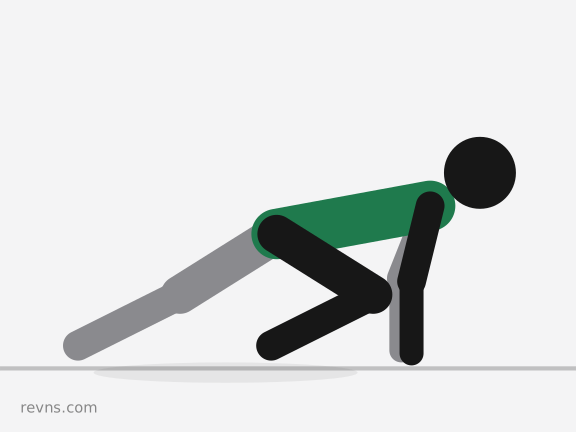
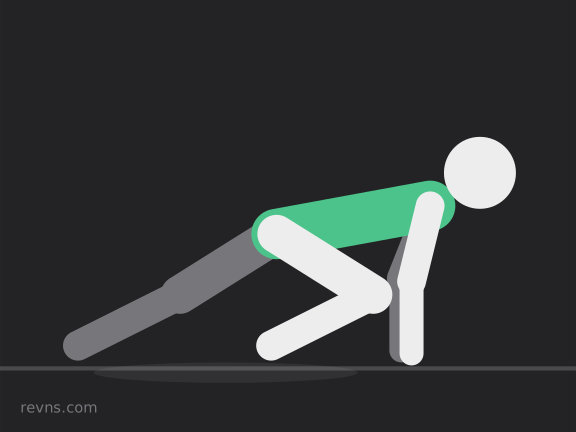
2. Mountain climbers
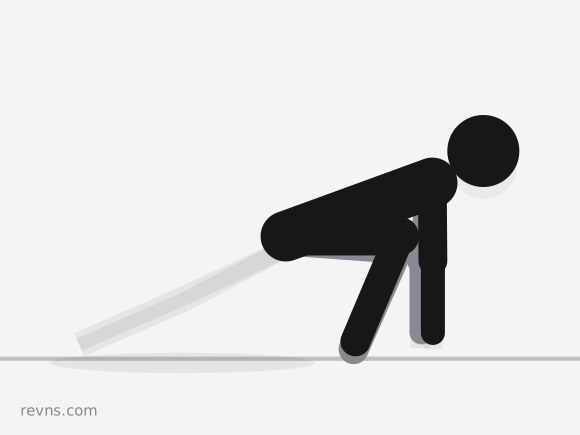
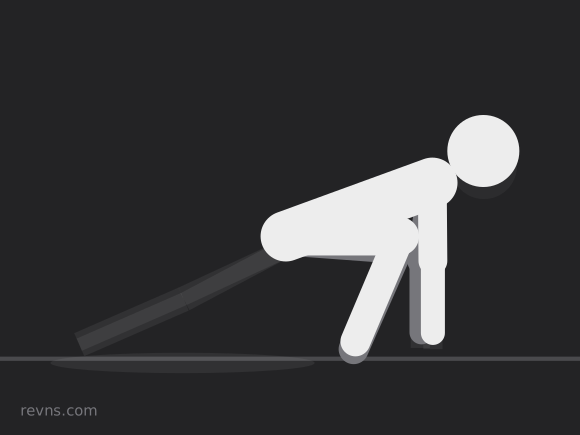
Mountain climbers drive heart rate with alternating knee drives from a plank. They train core anti-extension and shoulder stability.
- Start in a high plank, hands under shoulders, feet hip-width apart.
- Brace the abs so the hips stay level.
- Drive one knee toward the chest without lifting the hips.
- Switch legs with a steady rhythm.
- Land each foot lightly under the hip, not wide.
Do: 30 seconds. Move on when: hips stay level for the full interval without hiking up.
Common mistake: bouncing the hips high — slow down and shrink the range until the trunk stays quiet.
Easier: step each foot in one at a time. Harder: faster cadence or plank jacks in a later workout.
3. High knees
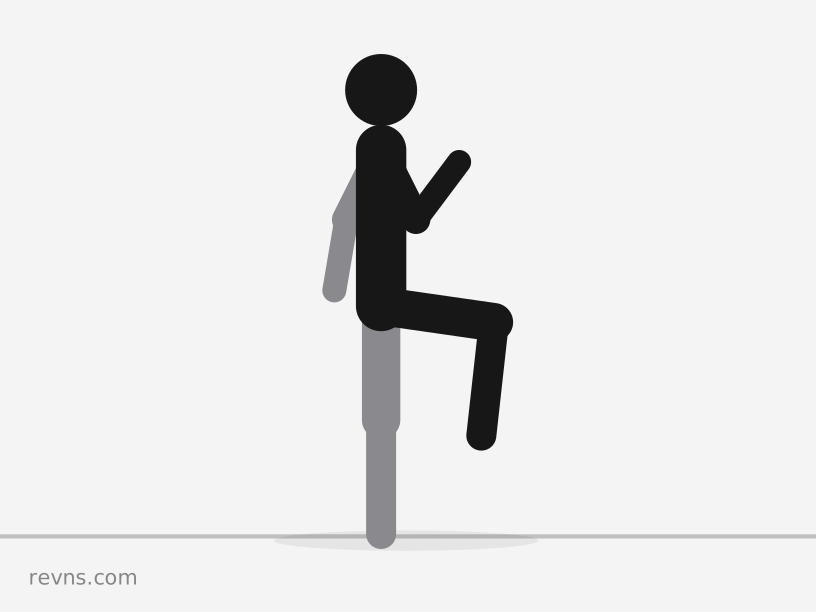
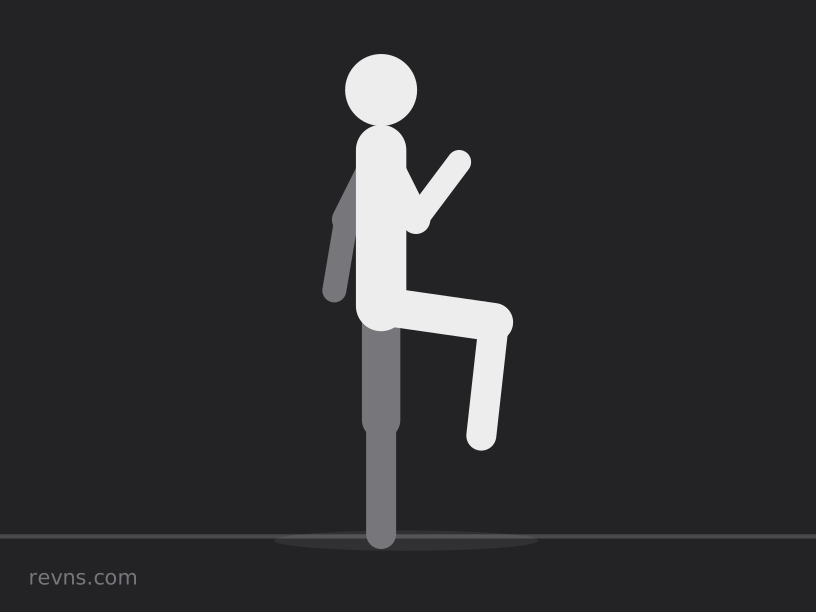
High knees are running in place with knees lifted toward hip height. They add locomotion after floor work.
- Stand tall, core lightly braced.
- Drive one knee up while the opposite arm swings forward.
- Land on the ball of the foot, then switch.
- Stay on the spot; do not travel forward.
- Keep the chest lifted; do not lean back.
Do: 30 seconds. Move on when: you can maintain cadence without leaning backward.
Common mistake: tiny knee lifts that never raise effort — lift higher or pump the arms.
Easier: standing marches. Harder: faster cadence or butt kicks in a future round.
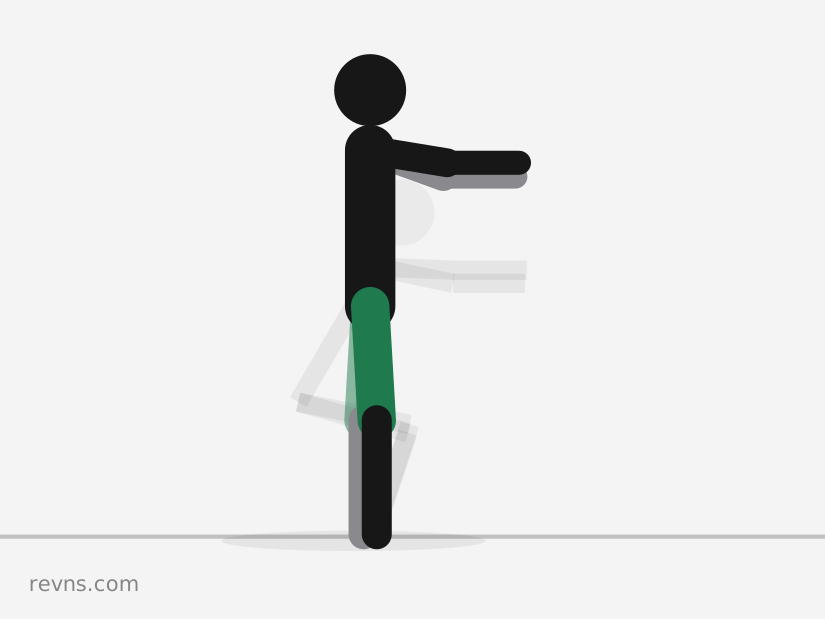
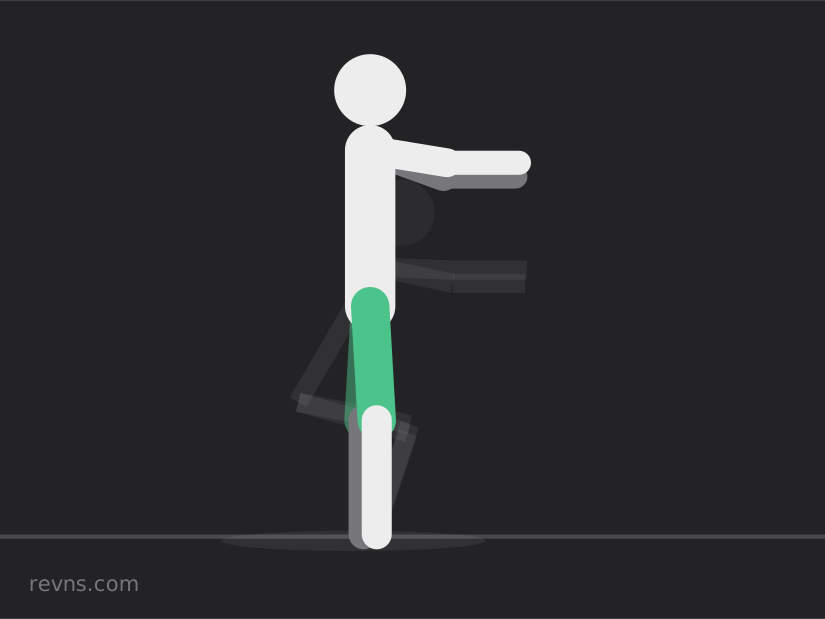
4. Squat
Squats in HIIT are faster reps, not maximal depth tests. They reload the legs between upper-body and jumping patterns.
- Stand with feet shoulder-width apart, toes slightly out.
- Sit the hips back and down, keeping heels down.
- Drive through the mid-foot to stand.
- Squeeze the glutes at the top without arching the lower back.
- Use a pace you can hold for the full 30 seconds.
Do: 30 seconds of continuous reps. Move on when: depth stays consistent in round two.
Common mistake: collapsing forward with the chest — think "hips back" and keep heels heavy.
Easier: quarter-depth squats or wall sit for 20 seconds instead. Harder: squat pulses or jump squats only when pain-free.
5. Knee push-up
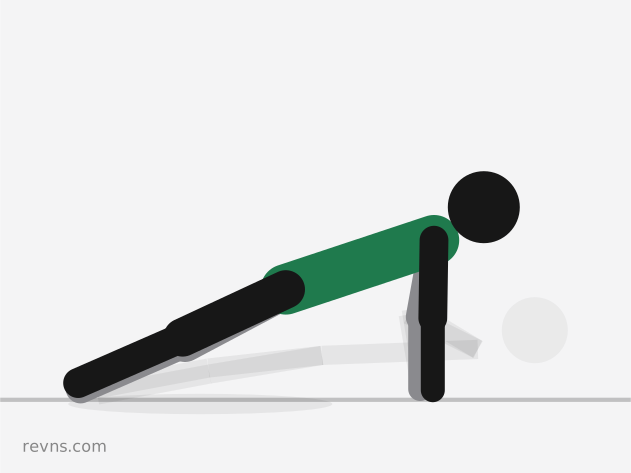
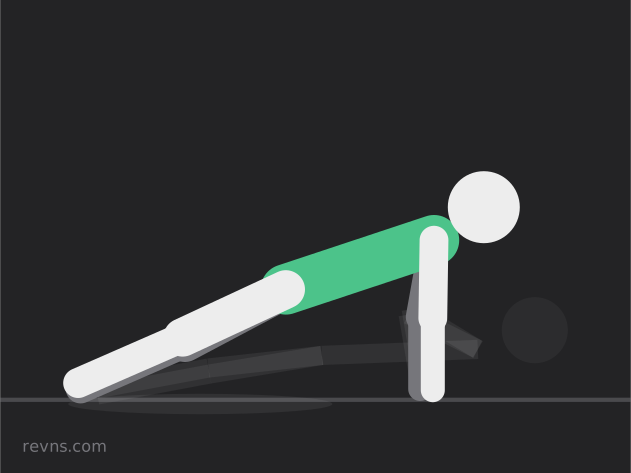
Knee push-ups keep horizontal pushing in the circuit without demanding a full plank push-up on day one.
- Kneel on a mat, hands slightly wider than shoulders.
- Walk the hands forward until the body forms a straight line from knees to head.
- Lower the chest between the hands, elbows at roughly 45 degrees.
- Press back up without letting the hips sag.
- Breathe out on the press.
Do: 30 seconds of reps. Move on when: you can complete round two without breaking form.
Common mistake: hips piking up — shift weight forward so the chest, not the hips, travels toward the floor.
Easier: wall push-ups or incline push-ups. Harder: push-ups from the toes.
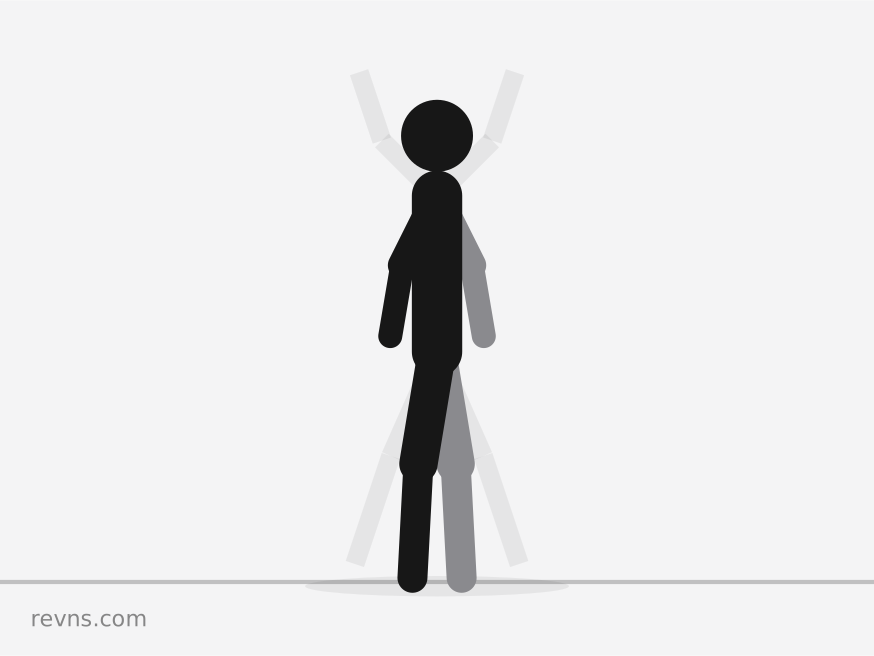
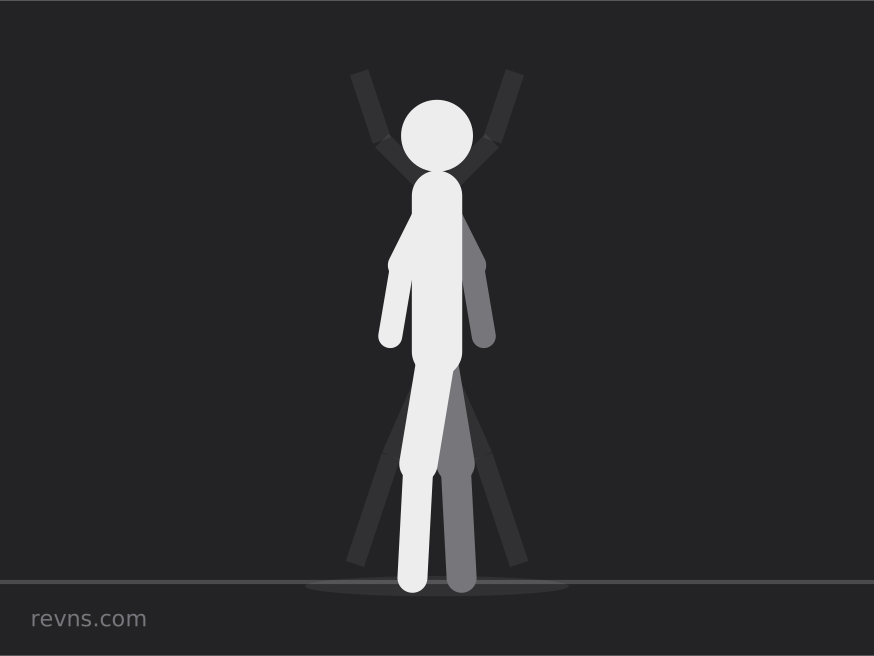
6. Step jacks
Step jacks mimic jumping jacks without both feet leaving the floor at once, which keeps apartments quieter than full jacks.
- Stand with feet together, arms at sides.
- Step the right foot out as both arms rise overhead.
- Step back to centre as arms lower.
- Repeat on the left side.
- Stay light on the feet; do not stomp.
Do: 30 seconds, alternating sides. Move on when: you can keep rhythm through round two.
Common mistake: wide stomping steps — shorten the step to stay quiet on hard floors.
Easier: standing marches with arm swings. Harder: jumping jacks when impact is comfortable.
What muscles does a beginner HIIT workout work?
This circuit is full body. Squat thrusts and mountain climbers stress quads, glutes, shoulders and core. High knees and step jacks add calves and hip flexors. Squats load legs. Knee push-ups train chest, shoulders and triceps. No single muscle is isolated; that variety is why HIIT feels demanding in a short window.
Energy use depends on size, sex and how fast you move. The 2024 Adult Compendium lists vigorous calisthenics and dedicated HIIT-style bodyweight work at roughly 7.5–11 MET (Compendium tables). A 70 kg adult at the lower end might burn on the order of 80–120 kcal in 12 minutes of hard mixed work, but treat that as a rough range, not a target.
Can you do beginner HIIT in a small apartment?
Yes, with two tweaks: use step jacks instead of jumping jacks and step back in squat thrusts instead of jumping to plank. High knees stay on the spot. If downstairs neighbours still hear thumps, swap high knees for marches and read the quiet apartment workout on those weeks.
What should you do this week?
- Day 1: One round only if HIIT is new; note breathing and knee comfort.
- Day 2: Rest or easy walk.
- Day 3: Two full rounds if day 1 felt controlled.
- Day 4: Strength session or core work.
- Day 5: Optional second HIIT day — only if sleep and soreness are normal.
- Next week: Add progression from one lever above, not every lever at once.
Log minutes in a workout log or your usual tracker so hard days do not stack invisibly next to runs or lifting.
Who should check with a clinician first, and when should you stop?
Ask a doctor or physiotherapist before starting if you have heart or lung disease, uncontrolled blood pressure, recent surgery, pregnancy complications, osteoporosis with fracture risk, or symptoms your clinician is investigating. Pregnant people should follow clinician-led activity guidance rather than maximal intervals.
Stop and seek urgent care for chest pain, fainting, severe breathlessness, or irregular heartbeat. Stop this workout and get advice for sharp joint pain, swelling, dizziness, or pain that worsens week to week.
This is general training guidance, not medical advice.
Related
- Low impact cardio workout at home: a quiet beginner circuit with demos
- Full body workout at home with no equipment: a six-move beginner routine
- 20 minute full body workout: intermediate home circuit with moving demos
- Rest days: how many you need and what to do on them
- How much exercise per week: WHO guidelines for adults
- How to warm up before a workout: how long and what to do
- Exercise library
Sources
- Bull FC et al. World Health Organization 2020 guidelines on physical activity and sedentary behaviour. Br J Sports Med 2020
- Ainsworth BE et al. 2024 Adult Compendium of Physical Activities
- American College of Sports Medicine. Physical Activity Guidelines Resources
- U.S. Centers for Disease Control and Prevention. How much physical activity do adults need?
Terms in this post
revns publishes training and nutrition guidance, not medical advice. See a clinician for symptoms, injury or a medical condition. Accurate as of November 22, 2026.