Benefits of hammer curls: what they train, how often and a simple plan
Benefits of hammer curls: neutral-grip curls train brachialis, biceps and brachioradialis with less wrist twist. How often, sets, reps and a two-day arm plan.
revns editorial · Published November 23, 2026 · 9 min read

Hammer curls strengthen elbow flexors and brachioradialis with a thumbs-up grip. Do them 2–3 times a week after pulls; 2–3 sets of 8–12 reps pair well with standard bicep curls.
The main benefits of hammer curls are stronger neutral-grip pulling, extra brachialis and brachioradialis work, and elbow-flexion volume that many wrists tolerate better than palms-up curls. They train the same elbow flexors as standard bicep curls with the thumbs pointing up. Most adults do well with two or three hammer curl sessions a week, two to three sets of 8 to 12 reps, after rows or pulldowns. Pair them with palms-up curls when you want both emphasis and variety.
TL;DR
| Question | Short answer |
|---|---|
| What do hammer curls work? | Biceps brachii, brachialis, brachioradialis (thumb-side forearm) |
| Why do them? | Wrist-friendly arm volume, grip and carry support, curl variety |
| How often? | 2–3 days a week; count sets toward weekly arm volume |
| Sets and reps | 2–3 × 8–12, stopping 1–3 reps before form breaks |
| vs bicep curl | Slightly less biceps ascent activation in one EMG study; often more reps at same load |
| Progress | Add reps, then weight; see progressive overload |

What muscles do hammer curls work?
Hammer curls muscles worked are the elbow flexors: biceps brachii on the front of the upper arm, brachialis underneath it and brachioradialis along the thumb side of the forearm. All three help bend the elbow. The neutral grip—palms face each other, thumbs up—reduces the supination twist that palms-forward curls ask for, which is why many lifters describe hammers as wrist-friendly.
Grip changes how hard each muscle works, not which muscles exist. In Coratella and colleagues' 2023 study of ten competitive bodybuilders curling at an 8-rep-max load, biceps brachii excitation on the ascending phase was about 12% higher with a supinated grip than with a neutral grip, while the lowering phase did not differ by grip. Jahizi and colleagues (2024), comparing traditional, hammer and reverse dumbbell curls in thirty trained men, reported highest biceps brachii EMG on traditional curls and the most repetitions completed on hammer curls under the same protocol. Those are small-lab EMG studies, not proof that one grip always builds bigger arms, but they support using both grips across a training block.
What are the benefits of hammer curls?
Wrist-friendly arm volume
Palms-up curls ask the wrist to stay extended while the biceps supinates the forearm. Some lifters feel pinch or fatigue at the wrist before the biceps fail. Hammer curls keep the wrist in a neutral line. If palms-up curls irritate your wrist but rows feel fine, hammers are a practical way to add direct arm sets without abandoning curl work.
Brachialis and brachioradialis strength
The brachialis sits under the biceps and helps bend the elbow whether the palm is up or neutral. The brachioradialis runs along the thumb side of the forearm; it is active in neutral and pronated grips. Stronger brachialis and brachioradialis support hammer grip rows, neutral-grip pull-ups, carries and rope climbs. For a dedicated forearm block, see forearm and grip strength exercises.
More completed reps at the same load
In Jahizi and colleagues' 2024 comparison, hammer curls produced the most repetitions among the three dumbbell curl styles tested. More reps at the same load, with clean form, means more training volume toward weekly strength targets without always adding weight. Volume still has to stay within what elbows and wrists recover from.
Grip and carryover
Holding dumbbells with a neutral grip through a full set trains the hands and forearms isometrically. That overlaps with farmer carries, suitcase carries and dead hangs. Curls are not a complete grip programme, but hammers fit a grip plan that also includes hangs and loaded carries.
Count toward WHO strength days
The WHO recommends muscle-strengthening on two or more days per week for major muscle groups. Hammer curls count toward that tally when they sit inside a balanced week that also trains legs, chest, back and core. They are isolation work: one joint leads. Do them after compounds, not instead of rows or chin-ups.
Variety without new equipment
Dumbbells you already own are enough. Cable rope hammer curls and incline hammer curls change the resistance curve slightly, but the benefit story is the same: neutral-grip elbow flexion. Variety can help when a single grip stalls for two weeks at the same load.
Are hammer curls effective compared with bicep curls?
Yes, for the same overall goals—elbow strength and arm size—when you count weekly sets and recovery. Palms-up curls may edge biceps brachii activation on the way up in EMG studies; hammers may let you stack more quality reps. Neither replaces compound pulls.
| Factor | Hammer curl | Bicep curl (palms up) |
|---|---|---|
| Grip | Neutral, thumbs up | Supinated, palms forward |
| Biceps ascent (Coratella 2023) | Slightly lower excitation vs supinated | About 12% higher vs neutral in that study |
| Reps at same protocol (Jahizi 2024) | Most reps completed among three curl types | Highest biceps EMG among three types |
| Wrist stress | Often lower for some lifters | Higher for some lifters |
| Best paired with | Rows, neutral pull-ups, carries | Chin-ups, barbell curls, standard rows |
For a side-by-side routine and four-move pairing, see hammer curl vs bicep curl. For palms-up benefits and frequency, see benefits of bicep curls.
How often should you do hammer curls?
Two or three times a week fits most beginners and intermediates, the same rhythm as other curl work. Space hard hammer days from heavy pulling or keep one day light. If you already do two bicep curl days, add hammers on one of those days first rather than inventing a fourth arm day.
| Weekly schedule | Who it suits |
|---|---|
| 2 hammer days | Upper-lower or push-pull-legs with arm focus |
| 1 hammer + 1 palms-up day | Full-body 3×/week |
| Hammers only on one pull day | Elbows need less direct volume |
Signs you are doing too much: elbow ache that worsens each session, shrinking reps at the same weight for two weeks or hammers replacing sleep and leg work. Swap a curl day for active recovery.
Are hammer curls worth doing every day?
Daily light technique work with bands or very light dumbbells is usually fine. Heavy hammer curls every day without easier days often stalls progress and can irritate elbows. Muscle recovery for the same tissue still needs 48 to 72 hours between hard sessions for most people.
How many sets and reps of hammer curls?
A supported starting point for novices learning resistance training is 2 to 3 sets of 8 to 12 repetitions, stopping 1 to 3 reps before failure—the range the American College of Sports Medicine often cites for beginners.
| Goal | Sets × reps | Rest | Notes |
|---|---|---|---|
| General strength and size | 2–3 × 8–12 | 60–90 s | Add load when the top rep is clean |
| Heavier strength | 3 × 6–8 | 90 s | After warm-up; skip if elbows hurt |
| Endurance or finisher | 2 × 12–15 | 45–60 s | Lighter load; not every session |
Count hammer sets inside your total direct biceps and forearm volume. Roughly 6 to 12 direct curl sets per week sits in the range many hypertrophy reviews discuss for a single muscle group in trained lifters, before you count curls inside rows. See how many sets per muscle per week for the wider picture.
When to add weight: when you hit the top of your rep range on all sets with the same slow tempo and no swing, add the smallest jump your dumbbells allow (often 1 to 2 kg per hand) or add one rep per set before loading.
How to do hammer curls with good form
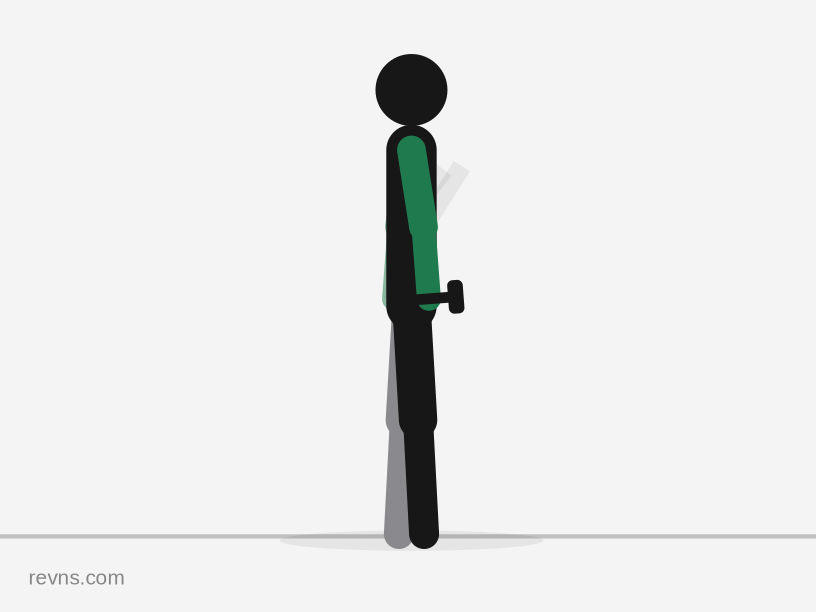
- Stand or sit tall, shoulders down, ribs stacked over hips.
- Hold dumbbells at your sides, palms facing each other, thumbs up.
- Pin elbows at your ribs; only the forearms travel.
- Curl until the dumbbells reach shoulder height without shrugging or leaning back.
- Lower under control for two to three seconds; do not rotate the palms up on the way.
Common mistake: swinging the torso or drifting the elbows forward. Fix it with a lighter weight and a one-second pause at the bottom.
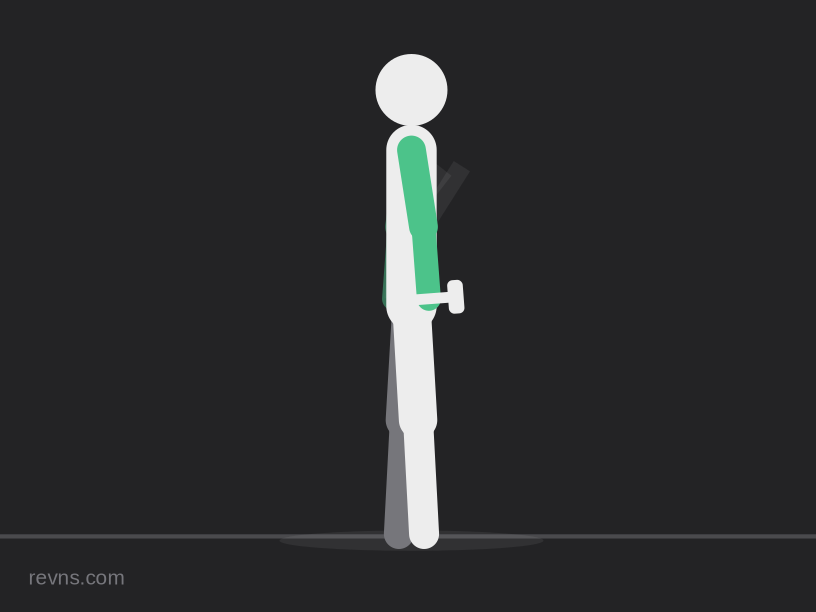
Easier: band curls with a neutral handle if available. Harder: concentration curls or slower eccentrics after form is solid. At the gym, rope hammer curls on a cable keep constant tension; start lighter than dumbbells.
Rope hammer curls and incline hammer curls: extra benefits?
Rope hammer curls use the same neutral grip on a cable stack. The cable pulls slightly backward, which can keep tension at the bottom of the range. They belong on the same weekly volume tally as dumbbell hammers—do not double-count two hammer variants on the same day unless elbows tolerate it.
Incline hammer curls (bench set to 45–60 degrees, arms hanging) lengthen the biceps and brachialis at the bottom. They can feel harder at the stretch; use lighter loads and the same elbow rules. Neither variation changes the muscle list; they change line of pull and comfort.
A simple hammer curl workout plan (two days a week)
Use this after main compounds. Each arm block should take 10 to 15 minutes.
Day A (after pull or full-body day)
| Exercise | Sets × reps | Rest |
|---|---|---|
| Hammer curls (dumbbell) | 3 × 8–10 | 60–90 s |
| Bicep curls (palms up) | 2 × 10–12 | 60 s |
Day B (after pull or upper day, 2–3 days later)
| Exercise | Sets × reps | Rest |
|---|---|---|
| Incline hammer curl OR cable rope hammer curl | 3 × 10–12 | 60 s |
| Band curls (light finisher) | 1 × 15–20 | — |
Warm up: two sets of 12 easy hammer curls with very light dumbbells before the first working set. See how to warm up before a workout.
Recovery: arm growth still needs sleep, protein and overall weekly load management. Use the protein calculator if daily targets are unclear. Log sessions in a workout log with sets and reps or a simple workout tracker so trends stay visible.
Benefits of hammer curls for women
Women gain the same functional benefits: stronger pulls, better grip and support for strength training for women. Hormones and genetics set how fast arms grow; neutral-grip curls alone will not produce large arms without months of progressive training, enough food and overall volume.
If wrists dislike supination, start with hammers before heavy palms-up work. Pair them with rows or band pull-aparts so the back stays balanced.
What to do this week
- Add two sets of hammer curls after your next row session. Stop with two reps left in the tank.
- Log weight and reps for four weeks before you judge progress.
- Keep one full rest or easy day between hard upper-body days; see rest days.
- If elbows or wrists ache for more than a week, drop load and seek assessment if pain is sharp or swelling appears.
When to see a professional
Stop and get medical advice for sharp elbow or wrist pain, numbness or tingling in the hand during curls, visible swelling after a session, or loss of strength that does not improve with a lighter week. This is general training guidance, not medical advice. Curls are not a treatment for tendonitis or nerve issues.

Related
- Hammer curl vs bicep curl: differences, muscles worked and when to use each
- Benefits of bicep curls: what they train, how often and a simple plan
- Bicep curl: how to do it right, with beginner form drills and moving demos
- Forearm and grip strength exercises: a five-move dumbbell routine
- How many sets per muscle per week for muscle growth
- Progressive overload in plain words
- Tricep extensions workout plan: benefits and a weekly routine
- Hammer curls exercise library page
This is general training guidance, not medical advice.
Sources
- Coratella G et al. Biceps Brachii and Brachioradialis Excitation in Biceps Curl Exercise: Different Handgrips, Different Synergy. Sports (Basel) 2023 (PMC).
- Jahizi K et al. Comparison of electromyographic activation and number of repetitions completed between traditional, hammer and reverse dumbbell bicep curl among trained men. AIP Conf Proc 2024.
- Bull FC et al. WHO Guidelines on Physical Activity and Sedentary Behaviour. Br J Sports Med 2020.
- American College of Sports Medicine. ACSM's Guidelines for Exercise Testing and Prescription, 11th ed. Wolters Kluwer.
- Lopez P et al. Resistance Training Load Effects on Muscle Hypertrophy and Strength Gain: Systematic Review and Network Meta-analysis. Br J Sports Med 2021.
Terms in this post
revns publishes training and nutrition guidance, not medical advice. See a clinician for symptoms, injury or a medical condition. Accurate as of November 23, 2026.