Lunges workout plan: benefits, muscles worked and a simple weekly routine
Lunges workout plan: quad and glute benefits, forward vs reverse, sets and reps, and a two-day leg routine at home or in the gym with dumbbell options.
revns editorial · Published November 23, 2026 · 10 min read
Lunges build quad and glute strength and single-leg balance. Do them 1–2 leg days a week, 3 sets of 8–12 each leg; long steps and walking lunges raise muscle use.
A lunges workout plan builds quad and glute strength one leg at a time, while training balance and hip control that bilateral squats skip. The standard forward lunge and reverse lunge are closed-chain leg pushes. Most healthy adults do well with one or two leg sessions a week, three sets of eight to twelve reps per leg, and slow load increases when the front knee tracks over the foot and the torso stays tall. The tables below answer what muscles lunges work, forward vs reverse, and a home or gym weekly plan.
TL;DR
| Question | Short answer |
|---|---|
| What does a lunges workout train? | Quads and glutes; hamstrings, calves and hip stabilizers help |
| Why use lunges? | Single-leg strength, balance, stairs and sport carry-over |
| How often? | 1–2 leg days per week inside a full-body or lower split |
| Sets and reps | 3 × 8–12 each leg, rest 60–90 s; stop 1–3 reps before form fails |
| Long vs short step | Long step raises quad and glute use in lab EMG work |
| Home vs gym | Bodyweight at home; dumbbells or kettlebells in the gym |

What muscles does a lunges workout work?
Lunges mainly work the quadriceps that straighten the knee and gluteus maximus that extends the hip on the working leg. Hamstrings and gastrocnemius assist through the knee and ankle. Gluteus medius on the stance side fires to stop the pelvis from dropping, which is why wobbly newcomers often feel the outside of the hip tire before the thigh burns.
| Muscle group | Role in a lunge |
|---|---|
| Quadriceps (vastus lateralis, medialis, rectus femoris) | Main knee extensors on the descent and drive up |
| Gluteus maximus | Hip extension on the way up |
| Gluteus medius | Pelvis level over the stance leg |
| Hamstrings | Knee and hip control, especially in longer steps |
| Calves | Ankle stability at the bottom |
Muyor and colleagues (2020, 20 physically active participants, 10 men and 10 women, PLoS ONE) compared forward lunges with lateral step-ups and single-leg squats at about 60% of a five-repetition maximum. During forward lunges, vastus lateralis and vastus medialis showed the highest surface EMG among the muscles tested, with gluteus medius and gluteus maximus next. That matches what lifters feel: the front thigh and hip carry most of the work when depth is controlled.
In earlier work, Ebben and colleagues (Medicine & Science in Sports & Exercise, 2006, 19 healthy men and women) reported high quadriceps activity (roughly 50 to 70% of a maximum voluntary contraction across the knee range) and moderate gluteus maximus activity (roughly 20 to 40%) during forward lunges with challenging loads. Long-stride forward lunges recruited more quad, hamstring, adductor and glute activity than short-stride lunges in that design.
For step-by-step cues on the default move, see lunges in the exercise library.
What are the benefits of a lunges workout?
Single-leg strength and balance
Everyday life and sport often load one leg at a time: stairs, decelerating when you run, cutting in field sports. Lunges train that pattern with a manageable range of motion. Balance improves when you repeat controlled reps, not when you rush.
Quad and glute work with minimal equipment
Bodyweight lunges need floor space only. A pair of dumbbells or a kettlebell raises load without a leg press machine. That suits leg workouts at home without weights when you add dumbbells later.
Supports WHO strength targets
The WHO advises adults to do muscle-strengthening activities on two or more days per week that work major muscle groups. Lunges count toward leg training when your week also includes hinge, push and pull work, as in how much exercise per week.
Complements squats and deadlifts
Bilateral squats load the spine and train max force. Lunges add unilateral volume and hip stability without replacing heavy squats for pure strength goals. Many programmes squat first, lunge second, on the same day or across the week.
Metabolic cost in conditioning blocks
Walking lunges and lighter high-rep sets raise heart rate. In a 2015 comparison by Ratamess and colleagues (Journal of Strength and Conditioning Research, 10 resistance-trained men), battling-rope intervals produced the highest average oxygen uptake in a circuit, but lunges still contributed meaningful leg work in the same session design. Use walking lunges as a finisher, not as daily max-effort cardio.
Is lunges a good leg workout?
For building single-leg strength, hip control and quad-glute endurance, yes — when knees are healthy and form stays controlled. Lunges are less ideal as the only leg exercise if you never train bilateral squats or hinges. Max bilateral strength and spinal loading still belong on squat and deadlift patterns for many goals.
| You | Lunges role |
|---|---|
| Beginner at home | Main single-leg move after squats |
| Gym lifters | Volume after squats or on a second leg day |
| Runners | Strength and hip stability between easy runs |
| Knee pain history | Clinician first; reverse lunge or split squat if cleared |
A lunges workout is a good leg workout when it sits inside a week that also includes rest, protein and progressive load, not when daily max walking lunges replace recovery.
Forward lunge vs reverse lunge: which should you use?
Forward lunges step the working foot ahead; reverse lunges step the working foot back. Both train quads and glutes. Many beginners find reverse lunges easier on the front knee because the shin stays more vertical and the torso can stay taller.
| Style | Usual feel | When to pick it |
|---|---|---|
| Forward lunge | More demand on balance and front knee | Short steps, sport carry-over |
| Reverse lunge | Front knee often more comfortable | Learning single-leg work |
| Walking lunge | Cardio and endurance bias | Space to travel |
| Static split squat | Less balance | Heavier load per leg |
A 2025 study in the Journal of Functional Morphology and Kinesiology (Escamilla and colleagues, 20 participants, loaded forward lunges at about a 12-repetition maximum) found quadriceps, gluteus maximus and gluteus medius activity was generally higher with a long step than a short step, and gluteus maximus activity was higher when lunges used a stride (step forward and push back) than when feet stayed fixed. Use that as a cue: slightly longer steps and walking or striding back can raise glute work when form stays clean — not as a reason to leap into gym-length lunges on day one.
How often should you do a lunges workout?
One or two leg days per week with lunges suit most recreational lifters. Full-body plans might lunge once; upper-lower splits might use lunges on both lower days with different rep ranges. Leave at least forty-eight to seventy-two hours between hard leg sessions.
| Weekly split | Lunges frequency |
|---|---|
| Full-body 3×/week | 1 session, 2–3 sets per leg |
| Upper-lower 4×/week | 1 heavy day, optional light single-leg day |
| Push-pull-legs | 1 dedicated leg day with lunges |
Signs you need active recovery or fewer sets: front knee ache that builds across the week, balance getting worse at the same load, or leg day stealing sleep quality.
How many sets and reps in a lunges workout?
The American College of Sports Medicine often cites one to three sets of eight to twelve reps for novices learning resistance training. A 2021 network meta-analysis (López et al., 28 studies, 747 healthy adults, Medicine & Science in Sports & Exercise) found 8–12 rep training with hard sets can build muscle much like heavier loads when sets approach volitional failure, while heavier loads still edge max strength. Lunges fit that 8–12 default.
| Goal | Sets × reps per leg | Rest |
|---|---|---|
| Strength and size (default) | 3 × 8–12 | 60–90 s |
| Heavier strength | 3–4 × 6–8 | 90–120 s |
| Endurance finisher | 2 × 12–15 | 45–60 s |
Stop one to three reps before the front knee caves inward or the torso collapses. Increase load when every set hits the top of the range with the same depth.
Can you do squats and lunges every day? Daily heavy lunges usually irritate knees and stall progress. Most people alternate hard leg days with easy or upper-only days; see rest days.
How to do a lunge with good form
- Stand tall, core braced, feet hip-width.
- Step forward or back into a split stance long enough that both knees can bend toward ninety degrees without the front heel lifting.
- Lower until the back knee hovers just above the floor — no slamming.
- Drive through the front heel to stand; torso stays upright.
- For forward lunges, step feet together or walk into the next rep.
Common mistake: short steps so the front knee shoots past the toes and the heel lifts. The fix is a longer step and slower lowering.
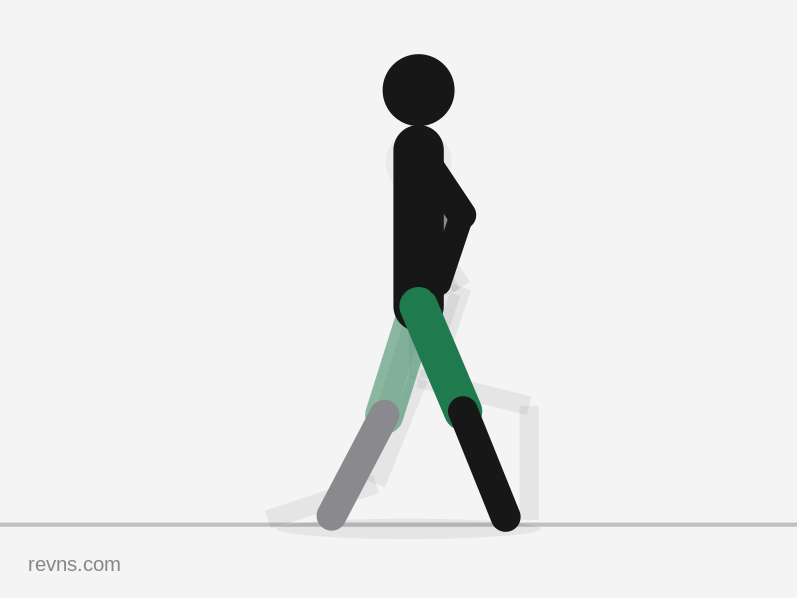
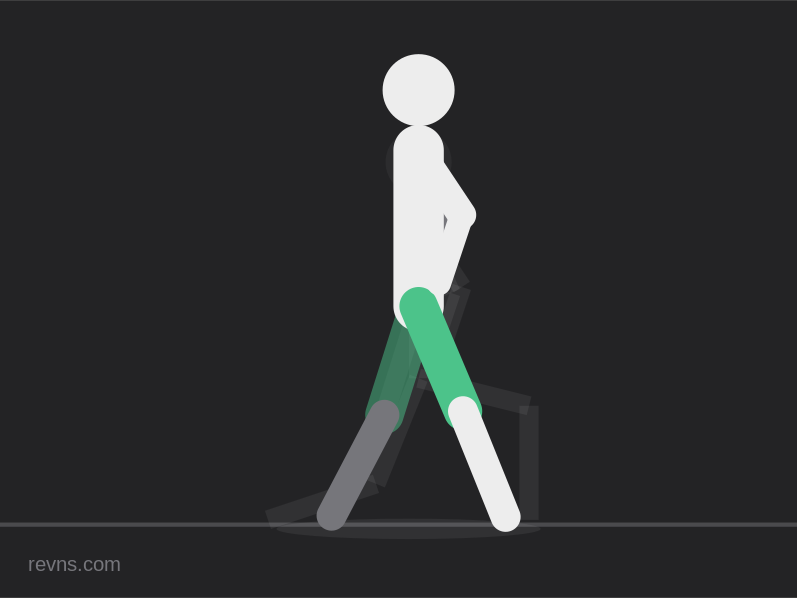
Easier: reverse lunges, shorter range, hand on a wall. Harder: walking lunges, dumbbells, or Bulgarian split squats. Similar: step-ups, split squats.
Lunges workout plan for beginners (two days a week)
Allow 30 to 45 minutes per session including warm-up. Do Day A and Day B at least two days apart.
Day A — bodyweight or light dumbbells
| Exercise | Sets × reps | Rest |
|---|---|---|
| Warm-up: marching and shallow squats | 2 × 15 | 60 s |
| Reverse lunge | 3 × 10 each leg | 90 s |
| Goblet squat or bodyweight squat | 3 × 10–12 | 90 s |
| Glute bridge | 3 × 12–15 | 60 s |
Day B — slightly longer steps or walking
| Exercise | Sets × reps | Rest |
|---|---|---|
| Warm-up | 2 × 15 | 60 s |
| Forward lunge or walking lunge | 3 × 8–10 each leg | 90 s |
| Romanian deadlift (dumbbell) or hip hinge | 3 × 8–10 | 90 s |
| Calf raise | 2 × 12–15 | 60 s |
Progression: when all sets hit the top of the rep range, add the smallest load jump (often 2 kg per hand) or one rep per set before loading. Log for four weeks before judging size changes; see how long to build muscle. Use the protein calculator if daily protein is unclear.
Warm up with five minutes of brisk walking, then the shallow squat sets above. Read how to warm up before a workout.
Lunges workout at home
You do not need a gym. Clear a hallway or use a mat:
| Gym option | Home swap |
|---|---|
| Walking dumbbell lunges | Reverse lunges in place |
| Barbell lunge | Goblet hold + forward lunge |
| Leg press | Squats + lunges same session |
Quiet apartment workouts already use soft reverse lunges for neighbors; keep the same slow lowering if floors are thin.
Lunges workout with dumbbells
Hold one dumbbell in the goblet position or two at your sides. Start with a weight that lets you finish three sets with two reps left in the tank. Walking lunges with heavy bells demand space and knee tracking; in-place reverse lunges are the safer default when balance is still shaky.
Lunges vs squats: should both be in the plan?
Squats train bilateral max strength and core bracing; lunges add single-leg volume and balance. In one session, squat first, lunge second, when you do both. If you only have twenty minutes, pick one primary leg push plus a hinge.
See leg press workout plan for machine volume and benefits of sumo deadlifts for posterior-chain work on another day.
Lunges workout plan for women
Women gain the same functional benefits: stronger stairs, carries and bone-loading stimulus when paired with impact or heavy rows, as in bone health for women. Hormones do not block quad strength from lunges; progressive load and protein still set the pace. See strength training for women for weekly structure.
Stop on sharp knee pain or hip pinching at depth; foot angle and step length are personal.
How do you track lunge progress?
Log step length (short vs long), load, reps per leg and which variation you used. Change one variable at a time. If a session feels off, repeat the same numbers instead of jumping. Pair with resting heart rate and sleep if recovery stalls after hard leg days.
What to do this week
- After your warm-up, do three sets of ten reverse lunges per leg with bodyweight or light dumbbells. Stop with two reps left.
- Note whether you used forward or reverse and step length so next week matches.
- Keep one full rest day before the second leg session; see recovery in training.
- If front knee pain lasts more than forty-eight hours after lunges, shorten the step, switch to reverse lunges only, and seek assessment if pain is sharp.
When to see a professional
Stop and get medical advice for sharp knee pain, locking or giving way, swelling after leg day, numbness in the foot or leg, or chest pain during exertion. This is general training guidance, not medical advice. Lunges are not knee rehab unless a clinician prescribes them.

Related
- Leg press workout plan: benefits and weekly routine
- Leg workout at home without weights: beginner routine
- Strength training for beginners: the first eight weeks
- Benefits of sumo deadlifts: what they train and a simple plan
- Progressive overload in plain words
- How long to rest between sets
- Lunges exercise library page
This is general training guidance, not medical advice.
Sources
- Bull FC et al. WHO Guidelines on Physical Activity and Sedentary Behaviour. Br J Sports Med 2020.
- American College of Sports Medicine. ACSM's Guidelines for Exercise Testing and Prescription, 11th ed. Wolters Kluwer.
- Ebben WP et al. A Biomechanical Analysis of Squatting and Lunging Type Exercises. Med Sci Sports Exerc 2006.
- Muyor JM et al. Electromyographic activity in the gluteus medius, gluteus maximus, biceps femoris, vastus lateralis, vastus medialis and rectus femoris during the Monopodal Squat, Forward Lunge and Lateral Step-Up exercises. PLoS ONE 2020.
- Escamilla RF et al. Effects of Step Length and Stride Variation During Forward Lunges on Lower-extremity Muscle Activity. J Funct Morphol Kinesiol 2025.
- Ratamess NA et al. Comparison of the acute metabolic responses to traditional resistance, body-weight, and battling rope exercises. J Strength Cond Res 2015.
- López P et al. Resistance Training Load Effects on Muscle Hypertrophy and Strength Gain: Systematic Review and Network Meta-analysis. Med Sci Sports Exerc 2021.
Terms in this post
revns publishes training and nutrition guidance, not medical advice. See a clinician for symptoms, injury or a medical condition. Accurate as of November 23, 2026.