Bodyweight leg day: a six-move intermediate routine at home
Bodyweight leg day at home for intermediates: Bulgarian split squats, tempo squats, single-leg hinges, step-ups, bridges and calf work, 3 sets, about 35 minutes.
revns editorial · Published November 25, 2026 · 11 min read
Intermediate bodyweight leg day at home: six moves, three sets each, single-leg focus, tempo squats, about 35 minutes, two sessions per week, with easier and harder options from the library.
A bodyweight leg day at home for intermediates is six moves in straight sets: Bulgarian split squats, tempo squats, single-leg deadlifts, step-ups, single-leg glute bridges and single-leg calf raises. Do three sets per move, rest 60 to 90 seconds, and train two non-consecutive days a week. The session takes about 35 minutes, needs a wall, a sturdy step and a sofa or bench for the back foot, and trains the quadriceps, glutes, hamstrings and calves without weights. Every move below has a moving demo from the exercise library.
TL;DR
| Move | Sets × reps or time | Rest |
|---|---|---|
| Bulgarian split squat | 3 × 8–10 per leg | 60–90 s |
| Squat (3 s down) | 3 × 10–12 | 60–90 s |
| Single-leg deadlift | 3 × 8 per leg | 60–90 s |
| Step-up | 3 × 8–10 per leg | 60 s |
| Single-leg glute bridge | 3 × 10 per leg | 60 s |
| Single-leg calf raise | 3 × 12–15 per leg | 45–60 s |
One exercise at a time, in order. Two hard leg days a week.
How do you run this bodyweight leg day?
Follow this order every session.
- Warm up for 5 minutes. March or walk briskly, then ten slow bodyweight squats, eight reverse lunges per leg and ten calf raises. Stay short of fatigue.
- Main work. Complete all sets of move 1 before move 2, and so on. Rest 60 to 90 seconds between sets on split squats, squats, deadlifts and bridges; 45 to 60 seconds on calves.
- Effort rule. Stop each set with one or two clean reps left in the tank. The last two reps of a set should feel like work, but your form should stay the same as the first rep.
- Cool down (optional). Two minutes of easy walking and light calf stretching if it feels good.
How often. Two days a week, for example Tuesday and Friday. The WHO 2020 guidelines say adults should do muscle-strengthening activity of moderate or greater intensity on two or more days a week, covering all major muscle groups. Pair this leg day with upper-body or core work on other days, or use the 20-minute full body workout at home on non-leg days.
Who this is for. You already finished the top rep ranges on the leg workout at home without weights for two weeks, or you train regularly and can do eight steady reverse lunges per leg without losing balance. If that is not true yet, stay on the beginner plan one more block.
Week-by-week progression.
| Week | What to change |
|---|---|
| 1 | Bottom of each rep range, perfect form |
| 2 | Add 1–2 reps per set where form stays clean |
| 3 | Slow every lowering phase to 4 seconds on squats and split squats, or add a 2-second pause at the bottom |
| 4 | Swap one move to its Harder option, or add a fourth set on the easiest exercise only |
Change one variable at a time. That pattern is progressive overload in plain words.
When to make it harder without weights. In order: more single-leg work, slower tempos, pauses, then more reps up to about 15 per set, then a harder library variation, then a loaded backpack on split squats only. Past about 20 reps per set on two-leg moves, switch variations instead of adding reps.
Sore legs for a day or two are common; see DOMS explained for what is normal.
The moves
Each block lists what the move trains, steps, dose, one mistake, and easier and harder options.
1. Bulgarian split squat
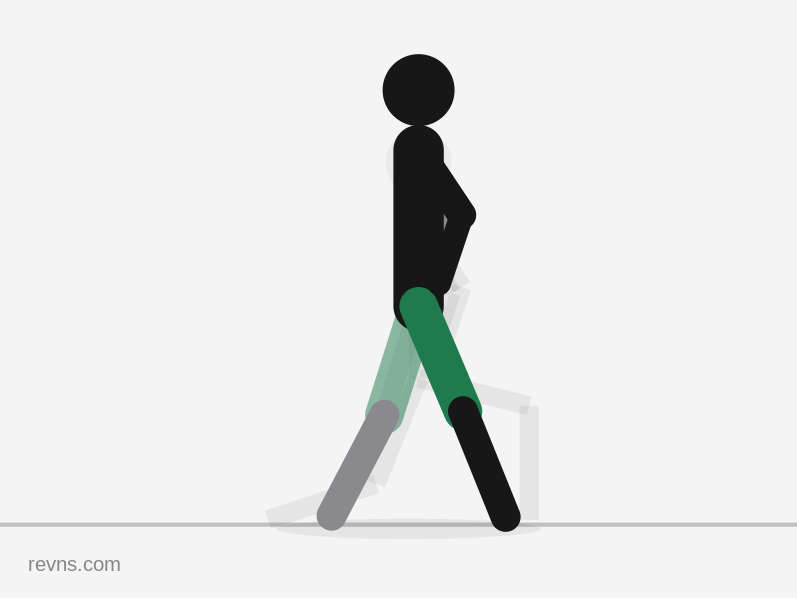
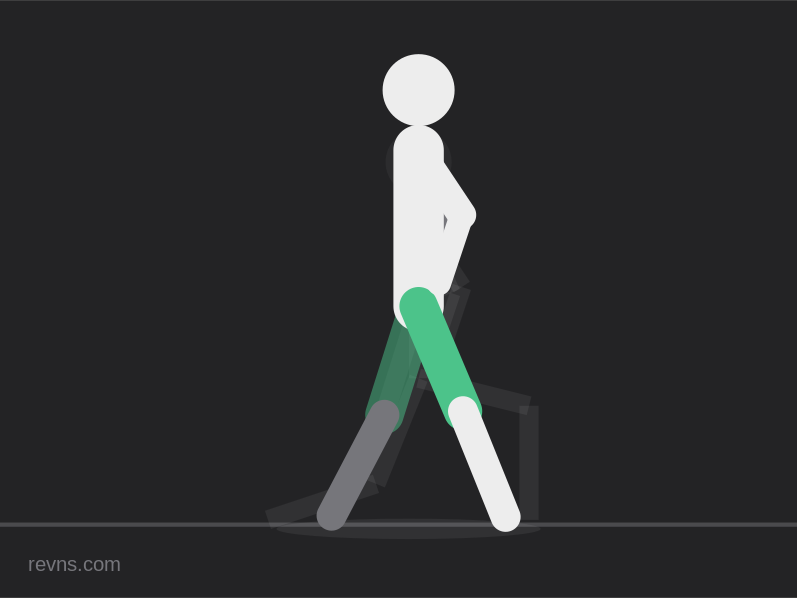
The Bulgarian split squat puts most of your weight on the front leg with the back foot on a bench or sofa. It is one of the hardest honest bodyweight quad moves you can do at home, and it loads the glute on the front side as well.
- Stand two strides in front of a knee-high bench or sofa, facing away from it.
- Place the top of one foot on the bench behind you, toes down or shoelaces on the cushion.
- Hop the front foot forward until you can lower straight down without the back knee crashing into the floor.
- Lower until the front thigh is about parallel and the back knee hovers above the floor.
- Drive through the front foot to stand, keeping your torso fairly upright.
Do: 3 × 8–10 per leg, rest 60–90 s between sets. Move on when: 10 per leg are steady for all three sets on two sessions. Common mistake: a front foot too close to the bench, which pushes the knee far over the toes. Slide the front foot farther forward. Easier: split squats with both feet on the floor. Harder: a 3-second lowering phase, a pause at the bottom, or a light backpack on the chest.
2. Tempo squat
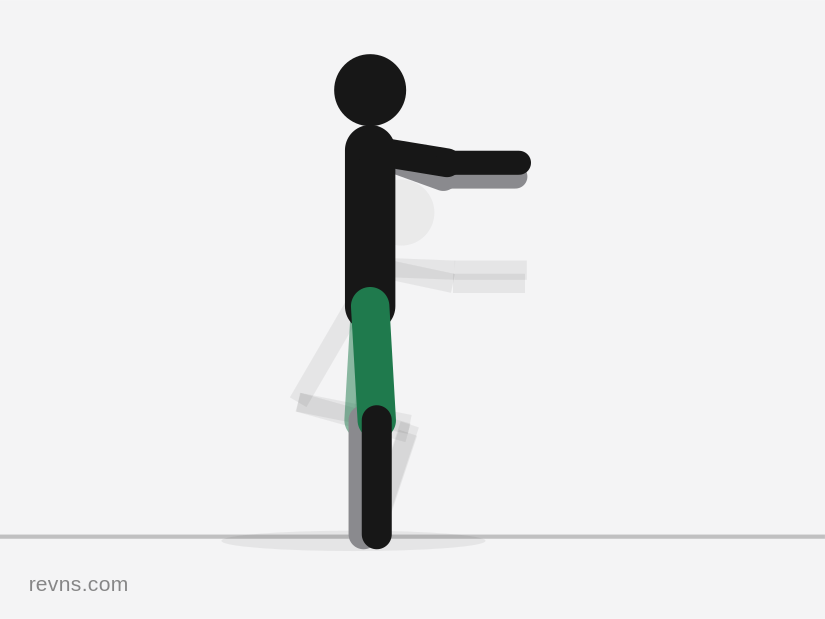
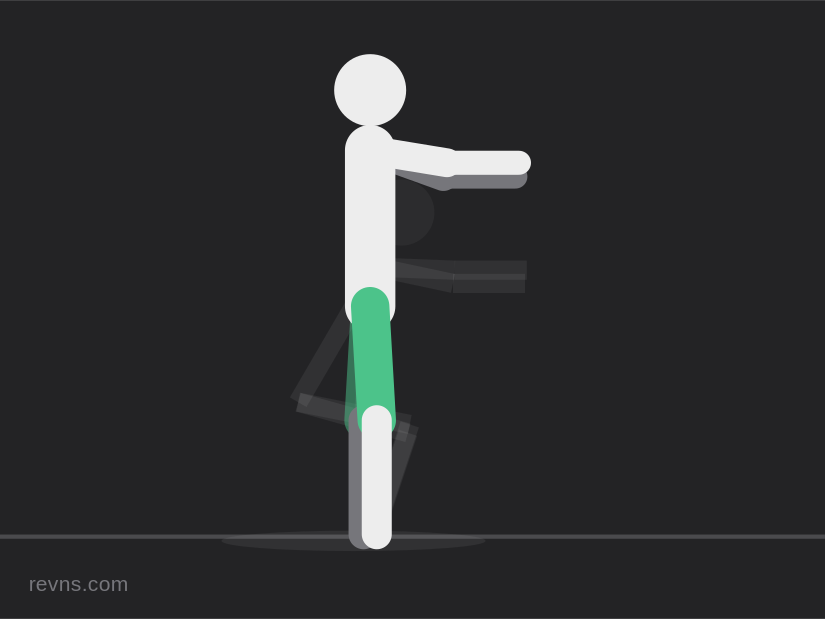
After single-leg work, a two-leg squat with a slow lowering phase keeps total quad and glute volume high without rushing reps. Count three seconds down, a brief pause, then stand. That tempo is often enough to make 12 reps feel demanding even when bodyweight squats alone felt easy.
- Stand with feet about shoulder-width apart, toes turned out slightly.
- Brace your stomach and reach your arms forward for balance.
- Push your hips back and bend your knees, taking three full seconds to reach your depth.
- Pause for one second at the bottom without bouncing.
- Stand up at a normal speed and squeeze your glutes at the top.
Do: 3 × 10–12, rest 60–90 s. Move on when: 12 reps with a 3-second down and 1-second pause feel controlled. Common mistake: speeding up on the way down after the first few reps. Use a silent count or a slow breath in on the descent. Easier: box squats to a chair with the same tempo. Harder: squat pulses after the last rep of each set, or a 4-second lowering phase.
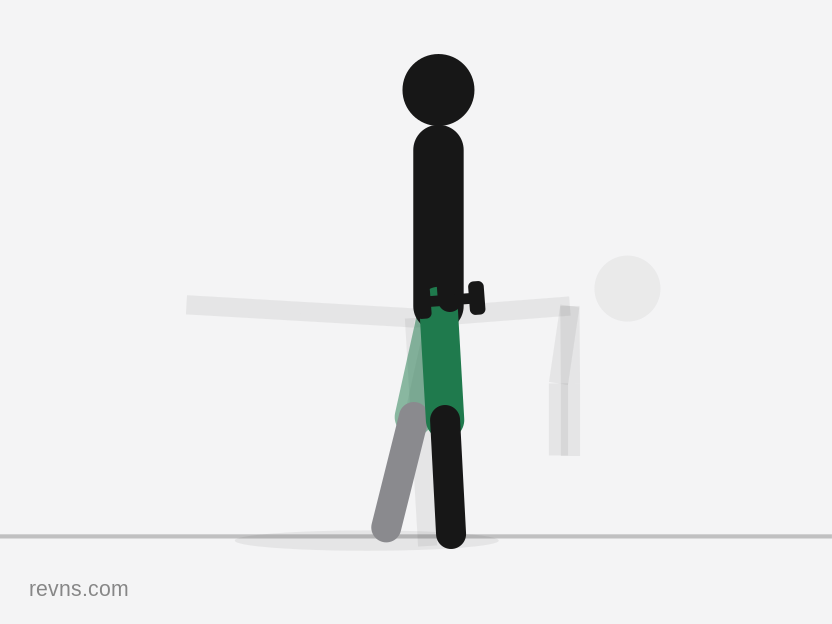
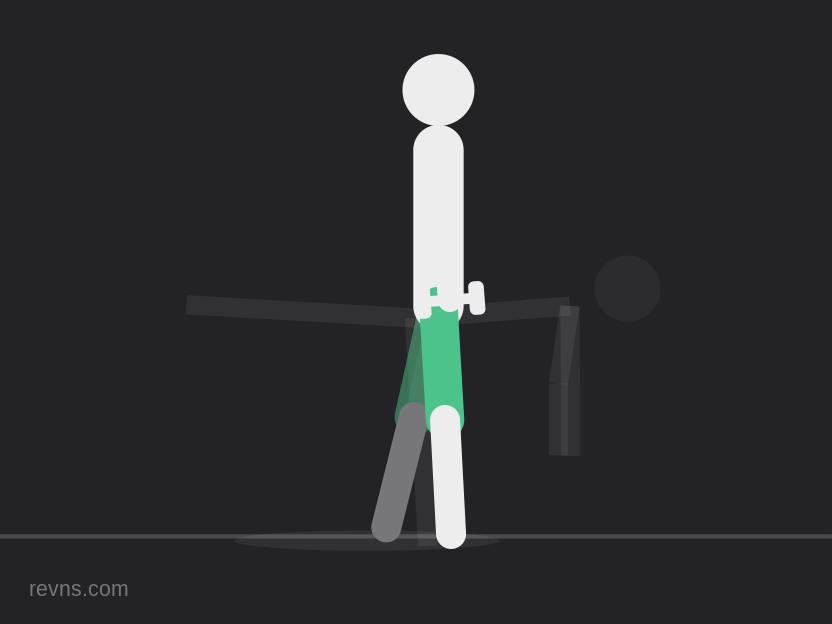
3. Single-leg deadlift
The bodyweight single-leg deadlift is a hip hinge on one leg. It trains the hamstrings and glutes, challenges balance, and copies the pattern you use when you pick something off the floor on one foot. A fingertip on a wall is fine while you learn it.
- Stand on one leg with a soft knee, the other foot slightly off the floor behind you.
- Hinge at the hip as the free leg reaches straight back and your torso tilts forward.
- Stop when your body is nearly a straight line from head to heel, or when you feel a stretch in the hamstring of the standing leg.
- Drive the hip forward to return to tall standing without twisting.
- Finish all reps on one leg, then switch.
Do: 3 × 8 per leg, rest 60–90 s. Move on when: 8 per leg stay square to the floor without opening the hip. Common mistake: rotating the hips open toward the ceiling. Keep both hip bones pointing at the floor. Easier: good mornings on two legs. Harder: no wall touch, a 3-second lowering phase, or a dumbbell in the opposite hand when you have one.
4. Step-up
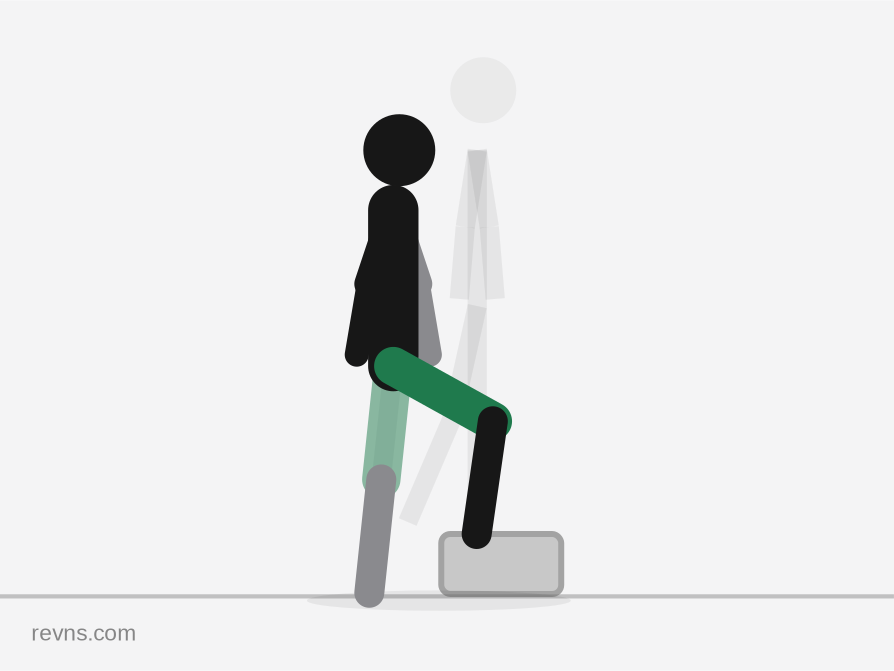
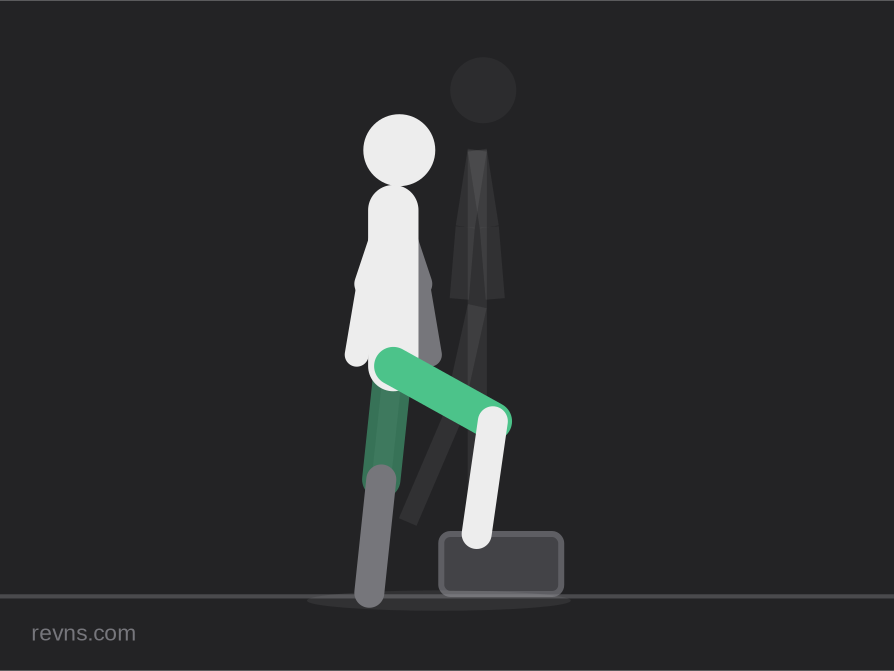
Step-ups train one leg at a time with a simple climbing motion. Use a step about mid-shin to knee height; higher is harder. The step must not slide, and the whole foot belongs on the surface.
- Place the entire working foot on the step, knee over the ankle.
- Lean slightly forward and press through the heel of that foot.
- Stand fully on the step without pushing off the bottom foot.
- Lower the trailing leg under control, or step down with the same leg each rep.
- Complete all reps on one leg, then switch.
Do: 3 × 8–10 per leg, rest 60 s. Move on when: 10 per leg need no hand on the wall. Common mistake: pushing off the floor with the back foot. Keep that foot light until you are standing on the step. Easier: a lower step with a hand on the wall. Harder: a higher step, a 3-second lowering phase, or Bulgarian split squats if step-ups feel too easy.
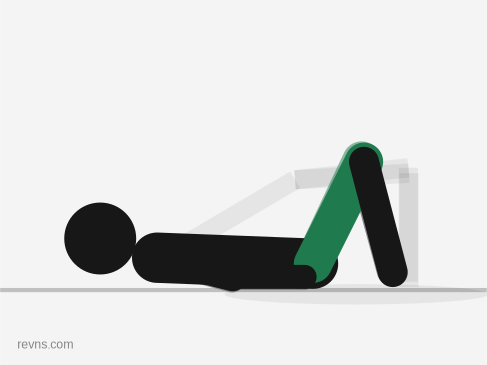
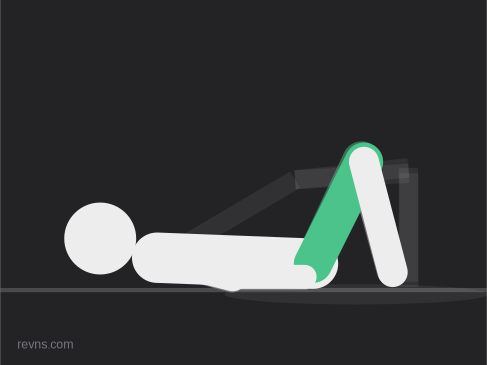
5. Single-leg glute bridge
Single-leg bridges load the glute and hamstring on one side while the core keeps the pelvis level. They are a good follow-up after squats and hinges when your lower back is tired but you still want hip strength.
- Lie on your back with one knee bent, foot flat, and the other leg extended or bent in the air.
- Tuck your pelvis slightly and press through the heel of the working foot.
- Lift your hips until your shoulders, hips and knee line up.
- Pause for two seconds and squeeze the glute.
- Lower slowly and repeat, then switch legs.
Do: 3 × 10 per leg, rest 60 s. Move on when: 10 per leg with a full pause feel easy; add a band later if you have one. Common mistake: the hips dropping on the free side. Keep the pelvis level like a table with one leg missing a leg. Easier: glute bridges on two legs. Harder: the foot farther from your body, or hip thrusts when you have a bench.
6. Single-leg calf raise
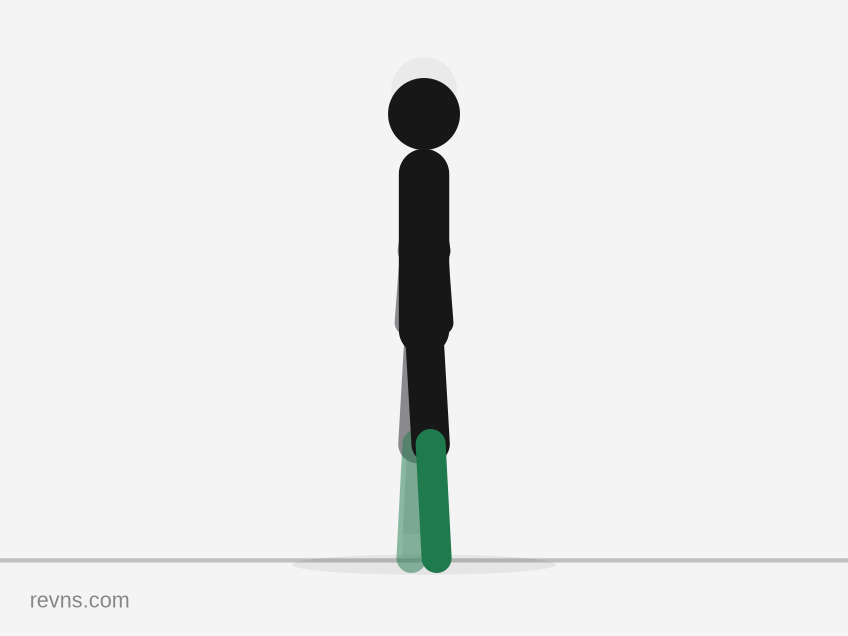
Calves handle thousands of steps a day but still respond to slow, full-range raises. Doing them on one leg and on the edge of a step makes bodyweight enough for most people training at home.
- Stand on one foot on a step with the heel hanging off, a hand on the wall for balance.
- Lower the heel below the step for a full stretch over two seconds.
- Rise onto the ball of the foot as high as you can.
- Pause one second at the top.
- Lower with control, then repeat and switch legs.
Do: 3 × 12–15 per leg, rest 45–60 s. Move on when: 15 per leg use full range without bouncing. Common mistake: bouncing at the bottom. Treat the lowest point as the start of each rep, not a springboard. Easier: two-leg calf raises on flat ground. Harder: no hand on the wall, or a slow 4-second lowering phase.
What is a good bodyweight leg day at home?
A good bodyweight leg day hits four movement patterns without a barbell: a squat, a split or lunge, a hip hinge, and calf work, with most of the hard reps on one leg. That is what the six moves above do. Circuits that repeat only squats and glute bridges miss the hinge and the single-leg stress that keeps home training challenging after the first month.
Compared with pages that list fifteen moves and three difficulty labels, this plan names one prescription, one order, and a move-on rule per exercise so you know when to add tempo or swap variations.
What muscles does this bodyweight leg day work?
| Move | Main muscles |
|---|---|
| Bulgarian split squat | Quadriceps, glutes |
| Tempo squat | Quadriceps, glutes |
| Single-leg deadlift | Hamstrings, glutes, core |
| Step-up | Quadriceps, glutes, calves |
| Single-leg glute bridge | Glutes, hamstrings |
| Single-leg calf raise | Calves |
For how lunges fit a full week, see lunges workout plan: benefits and a weekly routine. For glute-focused days, see glute workout at home.
How does this compare with weighted leg day?
Barbells and leg presses let you add load in small jumps, which is still the fastest path to maximal strength. Bodyweight leg day trades that for zero equipment and clear progressions you can do in any room. The ACSM position stand on progression in resistance training (2009) suggests two to four sets of 8 to 12 reps for novices and intermediates, with gradual increases in volume or difficulty. This routine sits in that range using tempo and single-leg versions instead of plates.
If you later get dumbbells, keep the same six patterns and add load on split squats and deadlifts first; the library links show loaded versions on each exercise page.
What should you do this week?
- Session A: All six moves at the bottom of the rep ranges. Log reps and how hard the last rep felt.
- Rest at least one day. Walk, cycle easy, or do upper body.
- Session B: Same session. Add one rep on any move where form was perfect.
- Next week: Add tempo discipline on squats if you rushed the lowering phase in week one.
- Week four: Pick the move that felt easiest and use its Harder line, or read strength training for beginners if you are stacking leg day into a full program.
Log sets in a workout log or with the simple workout tracker pattern so you see reps climb. Estimate energy burn from the TDEE calculator if you are balancing food and training.
Who should check with a clinician first, and when should you stop?
This routine is for healthy adults who can stand, step and get to the floor safely. Ask a doctor or physiotherapist first if you have a heart or lung condition, a joint injury or recent surgery, osteoporosis, balance problems, or if you are pregnant or have recently given birth.
Stop and seek advice for:
- Chest pain, pressure, fainting or unusual breathlessness.
- Sharp joint pain, especially in the knee or hip, or swelling that lasts after the session.
- Dizziness or a feeling that you may fall.
- Numbness or tingling that travels down a leg.
- Pain that worsens week to week despite easier options.
Muscle burn and mild next-day soreness are common. Sharp or joint pain is not.
This is general training guidance, not medical advice.
Related
- Leg workout at home without weights: a six-move beginner routine
- Glute workout at home: a six-move beginner routine with no equipment
- 20-minute full body workout at home: an intermediate routine
- Lunges workout plan: benefits and a weekly routine
- Progressive overload in plain words
- Rest days: how many you need and what to do
- Exercise library
Sources
- Bull FC et al. World Health Organization 2020 guidelines on physical activity and sedentary behaviour. Br J Sports Med 2020
- Schoenfeld BJ, Grgic J, Ogborn D, Krieger JW. Strength and hypertrophy adaptations between low- vs. high-load resistance training: a systematic review and meta-analysis. J Strength Cond Res 2017
- American College of Sports Medicine. Progression models in resistance training for healthy adults. Med Sci Sports Exerc 2009
- Ainsworth BE et al. 2024 Adult Compendium of Physical Activities
Terms in this post
revns publishes training and nutrition guidance, not medical advice. See a clinician for symptoms, injury or a medical condition. Accurate as of November 25, 2026.