Glute workout at home: a six-move beginner routine with no equipment
A glute workout at home for beginners: six moves with demos, sets, reps and rest, easier and harder options, a weekly plan and when to move on. No equipment.
revns editorial · Published November 19, 2026 · 10 min read
Beginner glute workout at home with no equipment: bridge, sumo squat, reverse lunge, step-up, donkey kick and fire hydrant, 2 rounds, 2 to 3 days a week, with easier and harder options.
A good beginner glute workout at home uses six moves: glute bridges, sumo squats, reverse lunges, step-ups, donkey kicks and fire hydrants. Do two rounds, rest about a minute between moves, and train two or three non-consecutive days a week. The session takes about 20 minutes and needs a mat and one sturdy step. It works the three glute muscles: the gluteus maximus (the large one that extends the hip), and the gluteus medius and minimus (the side-hip muscles that steady the pelvis). Every move below has a moving demo from the exercise library.
TL;DR
| Move | Sets × reps | Rest |
|---|---|---|
| Glute bridge | 2 × 10–15, 2 s squeeze | 45–60 s |
| Sumo squat | 2 × 8–12 | 60 s |
| Reverse lunge | 2 × 6–8 per leg | 60 s |
| Step-up | 2 × 6–8 per leg | 60 s |
| Donkey kick | 2 × 10–12 per leg | 45 s |
| Fire hydrant | 2 × 10–12 per leg | 45 s |
Two rounds in all, two to three days a week, with a rest day between sessions.
How do you do this glute workout at home?
Follow this order each session.
- Warm up for 3–5 minutes. March or walk briskly, then do ten slow bridges and ten easy squats. The goal is warm hips, not tired ones.
- Round 1. Do the six moves in the order below, resting 45–60 seconds between moves.
- Round 2. Repeat. In week one, do one round if your hips feel tired, and add the second round in week two.
- Cool down (optional). Walk for two minutes and breathe slowly.
Effort rule. Stop each set with two or three clean reps left. Without weights, a set counts when it gets close to what you can do with good form. Stop when form breaks, not just when the number is reached.
How often. Start with two days a week, for example Monday and Thursday, and move to three when recovery feels easy. The ACSM position stand on progression in resistance training (2009) suggests novices train each major muscle group two to three days a week, with one to three sets of 8 to 12 reps. The WHO 2020 guidelines say adults should do muscle-strengthening activity on two or more days a week, covering all major muscle groups. Add upper-body work with a full body workout at home or the leg workout at home without weights. Sore hips for a day or two are common after the first sessions; see DOMS explained for what is normal.
When to make it harder. Change one thing at a time. When you can do the top of the rep range on every set of a move for two sessions in a row, use the Harder option, add two reps, or slow the lowering to three seconds. This is progressive overload in plain words.
The moves
Each block gives what the move trains, the steps, the dose, a common mistake, and an easier and harder option.
1. Glute bridge
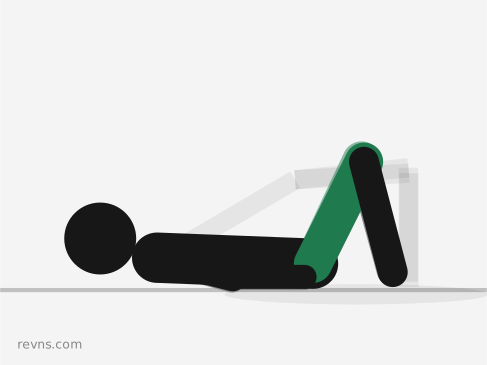
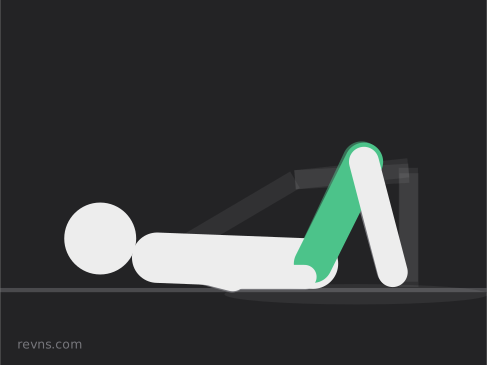
The glute bridge is the base of a home glute workout. You lie on the floor, so balance is not an issue, and the move trains hip extension: pushing the hips forward and up. It is the best first move if standing moves feel wobbly or your knees dislike bending under load.
- Lie on your back with knees bent and feet flat, hip-width apart.
- Tuck your pelvis slightly and press through your heels.
- Lift your hips until shoulders, hips and knees make a straight line.
- Pause for two seconds and squeeze your glutes.
- Lower slowly, one vertebra at a time.
Do: 2 × 10–15, rest 45–60 s. Move on when: 15 reps with a two-second squeeze feel easy on both sets for two sessions. Common mistake: arching the lower back and pushing the ribs up. Stop the lift when hips and thighs line up, and keep the ribs down. Easier: a smaller lift with a shorter pause. Harder: single-leg glute bridges, or frog pumps for fast, high-rep pulses.
2. Sumo squat
A sumo squat uses a wide stance with the toes turned out. The glutes and inner thighs do more of the work than in a narrow squat, and the upright torso is easy to learn. Pick a stance you can hold with your knees tracking over your toes.
- Stand with feet wider than your shoulders and toes turned out about 30 degrees.
- Keep your chest tall and brace your stomach lightly.
- Bend your knees and sit straight down between your feet.
- Lower until your thighs are about level with the floor, or as far as feels comfortable.
- Push through the whole foot to stand, and squeeze your glutes at the top.
Do: 2 × 8–12, rest 60 s. Move on when: 12 smooth reps on both sets for two sessions. Common mistake: knees caving in. Push your knees out over your toes and shorten the range if they drift. Easier: box squats to a chair. Harder: squat pulses, or a slow three-second lowering phase.
3. Reverse lunge
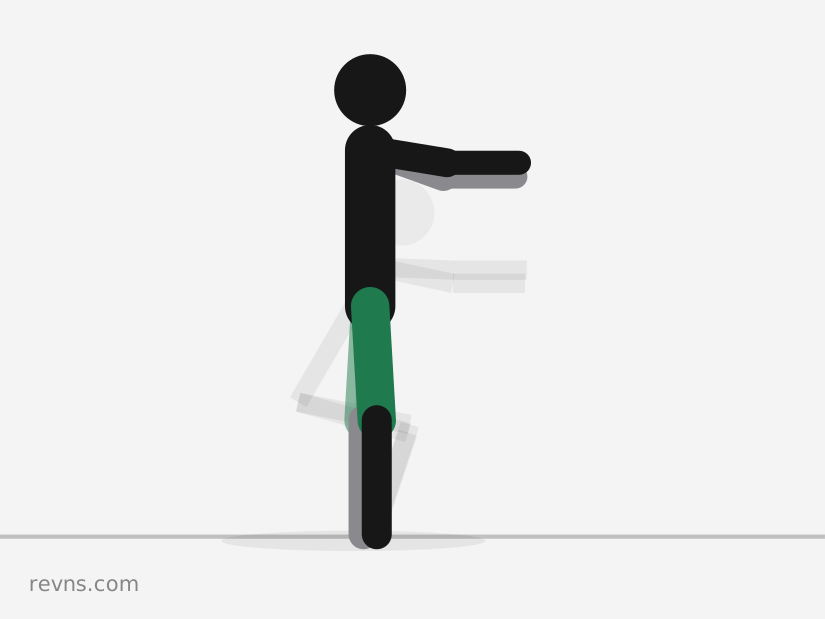
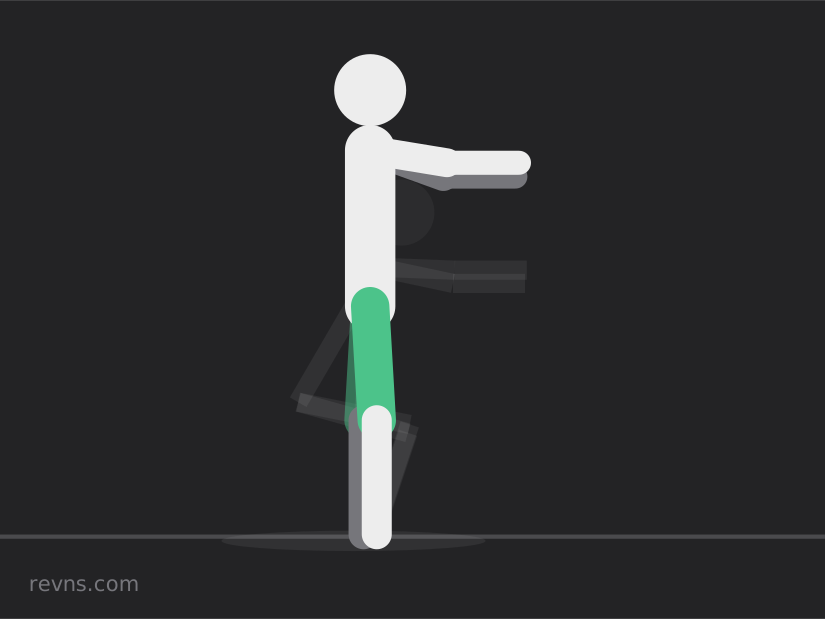
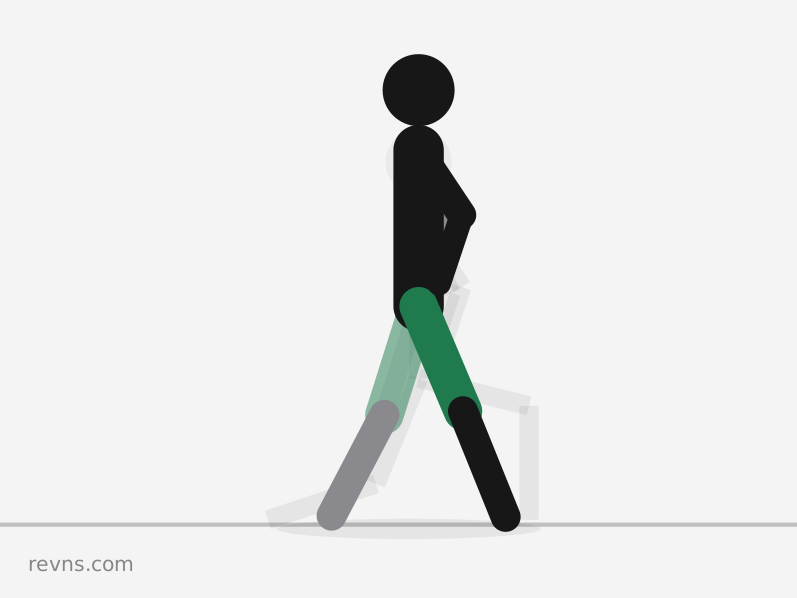
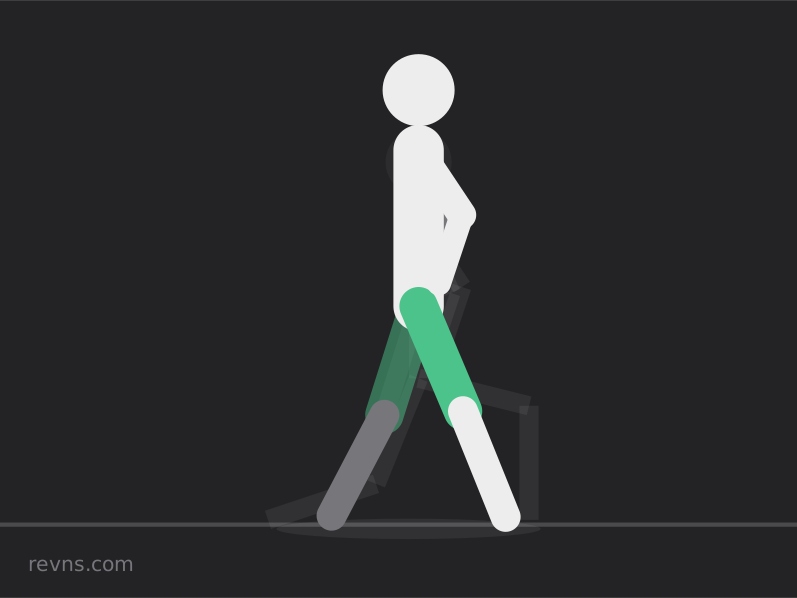
A reverse lunge steps back instead of forward. It is kinder to the front knee, easier to balance, and it loads one glute at a time. The front leg does most of the work, so a longer step back puts more of the effort into the glute.
- Stand tall with feet hip-width apart and hands on your hips.
- Step one foot back about one long stride.
- Lower until both knees bend to roughly 90 degrees, back knee just above the floor.
- Press through the whole front foot to stand.
- Finish all reps on one leg, then switch, or alternate legs.
Do: 2 × 6–8 per leg, rest 60 s. Move on when: 8 per leg are steady, with no wobble, for two sessions. Common mistake: a short step that pushes the front knee far past the toes. Step further back and keep the torso upright. Easier: split squats, with a hand on a wall. Harder: walking lunges or curtsy lunges, which add more side-hip work.
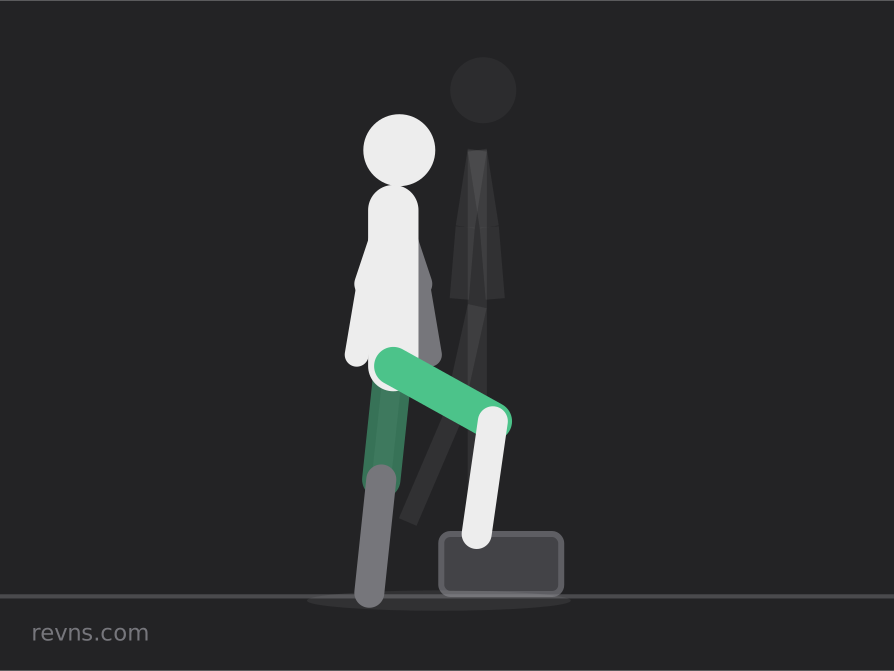
4. Step-up
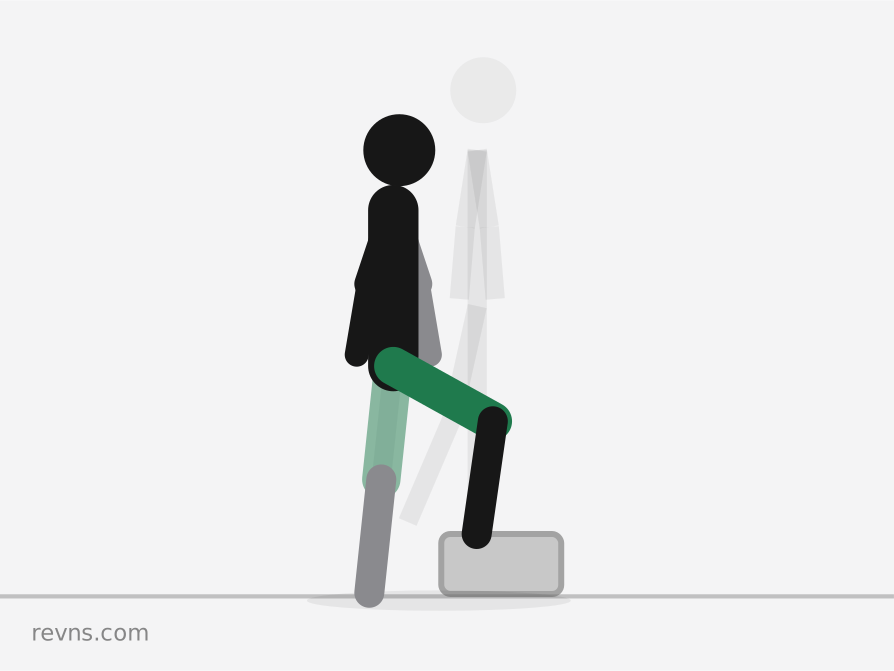
A step-up uses a low, sturdy step or the bottom stair. It trains one leg at a time and copies climbing stairs. Choose a step no higher than about knee height, and check it does not slide. In the 2020 review described below, step-up variations showed the highest glute activity, in studies that used added load.
- Place your whole foot on the step, knee over ankle.
- Lean slightly forward and press through the heel of the step foot.
- Stand fully on the step, bringing the other foot up or only tapping it.
- Lower the trailing leg under control.
- Finish all reps on one leg, then switch.
Do: 2 × 6–8 per leg, rest 60 s. Move on when: 8 per leg are smooth without pushing off the bottom foot. Common mistake: pushing off the back foot. Keep that foot light so the step leg does the work. Easier: a lower step with a hand on a wall. Harder: a higher step, a three-second lowering phase, or later Bulgarian split squats.
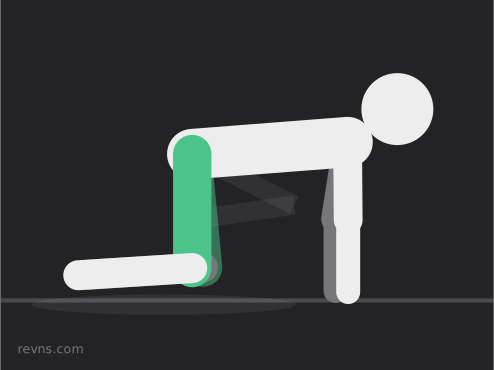
5. Donkey kick
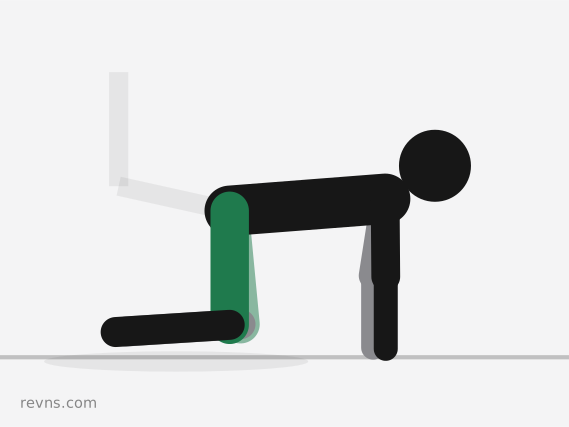
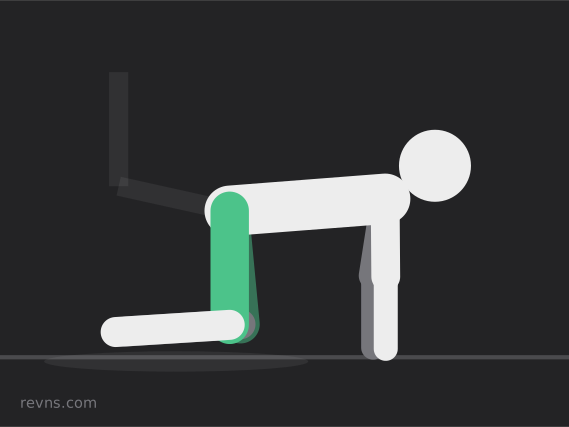
The donkey kick is a floor move that trains hip extension with the knee bent. It is light, so use it late in the session when the big moves have tired you. Keep the movement in the hip, not the lower back.
- Start on hands and knees, hands under shoulders, knees under hips.
- Brace your stomach so your back stays flat.
- Keeping the knee bent, lift one heel toward the ceiling.
- Stop when your thigh is level with your back.
- Lower with control, finish the reps, then switch legs.
Do: 2 × 10–12 per leg, rest 45 s. Move on when: 12 reps on each side with no back arch and a one-second pause at the top. Common mistake: swinging the leg and arching the back. Make the lift smaller and slower. Easier: a smaller lift, or bird dogs to learn the position. Harder: a two-second pause at the top, or a light ankle weight later.
6. Fire hydrant
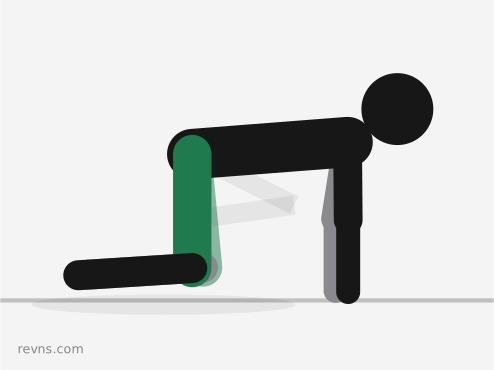
The fire hydrant opens the hip out to the side. It trains the gluteus medius, the muscle that keeps the pelvis level when you stand on one leg, walk or run. It is a small move: neat form matters more than height.
- Start on hands and knees, as for a donkey kick.
- Keep your hips square to the floor.
- Lift one bent knee out to the side, no higher than your hip.
- Pause, then lower slowly.
- Finish the reps, then switch legs.
Do: 2 × 10–12 per leg, rest 45 s. Move on when: 12 reps on each side with the hips staying level. Common mistake: rolling the whole body to lift the knee higher. Keep the hips still and shorten the range. Easier: clamshells on your side, or side-lying leg raises. Harder: a two-second pause at the top, or a mini resistance band above the knees.
What does the evidence say about glute exercises?
A 2020 systematic review by Neto and colleagues in the Journal of Sports Science and Medicine pooled 16 studies that measured gluteus maximus activity during loaded hip-extension exercises, as a percentage of a maximal voluntary isometric contraction. Exercises with very high activity (above 60%) included step-up variations, deadlifts, hip thrusts, lunges and squats. Step-ups and their variations showed the highest activation.
What that means: the routine above uses move patterns that fire the glute max well, although most of those studies used added load, which this routine does not. What it does not show: EMG measures how active a muscle is, not how much it grows. The review cannot say which exercise builds the most muscle over months.
For growth and strength, the better evidence is about effort. A 2017 meta-analysis by Schoenfeld and colleagues in the Journal of Strength and Conditioning Research pooled 21 trials and found similar muscle growth with light and heavy loads when sets were taken close to failure. Heavy loads gave larger gains in maximal strength. So bodyweight work is a good start, and the honest limit is that later you will want more load.
How do you make a home glute workout harder without weights?
| Lever | How | Example |
|---|---|---|
| More reps | Add two reps a set, up to about 15 | Bridge 2 × 12 to 2 × 14 |
| Slower lowering | Take three seconds to go down | Slow step-down |
| Pauses | Hold two seconds at the top or bottom | Paused bridge |
| One leg at a time | Move to single-leg versions | Single-leg bridge |
| Range | Higher step, deeper squat | Bulgarian split squat |
| Extra load | A backpack with books or bottles | Backpack sumo squat |
Add load only when the other levers stop working, and in small steps. For a longer plan see strength training for beginners.
What should you do this week?
- Day 1: One round of all six moves. Note the reps you reached and how hard each set felt.
- Day 2: Rest, or walk. Walking is fine and good for the hips.
- Day 3: Two rounds if day 1 felt fine. Log reps and hold times.
- Next week: Add two reps to one move, or a pause to one move. Not both at once.
- Week four: Try the harder option on the move that feels easiest.
If you already train, use this as a warm-up before leg day, or as a light session between runs. Log each session in a workout log so you see your reps climb. The check every four weeks is simple: more reps, longer pauses or a harder option mean the plan works.
Do you need a different glute workout at home with a band or dumbbells?
Not at first. A mini band above the knees makes fire hydrants, bridges and side steps harder, and a dumbbell makes squats and bridges harder. Both are a later step. The moves in this routine do not change; you add load once the bodyweight versions are easy. Women, men and non-binary readers can use the same routine: the evidence on how the glutes work does not depend on sex, and you choose the dose by how hard the sets feel.
Who should check with a clinician first, and when should you stop?
This routine is for healthy adults who can stand and get down to the floor safely. Ask a doctor or physiotherapist first if you have a heart or lung condition, a hip, knee or back injury, recent surgery, osteoporosis or balance problems, or if you are pregnant or have recently given birth.
Stop and seek advice for:
- Chest pain, pressure, fainting or unusual breathlessness.
- Sharp pain in the hip, knee or lower back, or a joint that swells.
- Dizziness or a feeling you may fall.
- Numbness or tingling that goes down a leg.
- Pain that gets worse from session to session, even with easier versions.
Muscle burn and mild soreness the next day are normal. Sharp or joint pain is not.
This is general training guidance, not medical advice.
Related
- Leg workout at home without weights: a six-move beginner routine
- Full body workout at home with no equipment: a six-move beginner routine
- Core workout for beginners at home: six moves, no equipment
- Strength training for beginners: a simple plan for the first eight weeks
- Progressive overload in plain words
- Exercise library
Sources
- Bull FC et al. World Health Organization 2020 guidelines on physical activity and sedentary behaviour. Br J Sports Med 2020
- American College of Sports Medicine. Progression models in resistance training for healthy adults. Med Sci Sports Exerc 2009
- Neto WK et al. Gluteus maximus activation during common strength and hypertrophy exercises: a systematic review. J Sports Sci Med 2020
- Schoenfeld BJ, Grgic J, Ogborn D, Krieger JW. Strength and hypertrophy adaptations between low- vs. high-load resistance training: a systematic review and meta-analysis. J Strength Cond Res 2017
- Ainsworth BE et al. 2024 Adult Compendium of Physical Activities
Terms in this post
revns publishes training and nutrition guidance, not medical advice. See a clinician for symptoms, injury or a medical condition. Accurate as of November 19, 2026.