Benefits of lateral raises: what they train, how often and a simple plan
Benefits of lateral raises: side delt strength, shoulder balance with presses and pulls, and a light weekly plan. Form, sets, reps and when to see a clinician.
revns editorial · Published November 24, 2026 · 8 min read
Lateral raises isolate the lateral deltoid for shoulder width and balance. Use light weight, 2–3 sets of 12–15, one to two days a week after compounds; stop if sharp shoulder pain persists.
The benefits of lateral raises are stronger side deltoids for lifting your arms out to the side, better balance with pressing and rowing, and manageable shoulder volume with light weights. A lateral raise — raising dumbbells or a cable to shoulder height with arms out to the sides — is an isolation move: one main joint pattern, small muscles. Most adults do well with one or two sessions a week, 2 to 3 sets of 12 to 15 reps, after heavier compounds. Stop if sharp shoulder pain persists.
TL;DR
| Question | Short answer |
|---|---|
| What does it train? | Lateral (middle) deltoid; stabilisers in cuff and upper back |
| Why do it? | Shoulder balance, width, overhead and daily reach |
| How often? | 1–2 short sessions per week, not daily heavy raises |
| Sets and reps | 2–3 × 12–15, light; see rest between sets |
| Progress | Add reps, then the smallest weight jump |
| Who should modify? | Ongoing shoulder pain: bands, cables, or clinician first |
What muscles do lateral raises work?
In a lateral raise (also called a side lateral raise or side raise), you lift weight from your thighs or hips until your arms are roughly level with your shoulders, with elbows slightly bent. The lateral deltoid — the middle head of the shoulder muscle — does most of the work. That head abducts the arm: it pulls the upper arm away from the body in the plane of the front of your torso.
Supporting muscles include:
- Anterior deltoid and supraspinatus (part of the rotator cuff) in the first part of the lift.
- Upper trapezius if you shrug; good form keeps the traps quiet.
- Wrist and finger flexors to grip the dumbbells.
The movement does not heavily load the chest or lats. That is why it pairs well after overhead press, rows or push-ups: compounds handle the big load; lateral raises add targeted side-shoulder work.
What are the benefits of lateral raises?
Shoulder balance after pressing
Push-ups, bench press and overhead press emphasise the front deltoid and chest. Rows and pull-ups train the back. The lateral deltoid can lag if you never abduct the arm under load. Side raises are a simple way to add volume to that head without another heavy barbell lift.
Overhead reach and daily tasks
Lifting a bag to an overhead locker, reaching to the side on a shelf or swimming freestyle use shoulder abduction. Isolation work is not a substitute for those skills, but stronger lateral delts support the pattern.
Joint-friendly volume
Because the elbow stays slightly bent and the load stays light, lateral raises are a common finisher on shoulder day. Coaches often program them after presses when the triceps and front delts are tired but you still want a few more sets for the side head.
Bone and strength guidelines
The WHO recommends muscle-strengthening on at least two days per week for all major muscle groups. Lateral raises count toward shoulder work when they sit inside a week that also trains legs, back and hips. They alone do not meet the full-body guideline.
Aesthetic and posture context
People search benefits of lateral raises for women and for men for the same functional reasons: shape and balance. Hormones and genetics set how fast shoulders change; a few sets per week support tone and strength without requiring heavy load.
Are lateral raises worth it?
Usually yes if you press or push often and want side-shoulder work without another heavy compound. They are not mandatory. Upright rows, wide-grip rows and some cable patterns also hit the lateral deltoid; overhead pressing trains the shoulder in another line.
| Situation | Worth adding lateral raises? |
|---|---|
| You overhead press or bench twice a week | Often helpful as 2–3 light sets |
| Shoulders pinch on raises | Try band lateral raises or skip until assessed |
| You only train legs and core | Optional unless you want shoulder health for carries |
| You already do high-volume upright rows | May be redundant; track total shoulder sets |
Searchers ask "are lateral raises good" and "are lateral raises important" — they are useful accessories, not foundations. Squats, rows and presses still carry most of your strength gains.
Are lateral raises the same as front raises or side raises?
Side raise and lateral raise mean the same pattern: arm out to the side. Front raises lift the arm forward in front of the body and load the anterior deltoid more. Cable lateral raises and seated lateral raises use the same muscles with different stability demands; cables can feel smoother at the top.
| Variation | Arm path | Main emphasis |
|---|---|---|
| Dumbbell lateral raise | Out to sides | Lateral deltoid |
| Cable lateral raise | Out to sides | Lateral deltoid, constant tension |
| Front raise | Forward | Anterior deltoid |
| Lean-away cable raise | Out to sides on angle | Lateral deltoid, often less trap |
Benefits of cable lateral raises include even tension through the rep; benefits of seated lateral raises reduce cheating from the legs and lower back.
How often should you do lateral raises?
One or two sessions per week with 2 to 3 working sets fits most lifters. Doing heavy lateral raises every day often irritates the shoulder without better growth.
| Weekly schedule | Example placement |
|---|---|
| 1× shoulder focus | After overhead press or push day |
| 2× upper body | Monday after press, Thursday after rows |
| Full-body 3× | One set per session as a finisher |
Leave at least 48 hours between hard shoulder days. On weeks with poor sleep or stress, keep the weight and cut a set; see stress, sleep and training load.
How many sets and reps of lateral raises?
| Goal | Sets × reps | Rest | Notes |
|---|---|---|---|
| General strength and size | 2–3 × 12–15 | 60–90 s | Default for most adults |
| Metabolic finisher | 2 × 15–20 | 45 s | Very light, strict form |
| Strength emphasis | 3 × 8–10 | 90 s | Still lighter than press loads |
A 2021 network meta-analysis in Medicine and Science in Sports and Exercise (Lopez et al., healthy adults) found multiple rep ranges can build muscle when sets are hard; moderate reps with controlled tempo suit small shoulder muscles. ACSM beginner guidance favours 8 to 12 or 12 to 15 for learning patterns before heavy loading.
How often to add weight: when every set hits the top of your rep range with no torso swing and no shrug, add the smallest jump (often 0.5 to 1 kg per dumbbell) or add one rep per set first.
How to do lateral raises with good form
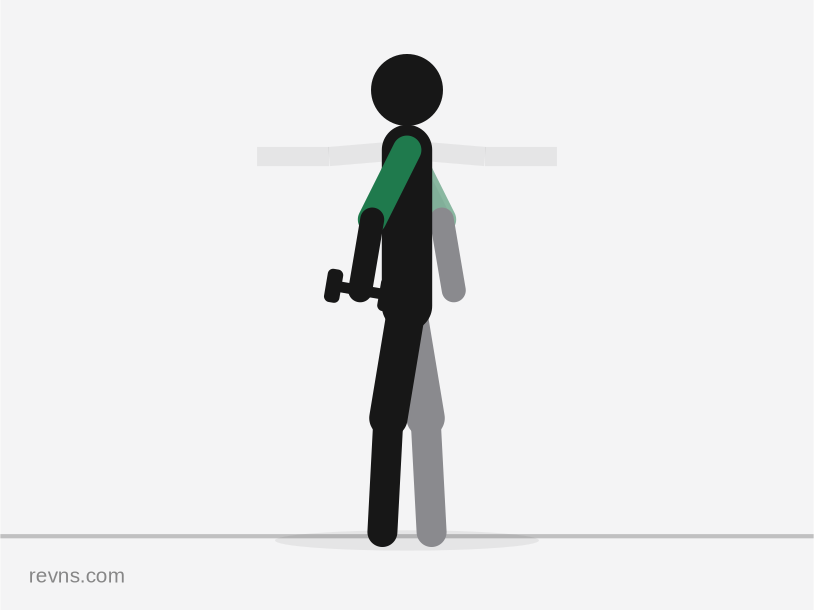
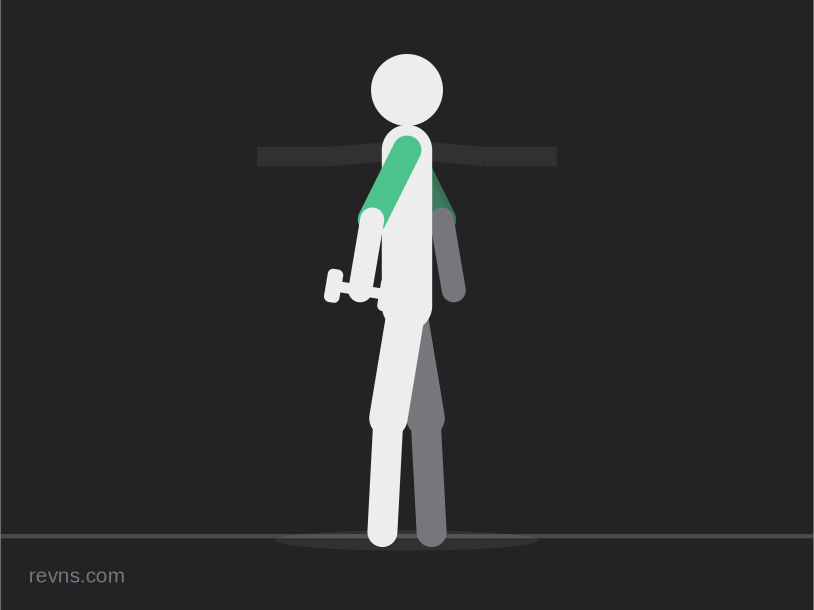
- Stand tall, feet hip-width, light dumbbells at your sides, palms facing in.
- Keep a soft bend in the elbows; they stay bent through the set.
- Raise your arms out to the sides until they are level with your shoulders, leading with the elbows, not the hands.
- Pause briefly at the top without shrugging your shoulders toward your ears.
- Lower for two to three seconds; do not drop the weights.
Common mistake: swinging the torso or using momentum. Fix: sit on a bench, bend the knees slightly, or use a lighter weight.
Easier: Band lateral raises or very light dumbbells. Harder: add slow eccentrics or pair with overhead press on a separate day, not the same fatigued session.
A simple lateral raise workout plan (two days a week)
Use this after pressing or rowing, not instead of them. Each arm block takes about 8 to 12 minutes.
Day A (after push or overhead day)
| Exercise | Sets × reps | Rest |
|---|---|---|
| Lateral raises (dumbbell) | 3 × 12–15 | 60 s |
| Band pull-aparts | 2 × 15 | 45 s |
Day B (after pull or upper day, 2–3 days later)
| Exercise | Sets × reps | Rest |
|---|---|---|
| Cable or band lateral raise | 3 × 12–15 | 60 s |
| Face pull or band pull-apart | 2 × 12–15 | 45 s |
Warm up: one set of 15 raises with no weight or a band before the first working set. See how to warm up before a workout.
Recovery: shoulder growth still needs protein, sleep and sensible weekly load. Use the protein calculator if targets are unclear; log sets in a workout log or simple workout tracker.
Benefits of lateral raises for women
Women get the same functional benefits: stronger side delts, better balance with strength training for women and support for carrying children or bags at shoulder height. Light dumbbells at home need little equipment. Pair raises with rows so the back stays balanced.
Lateral raises vs upright row
Both can load the lateral deltoid. Upright rows use a close grip and higher trap involvement; some people feel shoulder impingement with heavy upright rows. Lateral raises keep the arm in pure abduction with lighter load. If upright rows hurt, raises or cables are a common swap.
How do you track lateral raise progress?
Log weight, reps and whether the last two reps were clean (no swing). Progress with reps first, then the smallest weight increase. Repeat the same load for a week if elbows or shoulders feel tight.
What to do this week
- Add two sets of lateral raises after your next press or row session. Stop with two reps left in the tank.
- Log numbers for four weeks before you judge shoulder changes in the mirror.
- Keep one rest or easy day between hard upper sessions; see rest days.
- If shoulder pain lasts more than a week, reduce load and seek assessment if pain is sharp.
When to see a professional
Stop and get medical advice for sharp or pinching shoulder pain, pain that radiates down the arm, numbness, visible swelling, or weakness that does not improve after a lighter week. Sudden loss of range after a fall needs urgent assessment. This is general training guidance, not medical advice.

Related
- Benefits of overhead press: what they train, how often and a simple plan
- Benefits of bicep curls: what they train, how often and a simple plan
- Benefits of hammer curls: what they train, how often and a simple plan
- Tricep extensions workout plan: benefits and a weekly routine
- Strength training for beginners: the first eight weeks
- Progressive overload in plain words
- How long to rest between sets: strength, muscle and endurance
- Lateral raises exercise library page
This is general training guidance, not medical advice.
Sources
- Bull FC et al. WHO Guidelines on Physical Activity and Sedentary Behaviour. Br J Sports Med 2020.
- American College of Sports Medicine. ACSM's Guidelines for Exercise Testing and Prescription, 11th ed. Wolters Kluwer.
- López P et al. Resistance Training Load Effects on Muscle Hypertrophy and Strength Gain: Systematic Review and Network Meta-analysis. Med Sci Sports Exerc 2021.
- Grgic J et al. Effects of Rest Interval Duration in Resistance Training on Measures of Muscular Strength: A Systematic Review. Sports Med 2018.
- Escamilla RF et al. Shoulder muscle activity and function in common shoulder rehabilitation exercises. Sports Med 2009.
Terms in this post
revns publishes training and nutrition guidance, not medical advice. See a clinician for symptoms, injury or a medical condition. Accurate as of November 24, 2026.