Strength training plateau: what it is, signs and how to break it
A strength training plateau is weeks without load or rep progress despite steady training. Learn signs, causes, deload weeks, and when stalled lifts need a clinician.
revns editorial · Published November 24, 2026 · 7 min read
A plateau is no measurable progress for 3–4 weeks with steady effort. Fix sleep and food first, then deload, change reps or exercise, or add a coached week before forcing load.
A strength training plateau is when your main lifts stop improving for several weeks even though you train consistently. For most people that means three to four weeks with no extra rep, no small load jump and no faster bar on the same movement while sleep and stress were roughly normal. It is common and fixable. Start with recovery and logging, then use progressive overload in small steps — not a random new programme every Monday.
TL;DR
| Question | Plain answer |
|---|---|
| What is it? | No progress on a lift for 3–4 weeks with steady effort |
| Not a plateau | One tired week, a holiday, or a new exercise you are learning |
| First checks | Sleep, protein, rest days, life stress |
| Next tools | Deload week, rep-range change, exercise swap, one overload dial |
| Track it | Log sets, reps, load and RPE; use workout trends |
| Red flags | Sharp joint pain, chest pain, fainting: clinician, not more load |

What is a strength training plateau?
A training plateau is a period when training stress no longer produces the adaptation you expect. In strength work that usually shows up as the same numbers on the bar week after week.
Typical signs:
- The same load for 3×8 on bench press for a month with no extra rep.
- A planned load jump that fails twice in a row with good sleep.
- Bar speed on warm-up sets that feels slower even though load is unchanged.
The American College of Sports Medicine (ACSM) describes resistance training as progressive: load or volume should rise gradually as strength improves. When nothing on the log moves, you are not applying overload — on purpose or by accident.
A plateau is not:
- Two hard days after a late night.
- A new lift where form is still changing (that is learning, not stalling).
- Body weight on the scale flat while your 5-rep max still climbs (that is body recomposition, not a strength plateau).
What is a plateau in weight lifting for beginners vs trained lifters?
Beginners often stall when the neuromuscular learning curve flattens. Strength can rise for weeks from practice alone. When that slows, they need clearer progressive overload rules: reps before load, small jumps, and logged sessions.
Intermediate lifters plateau when volume and recovery stop matching each other. The same four-day split that worked at 60 kg may not work at 100 kg without more sleep or fewer all-out sets.
Advanced lifters can sit on a number for months. A 2017 Sports Medicine meta-analysis of periodised versus non-periodised programmes reported larger one-rep-max gains when training load and volume varied across phases than when the same scheme repeated every week. That is population-level evidence, not a promise about your bench.
| Stage | Common stall pattern | First lever to try |
|---|---|---|
| First 3 months | Form changes; inconsistent depth | Standardise technique; add reps |
| 6–18 months | Same split; no deloads | Deload; one rep-range block |
| Years of training | Same top weight for months | Exercise variation; coach eyes on form |
How do you know you are on a plateau and not just tired?
Use a four-week window and at least one objective measure:
- Load × reps × sets on a named exercise (same grip, range and tempo).
- Estimated one-rep max from submaximal sets via the one-rep-max calculator.
- Rep velocity or RPE if you track how fast the bar moves or how hard a set feels.
If all three are flat for a month while you averaged seven or more hours of sleep (when that is your norm) and you did not change diet sharply, treat it as a plateau. If sleep was under six hours for two weeks, fix sleep before you rename the problem.
Our guide on reading workout trends explains why seven-day averages beat one bad Friday session.

What causes strength plateaus?
Not enough recovery between hard sessions
The WHO recommends muscle-strengthening on at least two days a week for adults. Heavy lifters often train four or five days. That is fine when easy days and full rest days exist. Stack limit sessions back-to-back without lighter days and the same load eventually refuses to move.
See how many rest days a week and active recovery for pacing.
Sleep, protein and stress
A 2022 systematic review and meta-analysis in Sports Medicine pooled acute sleep-loss studies in humans and found small average drops in strength performance versus rested trials, with larger effects after sleep deprivation than after a single short night. That is a pooled lab pattern, not a personal forecast, but it matches what coaches see: stalled squats after weeks of short sleep.
Protein needs for people who train sit around 1.2–1.6 g per kg body weight per day in many sports-nutrition summaries — use the protein calculator as a starting point. Chronic work stress without deload habits can mimic a training plateau.
Too little overload variety
Grinding the same 3×10 forever maintains strength for a while, then stops. The ACSM lists load, volume, rest interval, frequency and exercise choice as progression variables. If you have not changed any of them in six weeks, the body has little reason to adapt.
Technical drift or pain guarding
Subtle form changes — shorter range, faster reps, looser bracing — hide true overload. So does guarding a sore shoulder without telling yourself you changed anything. Film one working set or ask a trainer to check depth and bar path.
Expected long plateaus near genetic limits
After years of training, month-long flat spots on a competition lift are normal. At that stage, goals shift to maintaining strength, joint health and other qualities (power, conditioning), not weekly personal records.
What should you do this week when you hit a plateau in weight training?
Work through this list in order. Stop when numbers move again or when a clinician says stop.
Step 1: Audit the log
Confirm you compare like with like: same exercise variant, same rest, same warm-up. Use a spreadsheet workout template or revns training log so last month is visible.
Step 2: Fix recovery for seven days
- Sleep: aim for your usual window; see sleep calculator for wake-time planning.
- Protein: hit your daily target with vegetarian, vegan or omnivore meals you already tolerate.
- Rest: take at least one full rest day; move easy walks on sore days only.
Step 3: Deload one week
A deload is a planned easier week: same movements, about 50–70% of usual load or two fewer sets, leaving two or three reps in reserve on every set. Many lifters return stronger. This is coaching convention supported by periodisation research, not a guarantee for every person.
If you use goal tracking, note the deload on the calendar so you do not mistake it for regression.
Step 4: Change one progression dial
Pick one row from progressive overload:
| Dial | Example on a 40 kg press |
|---|---|
| Reps | 3×8 → 3×10 at 40 kg, then add 2.5 kg and return to 8 |
| Load | 40 kg → 42.5 kg when 3×12 was easy |
| Sets | 3 sets → 4 sets at the same load |
| Variation | Flat dumbbell press → paused bench or close-grip push-up block |
| Tempo | 3-second lowering phase for three weeks |
Do not change load, volume, exercise and cardio all in the same week.
Step 5: Run a four-week block, then review
Programme four weeks at the new rep range or exercise, then compare totals to the previous block in trends. If still flat, consider a qualified coach for form, or medical review if pain is present.
When is a plateau not something you can train through?
See a clinician or physiotherapist when:
- Sharp or joint pain that worsens with load, not just muscle soreness. See DOMS explained for normal soreness vs joint symptoms.
- Chest pain, fainting, dizziness during or after lifts.
- Numbness, tingling or weakness in an arm or leg.
- Missed lifts plus unexplained fatigue for more than two weeks with low mood — treat mental health seriously; training is not a cure.
This is general training guidance, not medical advice.
What strength training methods help overcome plateaus?
Evidence-backed options that fit amateur schedules:
| Method | What you do | Good when |
|---|---|---|
| Double progression | Add reps in a range, then load | Beginners; home gyms |
| Rep-range block | Four weeks at 6–8 reps, then 10–12 | Boredom with one scheme |
| Exercise rotation | Swap barbell row for chest-supported row | Joint niggle at one angle |
| Cluster or rest-pause | Short rests inside a set | Advanced, with spotter when needed |
| Conditioning base | Add zone 2 | Work capacity limits hard sets |
None replace sleep and food. Drugs, extreme cuts or training through red-flag pain are not on this list.
How can you track plateaus without obsessing over daily numbers?
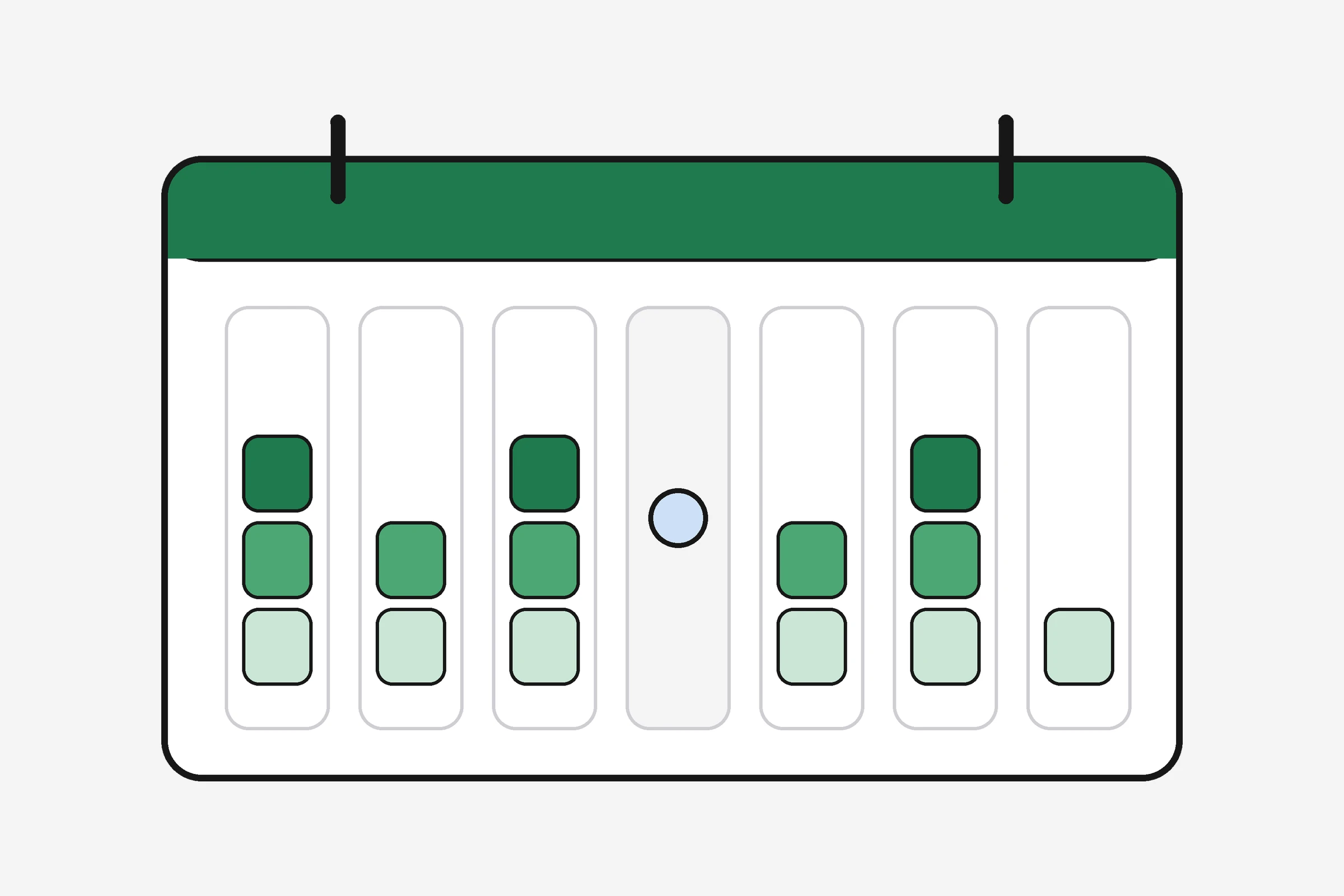
Log main lifts once or twice a week, not every accessory every day. On iPhone, the revns app reads sleep, HRV, resting heart rate and workouts from Apple Health (read-only) into multi-sport tracking, or enter sleep hours manually. A plateau plus falling HRV and short sleep points to recovery, not a weak programme.
An AI fitness coach can summarise trends you already logged; it does not diagnose or prescribe loads. Use it to spot flat four-week blocks, not to chase perfection daily.
Related
- Progressive overload in plain words
- Rest days: how many you need and what to do on them
- Overtraining symptoms: what to watch and when to rest
- How long does it take to build muscle? Timeline, sets and protein
This is general training guidance, not medical advice.
Sources
- American College of Sports Medicine. Progression models in resistance training for healthy adults (position stand). Med Sci Sports Exerc 2009; DOI 10.1249/MSS.0b013e3181915670
- World Health Organization. WHO guidelines on physical activity and sedentary behaviour. 2020
- Craven J et al. Effects of acute sleep loss on physical performance: a systematic review and meta-analysis. Sports Med 2022; DOI 10.1007/s40279-022-01706-y
- Williams TD et al. Comparison of periodized and non-periodized resistance training on maximal strength: a meta-analysis. Sports Med 2017; DOI 10.1007/s40279-017-0734-y
Terms in this post
revns publishes training and nutrition guidance, not medical advice. See a clinician for symptoms, injury or a medical condition. Accurate as of November 24, 2026.