Tabata workout for beginners at home: two 20/10 blocks with moving demos
A Tabata workout for beginners: 20 seconds on, 10 off, pairing squats with push-ups and climbers with step jacks. Start with 4 rounds, build to 8.
revns editorial · Published November 22, 2026 · 10 min read
Beginner Tabata at home uses 20 s work and 10 s rest, alternating two moves for 4–8 rounds at 7–8/10 effort. Two blocks, no equipment, two days a week to start.
A Tabata workout for beginners at home is two alternating moves for 20 seconds of work and 10 seconds of rest — classic 20/10 timing — starting with four rounds and building to eight when form stays clean. This session pairs squats with knee push-ups in block one and mountain climbers with step jacks in an optional second block. It takes about 15 to 22 minutes with warm-up and cool-down, needs no equipment, and suits healthy adults who want short, structured intervals without a gym. Train two days a week at first, with 7–8 out of 10 effort, not an all-out sprint. Every move below has a moving demo from the exercise library.
TL;DR
| Block | Move A (20 s) | Move B (20 s) | Rest | Beginner rounds | Full Tabata |
|---|---|---|---|---|---|
| Warm-up | Standing marches | arm circles, slow squats | — | 4 min | — |
| 1 | Squat | Knee push-up | 10 s between | 4 (week 1) → 8 | 4 min at 8 rounds |
| Between blocks | easy walk/march | 60–120 s | — | — | — |
| 2 (optional) | Mountain climber | Step jack | 10 s between | add in week 3+ | 4 min at 8 rounds |
| Cool-down | slow march, calf and chest stretch | — | — | 3 min | — |
Effort: 7–8/10 on work intervals. Frequency: 2 days/week, non-consecutive.
What is a Tabata workout for beginners?
Tabata is a timed interval format: 20 seconds of hard work, 10 seconds of rest, repeated for eight rounds (four minutes total for one exercise pair or one A/B pair). It is named after the 1996 study in which seven subjects on a laboratory cycle ergometer performed seven to eight bouts at about 170% of VO₂max (Tabata et al., Med Sci Sports Exerc 1996). That study shows what very fit cyclists tolerated on a bike; it does not mean a new exerciser should collapse on round three of jumping burpees.
Beginner here means three things: fewer rounds at first (four instead of eight), effort capped around 7–8/10, and regressions on every move (knee push-ups, step-back plank, step jacks instead of jumping jacks). The clock stays 20/10 so you learn the rhythm used in classes and apps worldwide.
Ranking pages for Tabata workout for beginners often offer follow-along videos, list six random moves, or repeat “go all out” without saying how that differs from the original bike study. Written plans rarely link each move name to form steps, easier swaps and a weekly round progression. This guide gives two blocks you can run from a phone timer, with demos on every exercise.
The World Health Organization still recommends 150–300 minutes of moderate or 75–150 minutes of vigorous activity weekly for most adults, plus strength on two or more days (BJSM 2020 summary). One hard Tabata block can contribute vigorous minutes when breathing is truly heavy, but it does not replace walking, strength work or rest across the week.
How is Tabata different from a beginner HIIT workout?
Both use work and rest intervals. HIIT is the umbrella; ratios vary (30/30, 40/20, etc.). Tabata fixes 20/10 and usually eight rounds per block.
| Feature | Beginner Tabata (this guide) | Beginner HIIT at home |
|---|---|---|
| Work/rest | 20 s / 10 s | 30 s / 30 s |
| Rest between moves | 10 s only | 30 s between every exercise |
| Structure | Alternate two moves (A/B/A/B…) | Six moves in a row, twice |
| Beginner scale | 4 → 6 → 8 rounds | 2 rounds of the full circuit |
| Session length | ~15–22 min with optional 2nd block | ~18–22 min |
If 10-second rests feel brutal in week one, run the same moves in the beginner HIIT circuit until two rounds feel easy, then return to 20/10.
How do you do this Tabata workout for beginners at home?
Session clock
- Warm-up (4 minutes): standing marches, arm circles, ten slow squats, five wall push-ups, and three practice reps of every move you will use.
- Set a timer for intervals: 20 seconds work, 10 seconds rest, 4 rounds in week one (add two rounds per week when rep quality holds).
- Block 1 — alternate: squat → knee push-up → squat → knee push-up… until rounds are done.
- Between blocks: walk or march 60–120 seconds. Sip water.
- Block 2 (week 3+ or when block 1 feels repeatable): mountain climber ↔ step jack, same 20/10 and round count.
- Cool-down (3 minutes): slow march, then gentle calf, hip flexor and chest stretches.
Pairing moves
Alternate a leg-dominant pattern with upper body or core so breathing can settle slightly while the other pattern works. Block 1 uses squats + knee push-ups. Block 2 uses mountain climbers + step jacks for more trunk and quiet-foot cardio. If wrists hurt in climbers, swap block 2 for squat thrusts with a step-back and step jacks.
Who is this for?
Healthy adults who know basic squats and can hold a short plank, people graduating from steady walking who want shorter work periods, and trained exercisers who want a four-minute finisher. It is a poor first session if you cannot stand from the floor without dizziness — start with the full body beginner circuit for two weeks.
How hard should it feel?
Use 0–10 effort. On work intervals aim for 7–8: fast breathing, only a few words at a time, but reps still look the same as round one. Round eight should not look like round one collapsed — if it does, you started too hot or need fewer rounds.
The CDC notes that at moderate intensity you can talk but not sing; during these work bouts you should be above that, but not unable to finish the 20 seconds standing. That is a coarse check, not a medical test. The heart rate zone calculator can confirm work lands high for your age if you wear a watch.
Progression table
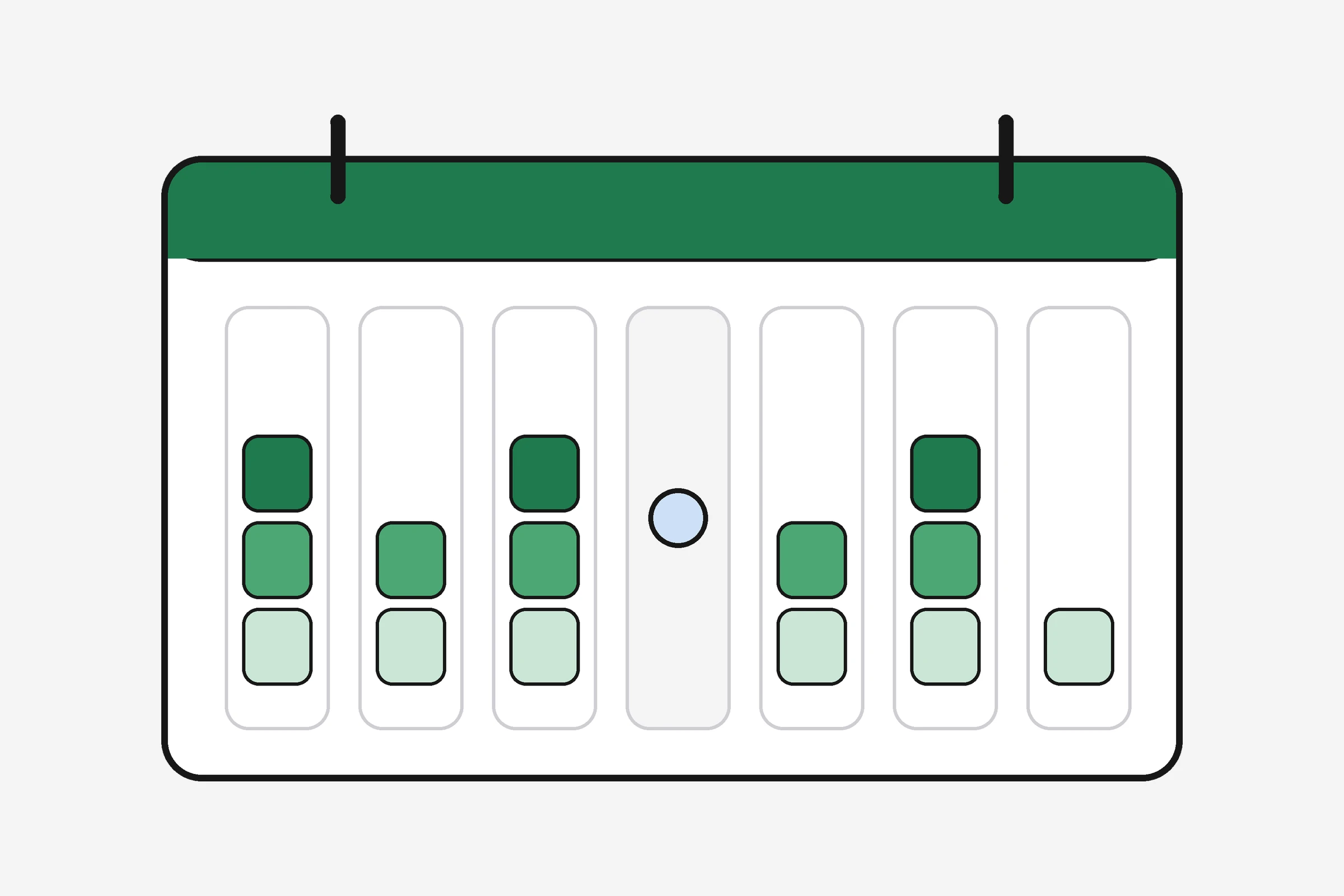
| Week | Tabata days | Rounds per block | Blocks per session | Notes |
|---|---|---|---|---|
| 1 | 2 | 4 (2 min) | 1 | Learn block 1 only |
| 2 | 2 | 6 (3 min) | 1 | Same moves, slightly faster pace |
| 3 | 2–3 | 8 (4 min) | 1 | First full Tabata on block 1 |
| 4 | 2–3 | 8 | 2 with 90 s walk between | Add block 2 |
Add only one challenge at a time: extra rounds or a second block or jumping jacks instead of step jacks — not all three in one week.
How many days a week?
Two non-consecutive days fit most beginners. A third day is optional only when sleep, mood and knee comfort stay normal. Follow rest day guidance between hard intervals. On noisy weeks, swap block 2 jacks for marches and read the quiet apartment workout.
What do competitor Tabata plans cover — and what is missing?
| Common on ranking pages | Often missing |
|---|---|
| 20/10 explained | How the original bike study differs from floor work |
| 4-minute promise | 4-round entry path for week one |
| Random exercise lists | A/B pairing with upper–lower logic |
| “All-out” language | 7–8/10 cap and rep-count check across rounds |
| Video-only demos | Per-move steps, mistakes, easier/harder links |
This post fills those gaps so you can run intervals without a video and open each move's /exercises page during the 10-second rest.
The moves
On work intervals, move fast but controlled. Count reps in round one; if the last round drops more than one third, ease pace next session.
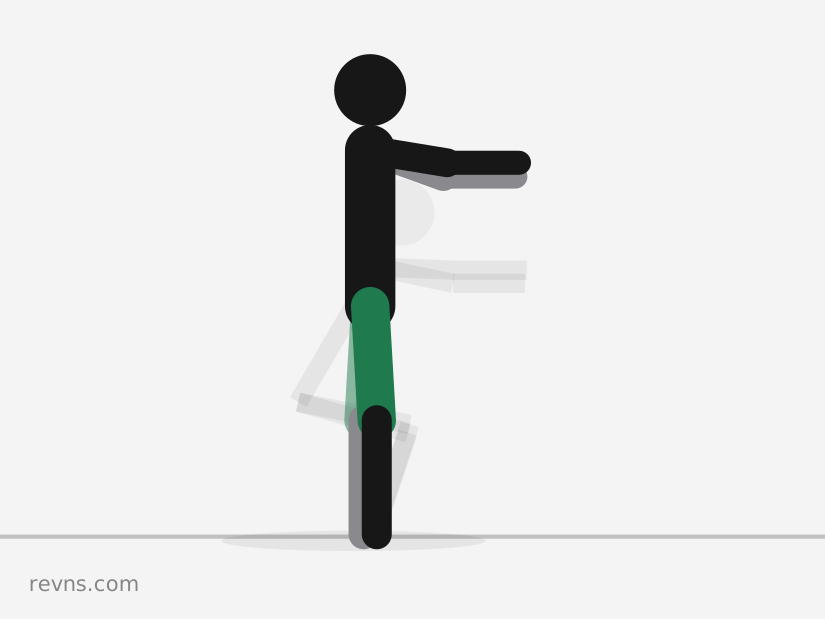
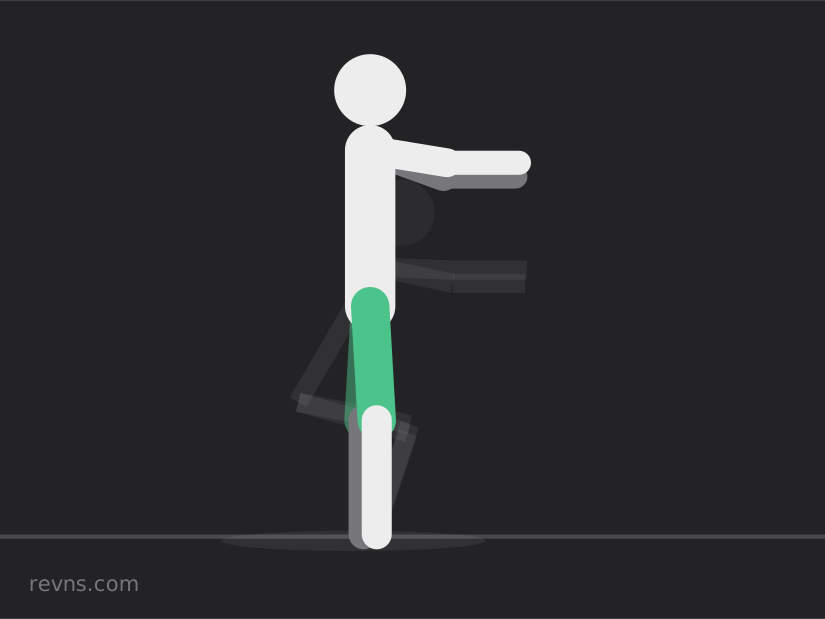
1. Bodyweight squat
Squats drive heart rate in block one without jumping. Depth can be shallow at first; knees track over toes.
- Stand with feet roughly shoulder-width, toes slightly out.
- Brace the trunk as if someone might poke your sides.
- Sit hips back and down; keep heels down if ankles allow.
- Drive through mid-foot to stand; squeeze glutes at the top.
- Repeat steady reps for the full 20 seconds.
Do: 20 s per interval, alternating with push-ups. Move on when: depth and knee tracking match round one on the final round.
Common mistake: folding forward with heels lifting — shorten depth until the chest stays modestly upright.
Easier: box squats to a chair. Harder: jump squats only when landings stay quiet.
2. Knee push-up
Knee push-ups load the chest and shoulders while the legs rest briefly between squat bursts.
- Kneel with hands slightly wider than shoulders, fingers forward.
- Walk hands forward until shoulders are over wrists.
- Lower the chest between the hands; elbows angle about 45° from the ribs.
- Press up without sagging the lower back.
- Keep a straight line from knees through head.
Do: 20 s, as many clean reps as fit. Move on when: hips do not dive on the last interval.
Common mistake: hands too far forward — stack shoulders over wrists.
Easier: wall push-ups. Harder: push-ups from the toes when 20 s of knee reps feel easy for eight rounds.
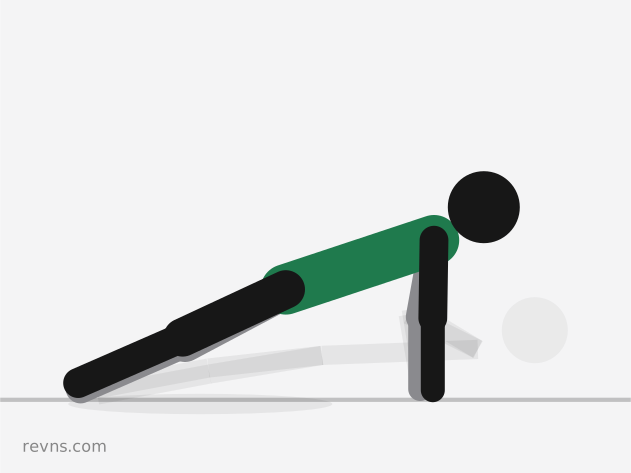
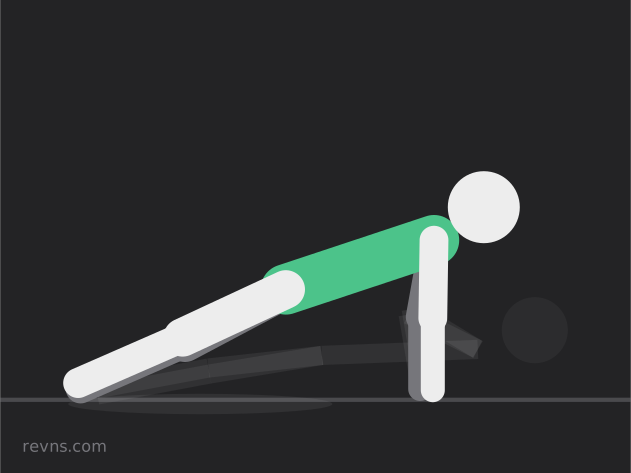
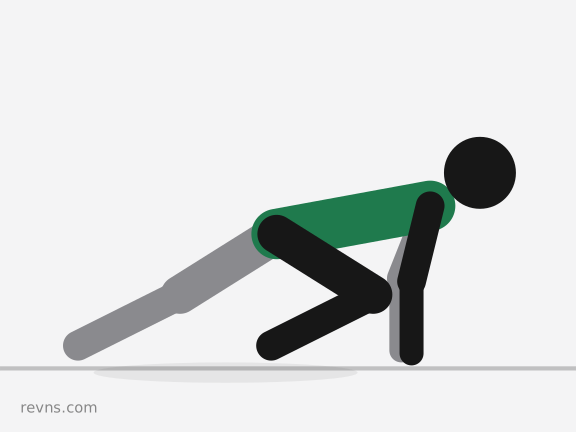
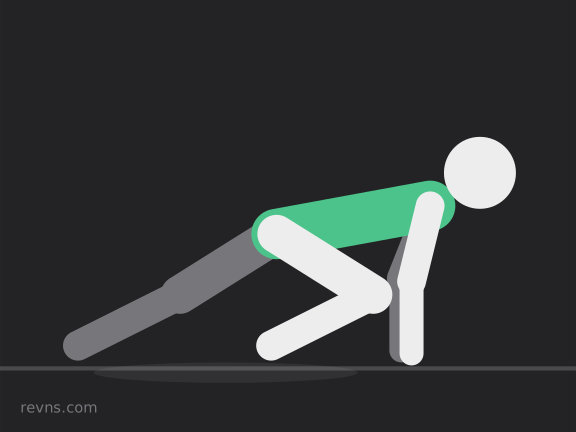
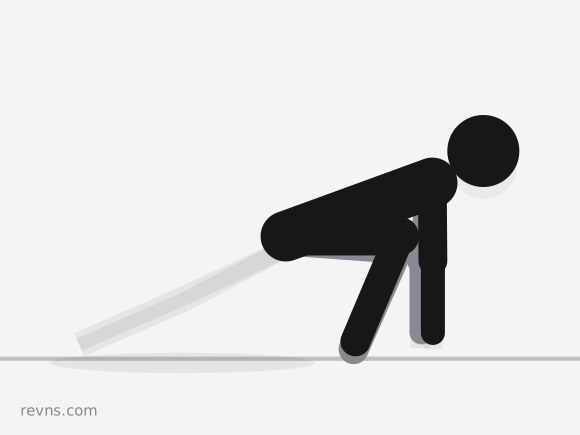
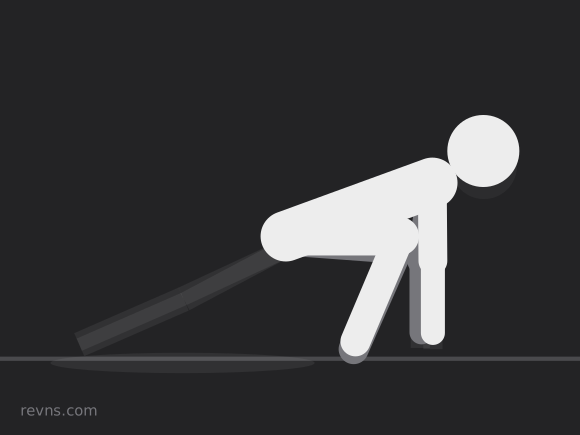
3. Mountain climber
Mountain climbers raise breathing and train core and shoulders in block two. Slow knee drives beat sloppy sprints.
- Start in a straight-arm plank, shoulders over wrists.
- Brace the trunk; do not let hips pike up or sag.
- Drive one knee toward the chest, then switch.
- Land toes lightly under the hips when stepping instead of jumping.
- Keep shoulders stable; do not bounce the upper back.
Do: 20 s alternating legs. Move on when: plank line stays level on round eight.
Common mistake: hips bouncing high — slow the pace until the trunk stays quiet.
Easier: plank hold for 20 s. Harder: faster climbers or plank jacks in later weeks.
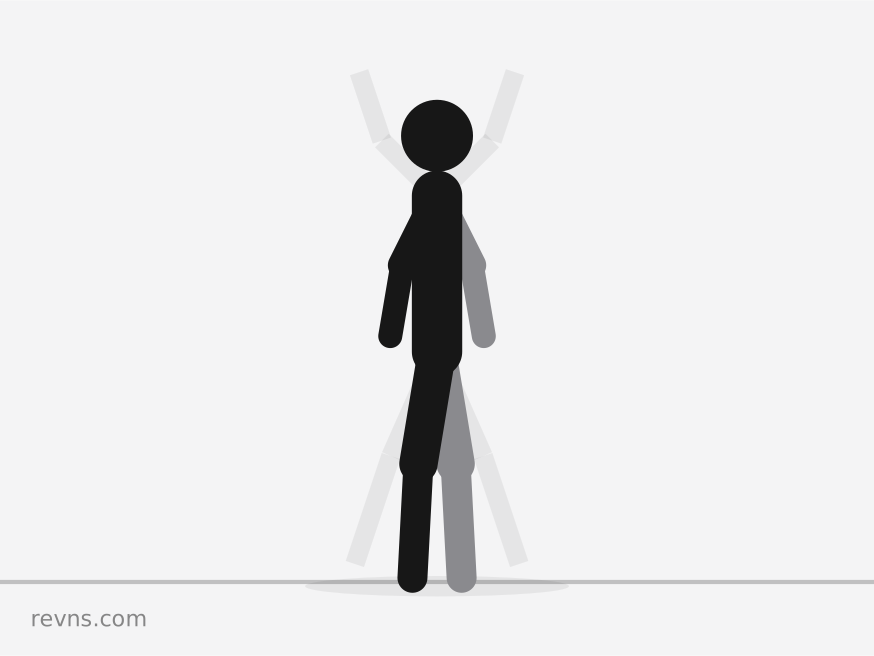
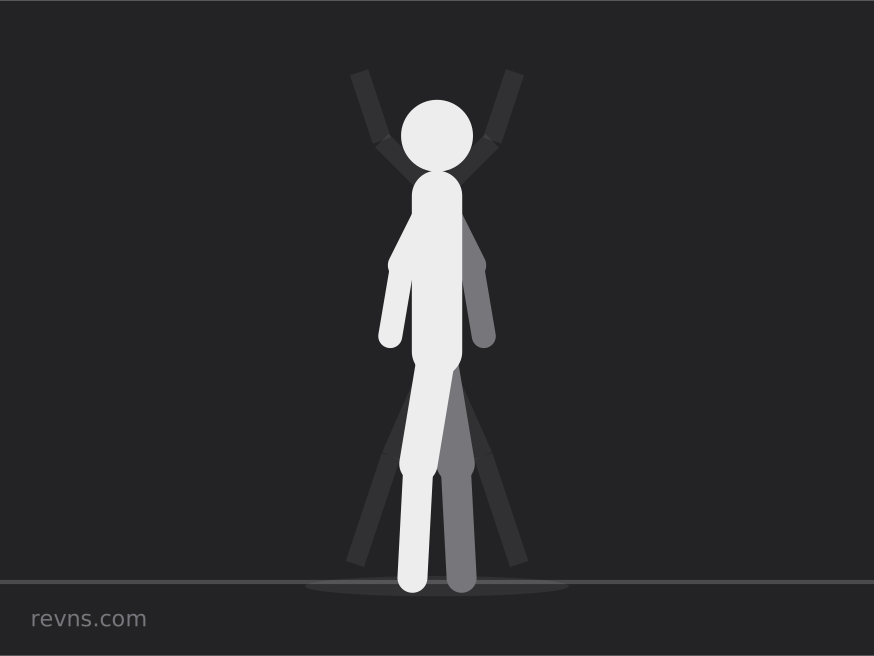
4. Step jacks
Step jacks add low-impact cardio-friendly arm and leg rhythm without both feet leaving the floor.
- Stand tall, feet together.
- Step the right foot out as arms rise overhead.
- Return to centre; step the left foot out.
- Stay light on the feet; avoid stomping.
- Find a pace you can hold for the full 20 seconds.
Do: 20 s, alternating sides. Move on when: rhythm stays even in the last round.
Common mistake: marching too wide and loud — shorten steps for apartment floors.
Easier: standing marches with arm swings. Harder: jumping jacks when impact is comfortable.
5. Squat thrust (optional swap)
Use squat thrusts in block two if you want more full-body work without jumping to plank.
- Stand feet hip-width.
- Squat and place palms flat shoulder-width apart.
- Step or jump feet back to a plank.
- Step or jump feet back under the hips.
- Stand and breathe before the next rep.
Do: 20 s with step-back feet only for beginners. Move on when: plank stays flat under fatigue.
Common mistake: dropping the hips in the plank — pause and reset instead of rushing.
Easier: hands elevated on a sturdy counter. Harder: burpees only after many clean squat thrusts sessions.
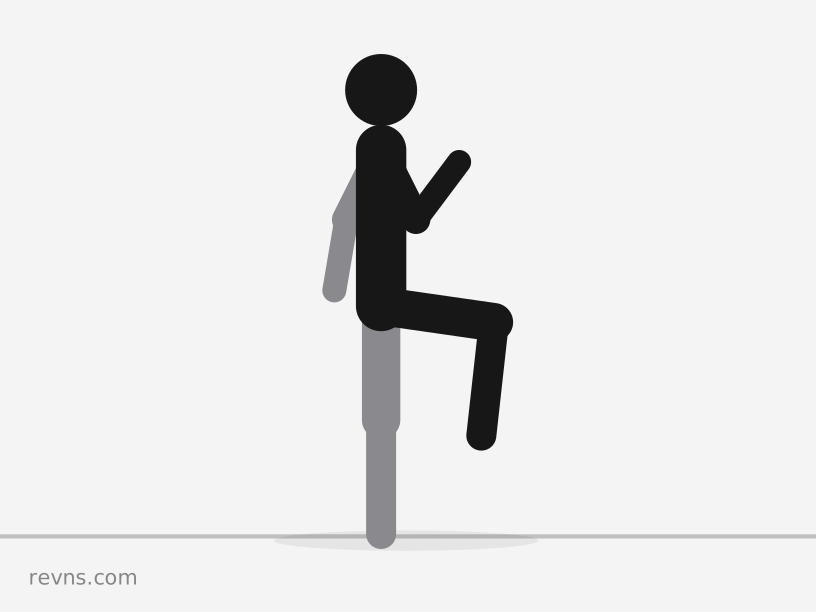
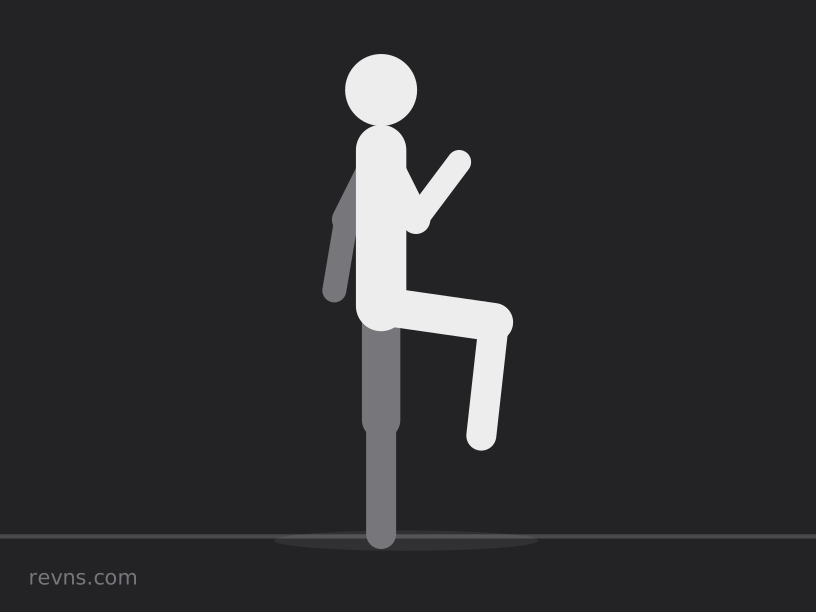
6. High knees (harder option)
High knees can replace step jacks when impact is tolerable and neighbours allow.
- Stand tall, core gently braced.
- Drive one knee toward hip height without leaning back.
- Land softly on the ball of the foot.
- Pump the opposite arm with the leg.
- Alternate quickly but stay upright.
Do: 20 s only after step jacks feel easy for a full 4-minute block. Move on when: landing stays quiet.
Common mistake: leaning backward — smaller knee height until posture stays stacked.
Easier: standing marches. Harder: faster cadence toward mountain climbers.
What muscles does a Tabata workout work?
Block one stresses quads, glutes, chest, shoulders and triceps. Block two adds hip flexors, core, calves and shoulders. Tabata is not muscle-isolation training; it is short whole-body conditioning.
Energy cost depends on body size and speed. The 2024 Adult Compendium lists vigorous calisthenics and dedicated high-intensity bodyweight circuits around 7.5–11 MET (Compendium tables). A 70 kg person might use roughly 40–80 kcal in four minutes of hard mixed work — a rough range, not a goal.
Can you do Tabata in a small apartment?
Yes. Keep step jacks instead of jumping jacks, step-back squat thrusts, and small high-knee height. If pounding persists, run block two as squat thrusts + marches and use the low impact cardio circuit on alternate weeks.
What should you do this week?
- Day 1: Block 1 only, four rounds, note knee and wrist comfort.
- Day 2: Rest or easy walk.
- Day 4: Repeat block 1; add two rounds if day 1 felt controlled.
- Day 6: Optional strength or core work.
- Next week: Progress rounds per the table; add block 2 only when eight rounds of block 1 feel repeatable.
Log intervals in a workout log or your tracker so Tabata days do not stack on top of heavy leg days without notice.
Who should check with a clinician first, and when should you stop?
Ask a clinician before maximal intervals if you have heart or lung disease, uncontrolled blood pressure, recent surgery, pregnancy complications, or unexplained chest symptoms. Pregnant people should follow clinician-led activity guidance rather than exhaustive intervals.
Stop and seek urgent care for chest pain, fainting, severe breathlessness, or irregular heartbeat. Stop this workout for sharp joint pain, swelling, dizziness, or pain that worsens each week.
This is general training guidance, not medical advice.
Related
- Beginner HIIT workout at home: a six-move no-equipment circuit with demos
- Low impact cardio workout at home: a quiet beginner circuit with demos
- Quiet apartment workout no jumping: a six-move beginner routine with demos
- Rest days: how many you need and what to do on them
- How to warm up before a workout: how long and what to do
- Exercise library
Sources
- Tabata I et al. Effects of moderate-intensity endurance and high-intensity intermittent training on anaerobic capacity and VO₂max. Med Sci Sports Exerc 1996
- Bull FC et al. World Health Organization 2020 guidelines on physical activity and sedentary behaviour. Br J Sports Med 2020
- Ainsworth BE et al. 2024 Adult Compendium of Physical Activities
- American College of Sports Medicine. Physical Activity Guidelines Resources
- U.S. Centers for Disease Control and Prevention. How much physical activity do adults need?
Terms in this post
revns publishes training and nutrition guidance, not medical advice. See a clinician for symptoms, injury or a medical condition. Accurate as of November 22, 2026.