How to improve HRV: what actually moves your score over weeks
Raise HRV over months with steady sleep, easy cardio and recovery days. No quick fix. What evidence supports, Garmin status, and what to do this week.
revns editorial · Published November 22, 2026 · 7 min read

Improve HRV over months with steady sleep and wake times, 150+ minutes of moderate cardio weekly, strength twice a week, less evening alcohol, and deloads when the 7-day average drops.
You can improve HRV over months, mostly by protecting sleep, building an easy aerobic base and spacing hard training with recovery days. There is no reliable way to lift your baseline in a day. Breathing slowly for five minutes can raise the number while you do it, but your seven-day average on the same device is what matters. For most people who train, steady wake times, enough zone 2 work, strength training twice a week, less evening alcohol and honest deloads move overnight HRV upward over a season.
TL;DR
| Question | Plain answer |
|---|---|
| Can you improve HRV? | Yes, slowly, mainly through sleep regularity and aerobic fitness |
| How long? | Judge over 8–12+ weeks; use a 7-day average, not one morning |
| Best training | 150+ min/week moderate cardio plus 2–3 strength sessions |
| Sleep | Same wake time daily, 7–9 hours, less late alcohol |
| Garmin HRV status | Moves when your 7-day average vs 3-week baseline shifts — takes weeks |
| Quick fix? | No for baseline; breathing lifts one reading, not fitness |
Is it possible to improve HRV?
Yes, for most healthy adults, but the rise is gradual and personal. HRV reflects how strongly the parasympathetic "brake" holds your heart rate steady at rest. Aerobic fitness and regular sleep strengthen that branch over time.
Sandercock and colleagues pooled exercise training studies in a 2005 meta-analysis in Medicine and Science in Sports and Exercise. After training, short-term HRV indices tied to vagal activity were higher than before training in pooled controlled trials. The effect sizes were modest, and most trials ran eight to twelve weeks in people who were inactive or returning to training.
That does not mean a fit person can push HRV up forever. Genetics, age and sex set part of your range. A 2010 systematic review by Nunan and colleagues in Pacing and Clinical Electrophysiology reported mean RMSSD near 42 ms in healthy adults, with a wide normal spread. Your job is to lift your baseline on one device, not to chase an influencer's screenshot.
How long does it take to improve HRV?
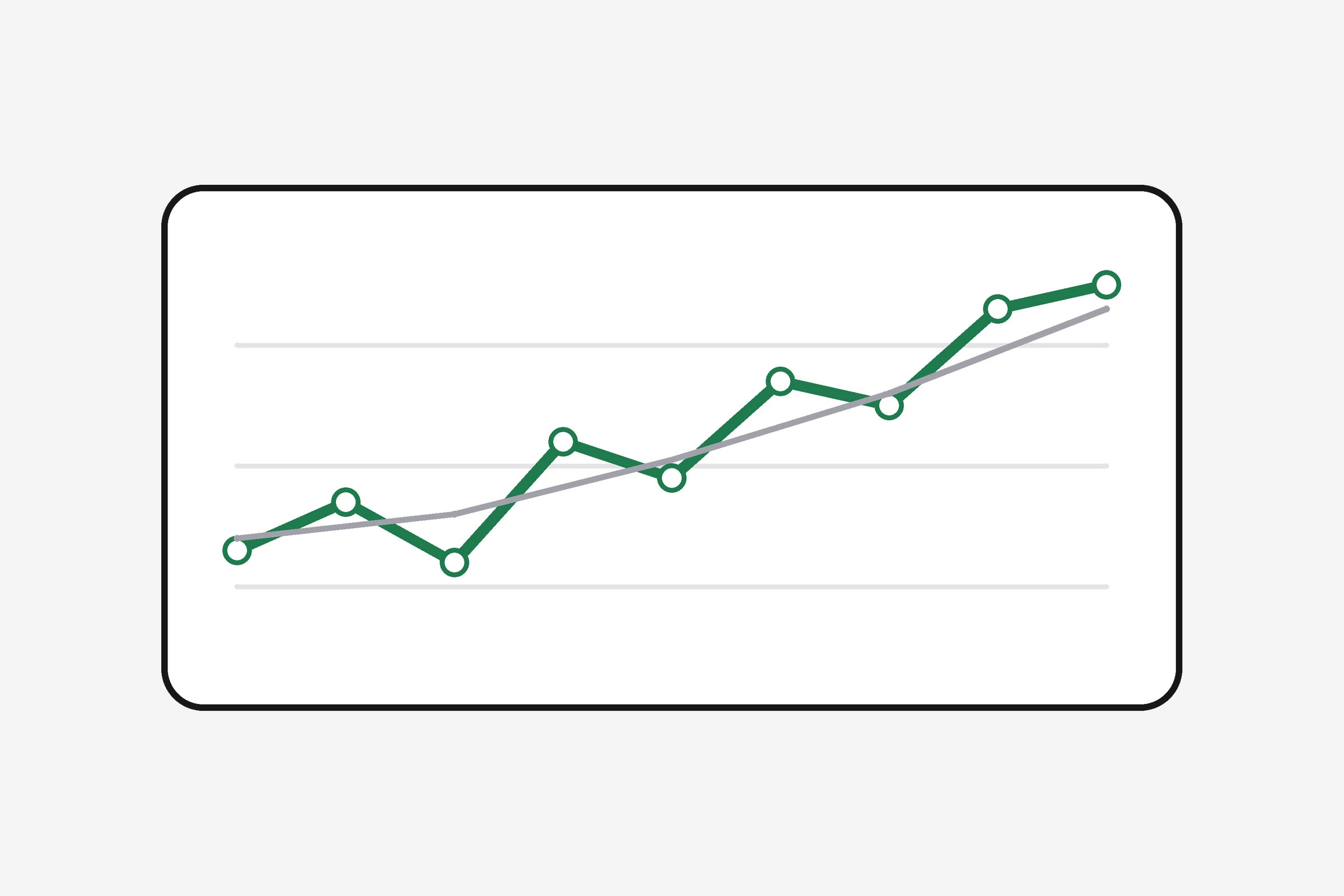
Plan on at least eight to twelve weeks of consistent habits before you expect a clear upward drift in the seven-day average. Buchheit's monitoring review in Frontiers in Physiology (2014) notes that day-to-day HRV noise is often 10 to 20 percent, so one green or red morning is meaningless.
A practical timeline:
| Phase | What you do | What to watch |
|---|---|---|
| Weeks 1–2 | Same wake time, log morning or overnight HRV | Your personal range, no training changes yet |
| Weeks 3–8 | Add easy aerobic minutes, keep two strength days | 7-day average vs your range |
| Weeks 8–12 | Steady load, one deload if average dips | Average drifting up or bouncing back faster after hard days |
| Beyond | Maintain sleep and easy volume | Less panic about single low days |
If the average stays below your range for two weeks with poor sleep, heavy legs and a higher resting heart rate, ease training and fix sleep before you add more intensity.
What training actually raises HRV?
Moderate aerobic work is the best supported lever; strength training helps fitness but is secondary for resting HRV. The WHO 2020 guideline asks adults for 150 to 300 minutes of moderate-intensity activity per week, or 75 to 150 minutes of vigorous activity, plus muscle-strengthening on two or more days.
Aerobic base (zone 2 and brisk walking)
Easy work you can repeat most days raises stroke volume and vagal tone without burying recovery. Aim for three to five sessions per week of 30 to 60 minutes in zone 2: brisk walking, easy cycling, light jogging or swimming. Use the heart rate zone calculator if you want a heart-rate cap.
Strength training
Two or three full-body sessions per week support muscle and bone. They are not a substitute for aerobic minutes for HRV, but they belong in a week that also has easy cardio. See strength training for beginners for a starting structure.
Hard intervals and races
Intervals and races lower HRV for 24 to 48 hours afterward in many people. That dip is not failure. Schedule them once or twice a week at most, with easy days before and after, and use a deload when the readiness score or HRV average stays low.
HRV-guided training
Manresa-Rocamora and colleagues pooled eight small trials in a 2021 meta-analysis in the International Journal of Environmental Research and Public Health. HRV-guided plans improved vagal-related HRV more than fixed plans in some comparisons (standardised mean difference 0.50, 95% confidence interval 0.09 to 0.91), but effects on maximal aerobic capacity were small and not statistically significant. Use HRV to trim hard days when your average dips, not to replace a sensible week structure.
How do you improve HRV during sleep and at night?
Wearables score overnight HRV, so sleep timing and alcohol matter more than a breathing drill at lights out. Adults need seven to nine hours per night for most people, per the Watson and colleagues joint consensus in Sleep (2015). See how much sleep you need for ranges by life stage.
Steps that move overnight readings over weeks:
- Fixed wake time within about 30 minutes, weekends included. Shift bedtime earlier in 15-minute steps every three or four days if you wake groggy.
- Finish hard training earlier when you can. Late intense sessions can delay sleep onset and flatten overnight HRV.
- Cut alcohol within three to four hours of bed. Both quantity and timing show up in next-morning HRV on many devices.
- Cool, dark, quiet room. Heat loads the cardiovascular system and can depress HRV.
- Caffeine cut-off about eight hours before bed if sleep is short; see caffeine and training.
If snoring, breathing pauses or unrefreshing sleep persist despite habits, see a clinician. A watch cannot diagnose sleep apnoea.
How do you improve Garmin HRV status or other app labels?
App labels compare your recent week with your personal baseline on that brand — there is no in-app shortcut. On Garmin, HRV status uses a seven-day average of overnight HRV against a baseline built over roughly three weeks: Balanced, Unbalanced, Low or Poor. Whoop and Oura use their own scales.
What helps the label over weeks, not hours:
- Three or four weeks of stable measurement before you react to status.
- Seven-day average above your early baseline, with sleep and resting heart rate steady.
- One or two easier days when status drops after a hard block or short sleep — see active recovery.
- No device switching mid-season. Changing brands resets the baseline.
For band definitions, see what is a good HRV score and Garmin Body Battery.
What about food, supplements and breathing drills?
No food or supplement has strong evidence to raise resting HRV in healthy trainers the way sleep and aerobic work do. Diets rich in vegetables, legumes, nuts and whole grains are linked with better cardiovascular health in population studies, but they are not an HRV hack. revns does not recommend supplements for HRV.
Slow paced breathing at roughly six breaths per minute for five to ten minutes can raise HRV during the exercise. That is useful for wind-down and stress, not a replacement for sleep or training.
Skip chasing ice baths, sauna rounds or novelty gadgets solely for a higher morning score unless you enjoy them for other reasons.
What should you do this week?
Pick one wake time, log HRV for two weeks if you are new, then add easy aerobic minutes before you add intensity.
Beginners
- Wake at the same time every day for seven days.
- Walk 30 minutes at a brisk but conversational pace on four days.
- Two body-weight strength sessions on non-consecutive days.
- No alcohol on nights before you care about HRV.
- Read the seven-day average on day 14, not daily dots.
People already training
- Check whether 80 percent of cardio minutes are truly easy. Move one interval day to zone 2 if the HRV average has sat low for a week.
- Add a deload week — cut volume by 30 to 40 percent, keep sleep sacred — if HRV, resting heart rate and mood all agree you are flat.
- Log HRV next to sleep hours in sleep tracking. On iPhone, the revns app reads Apple Health HRV, sleep, resting heart rate and workouts read-only; Garmin and similar integrations are on the roadmap, so enter values manually if needed.
When should you see a professional?
HRV on a watch is a wellness trend, not a diagnosis. See a doctor or urgent care for chest pain, fainting, a racing or irregular pulse, or breathlessness at rest.
If anxiety, depression or burnout is stealing sleep, talk to a clinician. If you might harm yourself, contact your local emergency number or crisis line now. Training and tracking cannot replace care.
Related
- What is HRV? Heart rate variability explained for people who train
- What is a good HRV score? Average HRV, HRV status and what a low number means
- What is a readiness score? Meaning and low scores
- Zone 2 training explained
- How much sleep do you need?
- Rest days: how many you need and what to do on them
- Sleep and recovery tracking
This is general training guidance, not medical advice.
Sources
- Sandercock GR, Bromley PD, Brodie DA. Effects of exercise on heart rate variability: inferences from meta-analysis. Med Sci Sports Exerc 2005
- Buchheit M. Monitoring training status with HR measures: do all roads lead to Rome? Front Physiol 2014
- Manresa-Rocamora A et al. Heart rate variability-guided training for enhancing cardiac-vagal modulation, aerobic fitness, and endurance performance: a methodological systematic review with meta-analysis. Int J Environ Res Public Health 2021
- Nunan D, Sandercock GRH, Brodie DA. A quantitative systematic review of normal values for short-term heart rate variability in healthy adults. Pacing Clin Electrophysiol 2010
- Bull FC et al. World Health Organization 2020 guidelines on physical activity and sedentary behaviour. Br J Sports Med 2020
- Watson NF et al. Recommended amount of sleep for a healthy adult: a joint consensus statement of the American Academy of Sleep Medicine and Sleep Research Society. Sleep 2015
Terms in this post
revns publishes training and nutrition guidance, not medical advice. See a clinician for symptoms, injury or a medical condition. Accurate as of November 22, 2026.