What is HRV? Heart rate variability explained for people who train
HRV is the variation in time between heartbeats. Learn what the number means, how to measure it, why your own trend matters most, and what it cannot tell you.
revns editorial · Published November 12, 2026 · 8 min read
HRV is the variation in time between heartbeats. Read your own trend over weeks, not one morning, and use it with sleep and how you feel, never alone.
Heart rate variability (HRV) is the small, beat-to-beat change in the time between your heartbeats. A heart at 60 beats a minute does not tick once a second like a metronome; the gaps vary by a few hundredths of a second. For most people who train, a higher HRV than their own usual tends to go with good recovery, and a lower one often follows poor sleep, illness, alcohol or hard training. It is a useful trend line, not a score you can pass or fail.
TL;DR
- HRV is measured in milliseconds. Wearables usually report a version called RMSSD.
- Your number is only comparable with your own number, on the same device, under the same conditions.
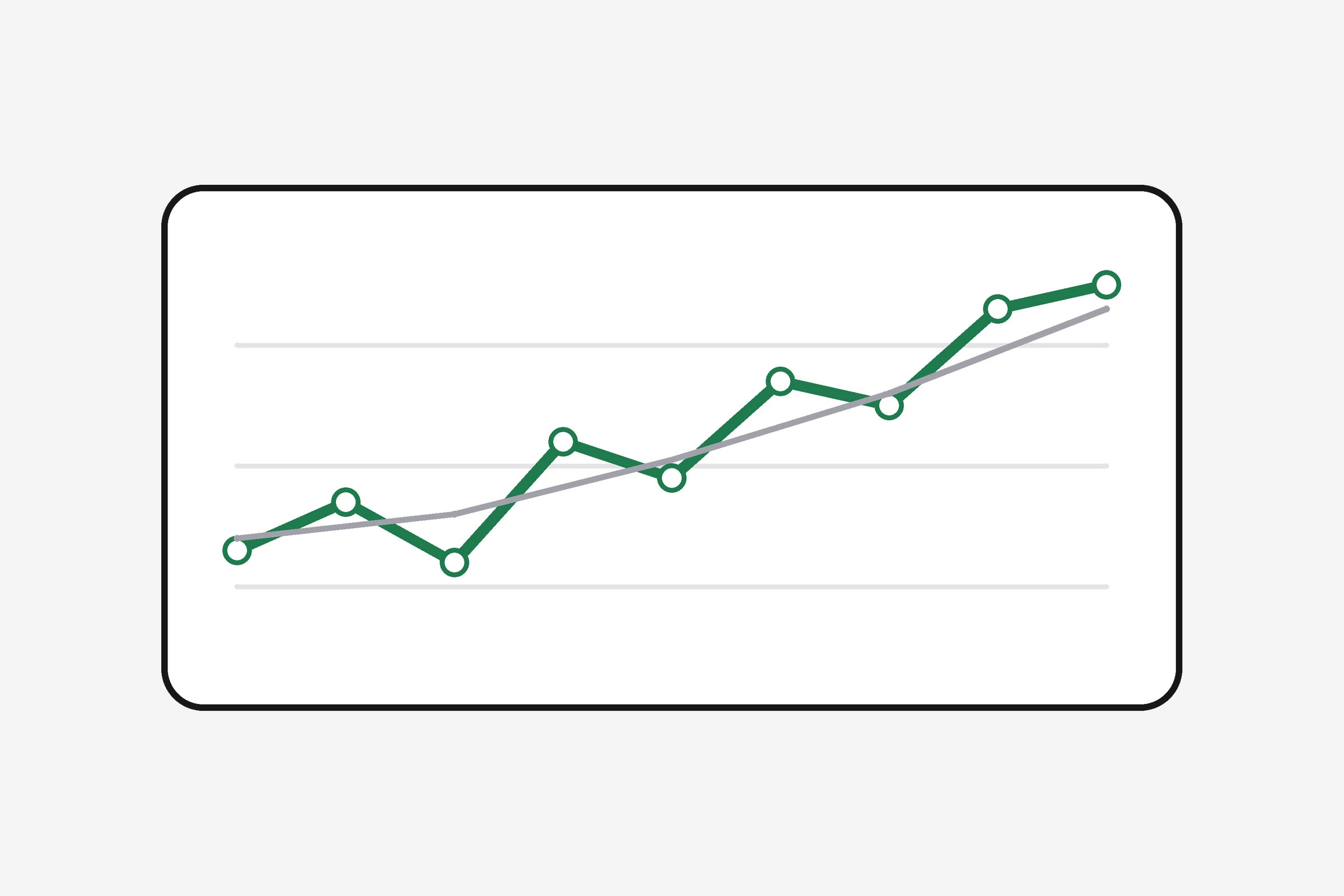
- Judge the trend over days and weeks. Day-to-day swings of 10 to 20 percent are normal noise.
- Use HRV with sleep, resting heart rate and how you feel. It cannot diagnose anything.
What does HRV actually measure?
Your heart rate is set by the sinus node, a small cluster of cells that acts as the heart's pacemaker. Two branches of the autonomic nervous system adjust it. The sympathetic branch speeds the heart up for effort and stress. The parasympathetic branch, carried mainly by the vagus nerve, slows it down at rest. The interval between beats changes constantly as these two inputs, plus breathing, shift.
The 1996 Task Force of the European Society of Cardiology and the North American Society of Pacing and Electrophysiology set out how to measure and name these variations. It remains the standard reference for the definitions. The methods fall into two families: time-domain measures, which work on the intervals directly, and frequency-domain measures, which split the variation into rhythms.
The measure most wearables and chest straps report is RMSSD, the square root of the mean of the squared differences between successive beat intervals. In a 2014 technology report in Frontiers in Physiology, the sports scientist Martin Buchheit describes RMSSD as reflecting parasympathetic (vagal) activity and prefers it for field use because it works on short recordings and is less sensitive to breathing than other indices.
In plain terms: when the vagal "brake" is strong, successive gaps differ more, and RMSSD is higher. When stress or fatigue shifts the balance toward the sympathetic side, the gaps become more uniform, and RMSSD is lower.
Why do people who train care about it?
Training is a stress, and recovery is when you adapt. HRV is one cheap, non-invasive window on how your nervous system is coping with the load. Common patterns, drawn from the monitoring literature, are:
- A dip after a hard block, a late night, a hot day, alcohol or an infection.
- A steady return to your usual range as you recover.
- A persistent drop alongside bad sleep, a raised resting heart rate and heavy legs, which is a reason to look at your week.
Buchheit's review also warns that HRV reflects cardiac autonomic activity only. It can miss muscular, metabolic or psychological fatigue, so he recommends reading it with training logs, wellness questions and performance tests rather than alone.
What is a normal HRV?
This is the most common question, and the honest answer is that there is no single normal. HRV differs a lot between healthy people, tends to fall with age, and depends on genetics and fitness. Devices also compute it differently: some use a few minutes in the morning, others an average of overnight readings, and some report SDNN, a different statistic, rather than RMSSD. A 54 on one watch is not the same as a 54 on another.
So do not compare yourself with a friend, a podcast guest or a chart. Compare yourself with your own last month on the same device. The dictionary entry for HRV says the same thing in one line.
How do I measure it properly?
Buchheit's review gives practical rules that hold for any device:
- Measure at the same time, in the same position. A short recording of about 5 to 10 minutes on waking is the common standard. Lying down or sitting both work; pick one.
- Keep conditions steady. Same room, before coffee, before checking your phone, breathing normally.
- Measure often enough. For endurance athletes he suggests at least three to four times a week, because random sampling cannot show a within-person trend.
- Average several days. Correlations with performance in the studies he reviewed were seen when using the average of at least three to four days of data.
- Watch for bad data. A single skipped or extra beat in a five-minute recording can change common HRV values by up to 50 percent, which is why a chest strap or a good optical sensor, and a still body, matter.
Overnight wearable values are convenient and need no routine, but sleep patterns, alcohol and late meals affect them. That is fine as long as you accept that they measure your night, not your training alone.
How much does HRV change from day to day?
More than most people expect. Buchheit reports that the day-to-day variation of the log-transformed RMSSD in a healthy person is around 10 to 20 percent, with a typical error of about 12 percent. A worthwhile change in the resting value is much smaller than that noise, which is exactly why one reading tells you little.
A practical reading, for your own data:
| What you see | Likely meaning | What to do |
|---|---|---|
| One reading 10 to 20% below usual | Within normal noise | Nothing. Check again tomorrow |
| 3 to 4 day average clearly below your range, sleep poor, resting heart rate up | Accumulated stress, short sleep or early illness | Keep training easy, protect sleep, review the week |
| Average above your range for weeks, feeling good | Often good adaptation | Carry on; do not chase the number |
| Very high reading after illness, heat or a big change | Can be unrelated to fitness | Wait for a pattern before drawing conclusions |
The "clearly below" threshold is deliberately not a number. Where your own normal band sits depends on your history, and revns does not claim a cut-off that the evidence does not give.
Does training by HRV make you fitter?
The idea is simple: train hard on days when HRV is at or above your normal, and go easy when it drops. A 2021 systematic review with meta-analysis by Manresa-Rocamora and colleagues in the International Journal of Environmental Research and Public Health pooled eight studies with 199 participants (106 in HRV-guided groups, 93 following a predefined plan).
The results were modest:
- Vagal-related HRV improved more with HRV-guided training (standardised mean difference 0.50, 95% confidence interval 0.09 to 0.91).
- Resting heart rate did not differ between methods.
- Effects on maximal aerobic capacity (0.20) and endurance performance (0.20) were small and not statistically significant.
The authors conclude that HRV-guided training may help keep HRV up and reduce negative responses, but that any group-level fitness advantage over a well-planned fixed programme is only by a small margin. The trials were small and mostly in endurance-trained people, so they say little about strength training or complete beginners.
The takeaway is not that HRV is useless. It is that a sensible plan, enough sleep and honest notes about how you feel do most of the work, and HRV is a useful extra check, not a replacement.
What can lower or raise HRV?
Many things move it that have nothing to do with how fit you are:
- Sleep: short or broken nights are a common cause of a low morning reading. The sleep guide covers how much adults need.
- Alcohol and late heavy meals: both often show up in overnight HRV.
- Illness: an infection loads the body like any other stress, so a dip can coincide with feeling unwell.
- Heat, altitude and hydration: these shift blood volume and heart rate and so move HRV.
- Hard training and emotional stress: both load the same system.
- Age and genetics: these set your baseline, and you cannot change them by training harder.
- Medicines and heart rhythm problems: these can change HRV or make it hard to measure. Do not interpret a wearable number if a clinician has told you about a rhythm condition.
How do I use HRV this week?
If you are new to it
- Pick one device and one routine. Measure on waking, same position, five minutes.
- Log it for two weeks without changing anything. That gives you your own range.
- Log sleep hours and a 1 to 5 "how do I feel" score beside it. The pattern across the three is what matters.
If you already train and track
- Look at the 7-day average, not the daily dot.
- When the average dips and sleep and mood agree, make the next two sessions easier, such as zone 2 work instead of intervals. The zone 2 guide explains what easy means.
- Do not add a new rule such as "no lifting if HRV is under X". Your own history does not support a fixed cut-off, and one noisy morning can mislead.
revns lets you log HRV next to sleep, resting heart rate and a recovery rating, and charts it with a seven-day average; see sleep and recovery tracking. Automatic sync from wearables is on the roadmap, not live, so values are entered by you. The planner uses the last three nights of sleep, not HRV, to decide whether today should be moderate.
When should I see a professional?
HRV from a watch or strap is a wellness estimate. It does not diagnose a heart condition and cannot rule one out. See a doctor if you have:
- chest pain or pressure, or pain spreading to the arm, jaw or back
- fainting or near-fainting, especially during exercise
- a racing, pounding or irregular heartbeat that does not settle
- new breathlessness out of proportion to effort
- a persistently very low or very high resting heart rate with symptoms
If low mood, anxiety or burnout are behind a poor stretch of sleep and recovery, talk to a clinician or your local crisis line if you feel unsafe. A tracker cannot treat or replace care.
Related
- How much sleep do you need?
- Zone 2 training explained
- Heart rate zone calculator
- Sleep and recovery tracking
This is general training guidance, not medical advice.
Sources
- Task Force of the European Society of Cardiology and the North American Society of Pacing and Electrophysiology. Heart rate variability: standards of measurement, physiological interpretation and clinical use. Eur Heart J 1996
- Buchheit M. Monitoring training status with HR measures: do all roads lead to Rome? Front Physiol 2014
- Manresa-Rocamora A, et al. Heart rate variability-guided training for enhancing cardiac-vagal modulation, aerobic fitness, and endurance performance: a methodological systematic review with meta-analysis. Int J Environ Res Public Health 2021
Terms in this post
revns publishes training and nutrition guidance, not medical advice. See a clinician for symptoms, injury or a medical condition. Accurate as of November 12, 2026.