What is a good HRV score? Average HRV, HRV status and what a low number means
A good HRV score is one near your own baseline. The average HRV range in healthy adults, what Garmin HRV status labels mean, and when a low number needs a check.
revns editorial · Published November 15, 2026 · 8 min read

There is no single good HRV score. Compare your seven-day average with your own baseline, use the same device, and treat one low reading as a cue to check sleep and stress, not a verdict.
A good HRV score is one that sits inside your own usual range, measured the same way on the same device. There is no single number everyone should hit. In a 2010 systematic review of short resting recordings in healthy adults, RMSSD (the HRV measure most wearables use) averaged about 42 milliseconds, with a normal range of roughly 19 to 75 ms. Your seven-day trend tells you more about recovery than one morning's reading.
TL;DR
| Question | Plain answer |
|---|---|
| What is a good HRV score? | One near your own baseline on the same device; there is no universal target |
| Average HRV in healthy adults | RMSSD about 42 ms, normal range about 19 to 75 ms (short resting recordings, 2010 review) |
| Does HRV fall with age? | Yes, in healthy people, from young adulthood onward |
| What does Garmin HRV status mean? | Your 7-day average vs a 3-week baseline: Balanced, Unbalanced, Low or Poor |
| Is 15 ms low? | Below the usual adult range, but it can be your normal; compare with your own trend |
| When to see a clinician | Chest pain, fainting, a racing or irregular pulse, breathlessness at rest |

What does an HRV score actually measure?
HRV (heart rate variability) is the variation in time between one heartbeat and the next. A heart beating at 60 beats a minute does not tick every 1.000 seconds. One gap might be 0.95 s and the next 1.07 s. That variation is normal and healthy.
The gaps change because two branches of the nervous system pull on the heart all the time. The parasympathetic branch, the "rest and digest" side, slows the heart and makes the gaps more variable. Stress, hard training, poor sleep, alcohol and illness shift the balance and usually make the gaps more even, so HRV falls.
Most "HRV scores" are one of two numbers:
- RMSSD, in milliseconds: the root mean square of successive differences between beats. It tracks the parasympathetic side well over short recordings. Oura, Whoop and most chest-strap apps use it. See RMSSD.
- SDNN, in milliseconds: the standard deviation of all the gaps in a recording. Apple Health stores SDNN from short readings the Apple Watch takes during the day and night.
Some apps rescale the natural log of RMSSD onto a 1 to 100 scale. A "65" in one of those apps is not 65 ms, so read the app's own definition before you compare numbers with a friend.
What is the average HRV in healthy adults?
The most quoted reference is a 2010 systematic review by Nunan and colleagues in Pacing and Clinical Electrophysiology. It pooled short (about five-minute) resting recordings from healthy adults across many studies. Mean RMSSD was about 42 ms, with a normal range of roughly 19 to 75 ms. Mean SDNN was about 50 ms, with a range of roughly 32 to 93 ms.
Three things limit how far you can use those numbers:
- They come from short, lying-down recordings in a lab. A wearable that averages your whole night, or takes a reading in the last deep-sleep phase, gives a different value.
- The range is wide. Two healthy people of the same age can differ by 40 ms or more. Genetics, fitness, breathing pattern and body position all play a part.
- Metrics are not interchangeable. RMSSD and SDNN measure different things, so a 42 on one is not equal to a 42 on the other.
That is why sports scientists track the trend. A 2013 review by Plews and colleagues in Sports Medicine, written about elite endurance athletes, recommended a rolling seven-day average of the log of RMSSD rather than single readings, because day-to-day noise is large.
What is the average HRV by age?
HRV is highest in childhood and young adulthood and falls with age in healthy people. Umetani and colleagues recorded 24-hour HRV in 260 healthy people aged 10 to 99 and found a clear decline across the decades. Voss and colleagues found the same direction in short recordings from 1,906 healthy adults aged 25 to 74 in Germany.
| Age group | Direction of HRV in healthy people | What to do with it |
|---|---|---|
| 20s and 30s | Highest on average, widest spread | Build a personal baseline over three or four weeks |
| 40s and 50s | Lower on average than in your 20s | Compare with your own last year, not with a 25-year-old |
| 60s and over | Lower again; very wide spread | Trend and symptoms matter far more than the number |
We do not print a millisecond table by age here. Published tables differ by metric, device, recording length and the group studied, and a number from one study can look alarming next to a device that measures something else. If you want to see where your HRV sits among people your age on the same kind of data, the age ranks in our fitness-for-your-age guide treat it as one input among six.
What does HRV status mean on Garmin?
Garmin's HRV status is not a score. It is a label that compares your recent average with your own baseline. Per Garmin's device manuals, the watch measures HRV while you sleep, needs about three weeks of nights to build a baseline, and then compares your seven-day average with that baseline range.
| HRV status | Garmin's meaning | A sensible response |
|---|---|---|
| Balanced | Your 7-day average is inside your baseline range | Train as planned |
| Unbalanced | Your 7-day average is above or below your baseline range | Check sleep, stress, alcohol, travel and training load |
| Low | Your 7-day average is well below your baseline range | Keep hard days easy until it comes back, and look for the cause |
| Poor | Your values are well below the usual range for your age | A long-term pattern, not one bad night; review the basics and mention it at your next check-up |
| No status | Not enough nights yet | Wear the watch to bed for three weeks |
Whoop and Oura fold HRV into a wider recovery or readiness score, together with resting heart rate, sleep and sometimes temperature. We compare what those scores do and do not measure in Whoop vs Oura vs a free tracker.
Is a low HRV bad? What about an HRV of 15?
A low number is a signal to look at, not a verdict. An RMSSD of 15 ms is below the usual resting range in the Nunan review. In a 30-year-old who used to read 55 ms, a drop to 15 for several days is a clear change. In a 70-year-old whose readings have sat at 15 to 20 ms for years, it may simply be their normal.
The common causes of a drop are everyday ones:
- A short or broken night. Sleep is the biggest single lever for most people.
- Alcohol. Even moderate drinking in the evening lowers overnight HRV in many people.
- A hard session or a big training week. A dip of a day or two after heavy work is expected.
- Illness. HRV often falls a day or two before a cold or a fever is obvious.
- Stress, travel, heat and dehydration. All of them push the nervous system toward "alert".
A persistently low HRV is also linked with heart disease in population studies, which is why the topic sounds frightening. Those studies describe groups of people and medical-grade recordings. A consumer watch cannot diagnose a heart condition, and a low reading alone is not evidence that you have one.
How do I use my HRV score this week?
A simple routine works for beginners and for people who already train.
- Pick one device and one time. Overnight readings from the same watch or ring are the most consistent. Morning chest-strap readings work too if you do them lying down, at the same time, before coffee.
- Collect three to four weeks before you act on the number. That is your baseline.
- Watch the seven-day average, not today's reading. Most apps show it; you can also average the last seven values yourself.
- Pair it with how you feel. Log energy and soreness next to HRV. A low reading on a day you feel great matters less than a low reading on a day you feel flat. Our guide to tracking mood and energy next to training shows a 10-second way to do it.
- Use a simple rule. One low day: keep the plan, but make hard sessions controlled. Three or more days below your range: swap one hard day for an easy day or a rest day, and look at sleep first.
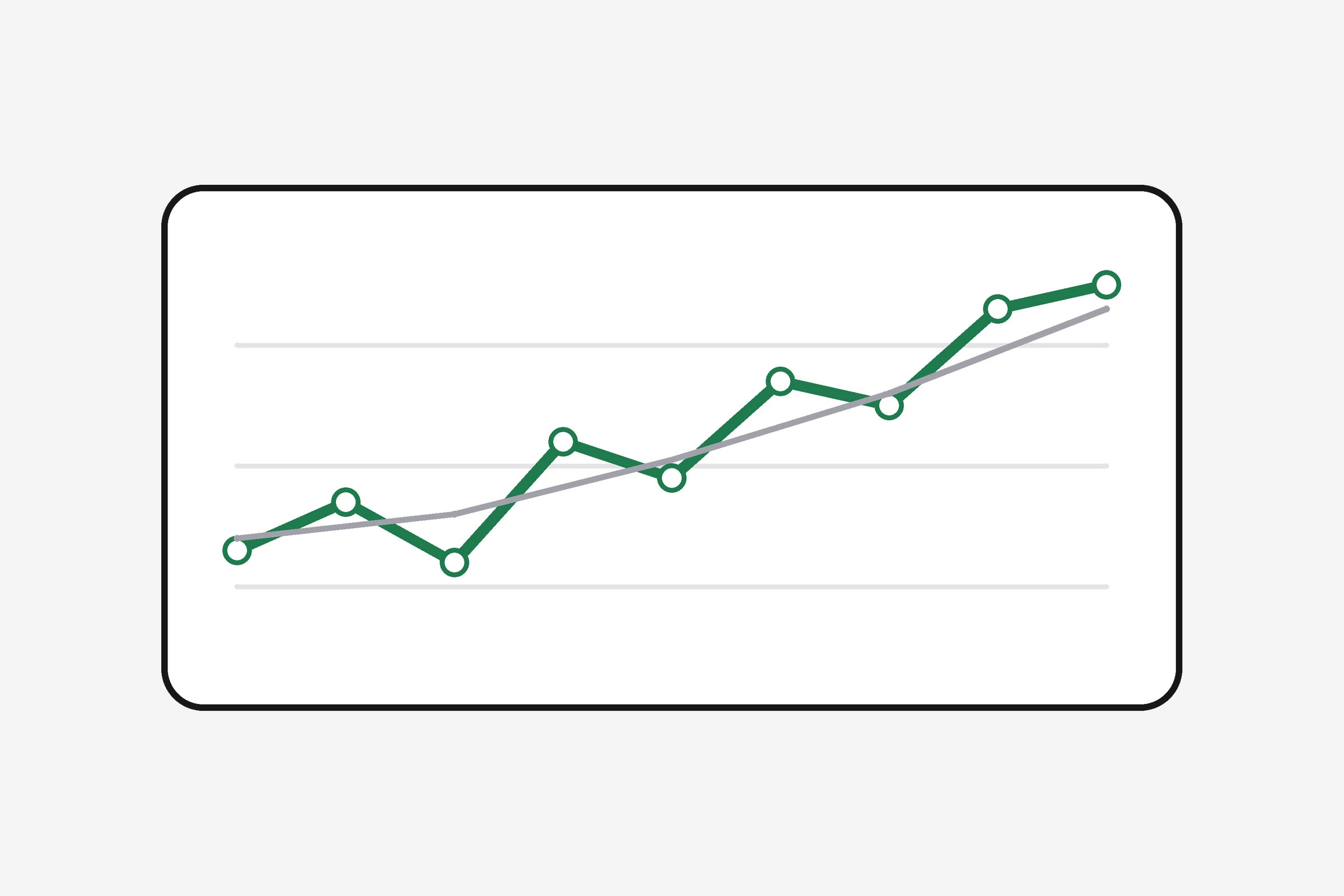
If you use an iPhone, the revns phone app can read HRV from Apple Health (read-only), next to steps, sleep, resting heart rate and every workout your watch records. It shows up as a measured number on your day, and it never counts against your score on its own. You can also ask your assistant about it through the revns MCP server.
Can you raise your HRV?
You can raise your own baseline over months, mostly with the habits that improve fitness in general. Regular aerobic training, especially easy zone 2 work, tends to raise resting HRV in previously inactive adults. So do steady sleep times, less evening alcohol and enough recovery between hard sessions.
What does not work is chasing the number day to day. Breathing slowly for a few minutes can raise HRV during the breathing itself, which can be a pleasant way to wind down, but it does not change your fitness. The goal is a baseline that drifts up over a season and readings that bounce back quickly after hard days.
When should you see a professional?
HRV from a wearable is a training signal. See a doctor or urgent care if you have:
- chest pain or pressure, especially on exertion
- fainting or near-fainting
- a racing, pounding or irregular heartbeat that does not settle with rest
- breathlessness at rest or out of proportion to effort
- a watch alert for an irregular rhythm, together with any of the above
Also mention a long-term "Poor" status or a steady fall in HRV and a rise in resting heart rate at your next check-up, especially if you take heart or blood pressure medicine, which can change HRV.
Related
- What is HRV? Heart rate variability explained for people who train
- Normal resting heart rate: what is normal and what changes it
- Whoop vs Oura vs a free tracker: what recovery scores measure
- Sleep and recovery tracking
- Heart rate zone calculator
This is general training guidance, not medical advice.
Sources
- Nunan D, Sandercock GRH, Brodie DA. A quantitative systematic review of normal values for short-term heart rate variability in healthy adults. Pacing Clin Electrophysiol 2010
- Shaffer F, Ginsberg JP. An overview of heart rate variability metrics and norms. Front Public Health 2017
- Umetani K et al. Twenty-four hour time domain heart rate variability and heart rate: relations to age and gender over nine decades. J Am Coll Cardiol 1998
- Voss A et al. Short-term heart rate variability: influence of gender and age in healthy subjects. PLoS One 2015
- Plews DJ et al. Training adaptation and heart rate variability in elite endurance athletes: opening the door to effective monitoring. Sports Med 2013
- Garmin. Heart rate variability status (device manual)
Terms in this post
revns publishes training and nutrition guidance, not medical advice. See a clinician for symptoms, injury or a medical condition. Accurate as of November 15, 2026.