Whoop vs Oura vs a free tracker: what recovery scores actually measure
Whoop, Oura and free apps turn sleep, resting heart rate and HRV into one morning score. Here is what each uses, what research validates, and how to train.
revns editorial · Published November 12, 2026 · 9 min read
Whoop, Oura and free trackers blend sleep, RHR and HRV into one score. Research validates many sensors more than the composite. Compare your own trend on one device.
Whoop, Oura and most free sleep apps all boil sleep, resting heart rate and heart rate variability (HRV) into one morning number — a readiness score, recovery percentage or similar label. They feel comparable because they sit on the same screen, but the formulas differ, the scales differ and published science has tested the sensors and sleep staging far more than the composite score itself. For training decisions, treat any device's score as a trend on that device, alongside hours slept and how you feel — not as a universal grade you can rank against another brand.
TL;DR
| Whoop | Oura | Typical free tracker (phone, basic band, smartwatch) | |
|---|---|---|---|
| Morning score name | Recovery (0–100%) | Readiness (0–100) | Varies: "Sleep score", "Readiness", "Body Battery", or none |
| Main overnight inputs | HRV, resting HR, sleep, respiratory rate, skin temp | HRV balance, resting HR, sleep stages, temp deviation, prior-day activity | Sleep duration and timing; HRV or resting HR if hardware allows |
| Daytime load score | Strain (0–21) | Activity and exertion contributors to readiness | Steps, active minutes, sometimes training load |
| Sensor validation (vs ECG overnight) | Acceptable HRV and RHR agreement in a 2025 multi-device study | Among the strongest RHR and HRV agreement in the same study | Widely variable; often no published overnight HRV validation |
| Composite score validated in journals? | Recovery algorithm not independently validated | Readiness algorithm not independently validated | Rarely; 2025 review found few empirical tests of combined scores |
What is a recovery score, really?
A recovery or readiness score is a proprietary blend of biometrics and recent behaviour. Manufacturers describe the ingredients in marketing copy and white papers, but they do not publish exact weights. A 2025 narrative review in Translational Exercise Biomedicine catalogued 14 composite health scores across ten major wearable brands (including Whoop strain and recovery, Oura readiness, Garmin Body Battery, Fitbit Daily Readiness and others). Heart rate variability appeared in 86% of them, resting heart rate in 79%, physical activity in 71% and sleep duration in 71%, yet the authors reported that none of the companies disclosed full formulas and few provided peer-reviewed validation of the combined number.
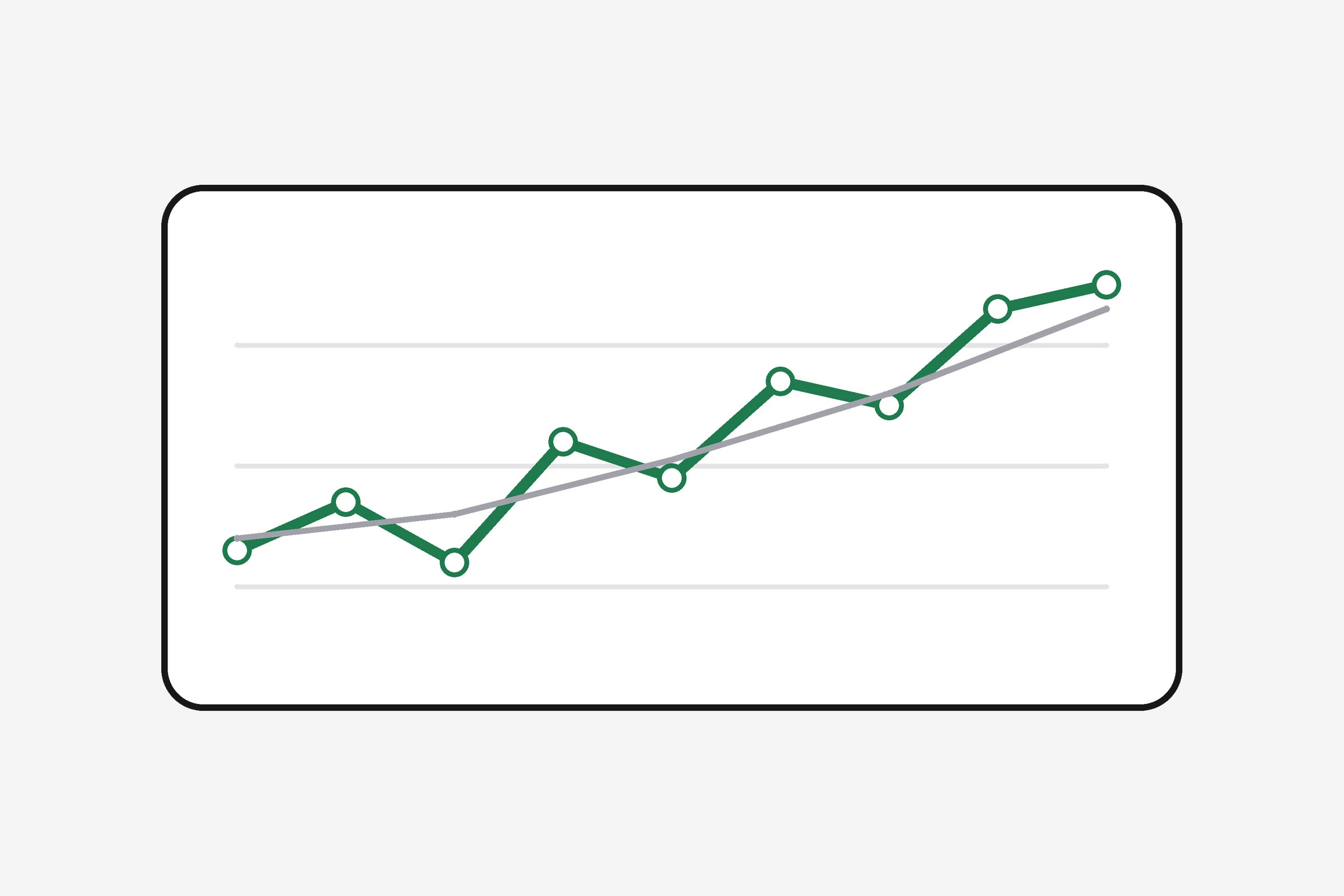
That matters because there is no gold-standard "recovery meter" to check the score against. Researchers can compare Whoop's pulse intervals to an electrocardiogram; they cannot compare "67% recovery" to an objective recovery truth the way they compare blood pressure to a cuff. The honest use of these scores is self-referencing: green versus your last month on this app, not green versus your training partner on a different app.
What does Whoop's recovery score use?
Whoop markets Recovery as a 0–100% readout each morning, built from sleep, HRV, resting heart rate, respiratory rate and other overnight signals, relative to your baseline. Strain (0–21) captures cardiovascular load across the day from workouts and general stress on the strap.
The best-published evidence on Whoop concerns measurement, not the Recovery math. A 2021 study in Sensors compared Whoop 2.0 photoplethysmography to electrocardiography and reported acceptable agreement for heart rate but wider limits of agreement for ln RMSSD (a common HRV format). The authors noted explicitly that validating the Recovery Score was outside their scope. A 2024 systematic review (preprint on medRxiv, not yet peer-reviewed) summarized accuracy studies and stressed that impact on performance outcomes remains limited in existing trials.
In applied data, a 2023 master's-thesis pilot in nine Division I college wrestlers found Whoop recovery correlated positively with HRV and sleep and negatively with resting heart rate, which matches what the score is designed to reflect — but that study did not prove the percentage predicts performance better than raw trends.
Practical read: Whoop is strong at nudging you to notice sleep debt, high strain and HRV dips in one place. The percentage is a summary; the signal is the pattern in its ingredients. See the HRV explainer for how to read ln RMSSD and why one morning is noisy.
What does Oura's readiness score use?
Oura reports Readiness on a 0–100 scale from contributors such as sleep score, sleep balance, previous-day activity, activity balance, average resting heart rate, HRV balance, body temperature deviation and recovery index (time to stabilizing overnight vitals). Sleep and activity scores feed those contributors.
Oura has more independent sensor research than most rivals, especially for overnight heart rate and HRV. A 2020 study in Physiological Measurement in 49 adults reported very high agreement between the ring and ECG for nightly average heart rate and HRV during sleep. A 2024 Sensors paper in 114 people found that stringent data-quality filters and averaging over at least 30 minutes or a full night improved agreement between Oura and ECG for rMSSD; five-minute snapshots were less reliable, especially in adults aged 45 and older.
A 2025 conference paper following 12 youth triathletes for three months used regression to relate Oura's contributors to the readiness number and found sleep was the dominant positive driver, then activity variables and resting heart rate — but that work reverse-engineered the score, it did not validate readiness against races or lab performance.
The readiness integer itself still lacks a published validation against an external standard, the same structural problem as Whoop: the outcome is defined by Oura, so science tests inputs, not the brand's weighting.
What do free trackers and basic watches give you?
"Free" here means no dedicated recovery subscription: a phone app that estimates sleep from motion and sound, a budget band with sleep stages, or a smartwatch with a generic wellness dashboard.
Capabilities vary widely:
- Sleep duration and timing are the most common inputs. They help, because sleep need and regular wake times explain much of how hard training feels.
- Resting heart rate overnight is available on many watches; it is a coarse but useful trend when illness or overtraining is brewing.
- HRV may appear as a single morning number, a "stress" score, or not at all. Without published overnight validation for your exact model and firmware, treat it as directional.
Brands such as Fitbit (Daily Readiness), Garmin (Training Readiness, Body Battery) and Samsung (Energy Score) use the same conceptual toolkit as Whoop and Oura. The 2025 composite-score review noted that Garmin and Polar disclose some guidance but still lack comprehensive independent tests of the combined readiness metrics. Apple's ecosystem emphasizes sleep stages and resting heart rate; it does not market a single "recovery percentage" in the same way, though third-party apps add scores with their own unvalidated blends.
Cost trade-off: free and bundled tools are enough if you will log sleep, resting heart rate and a 1–5 recovery rating honestly. Paid straps mainly add continuous wear, finer overnight HRV and training-load history in one UI — not a clinically validated recovery oracle.
Whoop vs Oura vs free: how should you choose?
Choose based on wear comfort, battery, what you will actually wear overnight and whether you want strain or activity load in the same app — not because one recovery number is medically proven superior.
| Question | Lean Whoop if… | Lean Oura if… | Lean free or basic if… |
|---|---|---|---|
| Form factor | A wrist strap is fine for sport and sleep | You prefer a ring and lift without a bulky watch | Your existing watch or phone is enough |
| Overnight HRV priority | You want strain and recovery in one training-centric UI | You want ring-based HRV with strong published overnight tests | You will track sleep hours and resting HR without HRV |
| Subscription tolerance | Monthly membership for insights is acceptable | Membership for full trends is acceptable | You want no extra hardware bill |
| Data export and AI | You will read trends in the Whoop app | You will read trends in Oura | You log manually or in a tracker like revns |
None of these devices sync automatically into revns today; device import from Apple Health, Strava and Garmin is on the roadmap, not live. You can still use the same principles: log sleep, resting heart rate, HRV if you have it and a recovery rating on the sleep and recovery tracking feature, and let the planner ease hard days when the last three nights run short — the same logic recovery scores approximate. Connecting Claude or ChatGPT through revns MCP lets an assistant read those trends with your permission; it does not replace a clinician.
What does research validate — and what does it not?
Summarizing the evidence a regular trainee should know:
- Overnight resting heart rate and HRV from Whoop and Oura can track ECG reasonably well in validation studies, with Oura often showing tighter agreement in a 2025 comparison of 536 nights in 13 adults (Whoop 4.0: concordance 0.91 for RHR and 0.94 for HRV; Oura Gen 4: 0.98 and 0.99 in that sample). Populations in sensor papers are small and mostly healthy; your firmware version matters.
- Composite recovery, readiness, Body Battery and similar scores are rarely validated as predictors of injury, illness or race performance in peer-reviewed work. The 2025 Doherty review calls this out across brands.
- HRV-guided training can change HRV more than fixed plans in some trials, but fitness gains were small and inconsistent in a 2021 meta-analysis of eight studies — scores are not a substitute for a sensible zone 2 and hard-day rhythm.
So: trust validated trends in sleep and resting heart rate; treat the headline percentage as a nudge.
What should you do this week?
If you use Whoop or Oura
- Hide the leaderboard. Compare this week's average recovery or readiness to your last 30 days, not to teammates.
- When the score is low and sleep was under your usual and legs feel flat, swap the next hard session for easy aerobic work or mobility. One green day after a deload does not mean full gas.
- Export or note sleep hours, resting heart rate and HRV once a week. If the app changes after an update, your raw trends still make sense.
If you use a free tracker or no wearable
- Log bedtime, wake time and hours slept for seven mornings. Use the sleep calculator if you are unsure what "enough" means for you.
- Add resting heart rate two or three mornings after you wake, before coffee, if your watch allows it.
- Rate recovery 1–5 honestly. Patterns beat any single algorithm.
If you use revns
Log sleep and recovery in the morning brief flow. The coach uses recent sleep, not a vendor recovery score, to mark a day moderate when nights run short. That keeps behaviour aligned with evidence without pretending revns has a proprietary readiness formula.
When should you see a professional?
Wearables are wellness tools. They do not diagnose depression, burnout, sleep apnoea or heart disease, and they do not treat any condition.
See a clinician promptly for chest pain, fainting, sustained palpitations, new breathlessness, blood in urine, or sleep that stays fragmented despite a stable schedule. If low mood, anxiety or hopelessness persist, contact a mental health professional or your local crisis line if you feel unsafe. No recovery score replaces that care.
Red flags that mean rest, not "push because green":
- Fever, vomiting or infection symptoms with a unusually high resting heart rate
- Sharp pain, joint swelling or numbness after training
- Dizziness when standing, especially with a very low HRV trend and poor sleep
Related
- What is HRV? Heart rate variability explained
- How much sleep do you need?
- Zone 2 training explained
- Sleep and recovery tracking
- Sleep calculator
This is general training guidance, not medical advice.
Sources
- Bellenger CR et al. Wrist-based photoplethysmography assessment of heart rate and heart rate variability: validation of WHOOP. Sensors 2021
- Kinnunen H et al. Feasible assessment of recovery and cardiovascular health: accuracy of nocturnal HR and HRV via ring PPG versus medical-grade ECG. Physiol Meas 2020
- Liang T, Yilmaz G, Soon CS. Deriving accurate nocturnal heart rate, rMSSD and frequency HRV from the Oura Ring. Sensors 2024
- Dial MB et al. Validation of nocturnal resting heart rate and heart rate variability in consumer wearables. Physiol Rep 2025
- Doherty C et al. Readiness, recovery, and strain: an evaluation of composite health scores in consumer wearables. Transl Exerc Biomed 2025
- De Bot I, Gielen J, Aerts JM. Recovery and readiness monitoring using wearable technology in young triathlon athletes. SCITEPRESS 2025
- Khodr R et al. Accuracy, utility and applicability of the WHOOP wearable device: a systematic review. medRxiv 2024
- Gerardi C. Exploring the feasibility of Whoop technology in college wrestlers (master's project). Virginia Tech 2023
- Manresa-Rocamora A et al. Heart rate variability-guided training: meta-analysis. Int J Environ Res Public Health 2021
Terms in this post
revns publishes training and nutrition guidance, not medical advice. See a clinician for symptoms, injury or a medical condition. Accurate as of November 12, 2026.