Fitness goal tracker: set a target, a date and see your pace
A fitness goal needs a date and a weekly rate. Learn SMART targets, safe weight-loss pace per NHLBI, and how a 7-day average shows if you are on track.
revns editorial · Published November 14, 2026 · 7 min read
Set a fitness goal with a date, compare the weekly rate you need with your trend, smooth weight with a 7-day average, and change one lever when behind. NHLBI and Locke and Latham cited.
A fitness goal tracker works when you tie a metric, a target, and a deadline together, then compare the weekly rate you need with the rate you are actually making. Locke and Latham’s 2002 review in the American Psychologist synthesised decades of research and found that specific, challenging goals outperform vague “try harder” aims when people get feedback on progress. A date turns a wish into a pace: without it, you cannot tell whether this week was good enough.
This guide shows how to set smart fitness goals you can measure, how fast to move on weight per NHLBI guidance, how a 7-day average keeps daily noise from fooling you, and what to do when the line goes flat.
TL;DR
| Piece | What to set |
|---|---|
| Metric | One number you log often: weight, waist, steps, a lift, resting heart rate, sleep hours |
| Target | A clear end point, not “get fit” |
| Date | Deadlines create a required weekly change |
| Current level | A 7-day average for noisy measures such as weight |
| Status | On pace, behind, flat or achieved — from trend, not guilt |
| One change | If behind, adjust food, steps, sleep or training — one lever at a time |
What is goal pace, and why does it matter?
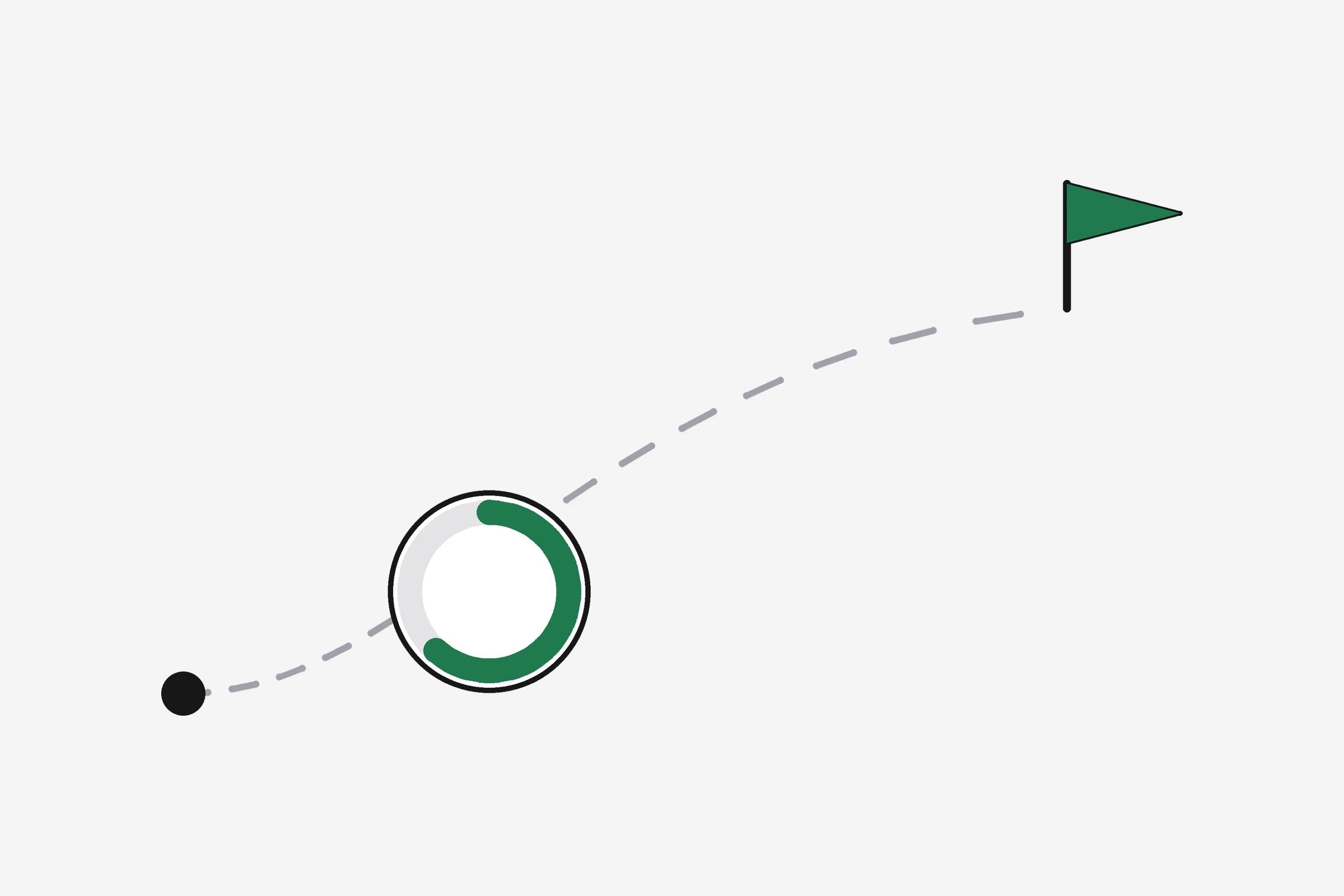
Goal pace is the amount your metric needs to move per week to reach your target by the date you picked. It is simple arithmetic: total change divided by weeks left. The value is not perfection. It is a ruler.
Example: you weigh 82 kg and want 78 kg in 12 weeks. The gap is 4 kg. The required pace is about 0.33 kg per week. If your smoothed trend shows 0.1 kg per week, you are behind pace even if yesterday’s scale dropped sharply. If it shows 0.35 kg per week, you are on track.
Locke and Latham argue that performance rises when goals are specific and difficult but attainable, and when people receive feedback. A tracker supplies feedback. Without a weekly rate, feedback is only “up a little” or “down a little,” which is too vague to change behaviour.
The SMART checklist helps you write the goal before you log anything. George Doran’s 1981 note in Management Review proposed that goals be Specific, Measurable, Assignable, Realistic and Time-related. For personal fitness, “Assignable” becomes “yours alone”: one person, one primary goal. A SMART strength goal might read: “Add 10 kg to my trap-bar deadlift top set by 1 March 2027, logging two heavy days per week.” A vague goal — “get stronger” — gives no pace and no feedback.
Which metrics work best in a fitness goal tracker?
Pick numbers you will log and that match the outcome you care about.
| Goal type | Metric | How to read pace | Caveat |
|---|---|---|---|
| Fat loss or gain | Body weight or waist | 7-day average vs weekly target | Scale noise is normal; read trends |
| Strength | Top set weight or reps at fixed effort | Best set each month, not daily | Compare like sessions |
| Endurance | Easy-run pace at fixed heart rate | Same route, same effort | Weather and hills skew times |
| Habit | Days trained per week | Count on-target days | Blanks are not zeros |
| Health marker | Resting heart rate, sleep hours | Weekly average | Illness and travel move the line |
The WHO 2020 guidelines in the British Journal of Sports Medicine describe activity targets in minutes and days, not arbitrary step counts. Step goals still work as habit goals when you already walk daily. For weight, the NHLBI focuses on percent loss over months, not daily scale victory.
For strength, the American College of Sports Medicine’s 2009 position stand on resistance-training progression suggests increasing load by about two to ten percent when you exceed your planned reps. That is a training rule, not a calendar goal — pair it with a dated target such as “five pull-ups by June” and log practice days. The progressive overload guide and one-rep max calculator help you set realistic loads.
How fast should you move on a weight goal?
Use official pace guidance, not influencer timelines. The National Heart, Lung, and Blood Institute (NHLBI), updated in 2025, recommends that adults with overweight or obesity aim to lose 5% to 10% of initial weight over about six months, working with a healthcare provider. It also states that losing 3% to 5% can improve blood glucose and blood pressure even before you hit the larger target.
Translate that into pace. If you weigh 90 kg, 5% is 4.5 kg. Spread over 26 weeks, that is roughly 0.17 kg per week. Ten percent over the same window is about 0.35 kg per week. Those bands are modest. They assume sustained habits, not a crash diet.
Faster loss is not always safer. Very low calorie diets can cost lean mass unless protein and resistance training are high and a clinician supervises the plan. This guide does not prescribe diets. If you have diabetes, heart disease, a history of eating disorders, or you are pregnant or postpartum, set weight targets with a qualified clinician, not from an app card alone.
For waist, NHLBI notes that waist above 35 inches (88 cm) for women or 40 inches (102 cm) for men raises cardiometabolic risk. Waist changes slowly; measure monthly at the same point, after exhaling, as NHLBI describes.

Why should you smooth noisy numbers?
Daily data lie politely. Weight rises after salty meals. Sleep hours crash after travel. Resting heart rate spikes with illness. If your goal card used only yesterday, you would change the plan every other day.
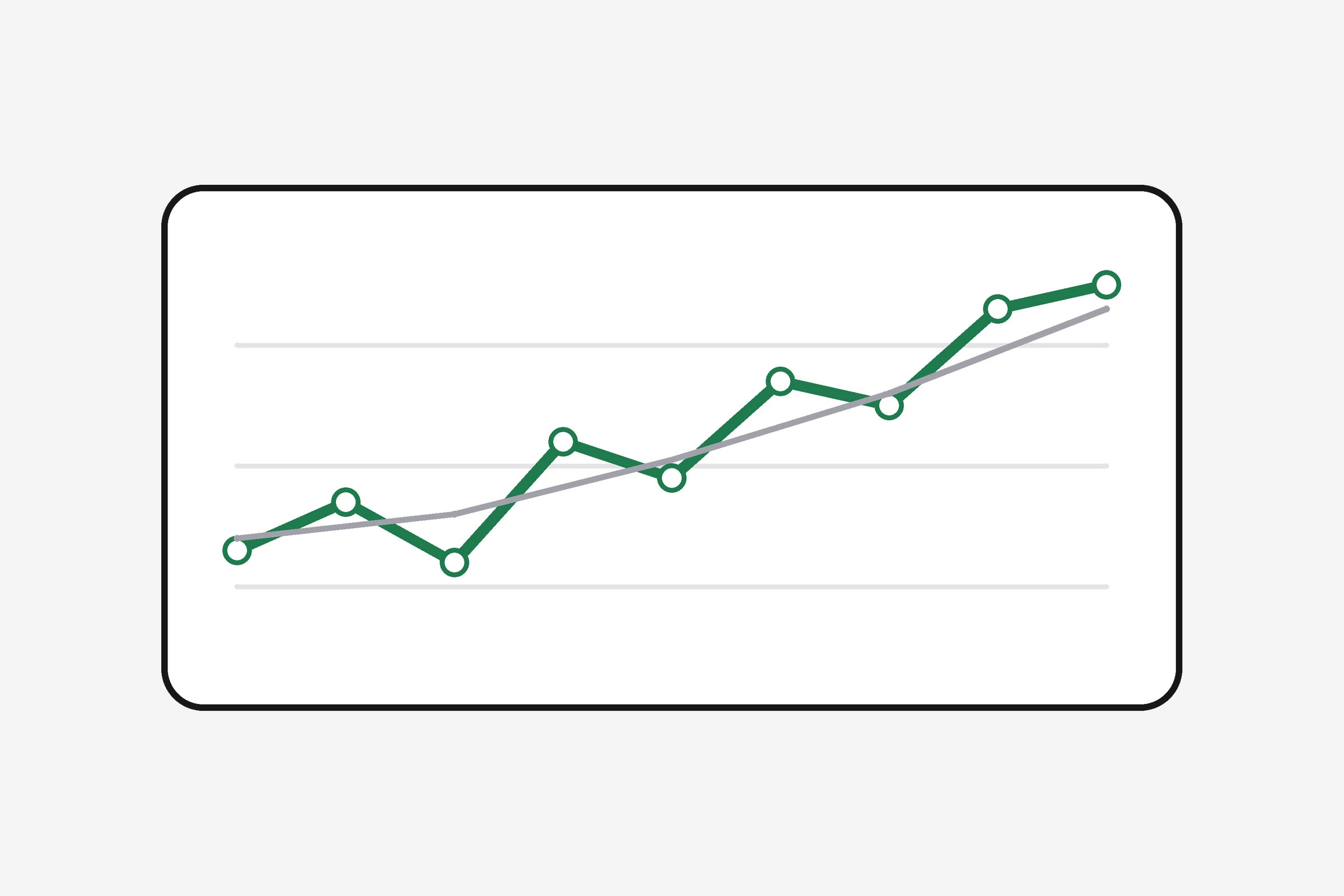
A 7-day average is the mean of the last seven logged days, recalculated daily. One odd day moves the line by one seventh. For weight, Orsama and colleagues analysed 4,657 readings from 80 adults (ages 25–62) in Obesity Facts (2014) and described a weekend-to-weekday rhythm at group level. The authors argued that short swings are normal and that long-term habits matter more. Your pattern may differ, but the lesson holds: read direction over two to four weeks.
Use averages for measures. Use counts for habits: “trained four days this week” does not need averaging. The workout trends guide explains windows and plateaus in more depth.
How does revns show pace on a goal card?
On goal tracking in revns, each goal links to a metric, a target and a date. The card shows:
- Current level as a 7-day average when the metric is noisy
- Required weekly change to finish on time
- Actual recent change over about the last two weeks
- Status: on track, behind, flat or achieved
- A projected date at the current rate
When a goal falls behind, the AI fitness coach week plan can add one concrete adjustment — extra steps, an on-plan meal anchor or a practice day — rather than rewriting your whole programme. You can accept or edit that day. The coach does not diagnose conditions and does not recommend drugs or supplements.
Goals can go up (pull-ups, distance) or down (weight, resting heart rate). You can pause a goal when life spikes; pausing is data, not failure. The product allows up to 12 active goals; most people should run fewer.
Privacy: goal details stay on your account. Team boards show derived scores only after both sides consent; they do not show goal text, meals or body measures.
What should you do this week?
If you are starting from zero
- Pick one primary metric and log it daily for seven days before you set a date.
- Open the TDEE calculator only if food matters to your goal; it estimates maintenance, not prescription.
- Set a date 12–16 weeks out for weight or strength, not two weeks.
- Write the goal in one SMART sentence and pin it on your lock screen.
If you already train regularly
- Compare last month’s average to this month’s on the same metric.
- If status is flat for three weeks with steady sleep, change one lever: a repeatable lunch with enough protein (beans and rice, tofu and noodles, eggs on toast, or fish and vegetables), an earlier bedtime, or swap a junk day for an easy walk day.
- Pair a body goal with a process goal: “four training days” supports “deadlift +20 kg.”
- Run the five-number weekly check-in so sleep and mood explain a stall.
If you use AI assistants
Connected assistants can read goal pace through MCP tools when you allow it. They can summarise status; they should not shame you for being behind. You choose what changes.
When should you change the goal instead of pushing harder?
Adjust the date or target, not your health, when:
- Injury, illness or a new medication shifted your trend for more than two weeks
- Sleep averaged under 6 hours while you chased an aggressive weight pace
- Mood or energy scores stayed low while you added volume — see the deload guide
- A clinician asked you to pause weight loss
Signs to stop and get care, not to tweak a goal:
- Chest pain, fainting, or breathlessness at light effort
- Blood in stool, black stools, or vomiting that will not stop
- Sudden unintended weight loss
- Persistent bingeing, purging, or fear of eating; contact a clinician or eating-disorder helpline
- Thoughts of self-harm — use local emergency or crisis lines at once
Related
- Is your training going up or down?
- Progressive overload in plain words
- Five numbers worth a weekly health check-in
- Goal tracking feature
- TDEE and maintenance calories
This is general training guidance, not medical advice. For weight loss, heart health, pregnancy, eating disorders or persistent symptoms, work with a qualified clinician before you change diet or training.
Sources
- Locke EA, Latham GP. Building a practically useful theory of goal setting and task motivation. Am Psychol 2002
- Doran GT. There's a S.M.A.R.T. way to write management's goals and objectives. Manag Rev 1981
- National Heart, Lung, and Blood Institute. Aim for a Healthy Weight (benefits and percent-loss targets)
- Orsama AL et al. Weight rhythms: weight increases during weekends and decreases during weekdays. Obes Facts 2014
- American College of Sports Medicine. Progression models in resistance training for healthy adults. Med Sci Sports Exerc 2009
Terms in this post
revns publishes training and nutrition guidance, not medical advice. See a clinician for symptoms, injury or a medical condition. Accurate as of November 14, 2026.