Walking and mental health: how many steps help mood
What a 2024 meta-analysis of 96,173 adults says about daily steps and low mood, why it shows a link and not a cure, and how to build a walk habit this week.
revns editorial · Published November 13, 2026 · 8 min read
A 2024 JAMA Network Open meta-analysis of 96,173 adults links more daily steps to fewer depressive symptoms. It shows an association, not a cure. Here is how to use it.
More daily steps go with fewer depressive symptoms, but the data show a link, not a cure. A 2024 meta-analysis in JAMA Network Open pooled 33 studies and 96,173 adults. Adults who walked about 5,000 steps a day had fewer symptoms than those under 5,000, and the gap grew at 7,000 to 7,500 steps. Walking is a cheap, low-risk habit that may help your mood. It does not replace care when low mood is persistent.
TL;DR
| Question | Short answer |
|---|---|
| Is there a step number tied to better mood? | Studies see lower symptoms from about 5,000 steps, with more at 7,000 to 7,500 |
| Do I need 10,000? | No. 10,000 or more looked similar to 7,500 to 9,999 |
| Does each step count? | Each extra 1,000 steps a day went with a 9% lower risk of depression in the pooled data |
| Is this proof walking works? | No. All studies were observational, and low mood can also cut walking |
| What to do this week | Raise your weekly average by 1,000 steps, log mood beside it, and keep one walk outside |
| When to get help | Low mood for two weeks or more, or any thought of self-harm |

How many steps help your mood?
The best recent summary is a systematic review and meta-analysis by Bizzozero-Peroni and colleagues, published in JAMA Network Open in December 2024. The team searched databases up to May 2024 and included 33 studies with 96,173 adults. Steps were counted by devices, not self-report. Of the studies, 27 were cross-sectional, which means they compared people at one point in time, and six followed people over time.
The results come in three layers.
Cross-sectional studies (a snapshot). Compared with adults who took fewer than 5,000 steps a day, the pooled differences in depressive symptoms were:
| Daily steps | Difference in depressive symptoms (standardised) | 95% confidence interval |
|---|---|---|
| 5,000 to 7,499 | −0.17 | −0.30 to −0.04 |
| 7,500 to 9,999 | −0.27 | −0.43 to −0.11 |
| 10,000 or more | −0.26 | −0.38 to −0.14 |
A negative number means fewer symptoms. The size of the gap grew from the 5,000 band to the 7,500 band, then stayed about the same at 10,000 or more. In four studies that counted people who met a depression threshold, those with 7,500 or more steps had lower odds of depression (odds ratio 0.58, 95% CI 0.39 to 0.86).
Prospective cohorts (people followed over time). In two cohorts, adults with 7,000 or more steps a day had a lower risk of later depression than those with fewer (relative risk 0.69, 95% CI 0.62 to 0.77). Across the longitudinal studies, each extra 1,000 steps a day went with a lower risk (relative risk 0.91, 95% CI 0.87 to 0.94).
So the plain reading is this: the first jump, from a very low count to about 5,000, matters, and more steps keep helping up to roughly 7,000 to 7,500. After that, the data do not show a clear extra gain.
What do these studies not show?
This is a mental health topic, so the limits matter as much as the numbers.
- Association is not cause. All 33 studies were observational. They cannot show that steps lowered symptoms.
- The arrow can point backwards. People with low mood often move less. The authors say reverse associations are possible.
- Quality was mixed. Most included studies were rated fair quality, only a minority good, and the authors found signs of publication bias in the cross-sectional comparison.
- Few long follow-ups. Only two prospective cohorts fed the 7,000-step result. The authors call for more prospective studies.
- Steps are a volume measure. They do not tell you pace, company, setting or why someone walked.
None of this means walking is pointless. It means you should read a step goal as a sensible habit, not as a dose of treatment.
Does exercise help mood in trials, not only in surveys?
A different kind of evidence looks at randomised trials, where one group is assigned to be active. Singh and colleagues published an umbrella review (a review of reviews) in the British Journal of Sports Medicine in 2023. It pooled 97 systematic reviews covering 1,039 trials and 128,119 participants. Physical activity gave medium-sized reductions in depression, anxiety and psychological distress compared with usual care. Median effect sizes were about −0.43 for depression, −0.42 for anxiety and −0.60 for distress.
Two cautions apply. First, the activity in those trials was often structured: supervised sessions, aerobic work, resistance training or mixed programmes, not only casual walking. Second, the authors report that higher-intensity activity tended to show larger gains, and shorter programmes tended to show larger effects than long ones. Walking at an easy pace is a fine start, but a brisk walk, a jog or a lifting session may add more for mood.
The WHO physical activity guidelines take the same line for adults: aim for 150 to 300 minutes of moderate activity a week, plus muscle-strengthening on two or more days, and list mental health among the benefits. Steps are one way to count that work. Our guide on how many steps a day you need covers the heart and longevity side.
Why might walking help mood?
Researchers suggest several routes, and none is settled for any one person:
- Movement itself. Activity changes arousal, stress hormones and sleep pressure.
- Daylight and outdoor time. A walk outside adds light, which helps body-clock timing for many people.
- Breaks from rumination. A change of scene can interrupt looping thoughts.
- Company. Walking with a friend adds contact, which helps mood for many people.
- A small win. Finishing a walk on a flat day is proof that you can still act.
Treat these as reasons to try, not as guarantees. Your own log will tell you more than a list.
How to build a walking habit for mood, this week
Start from your own baseline, not from 10,000.
If you walk under 4,000 steps a day. Look at your average over the last seven days. Add one walk of 10 to 15 minutes, most days. That is about 1,000 to 1,800 steps. Keep it for two weeks before you raise it again.
If you are near 5,000 to 7,000. Aim to move the weekly average up by about 1,000 steps. Walk to one errand, take a call on foot, or add a loop after lunch.
If you already pass 8,000 or 10,000. More steps may not add much for mood in these data. Spend the effort on sleep, strength work and rest instead. Our rest days guide explains how to balance load.
Ideas that fit any routine:
- Walk at the same time each day so the habit has a cue.
- Do at least one walk a week outdoors in daylight.
- Walk with someone, or send a friend your route.
- On a heavy day, do five minutes. A short walk still counts as keeping the habit.
- Wear shoes you like. Friction kills habits.
How do you tell whether walking helps you?
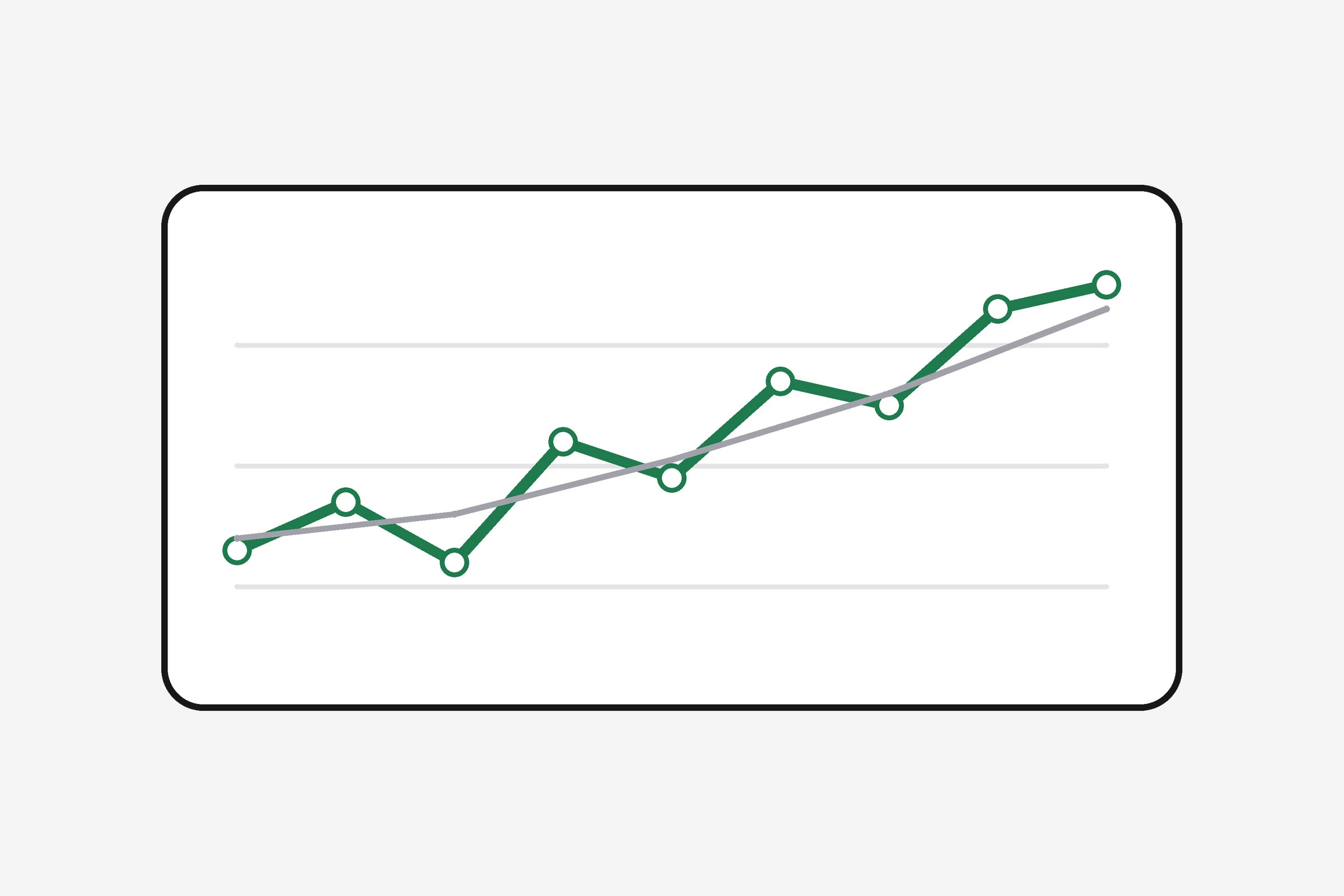
Your own pattern is the best test. Log three things on the same row each day:
| Field | How |
|---|---|
| Steps | From your phone or watch, or a rough count of minutes walked |
| Mood | 1 to 5, same anchors each day |
| Sleep | Hours, so you can separate a bad night from a bad week |
After two weeks, look at the average mood on days with a walk of 20 minutes or more compared with days without. If the gap is small, that is useful information too. Our guide to tracking mood and energy next to training shows the scale. You can log the same fields in revns, and an AI assistant connected through MCP can read your log when you ask. See what an AI coach can do. Device sync with Apple Health, Strava or Garmin is on the roadmap and is not live today, so enter steps by hand or import them.
Be honest about noise. One low day after a hard workout, a poor night or a work crisis does not say much. If your mood stays low across weeks even as you walk, that is a reason to talk to someone, not a reason to walk more.
What if low mood makes walking feel impossible?
This is common. When energy and interest drop, even a short walk can feel like a lot. Some practical steps:
- Shrink the target. Put on shoes and walk to the end of the street. Stopping there is allowed.
- Lower the bar on pace. An easy pace counts.
- Borrow a person. Ask a friend to meet you for a walk, or join a group walk.
- Do not turn it into a test. A missed day is data, not failure.
- Tell someone. If you cannot start for days, that matters more than the step count.
Walking can be one part of looking after yourself. It sits beside sleep, food, contact with other people and, where needed, professional support. Our guide on stress, burnout and when to deload covers how to cut training load when life is already heavy.
When should you see a professional?
Get help from a doctor, nurse, therapist or other qualified clinician if:
- Low mood, anxiety, or loss of interest lasts two weeks or more.
- Sleep, appetite, work or relationships have changed in a way that worries you or others.
- You feel hopeless, or you are using alcohol or other substances to cope.
- Walking and other habits have not helped over several weeks.
If you have thoughts of harming yourself, or you feel unsafe, get help now. Call your local emergency number. In the US you can call or text 988, and in the UK and Ireland you can call Samaritans on 116 123. If you are elsewhere, search for your country's crisis line or ask a doctor. Do not wait for a step goal.
revns is a tracking tool. It does not diagnose, treat or monitor any mental health condition.
Related
- How many steps a day do you actually need
- How to track mood and energy next to training
- Stress, burnout and when to deload
- How much sleep do you need
This is general training guidance, not medical advice.
Sources
- Bizzozero-Peroni B et al. Daily Step Count and Depression in Adults: A Systematic Review and Meta-Analysis. JAMA Netw Open 2024;7(12):e2451208
- Singh B et al. Effectiveness of physical activity interventions for improving depression, anxiety and distress: an overarching systematic review of systematic reviews. Br J Sports Med 2023
- World Health Organization. WHO guidelines on physical activity and sedentary behaviour. 2020
Terms in this post
revns publishes training and nutrition guidance, not medical advice. See a clinician for symptoms, injury or a medical condition. Accurate as of November 13, 2026.