Fertility awareness birth control: more people use it than old surveys counted, 2026 study finds
Guttmacher and Utah: about 7–8% of US contraceptive users aged 18–44 used FABMs in 2022–23; 14.5% in three states in 2026. What tracking means for training.
revns editorial · Published November 24, 2026 · 7 min read
Polis et al., Lancet Regional Health–Americas (23 Nov 2026): FABM prevalence 6.6–8.3% nationally 2022–23 (~2.2M users); MWSRH 7.5%→14.5% by 2026. Cycle logs for training are not contraception.
More US contraceptive users rely on fertility awareness-based methods (FABMs) than older national surveys suggested, according to a 23 November 2026 paper in The Lancet Regional Health – Americas led by Guttmacher Institute and University of Utah researchers. Across two national datasets in 2022–2023, roughly 7–8% of contraceptive users aged 18–44 used an FABM — about 2.2 million people in that window. In Idaho, Nevada and Utah, prevalence hit 14.5% in 2026, up from 7.5% in 2022. If you log your cycle beside training, the takeaway is narrow: period tracking for energy is not birth control, and apps without taught rules are not reliable contraception.
TL;DR
| Source | Who | FABM prevalence | Notes |
|---|---|---|---|
| NSFG 2022–23 | US national | 6.6% (95% CI 5.4–8.0; 167/2534) | Non-pregnant contraceptive users 18–44 |
| PCCAMP 2022 | US national | 8.3% (6.9–10.0; 185/1998) | Same age and status rules |
| SoW 2022–23 | AZ, NJ, WI | 6.9% (5.9–8.0) | Up from 5.0% in 2019–20 (p=0.006) |
| MWSRH 2022 | ID, NV, UT | 7.5% (5.7–9.9) | Three-state Mountain West sample |
| MWSRH 2026 | ID, NV, UT | 14.5% (11.6–18.0) | Nearly doubled vs 2022 (p=0.0002) |
| KFF 2026 survey | US women 18–49 | 18% reported FABM past year | Different question and age band; includes combination use |
What is a fertility awareness-based method?
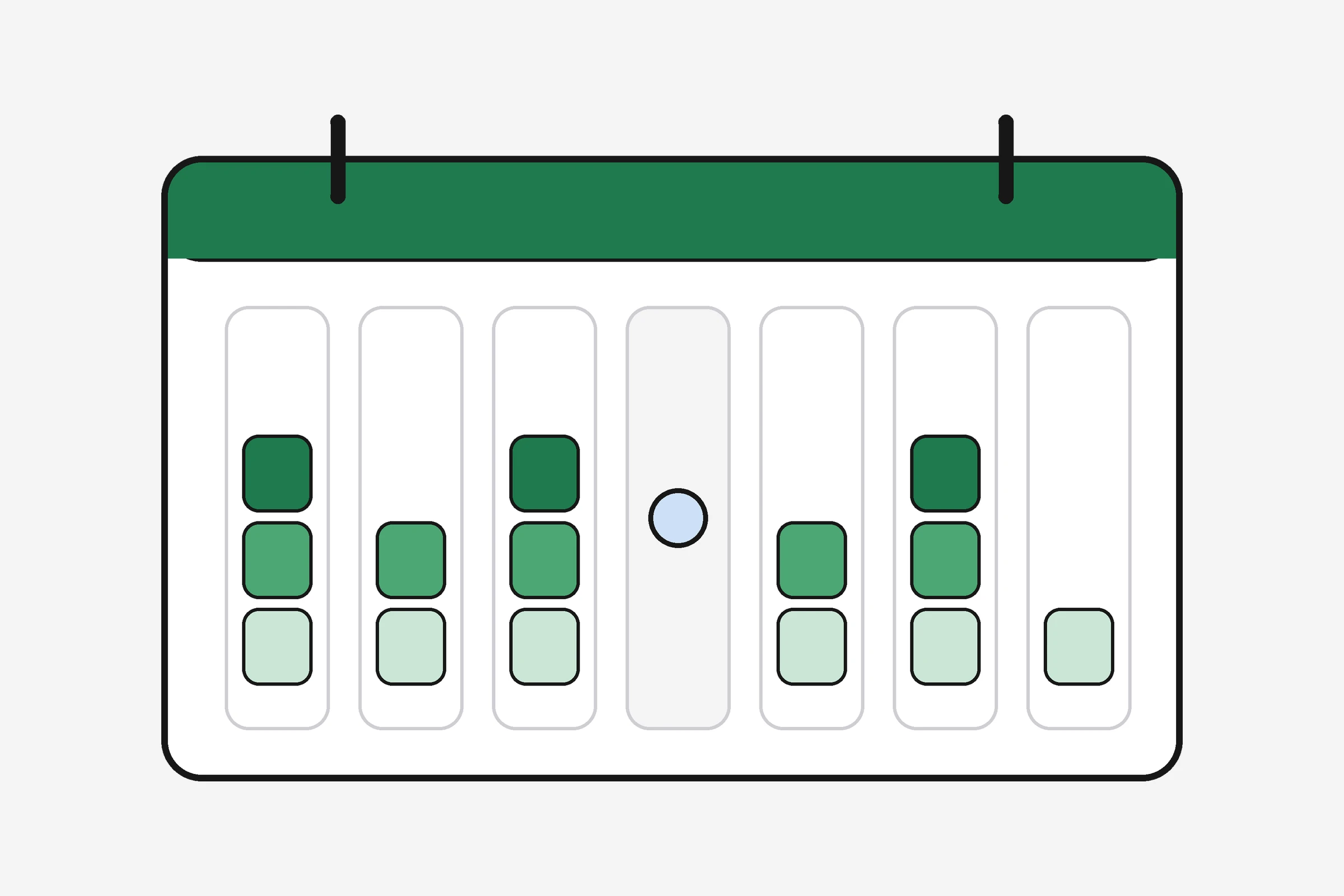
A fertility awareness-based method (FABM) tracks fertile days using cycle signs — bleeding, cervical mucus, waking body temperature, urine hormone tests or similar — then avoids pregnancy by abstaining from vaginal intercourse on fertile days or using another method such as condoms on those days.
The Guttmacher Institute summary of the Lancet paper notes more than a dozen distinct FABMs, with different rules and effectiveness. That matters because "fertility awareness" is a class, not one technique.
NHS natural family planning guidance (reviewed 9 February 2024) separates fertility awareness methods from withdrawal, which it does not recommend as contraception. NHS teaching expects daily records of temperature, discharge and cycle length, plus condoms or no sex on fertile days.
What did the 2026 Lancet regional study find?
Polis et al. analysed four US datasets: two national surveys (National Survey of Family Growth [NSFG] 2022–23 and Person-Centered Contraceptive Access Metrics Project [PCCAMP] 2022) and two multistate, multi-wave surveys (Surveys of Women [SoW] in Arizona, New Jersey and Wisconsin; Mountain West Sexual and Reproductive Health Survey [MWSRH] in Idaho, Nevada and Utah through 2026).
Among non-pregnant contraceptive users aged 18–44, they classified FABM users whether FABM was used alone or with other methods — a deliberate change from older surveys that often coded only the single most effective method someone reported.
2022–2023 national snapshots
- NSFG: 6.6% FABM (167 of 2534)
- PCCAMP: 8.3% (185 of 1998)
- SoW: 6.9% (288 of 4077)
Guttmacher's news release on 23 November 2026 states that convergence near 7–8% implies more than 2.2 million contraceptive users in that period — higher than earlier NSFG-era estimates near 3–4% in 2013–2017, though authors caution those waves are not directly comparable because of survey design changes.
Trends in multistate data
- SoW: 5.0% (2019–20) → 6.9% (2022–23), p = 0.006
- MWSRH: 7.5% (2022) → 14.5% (2026), p = 0.0002
The team reports FABM users were more likely to be married in some surveys and more educated in others; age patterns varied by dataset. Race/ethnicity associations appeared only in MWSRH, where Hispanic FABM users numbered 0 of 54 in a small sample — the authors flag limited cell sizes.
Interpretation (authors): clinicians should offer evidence-based counselling on FABMs; national surveys should measure FABMs with combination use; policy should support quality instruction and tools alongside other contraception options.
Why were earlier estimates lower?
Medical Xpress and University of Utah Health coverage quote co-author Rebecca Simmons, PhD: traditional surveys often assigned each person one "primary" method — usually the most effective they named.
If someone used condoms only during a fertile window but charted mucus or temperature daily, older coding might record only condoms, dropping the FABM. The 2026 paper counts FABM whether or not another method appears on fertile days — closer to how many users describe real life.
That fixes a measurement problem. It does not prove every counted user followed rules perfectly, or that prevalence will match 14.5% nationally in 2026. No national wave after 2022–23 appears in the paper; Guttmacher notes US-wide 2026 trends are unknown until later national data (Utah press notes national updates expected around 2027).
How does this compare with the 2026 KFF women's health survey?
Searchers also see 18% FABM use in the 2026 KFF Women's Health Survey (fielded March–April 2026), up from 13% in 2024 among contraceptive users 18–49 who used any method in the past year.
That number is not the same statistic as the Lancet paper's current FABM user classification among 18–44 contraceptive users in NSFG/PCCAMP. KFF allows multiple methods in one year; 88% of FABM reporters in KFF also used another method in the same year. Treat the surveys as complementary signals of rising visibility, not interchangeable percentages.
Is fertility awareness method effective birth control?
Effectiveness is method-specific and user-dependent.
| Guidance source | Perfect / correct use | Typical use (one-year failure) |
|---|---|---|
| NHS | 91–99% effective (range across fertility awareness methods) | 76% effective; 24 in 100 pregnant in a year |
| CDC contraception effectiveness | Varies by FABM subtype | ~24% typical-use failure for fertility awareness as a class |
Calendar apps that predict ovulation from previous cycle lengths alone perform worse than taught symptothermal methods. A 2023 scoping review in Cureus found limited independent evidence for marketed fertility apps used as contraception — algorithms are often proprietary.
The Lancet study is about how common FABMs are, not a new effectiveness trial. Choosing contraception still requires shared decision-making with a clinician, especially if pregnancy would be high risk medically.
How does cycle tracking fit with training?
Many runners and lifters already log cycle day, bleeding and energy next to sleep and load. Our guide How to track your period and what the data can tell you explains logging for patterns, not for pregnancy prevention.
Useful training links from the same data include:
- Energy and sleep swings across the cycle — see Training around your menstrual cycle for what evidence supports.
- Heavy bleeding and iron — Heavy periods and exercise and Iron, energy and training for women.
- Perimenopause drift — Perimenopause vs menopause when cycle length changes in your 40s.
In revns, you can log cycle day, mood, sleep and sessions in one day view or custom metrics beside workouts. That helps you spot trends for planning deloads or scheduling hard sessions. It does not replace waking temperature rules, mucus charting or instructor follow-up for FABM contraception, and revns is not a certified fertility awareness instructor.
Apple Health on the iPhone app (read-only sync for steps, sleep, heart rate, HRV, weight and workouts) does not supply clinical contraception counselling. Health Connect, Whoop, Oura and Fitbit integrations remain on the roadmap per the integrations page — do not assume cycle contraception features from those devices without reading their own medical claims.
What to do this week
- Separate goals. Write one sentence: "I track my cycle for training" or "I use an FABM for contraception." If both, list who teaches your contraception rules (clinic, Fertility UK practitioner, or US equivalent).
- If contraception is the question, book a contraception visit before changing methods. NHS advises 2–3 cycles of learning with backup contraception or no sex while you learn.
- If training is the question, log cycle day one, bleeding heaviness, sleep and session RPE for three cycles before big program changes — same rhythm as recovery tracking.
- Do not trust a generic "fertile window" banner in a fitness app. Ask whether the app is CE-marked or FDA-cleared for contraception; most are not.
- Flag red signs to a clinician: cycles under 21 or over 35 days for three months, three missed periods when not pregnant, bleeding between periods, or pain that limits daily life.
When to see a professional
See a GP, gynaecologist or sexual health clinic for contraception choice, FABM teaching referrals, or pregnancy concerns.
Urgent signs include fainting with bleeding, soaking through protection hourly, severe one-sided pelvic pain, or pregnancy symptoms when you relied on FABM alone.
Mental health: if cycle or contraception stress feels overwhelming, talk to a clinician or counsellor. In the US, call or text 988; in the UK, use NHS 111 or your GP for urgent advice.
This is general training and health education, not medical advice. Contraception decisions belong with you and a qualified clinician.
Related
- How to track your period and what the data can tell you
- Training around your menstrual cycle: what the evidence supports
- Heavy periods and exercise: can you train, and when to see a doctor
- Iron, energy and training for women: what to know and when to test
Sources
- Polis C, Chiu DW, Hussain R, et al. Prevalence and trends in fertility awareness-based method use among contraceptive users in the United States (2019–2026). The Lancet Regional Health – Americas. Published 23 November 2026.
- Guttmacher Institute news release: More than 2.2 million women relied on FABMs in 2022–2023. 23 November 2026.
- NHS. Natural family planning. Page last reviewed 9 February 2024.
- Frederiksen B, Ranji U, Salganicoff A, et al. Women's Experiences with Contraception: Use, Coverage, and Preferences. KFF Women's Health Survey. November 2026.
- Simmons R. University of Utah Health newsroom: FABM use doubled in Utah four-year window. November 2026.
Terms in this post
revns publishes training and nutrition guidance, not medical advice. See a clinician for symptoms, injury or a medical condition. Accurate as of November 24, 2026.