Couples workout tracker: how to train together and keep your data private
Do couple workouts stick? What dyadic trials show, how to share scores not meals, and how revns teams keep a partner's numbers separate until you both agree.
revns editorial · Published November 13, 2026 · Updated November 14, 2026 · 8 min read
Dyadic trials show a small average activity gain. How to run a fair couple pact, what to share on a tracker, and how revns teams need consent from both people.
A couples workout tracker works when you share effort, not your whole life. Reviews of partner-included programmes find a small average boost to physical activity compared with individual-only plans, and romantic partners can make schedules stick because you already coordinate meals, sleep and weekends. The failure mode is different too: comparison, guilt and oversharing can turn support into surveillance. This guide explains what dyadic research supports, how to set a fair couple pact, and how couples and team challenges in revns share scores only after both people agree.
TL;DR
| Question | Short answer |
|---|---|
| Do couple plans help on average? | A 2018 meta-analysis of 59 dyadic trials: small gain vs individual programmes (g = 0.203, 95% CI 0.123 to 0.282). |
| Best shared metric | Days trained, brisk walking minutes, steps or one lift total — not weight or food. |
| Best length | 7 to 14 days, then a new metric. |
| Privacy rule | Scores and streaks you both choose; keep entries, meals and body measures private. |
| House rule | Either person can pause when sick, injured or overloaded — no guilt texts. |
| In revns | Create a couple team; invite by email or code; nothing shares until the other accepts. |
Does training with your partner improve adherence?
A little on average, with wide variation. Researchers call two-person setups dyadic interventions. They are not all romantic couples — some use friends — but the pattern matters for any partner who shares a home.
Carr, Prestwich and colleagues synthesized 59 studies (72 independent tests) in a systematic review and meta-analysis in Health Psychology Review (2019). Compared with control conditions that targeted individuals with equivalent programmes, dyadic physical activity interventions raised activity by a small pooled effect g = 0.203 (95% CI 0.123 to 0.282). Heterogeneity was high: some trials barely moved the needle while others did well. Shared target-oriented goals — where both partners hold the same activity goal for the main person the programme targets — and peer or friend dyads showed larger effects in several analyses than vague "support your partner" messages.
What this cannot prove: most trials are short, many rely on self-report, and "partner included" is not the same as "both love the same gym hour." The honest read is directionally positive, not a promise that marrying your workouts fixes motivation.
A spouse-focused systematic review by Richards and colleagues in the International Journal of Health Promotion and Education (2018) narrows the lens to marital dyads. It included six randomized trials with 783 couples (mean ages 27 to 71). Each trial had both partners directly involved, couples were randomized, and physical activity was a primary outcome. All six reported more activity at follow-up, but gains did not always beat comparison groups and sometimes faded. The authors still argue that addressing both partners' needs is worth testing when one person is the main target.
For object-measured adherence, Berli and colleagues ran a 28-day randomized trial in overweight adults and their partners, reported in Social Science & Medicine (2016). N = 121 participants and partners received either information only or information plus action-control text messages on weekdays for two weeks. Moderate activity adherence — at least 30 minutes per day in bouts of 10 minutes or more, measured by accelerometer — was 21.0% of days in the control group vs 32.7% in the intervention group, roughly six vs 9 days out of 28. Action control and received partner support partly explained adherence in a follow-up mediation paper. That is a modest bump, not a full lifestyle rewrite, but it shows partner-aware nudges can change day-level behaviour.
Broader group evidence still applies when your couple walks together. Kassavou, Turner and French pooled 19 studies with 4,572 adults and found group walking programmes raised activity by a medium effect (d = 0.52). Hanson and Jones reviewed 42 walking groups with 1,843 adults and reported good adherence and no notable adverse effects in any study. A Sunday walk together borrows that social structure even if your weekday lifts stay solo.
What should a couples workout tracker measure?
Pick one number both of you can hit without copying each other's sport, and keep anything body-related private unless you deliberately discuss it away from the scoreboard.
Good shared metrics
- Days trained — any deliberate session counts: run, lift, class, long walk.
- Brisk walking minutes — useful when schedules differ; use the heart rate zone calculator to agree what "brisk" means.
- Steps — fair when one person works from home and the other commutes; cap daily winners so travel does not dominate.
- One lift total — monthly air squats, push-ups or a hold (plank seconds) scaled to each person's level.
- Day score in revns — a single derived number from sleep, training, recovery and fuel you already log; both people opt in to what pillars count.
Poor shared metrics
- Weight, body fat or waist — home scales swing with water and salt; public comparison can harm mood and eating behaviour.
- Food logs — couples already negotiate meals; a tracker should not become a surveillance tool.
- Sleep or mood detail — useful to discuss in person; rarely healthy on a leaderboard.
The World Health Organization recommends adults do 150 to 300 minutes of moderate aerobic activity per week, or 75 to 150 minutes vigorous, plus strength work two or more days weekly. A couple challenge can name that backdrop without turning it into a punishment: "three shared walks and two strength days each" beats "match my Strava volume."
How do you set up a couple pact that lasts?
Start smaller than your enthusiasm. Four rules cover most successful couple setups.
1. Consent before competition
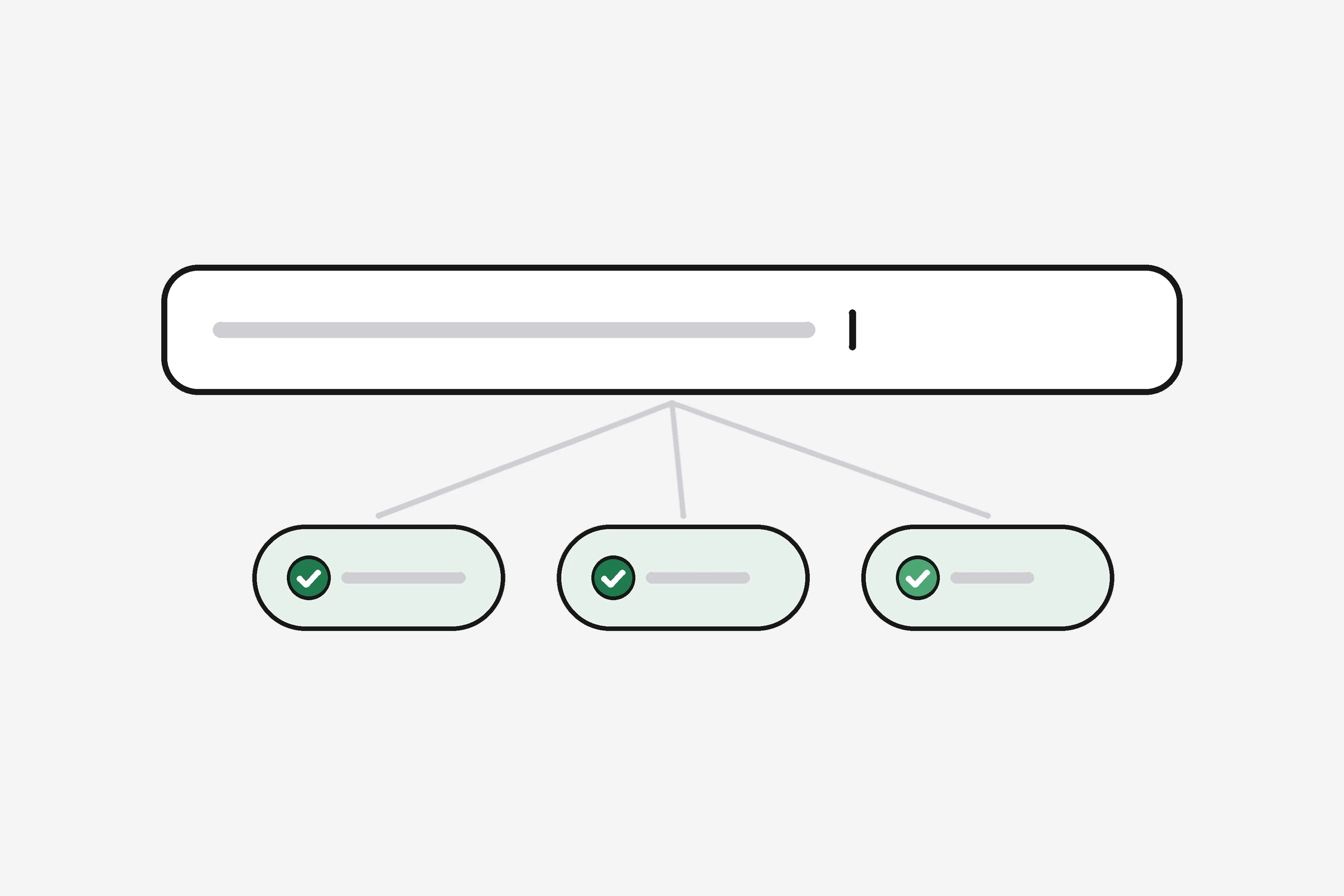
Agree in one sentence what each person shares: "We see day score and streak, not meals." In revns, create a couple team, invite by verified email or a 30-day join code, and nothing crosses until the other accepts and picks their share level. Either person can leave at any time; sharing stops immediately.
That matches how the product is built on the teams feature: invites tie to an email address; forwarding a link does not grant access. Members see derived numbers — scores, streaks, challenge totals — not raw entries.
2. Anchor sessions, flex the rest
Shared calendar friction kills couple plans. Pick one or two anchors: Saturday long walk, Tuesday lift together, or a post-dinner 20-minute walk on three weekdays. Everything else is solo. If one person travels, the pact counts their days trained at home — not a guilt gap.
3. Short challenges, kind scoreboards
Run 7 to 14 days, then change the metric. Monthly air-squat totals are fine; monthly weigh-ins are not. Reward consistency ("most training days") over single heroic sessions. Build rest into the rules using the guide on how many rest days you need.
4. Pause beats shame
Write a pause clause: illness, injury, work crunch or poor sleep means rest counts as following the plan. No catch-up volume. If motivation dips, shrink the challenge to walking only until mood and energy feel steadier — the mood and energy tracking guide shows what to watch.
What can go wrong with couple workouts?
Romantic partners carry emotional weight a gym buddy does not. Watch for:
- Training through pain so you do not disappoint them.
- Hiding or editing logs to keep up.
- Body comments dressed up as motivation.
- Guilt texts when someone chooses rest after a hard week.
- Different recovery speeds turned into a hierarchy.
Long-term dyadic planning trials remind us that more support for one partner does not always raise the other person's minutes. Keller and colleagues ran a 52-week randomized trial in Psychology of Sport and Exercise (2020) with 338 couples and found complex patterns: target persons' moderate-to-vigorous activity did not always beat individual planning, while partners in the dyadic-planning arm sometimes gained fitness when they gave support. Translation: do not assume the less active partner must always chase the faster one. Alternate who sets the weekly goal.
If comparison stirs shame, drop the public metric and keep a private log. A training buddy text check-in without a leaderboard may work better for a month.
What should you do this week?
If you are starting from zero
- Pick one metric for 10 days: e.g. days trained or 20-minute walks.
- Create a revns couple team; agree on score and streak only.
- Schedule one shared session on a day you both protect.
- Send a 30-second check-in each Sunday: trained yes or no, one note on effort.
- End with pizza or tea — not a weigh-in.
If you already train separately
- Keep individual programmes; add one shared recovery walk after the harder person's long day.
- Run a steps challenge capped at 12,000 per day so commute luck does not decide the winner.
- Read each other's trends only if you both want pillar detail; otherwise stay on streak.
If one person is returning from injury
Do not sync heavy metrics. Count physio homework days or pain-free walking minutes only. The injured partner leads the pause button.
When should you see a professional?
See a GP, physiotherapist or sports clinician for chest pain with effort, fainting, breathlessness out of proportion to work, joint swelling after sessions, or pain that worsens for more than two weeks despite rest.
See a mental health professional if low mood, anxiety or loss of interest lasts more than two weeks, or you have thoughts of self-harm. In the US, call or text 988. In the UK and Ireland, Samaritans are on 116 123. A couple challenge is not crisis care.
See a clinician or registered dietitian if eating patterns tighten around a shared tracker, or if either person loses period regularity, experiences rapid unintended weight change, or uses exercise to "earn" food.
Related
- Workout accountability partner
- Workout challenge app with friends
- Couples and team challenges
- Walking and mental health
This is general training guidance, not medical advice.
Sources
- Carr RM, Prestwich A, et al. Dyadic interventions to promote physical activity and reduce sedentary behaviour: systematic review and meta-analysis. Health Psychol Rev 2019;13(1):91-109
- Richards EA, Franks MM, et al. Let's move: a systematic review of spouse-involved interventions to promote physical activity. Int J Health Promot Educ 2018;56(1):51-67
- Berli C, et al. Action control in dyads: a randomized controlled trial to promote physical activity in everyday life. Soc Sci Med 2016;163:141-149
- Berli C, et al. Mediators of physical activity adherence: results from an action control intervention in couples. Ann Behav Med 2018;52(1):65-76
- Kassavou A, Turner A, French DP. Do interventions to promote walking in groups increase physical activity? A meta-analysis. Int J Behav Nutr Phys Act 2013;10:18
- Hanson S, Jones A. Is there evidence that walking groups have health benefits? A systematic review and meta-analysis. Br J Sports Med 2015;49(11):710-715
- Keller J, et al. Long-term effects of a dyadic planning intervention with couples motivated to increase physical activity. Psychol Sport Exerc 2020;49:101710
- WHO. WHO guidelines on physical activity and sedentary behaviour. 2020
Terms in this post
revns publishes training and nutrition guidance, not medical advice. See a clinician for symptoms, injury or a medical condition. Accurate as of November 14, 2026.