Body recomposition and the same weight on the scale: how to tell it is working
Body recomposition means losing fat and gaining muscle at once. The scale can stay flat while your shape changes. How to track it, eat and train with evidence.
revns editorial · Published November 21, 2026 · 9 min read
Body recomposition trades fat for muscle so weight may not fall. High protein, strength training and a small deficit help beginners and higher-fat adults most; track waist, photos and lifts.
Body recomposition means you lose fat and gain muscle (or keep muscle while fat falls), so the scale can stay on the same number while your shape, strength and waist change. It is not a miracle switch: it works best for people new to lifting, people returning after a break, and many adults carrying extra body fat. It is slow, needs strength training, enough protein and honest tracking beyond body weight alone.
TL;DR
| Question | Plain answer |
|---|---|
| What is body recomposition? | Fat down, lean mass up or stable; weight may not move much |
| Who responds best? | Lifting beginners, returners, many people with higher body fat |
| Food | Protein about 1.6–2.2 g/kg/day; energy at maintenance or a small deficit |
| Training | Strength 2–4 days/week with progressive overload |
| Why the scale stalls | Muscle plus water can replace fat weight for a while |
| Better trackers | Waist, photos, lift numbers, how clothes fit |
| Not the same as | Crash dieting or only doing cardio |
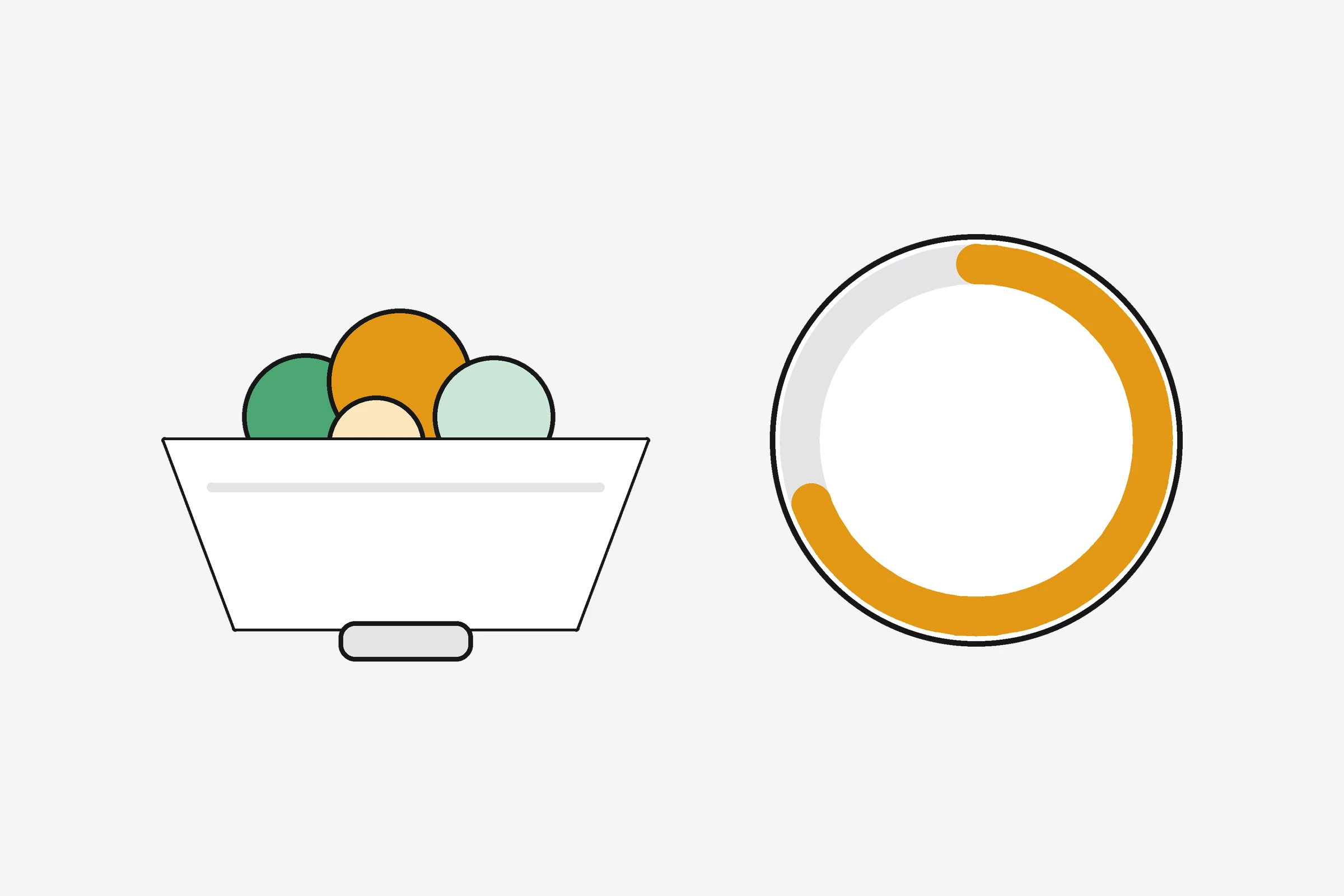
What is body recomposition?
Body recomposition is a change in body composition: less fat and more lean mass, especially muscle, at similar total weight. The term describes an outcome, not one branded programme. You get there with resistance training, protein intake high enough to support muscle, and energy intake matched to your goal — often maintenance or a modest calorie deficit.
Fat tissue stores more energy per kilogram than lean tissue, but muscle is denser. Replace a volume of fat with the same volume of muscle and your weight can sit in the same band on the scale while your shoulders, legs and waist look different. That is why search queries like body recomposition same weight are common: the bathroom scale is a poor tool for this goal.
Is body recomposition the same as weight loss?
No. Weight loss only means total mass fell. Without lifting and protein, a large share of loss can be lean mass, especially in older adults on aggressive diets. Recomposition tries to keep or build muscle while fat falls, so health and performance improve even when weight changes little.
| Goal | Scale | Muscle | Typical approach |
|---|---|---|---|
| Weight loss only | Falls fast | Often falls too | Large deficit, little lifting |
| Body recomposition | May stay flat | Rises or holds | Lifting, high protein, small deficit or maintenance |
| Muscle gain focus | Rises | Rises | Surplus or maintenance, heavy lifting |
For most readers who train, fat loss still needs you to eat below maintenance at some point. Muscle gain still needs stimulus and protein. Recomposition asks both at once, which is why it is slower than doing one goal at a time.
Can you build muscle and lose fat at the same time?
Often yes, but not for everyone, and never at full speed for both. Reviews and trials point to these patterns:
- Untrained or returning lifters frequently add strength and lean mass while fat falls, even in a deficit, if protein and training are solid.
- People with higher body fat have more stored energy to fuel muscle repair while eating less.
- Lean, experienced lifters usually maintain muscle in a deficit better than they add it; a slight surplus or maintenance block builds muscle faster.
A 2016 randomised trial in overweight young men by Longland and colleagues compared 2.4 g versus 1.2 g protein per kg body weight per day during a 40% energy deficit with intense exercise. Both groups lost fat; the higher-protein group gained more lean mass on average. That study used supervised training and tightly controlled food — not a normal gym life — but it shows muscle can rise while energy intake is restricted when protein and work are high.
A 2022 meta-analysis by Murphy and Koehler found that energy deficiency impaired gains in lean mass from resistance training, with deficits around 500 kcal/day linked to stalled muscle growth. Strength could still improve. Practical takeaway: if recomposition is the goal, keep any deficit small rather than aggressive.
Barakat and colleagues reviewed whether trained individuals can recompose in a 2020 review in the Strength & Conditioning Journal. They found several trials in trained lifters with fat down and lean mass up together, and stressed progressive resistance training, high protein and recovery over gimmicks. Progress still tends to be slower than in beginners.
Why does the scale stay the same during recomposition?
Several forces stack on the scale reading:
- Fat lost, muscle gained — net weight near zero for a while.
- Glycogen and water — harder training pulls more carbohydrate and water into muscle; that can add 1–2 kg without much extra fat.
- Sodium, hormones, sleep — short-term water shifts hide fat loss for days.
- You are at maintenance — shape changes from training alone, but fat loss is minimal until intake drops slightly.
So body recomposition not losing weight on the scale is not always failure. Ask whether waist, strength and photos moved over four weeks. If only the scale is flat, keep the plan one more month before you cut calories further.
How much should you eat for body recomposition?
Start with maintenance or a small deficit of about 200–300 kcal/day, not a crash diet. Pair that with protein at or above about 1.6 g per kg body weight per day. Morton and colleagues' 2018 meta-analysis of 49 trials in healthy adults found little extra muscle gain beyond roughly 1.6 g/kg/day from supplements, but higher intakes are common in recomposition protocols and help when energy is restricted.
| You | Energy | Protein (starting point) | Notes |
|---|---|---|---|
| New to lifting, some fat to lose | Small deficit | ~1.6–2.0 g/kg/day | Scale may stay flat; track waist |
| Returning after a break | Maintenance or small deficit | ~1.6–2.0 g/kg/day | Strength rebounds first |
| Lean, training for years | Maintenance or slight surplus | ~1.6–2.2 g/kg/day | Pure recomp is slow; consider phases |
| Plant-based diets | Same maths | Beans, lentils, tofu, tempeh, eggs if you eat them, dairy if you eat it | Spread protein across meals |
Use the TDEE calculator for maintenance, then the protein calculator for a daily target. Log meals in a simple way with meal tracking if you underestimate portions — underestimating intake is the main reason recomposition stalls.
Does body recomposition work for women?
Yes. Muscle responds to training in women the same way in principle: progressive resistance, protein and enough energy to recover. Morton and colleagues' 2018 meta-analysis pooled men and women; sex did not erase the benefit of protein plus lifting. Women sometimes see slower absolute muscle gain than men starting from the same training age, but recomposition at a stable scale is common when beginners lift and eat enough protein.
Hormonal cycles can shift water weight by a kilogram or two across a month, so compare photos and lifts across full cycles, not day to day. If you are in perimenopause or menopause, bone and muscle still benefit from lifting; see bone health for women for the wider picture. None of this replaces personal medical advice for bone or hormone conditions.
How should you train for body recomposition?
Resistance training is non-negotiable. Aim for at least two to four sessions per week hitting major movement patterns: squat or leg press, hinge, push, pull, and carries or core. Progress with progressive overload: a little more load, rep or set when the last session felt manageable.
Cardio helps heart health and can add a small energy deficit, but long sessions without lifting make muscle loss more likely in a cut. Many people do two or three lifts plus easy walking or zone 2 on other days. See zone 2 training if you want a pace for easy cardio.
Sleep and rest days are part of the formula. Murphy and Koehler's meta-analysis linked energy deficiency to worse lean-mass outcomes; stacking huge deficits, poor sleep and daily hard lifts works against recomposition.
How long does body recomposition take?
Strength often improves within a few weeks. Waist and mirror changes for many adults show over 8–12 weeks of consistent lifting, protein and sleep. Clear muscle definition may take several months, similar to the timelines in how long does it take to build muscle.
Do not trust a single weigh-in. Use:
- Weekly average weight (same scale, same time of day).
- Waist at navel level, same tape tension each time.
- Progress photos every two to four weeks, same lighting.
- Lift numbers for key exercises.
If after four weeks waist and strength are flat and energy feels low, nudge food or recovery before you slash calories.
What mistakes stall recomposition?
- Cutting calories too hard — Large deficits fight muscle gain; Murphy and Koehler's meta-analysis linked bigger gaps to smaller lean-mass gains.
- Skipping lifts — Cardio alone rarely builds the muscle that replaces fat.
- Low protein — Plant-only or busy schedules often land under 1.2 g/kg/day unless you plan meals.
- No written log — Memory flatters intake and training; ten seconds of logging beats guessing.
- Daily weigh-ins only — One high-salt meal can mask a week of fat loss.
A worked energy example: a 75 kg adult with maintenance near 2,400 kcal/day might eat 2,150 kcal with 120 g protein (about 1.6 g/kg), lift three days and walk twice. If weekly average weight sits at 75.0 kg but waist drops 1.5 cm and squat strength rises, recomposition is likely working even though the scale is flat. If nothing moves for a month, tighten the deficit slightly or add a fourth lift day before you panic.
What should you do this week?
- Set protein near 1.6 g/kg/day using the calculator; hit it at three or four meals (dal and rice, tofu stir-fry, eggs and roti, chicken or fish if you eat it, Greek yogurt, lentils).
- Lift twice with squats or leg work, a push, a pull and a hinge; log sets and load.
- Pick one metric besides weight: waist circumference or a gym benchmark (e.g. five-rep squat).
- Walk 20–30 minutes on two non-lift days if you want extra deficit without hammering recovery.
- Sleep with a regular wake time; poor sleep blunts muscle repair and pushes hunger up.
If you use a wearable, compare resting heart rate and HRV trends over seven days rather than daily spikes — they can hint when recovery is slipping. Apple Health sync on the revns iPhone app can pull steps, sleep and heart metrics read-only into one log; see Apple Health with Claude and ChatGPT if you want AI questions on your own exports.
When should you see a professional?
See a clinician or registered dietitian before aggressive dieting if you are pregnant or breastfeeding, under 18, have diabetes on insulin or similar medicines, or have a history of an eating disorder. Stop and get help if you lose periods, faint, have chest pain, or food and weight thoughts dominate your day.
Rapid unexplained weight loss or gain, swelling of limbs, or weakness with fever need medical assessment, not more treadmill time.
This is general training guidance, not medical advice.
Related
- What is a calorie deficit?
- How long does it take to build muscle?
- TDEE and maintenance calories explained
- Strength training for beginners
- TDEE calculator
- Protein calculator
Sources
- Longland TM et al. Higher compared with lower dietary protein during an energy deficit combined with intense exercise promotes greater lean mass gain and fat mass loss. Am J Clin Nutr 2016
- Murphy C, Koehler K. Energy deficiency impairs resistance training gains in lean mass but not strength: a meta-analysis and meta-regression. Scand J Med Sci Sports 2022
- Barakat C et al. Body Recomposition: Can Trained Individuals Build Muscle and Lose Fat at the Same Time? Strength Cond J 2020
- Morton RW et al. A systematic review, meta-analysis and meta-regression of the effect of protein supplementation on resistance training-induced gains in muscle mass and strength in healthy adults. Br J Sports Med 2018
- Ratamess NA et al. American College of Sports Medicine position stand: progression models in resistance training for healthy adults. Med Sci Sports Exerc 2009
Terms in this post
revns publishes training and nutrition guidance, not medical advice. See a clinician for symptoms, injury or a medical condition. Accurate as of November 21, 2026.