Running after pregnancy: when to start, pelvic floor signs and a gradual plan
When can you run after pregnancy? What UK guidance and 2024 expert consensus say, the pelvic floor signs to watch, and a gradual walk-run plan to build up safely.
revns editorial · Published November 19, 2026 · 8 min read
No guideline gives one date for running after birth. Experts advise a rest period, symptom checks and a gradual walk-run build, with help for leaking or heaviness. General guidance only.
There is no single date for running after pregnancy. Expert consensus agrees on a short rest period, a check of your symptoms and strength, and then a gradual walk-run build that you adjust to how your body responds. A 2024 consensus in the British Journal of Sports Medicine named a minimum of three weeks of rest and recovery, then an individual timeline. Pelvic floor symptoms such as leaking or heaviness do not mean "never run again", but they do mean "get advice and reduce load first".
TL;DR
| Question | Short answer |
|---|---|
| When can I run again? | No fixed date. At least about 3 weeks of rest (2024 consensus), then your own timeline; many plans start walk-run work around 3 months, if checks are passed |
| What comes first? | Walking, daily pelvic floor exercises, strength work twice a week |
| How do I start? | Walk-run intervals, every other day, with rest days between |
| Which signs mean "step back"? | Leaking, heaviness or dragging, pelvic or scar pain, heavier bleeding |
| Who helps? | Your midwife, GP or a pelvic health physiotherapist |
When can you start running after pregnancy?
When can you run after having a baby? The honest answer is "it depends on you", and the research says so too. Two Delphi consensus papers published in the British Journal of Sports Medicine in 2024 put together views from experts in sports medicine, pelvic health and physiotherapy. A Delphi study asks a panel to rate statements over several rounds until they agree.
The paper on readiness (Christopher and colleagues, 2024) reached consensus on a minimum period of about three weeks of rest and recovery after birth. After that it recommends an individual timeline and a gradual return, and screening for medical and psychological concerns, your current physical capacity and your training history. The authors say more research is needed to firm up specific recommendations. The companion paper on training programmes (Deering and colleagues, 2024) agreed on a period of relative rest, gradual increases in duration and intensity, starting with a walk-run approach, and including strength training.
Earlier UK guidance from physiotherapists (Goom, Donnelly and Brockwell, 2019) was the first guideline aimed at postnatal return to running. Its authors have described around three months after birth as a point from which a return-to-run programme can be applied, if the person passes a series of readiness tests. They also stress that every return is individual and that the guideline supports clinical reasoning, not a fixed protocol.
Put together: three weeks is the earliest rest the experts agreed on, three months is a common point to consider starting a programme, and neither is a rule. A long labour, a caesarean, a tear, poor sleep or a pelvic floor problem can move your date later. If you were a runner before and trained during pregnancy, that can help, but it does not replace the checks below.
What should you do before you start running again?
Build the base first: walking, pelvic floor exercises and strength work. The UK Chief Medical Officers' guidance for women after childbirth (birth to 12 months) says it is safe to be active, with no evidence of harm. It advises:
- At least 150 minutes of moderate activity a week, built up gradually. If you were inactive, start gently; if you were active, ease back in.
- Start pelvic floor exercises as soon as you can and continue them daily.
- Build back to muscle-strengthening activity twice a week.
- You can stay active while breastfeeding.
Running puts several times your body weight through each leg on every step, so a pelvic floor, hips and calves that can tolerate that load matter. A simple base is a daily walk you can do without symptoms, two short strength sessions a week (squats, glute bridges, calf raises, step-ups, rows with bands), and the pelvic floor routine from our pelvic floor guide for runners and lifters.
If you want a wider view of exercise from pregnancy through the first year, see exercise in pregnancy and postpartum: general guidance and red flags.
What pelvic floor signs should you look for?
Leaking, heaviness and pain are the three signals to take seriously. They are common, which is a reason to ask about them, not a reason to ignore them.
In an online survey of 881 women who had given birth and wanted to return to running (Moore and colleagues, 2021, discussed in a BJSM blog), about 74% had returned to running, and the average time to return was 12 weeks. Around a third reported leaking urine while running, and 84% of the group reported some musculoskeletal pain while running, most often in the lower limbs. Women who reported a feeling of vaginal heaviness were less likely to have returned to running. Leaking was more likely among women who had a vaginal delivery or who had leaked before or during pregnancy. A survey shows what happened to a group, not what is right for you, and it cannot show cause and effect. But it fits the advice of the authors: screen for symptoms, and do not treat leaking as something you must accept after birth.
Signs to note and bring to a professional:
- Leaking urine when you run, jump, cough or sneeze.
- A feeling of heaviness, dragging or a bulge in the vagina.
- Pain in the pelvis, lower back, hips or at a scar.
- Passing wind or stool that you cannot control, or a sudden urgent need to go.
- Bleeding that returns or becomes heavier after being lighter.
A pelvic health physiotherapist can assess your pelvic floor, tell you whether your muscles are weak or too tight, and set a plan. In the UK you can ask your GP or midwife for a referral; many services also accept self-referral.
How do you build up to running?
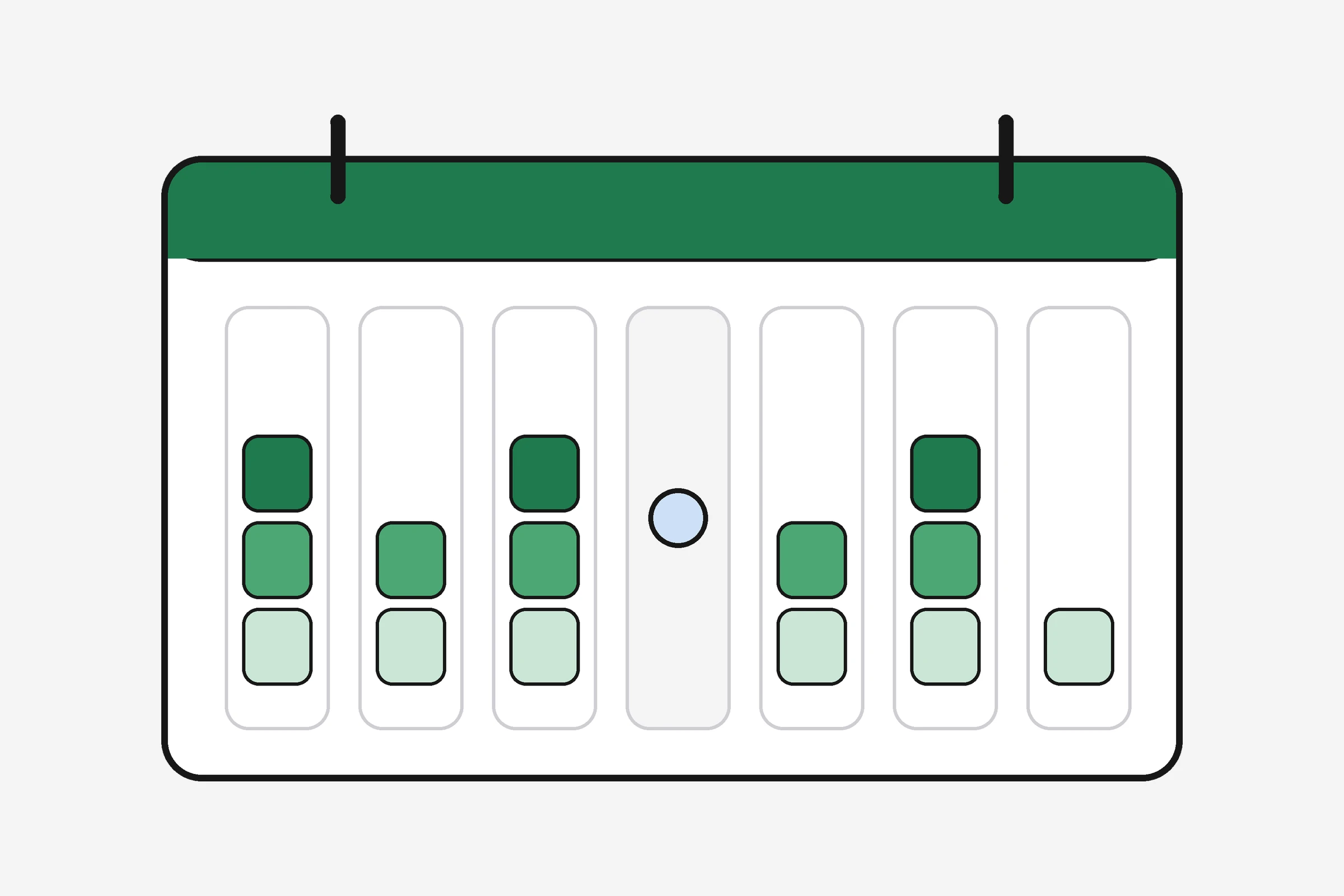
Start with a walk-run progression, run every other day and judge it by how you feel the next day. The 2024 consensus recommends starting with a walk-run protocol and adding duration and intensity gradually. The table is a general starting point, not a prescription. Move to the next week only if you have no leaking, heaviness or pain during the session or in the following 24 hours.
| Week | Session (3 days a week, rest days between) | Strength and pelvic floor |
|---|---|---|
| 1 | 5 rounds of 1 minute easy jog, 2 minutes walk | Daily pelvic floor work, 2 strength sessions |
| 2 | 5 rounds of 2 minutes jog, 2 minutes walk | Same |
| 3 | 4 rounds of 3 minutes jog, 2 minutes walk | Same |
| 4 | 4 rounds of 4 minutes jog, 1 minute walk | Same |
| 5–6 | 3 rounds of 8 minutes jog, 2 minutes walk | Same |
| 7–8 | 20 minutes continuous easy running | Same |
The pace should be easy enough to speak in sentences. If you are not sure how easy "easy" is, the running pace calculator gives an easy-pace range, and our couch to 5K plan shows a similar structure for beginners. Repeat a week if it felt hard; there is no prize for finishing the table early.
Other practical points:
- Sleep and energy count. The 2024 training consensus says to modify training for sleep, mental health, breastfeeding or low energy availability. A bad night is a good reason to walk instead.
- Eat enough. If you are breastfeeding or training, regular meals with protein (eggs, dairy, lentils, tofu, fish or meat) and carbohydrate help. Our protein guide covers vegetarian, vegan and non-vegetarian sources.
- Support. A comfortable bra and well-fitted shoes help. Surfaces that are flat and even are kinder than hills at first.
- Skip the comparison. Another runner's return date is not your date.
How do you know if you are ready for the next step?
Check three things: symptoms, strength and recovery.
- Symptoms: no leaking, no heaviness, no pelvic, back or scar pain during or after a session.
- Strength: you can do a set of 10 slow single-leg calf raises or step-ups on each side with control, and you are keeping up two strength sessions a week. These are everyday checks, not the formal tests in the 2019 guideline, which a physiotherapist can run for you.
- Recovery: you feel normal the next day. If you are wiped out for 24 hours or more, stay at the same level for another week.
Logging helps here. Note the session, any symptoms and your sleep in one place so you see the pattern. The AI fitness coach in revns can show how your weeks of walking, running and strength look together, and it asks about tiredness rather than assuming. It does not assess your pelvic floor or give medical advice.
What if I had a caesarean, a tear or a hard birth?
Your recovery plan follows your birth, not the calendar. After a caesarean you have healed abdominal surgery, and after a tear or an assisted birth your pelvic floor may need more time. The 2024 consensus includes screening for medical concerns before returning. Ask your midwife, GP or physiotherapist at your postnatal check what to avoid and for how long. Walking and pelvic floor exercises usually start first for everyone; running comes later.
Low mood, anxiety and exhaustion also affect when running feels right. Exercise can help mood, but it is not a treatment. If you feel low or anxious most days, or have thoughts of harming yourself or your baby, speak to your GP, midwife or health visitor today. In an emergency, call your local emergency number.
When should you see a professional?
Stop and get advice if you notice:
- Heavy bleeding, soaking a pad in an hour, or large clots.
- Fever, severe pain, or a scar that is red, hot or oozing.
- Chest pain, shortness of breath that is not explained by effort, or a swollen painful calf. These need urgent care.
- Leaking or heaviness that does not improve after a few weeks of reduced load.
- Pain that changes how you walk or run.
- Low mood or anxiety that is getting in the way of daily life.
What to do this week
- If you are in the first weeks after birth: walk when you feel up to it, do pelvic floor exercises daily and rest. You do not need a running date yet.
- If you are a few months after birth and symptom free: book a postnatal check or a pelvic health appointment, build two strength sessions a week and try week 1 of the walk-run table.
- If you have leaking or heaviness: do not push through. Ask for a pelvic health referral and keep walking and doing strength work in the meantime.
- If you ran before pregnancy: take the full build. Your heart and lungs return faster than your tissues do.
Related
- Pelvic floor exercises for runners and lifters: the basics
- Exercise in pregnancy and postpartum: general guidance and red flags
- Couch to 5K: a realistic plan
- Rest days: how many you need and what to do on them
- Running pace calculator
This is general training guidance, not medical advice. It does not replace your midwife, GP or physiotherapist, who know your birth and your body.
Sources
- Christopher SM et al. Return-to-running readiness postpartum: an international Delphi consensus. British Journal of Sports Medicine 2024;58:299–312
- Deering RE et al. Return-to-running training programme postpartum: Delphi consensus. British Journal of Sports Medicine 2024;58:183–195
- Goom T, Donnelly G, Brockwell E. Returning to running postnatal: guidelines for medical, health and fitness professionals managing this population, 2019
- UK Chief Medical Officers. Physical activity for women after childbirth: birth to 12 months (GOV.UK)
- BJSM blog. Return-to-running following childbirth: when sports medicine and pelvic health collide (summarising Moore et al. 2021)
Terms in this post
revns publishes training and nutrition guidance, not medical advice. See a clinician for symptoms, injury or a medical condition. Accurate as of November 19, 2026.