What is lactate threshold? LT1, LT2, heart rate and how to train near it
Lactate threshold is the effort where lactate in the blood rises faster than you clear it. LT1, LT2, pace, heart rate, Garmin estimates and a simple weekly plan.
revns editorial · Published November 21, 2026 · 9 min read
LT1 is the first lactate rise; LT2 is near the hardest steady effort you can hold. Most training stays below LT1; one tempo session near LT2 per week can sharpen speed.
Lactate threshold is the exercise intensity where lactate in your blood rises faster than you clear it. Coaches usually talk about LT1, the first rise, and LT2, the hardest steady pace you can hold for roughly 30 to 60 minutes in trained endurance athletes. Your lactate threshold heart rate or pace is a useful marker for tempo sessions, but most training should stay easier, in zone 2 or below LT1, with one controlled hard day when you want to get faster.
TL;DR
| Term | Plain meaning |
|---|---|
| Lactate threshold meaning | Effort where lactate production beats clearance |
| LT1 | First rise; easy to moderate; full sentences |
| LT2 | Hard steady effort; short phrases; near 30–60 min race pace in trained runners |
| Lactate threshold heart rate | Heart rate at LT2 on your device; often ~85–92% of max in trained people, but individual |
| Typical week | Mostly easy below LT1; 0–1 tempo block near LT2 |
| Find numbers | Heart rate zone calculator, talk test, or lab/step test |

What is lactate threshold?
Lactate threshold is the intensity where blood lactate increases more than you clear it, so the concentration starts to climb during steady exercise. At easy efforts, lactate stays low even though your muscles make it all the time. You also burn it as fuel. As power rises, production speeds up. There is a band where clearance still keeps up, then a point where it does not.
That point matters for training because fatigue rises faster above it. See the lactate threshold dictionary entry for a one-line definition. Breathing deepens, legs feel heavy, and holding the same pace gets harder minute by minute. It is not poison in the blood; lactate is a fuel and a signal. The word threshold is a coach’s shortcut for “about this hard.”
Sports scientists do not all use one blood number. Some labs mark LT1 near 2 mmol/L and LT2 near 4 mmol/L, but Faude, Kindermann and Meyer’s 2009 review in Sports Medicine stresses that cut-offs vary by protocol and that field tests often track ventilation or heart rate instead of a blood draw. For you, the useful part is relative effort: easy, moderate, hard steady, and sprint.
What is the difference between LT1 and LT2?
LT1 is the first lactate turnpoint: effort is still mostly aerobic and conversation is comfortable. LT2 is near maximal lactate steady state: hard, rhythmic, but not an all-out sprint.
| Marker | How it usually feels | Speech | Typical use in a week |
|---|---|---|---|
| Below LT1 | Easy; could go for hours | Full sentences | Long runs, easy rides, walks |
| Between LT1 and LT2 | Moderate; “comfortably hard” on some plans | Sentences with pauses | Brisk walks, steady commutes |
| At LT2 | Hard but controlled | Short phrases | One tempo block |
| Above LT2 | Very hard | Single words | Intervals, hills, races |
Zone 2 training in most plans sits at or below LT1, not at LT2. That is why easy days feel slow: they should. Saving LT2 for a planned session keeps the week sustainable.
Is lactate threshold the same as anaerobic threshold?
In coaching language, people often treat lactate threshold and anaerobic threshold as the same idea as LT2. In research, the names grew from different tests. OBLA fixed 4 mmol/L lactate. MLSS is the highest steady intensity where lactate does not drift up over time. Ventilatory thresholds track breathing instead of blood.
Faude and colleagues reviewed how these labels were used and concluded that for athletes, the practical target is similar: the hardest steady effort you can repeat in training, not a single number valid for every person. If your app shows lactate threshold and a friend’s shows functional threshold power on a bike, compare your own trend, not their absolute value.
What is lactate threshold heart rate?
Lactate threshold heart rate is the pulse you observe at LT2 effort, or the heart rate a wearable estimates as threshold. It is not maximum heart rate and not the top of zone 5.
In well-trained runners, threshold heart rate often lands around 85 to 92 percent of estimated maximum heart rate, but age, heat, caffeine, sleep and cycle phase move it day to day. A 35-year-old with an estimated max near 185 bpm might see threshold near 157 to 170 bpm; a newer runner might hit threshold at a lower percent because fitness changes where lactate drifts.
Three ways to estimate without a lab:
- Talk test. At LT2 you can speak only short phrases. Easier than that is below threshold; gasping single words is above.
- Recent race or time trial. A 30 to 60 minute hard steady effort in training often sits near LT2 for trained endurance athletes. A 10K race pace is sometimes used as a rough proxy, but it is faster than LT2 for many people.
- Calculator plus adjustment. Use the heart rate zone calculator for zone boundaries, then treat high zone 3 or low zone 4 as a starting band and refine with the talk test.
Chest straps usually track threshold sessions more steadily than wrist sensors at high effort, but either device works if you use it consistently.
What is lactate threshold pace?
Lactate threshold pace is how fast you run, ride or row at LT2 heart rate for you that day. For many trained runners it sits between 10K and half-marathon race pace, sometimes closer to one-hour race pace. It is slower than 5K race pace for most people and faster than easy runs.
On the road you can find it without lactate sticks:
- 20 to 40 minutes at “hard but even” after a warm-up
- Breathing deep; you want to stop but could hold form
- Split the last 10 minutes: if pace drops more than a few seconds per km without a hill, you started too fast
Use the running pace calculator to turn threshold pace into weekly mileage targets. Cyclists often use functional threshold power on a smart trainer; the idea is the same even when the unit is watts.
How does Garmin lactate threshold work?
Garmin estimates lactate threshold heart rate, pace and power from running data, using models that need a VO2 max estimate on the watch first. Garmin’s December 5, 2024 wearables software bulletin added automatic lactate threshold detection from wrist heart rate during GPS Run or Trail Run activities, without a mandatory chest strap or guided all-out test.
Treat the number as a training hint, not a lab result. Auto detection needs several outdoor runs at varied speeds. A sudden jump after one heroic session is noise; a slow rise across a training block is more useful. Garmin on the roadmap for revns integration is not live today; see the integrations page for what syncs now. Apple Watch does not label lactate threshold; it offers heart rate zones and VO2 max estimates instead.
How do you train at lactate threshold?
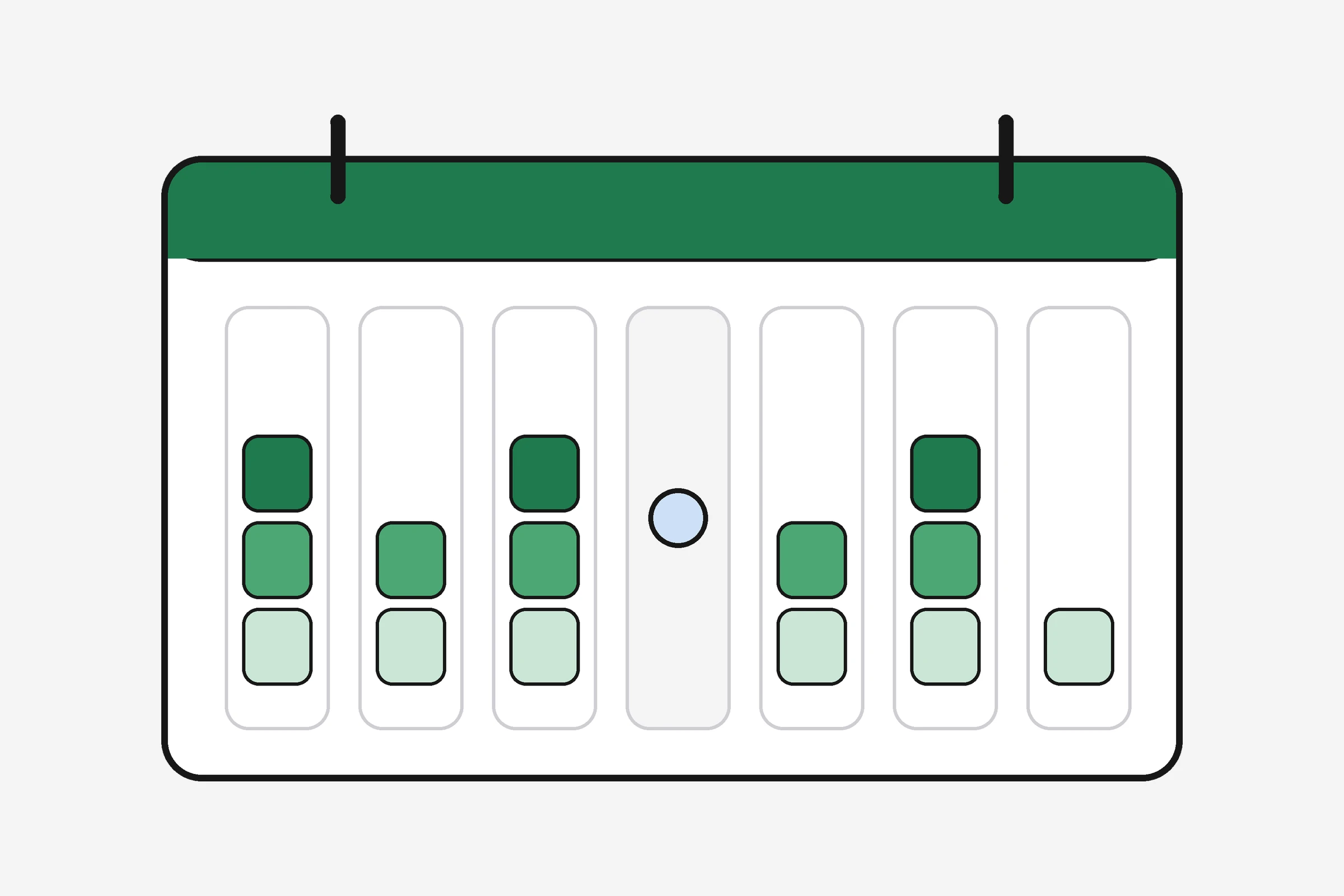
Most weeks should stay easy. Add zero to one session near LT2 if you want race fitness without burning out.
A simple structure for a runner already doing three to four days a week:
| Day | Session | Intensity |
|---|---|---|
| 1 | Easy run 30–45 min | Below LT1 |
| 2 | Strength or rest | — |
| 3 | Easy run or cross-train | Below LT1 |
| 4 | Tempo 10 min easy + 20–30 min near LT2 + 10 min easy | LT2 block |
| 5 | Rest or walk | — |
| 6 | Long easy run | Below LT1 |
| 7 | Rest | — |
Tempo rules:
- Warm up 10 to 15 minutes easy.
- Hold LT2 on feel, not a friend’s heart rate screenshot.
- Cool down easy; note pace and average heart rate for next time.
- If resting heart rate is 5 or more beats above your usual for several mornings, or sleep was poor, swap tempo for easy and try again next week.
Cyclists might do 2 × 20 minutes at threshold power with 5 minutes easy between. Walkers can use a brisk pace where talk breaks into phrases for 15 to 20 minutes, still within WHO weekly moderate minutes.
Improving threshold is mostly aerobic volume below LT1 plus small doses above it. A 2014 polarised training trial in well-trained cyclists reported better endurance markers when most work stayed easy and some sessions were very hard, compared with spending every day “moderately hard.” You do not need daily tempo to progress.
What happens to lactate threshold when you train?
Regular aerobic training usually raises LT2 pace or power at the same heart rate, so threshold feels faster over months. Intervals above threshold help too, but only when easy days stay easy.
Mechanisms include more mitochondria, better capillary supply to muscles and improved lactate shuttle and reuse as fuel, described in endurance physiology reviews. None of that needs a supplement or a special diet. Consistent sleep, enough carbohydrate around hard sessions (what to eat before and after a workout), and protein targets support the same adaptation.
If threshold heart rate drifts down while pace stays the same, check illness, heat, dehydration or overreaching. A falling threshold with rising fatigue across two weeks is a nudge to deload.
Should you get a lactate threshold lab test?
A step test with blood lactate every few minutes is the gold standard for athletes who need precise zones, for example before a marathon build. It is optional for health.
In a lab, power or speed rises each stage until lactate curves identify LT1 and LT2. Sport science centres and some universities offer it. Field substitutes include 30-minute time trials or monitored MLSS protocols, best run with a coach.
For general fitness, the talk test plus a watch trend is enough. Upgrade to a lab if you plateau despite smart training, if you coach others and want repeatable numbers, or if a clinician refers you for a structured cardiac rehab plan.
What to do this week
- Log three easy sessions below LT1 using the talk test or zone 2 heart rate.
- Note your morning resting heart rate on four days (or use Apple Health through the iPhone app if you sync there).
- If you already run three or more days a week and feel fresh, add one tempo block: 10 easy, 20 at short-phrase effort, 10 easy.
- Write threshold pace or average heart rate from that tempo in your workout log so next month you can compare.
- If you use an AI assistant with training data, ask how your easy minutes and one hard day line up with the last month through revns MCP instead of guessing from a single number.
When to see a professional
Stop and get urgent care for chest pain, fainting, shortness of breath at rest, or irregular heartbeat with dizziness. See a clinician before hard threshold training if you have diagnosed heart disease, take heart-rate medicines such as beta blockers, are pregnant without clearance for vigorous sport, or have unexplained syncope during exercise.
This is general training guidance, not medical advice.
Related
- Zone 2 training explained
- What are heart rate training zones?
- Carbohydrate and fat oxidation at each effort
- VO2 max: what it is and how to raise it
- Easy pace in running
- Heart rate zone calculator
Sources
- Faude O, Kindermann W, Meyer T. Lactate threshold concepts: how valid are they? Sports Med 2009
- Billat VL, Demarle A, Slopiak J et al. Physical and training characteristics of top-class marathon runners. Med Sci Sports Exerc 2003
- Seiler S. What is best practice for training intensity and duration distribution in endurance athletes? Int J Sports Physiol Perform 2010
- Bull FC et al. World Health Organization 2020 guidelines on physical activity and sedentary behaviour. Br J Sports Med 2020
- Garmin. December 2024 smartwatch and cycling computer feature update (lactate threshold auto-detection PDF)
- Stöggl TL, Sperlich B. Polarized training has greater impact on key endurance variables than threshold, high-intensity, or high-volume training. Front Physiol 2014
Terms in this post
revns publishes training and nutrition guidance, not medical advice. See a clinician for symptoms, injury or a medical condition. Accurate as of November 21, 2026.