Legs and glutes exercise
Jump lunges
Also called jumping lunges, split jumps, lunge jumps
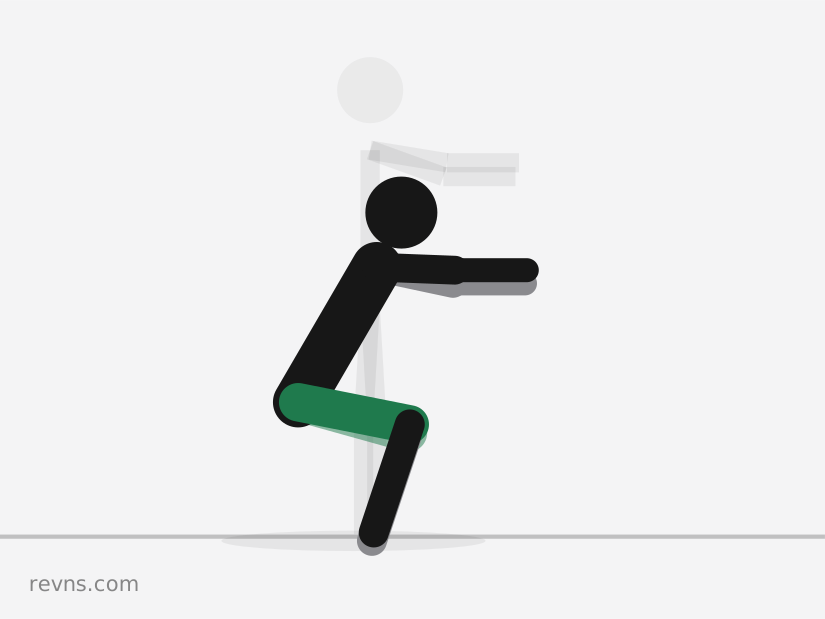
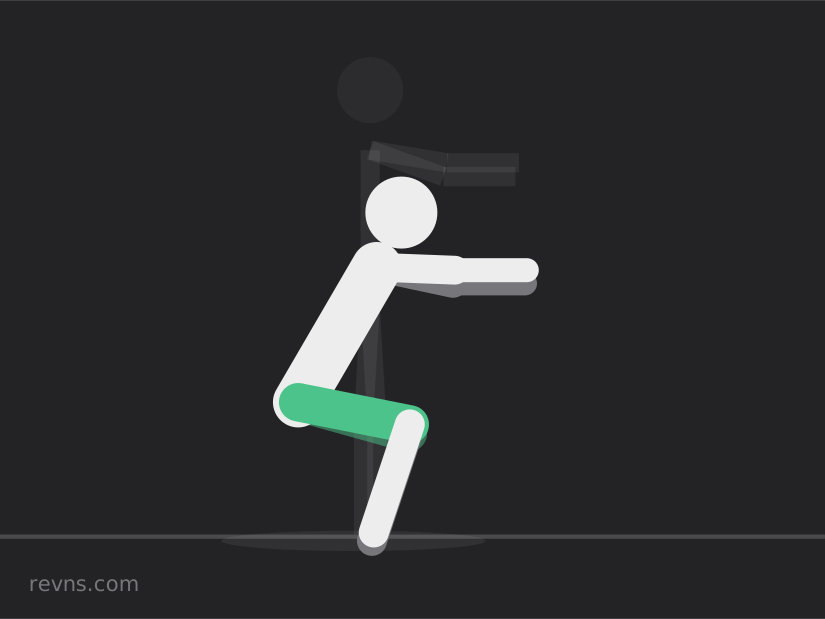
Jump lunges: a advanced plyometric exercise for the quads and glutes, no equipment needed. From a lunge, jump and switch legs in the air, land softly.
| Level | Advanced |
|---|---|
| Type | Plyometric |
| Movement | Compound, lunge |
| Equipment | No equipment |
| Where | Home, Gym, Outdoors, Office, Travel and hotel rooms |
| Main muscles | Quads, Glutes |
| Counted in | Reps |
| Calories | About 135 kcal in 10 minutes at 70 kg |
How to do jump lunges
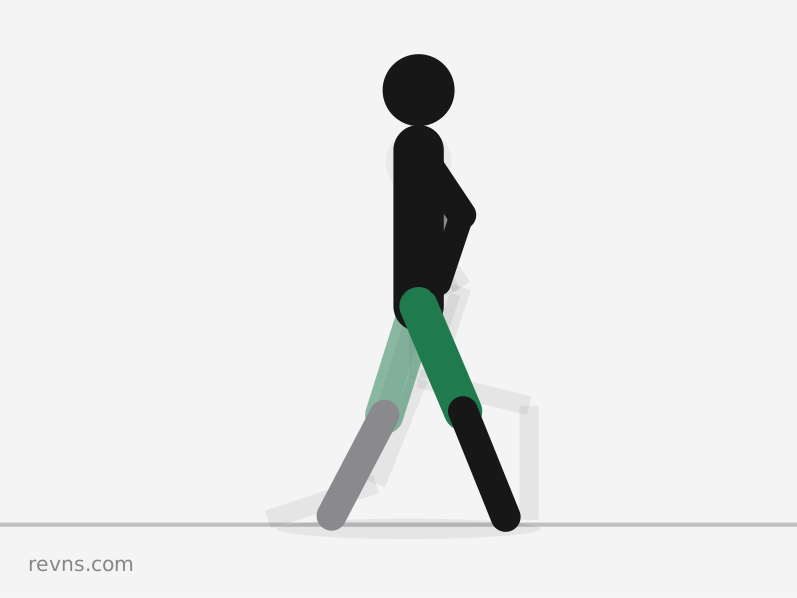
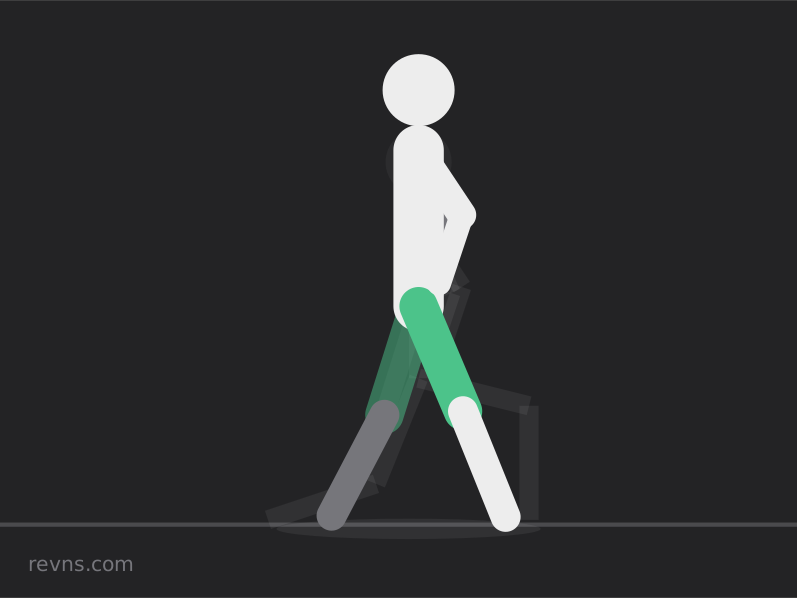
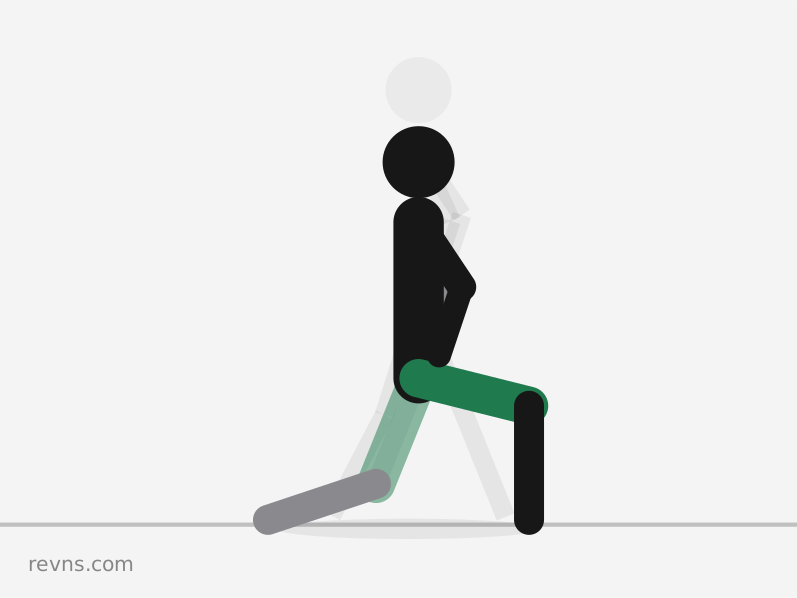
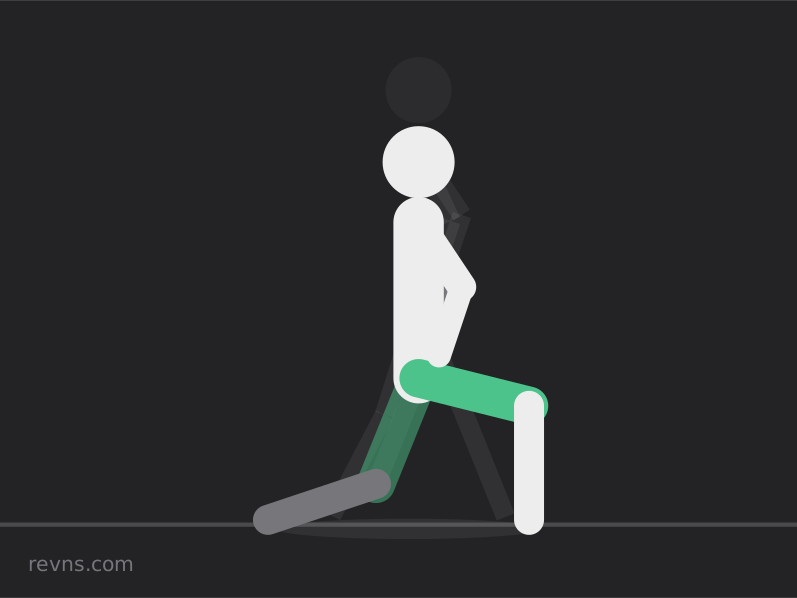
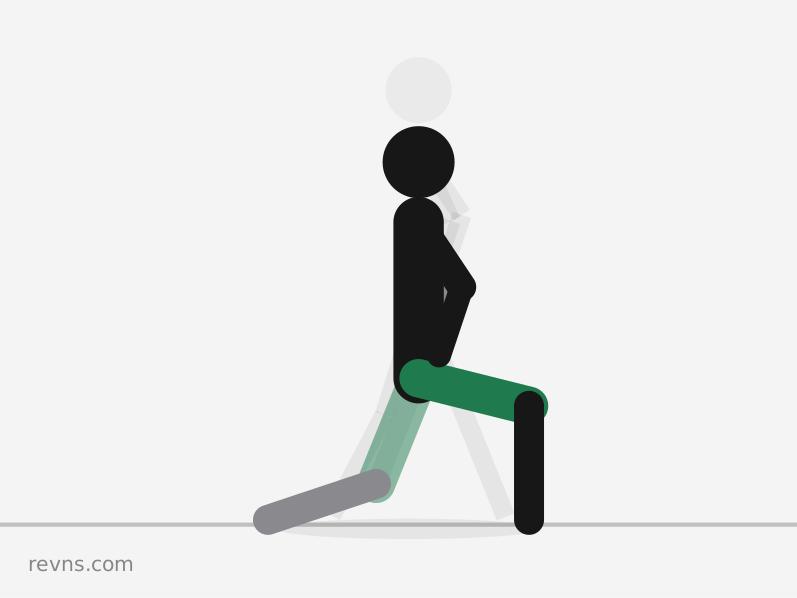
- Start in a lunge.
- Jump up and switch legs in the air.
- Land softly in a lunge on the other side.
- Keep going.
Form tips
- Land quietly.
- Rest when landings get messy.
- Alternating reverse lunges are the low-impact swap.
Breathing
Out as you jump.
What muscles do jump lunges work?
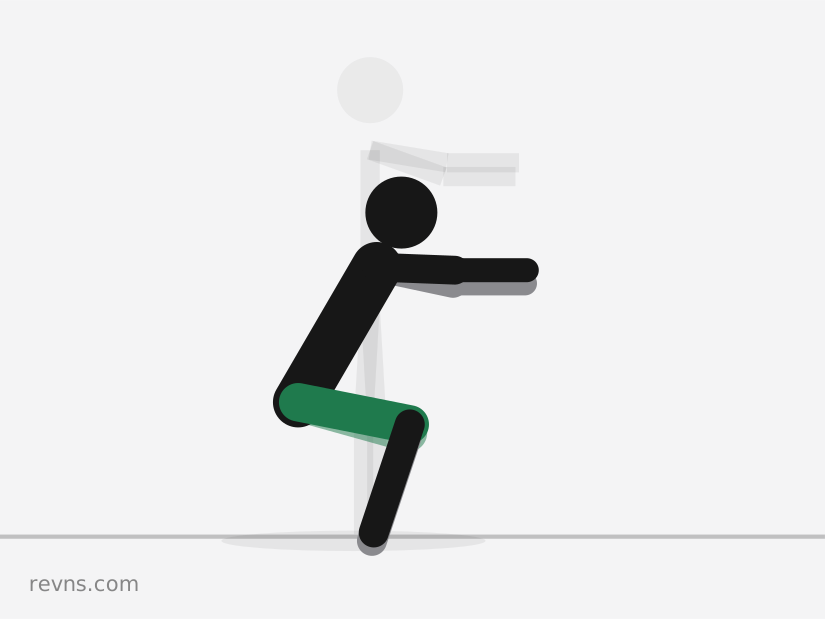
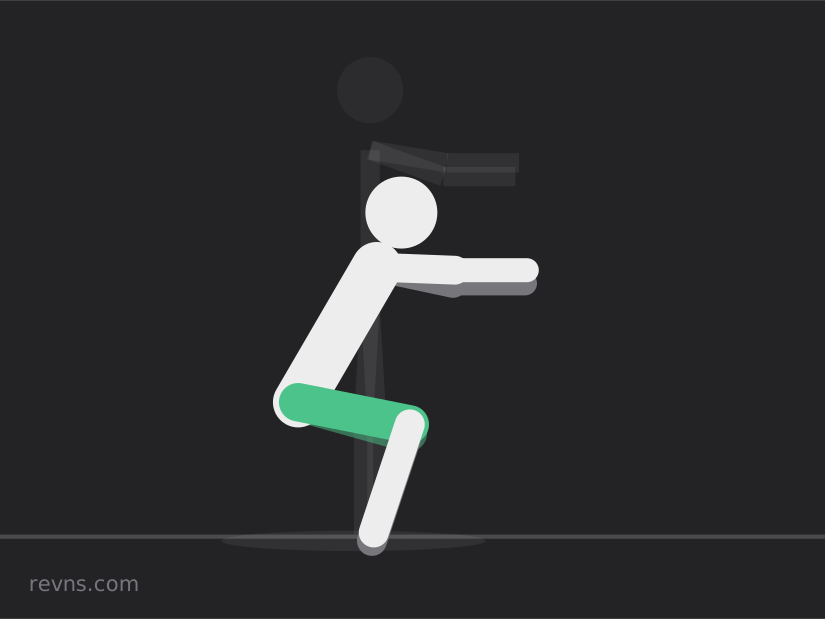
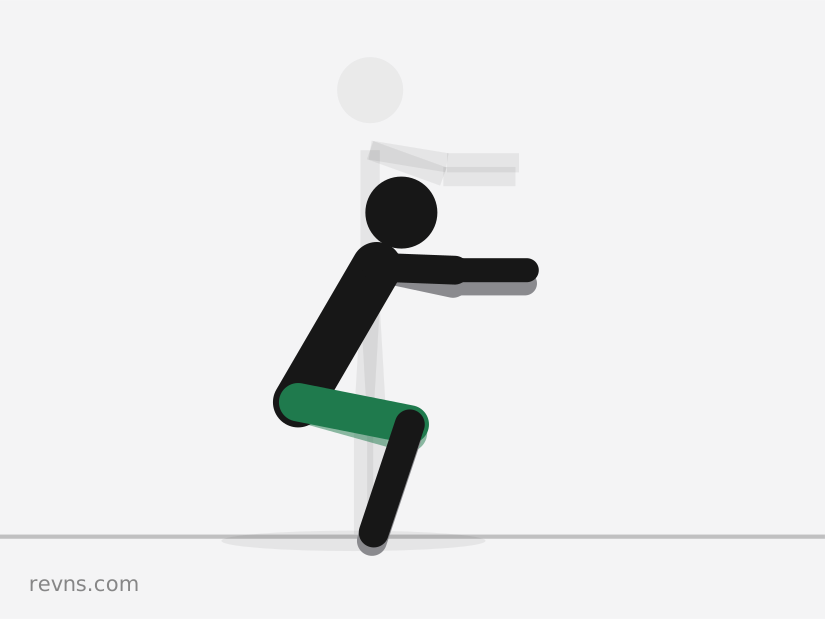
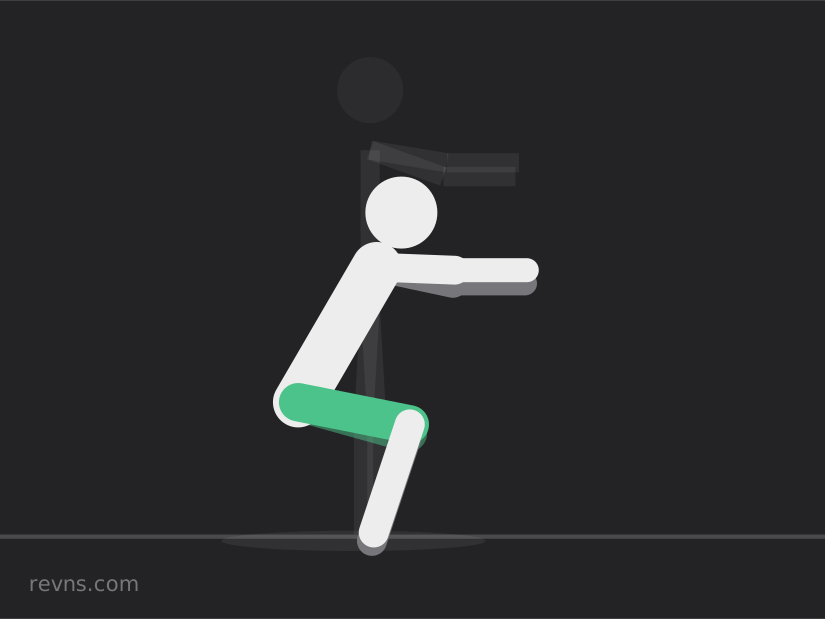
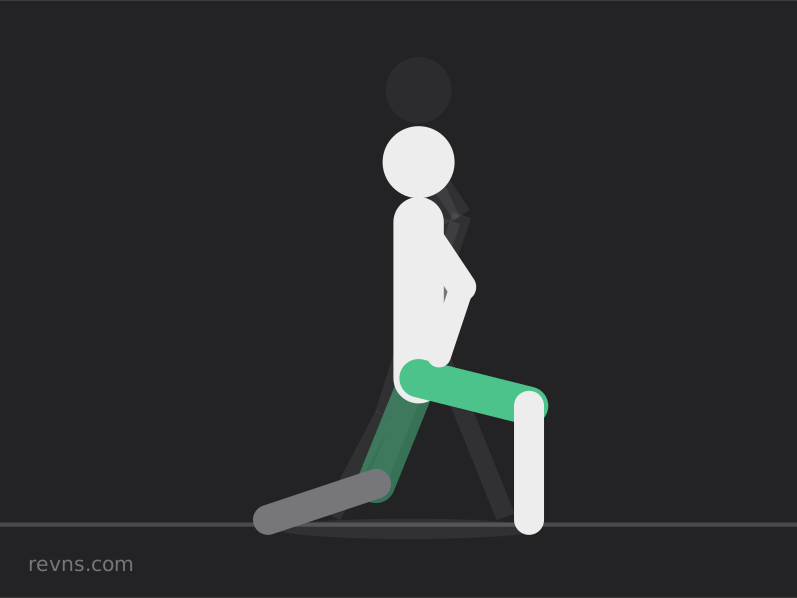
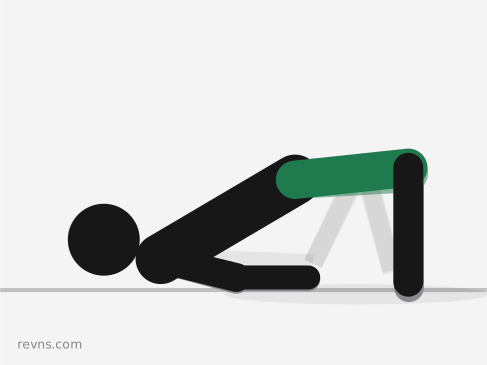
The main movers are green in the figure. The bars show each muscle’s share of the work, as the revns body map counts it.
- QuadsMain
- GlutesMain
- CalvesHelper
What jump lunges are good for
- Leg power
- HIIT
- Running and field sports
How many sets and reps of jump lunges?
Starting points from the American College of Sports Medicine’s guidance. Pick the row for your level, and move up when the last set feels easy with clean form.
| Level | Sets | Reps or time | Rest | How often |
|---|---|---|---|---|
| Beginner | 2 to 3 | 5 to 8 | 60 to 90 seconds | 1 to 2 a week |
| Intermediate | 3 to 4 | 6 to 10 | 60 to 90 seconds | 2 a week |
| Advanced (this move) | 4 to 5 | 6 to 10 | 90 seconds to 2 minutes | 2 to 3 a week |
How many calories do jump lunges burn?
Active calories (on top of resting burn) for steady work, from a MET of 11: “High intensity interval exercise (burpees, mountain climbers, squat jumps), vigorous effort” (code 02214) in the 2024 Adult Compendium of Physical Activities. Rests, pace and effort change the real number.
| Body weight | 1 minute | 10 minutes | 30 minutes |
|---|---|---|---|
| 55 kg | about 11 kcal | about 106 kcal | about 318 kcal |
| 70 kg | about 13 kcal | about 135 kcal | about 404 kcal |
| 85 kg | about 16 kcal | about 164 kcal | about 491 kcal |
| 100 kg | about 19 kcal | about 193 kcal | about 578 kcal |
At about 2 seconds a rep, 3 sets of 12 are about 1.2 minutes of work: roughly 16 kcal at 70 kg.
Common jump lunges mistakes
- Landing on locked knees.
- Knees caving.
- Too fast to control.
Jump lunges variations and alternatives
Who should take care with jump lunges?
Jumping is hard on the joints and the pelvic floor: build up from the low-impact version, and skip it with joint pain or in late pregnancy. Stop if you feel sharp pain, dizziness, chest pain or unusual shortness of breath, and see a clinician about pain that stays. If you are new to exercise, pregnant, or managing a heart, joint or other health condition, check with a professional first.
More legs and glutes exercises
Use this demo on your site
Free to embed with the credit link. The figure carries Content Credentials (C2PA) that name revns as its maker.
<iframe src="https://revns.com/embed/exercises/jump_lunges" title="Jump lunges exercise demo" width="480" height="420" style="border:0;max-width:100%" loading="lazy"></iframe>
Sources
- Herrmann SD et al. 2024 Adult Compendium of Physical Activities. J Sport Health Sci 2024
- American College of Sports Medicine. Progression models in resistance training for healthy adults. Med Sci Sports Exerc 2009
- World Health Organization. Guidelines on physical activity and sedentary behaviour. 2020
General training guidance, not medical advice.